Stretch Lab Cost 2026: Drop-In vs Membership Prices
Find out the current Stretch Lab cost for 2026. We compare single session prices vs. monthly memberships so you can see if the investment is right for you.

This content is for informational purposes only and does not constitute medical advice. Consult with a qualified healthcare professional before making any decisions about your health or treatment.
Stiff muscles, tight hips, and limited mobility are common complaints for everyone from dedicated athletes to desk workers. Assisted stretching studios like StretchLab have become a popular solution, offering one-on-one sessions to improve flexibility and reduce soreness. But before you book your first appointment, you're probably asking one key question: what is the actual stretch lab cost? The price isn't always straightforward, as it depends on memberships, location, and session length.
This guide breaks down every aspect of StretchLab pricing in 2026. We will cover membership fees, single-session rates, insurance coverage, and practical ways to save money, so you can decide if it's the right investment for your wellness routine.
Quick Price Summary
StretchLab primarily operates on a membership model, which offers a lower per-session rate than buying single or "drop-in" sessions. However, prices vary significantly by studio location and the specific package you choose. Here is a general overview of what you can expect to pay, based on current data.
| Service / Membership | Estimated Cost (2026) | Notes |
|---|---|---|
| Introductory Offer (25-Min) | $29 | One-time offer for new clients. |
| Introductory Offer (50-Min) | $49 | One-time offer for new clients. |
| Single Session (25-Min) | ~$55 | Varies by location. |
| Single Session (50-Min) | ~$105 | Varies by location. |
| Monthly Membership (4x 25-min sessions) | $149+ | Approx. $37 per session. |
| Monthly Membership (4x 50-min sessions) | $269+ | Approx. $67 per session. |
| Monthly Membership (8x 50-min sessions) | $539+ | Approx. $67 per session. |
Sources: ThePricer.org, InsuredAndMore.com
Feeling stiff but not sure where to start your wellness plan? Our free quiz can help you find a provider who understands your body's needs. These experts can guide you on everything from mobility to hormone optimization.
Stretch Lab Cost With Insurance
A common question is whether health insurance will cover the stretch lab cost. In most cases, the answer is no. StretchLab is classified as a private wellness studio, not a medical facility. Its services are generally not considered medically necessary by insurance carriers like United Healthcare or Medicare, even if a doctor suggests you would benefit from more stretching.
Insurance plans typically cover services that diagnose or treat a specific medical condition. For muscle and joint issues, this usually means physical therapy prescribed after an injury or surgery. While a session at StretchLab can feel therapeutic, it falls into the same category as a gym membership or a massage, which are wellness expenses paid for out-of-pocket. Some sources claim certain insurance plans are accepted, but this seems to be the exception, not the rule (Smart Insurance Solutions). The official StretchLab website advises customers to check directly with their provider and local studio for any questions about coverage (StretchLab Help Center).
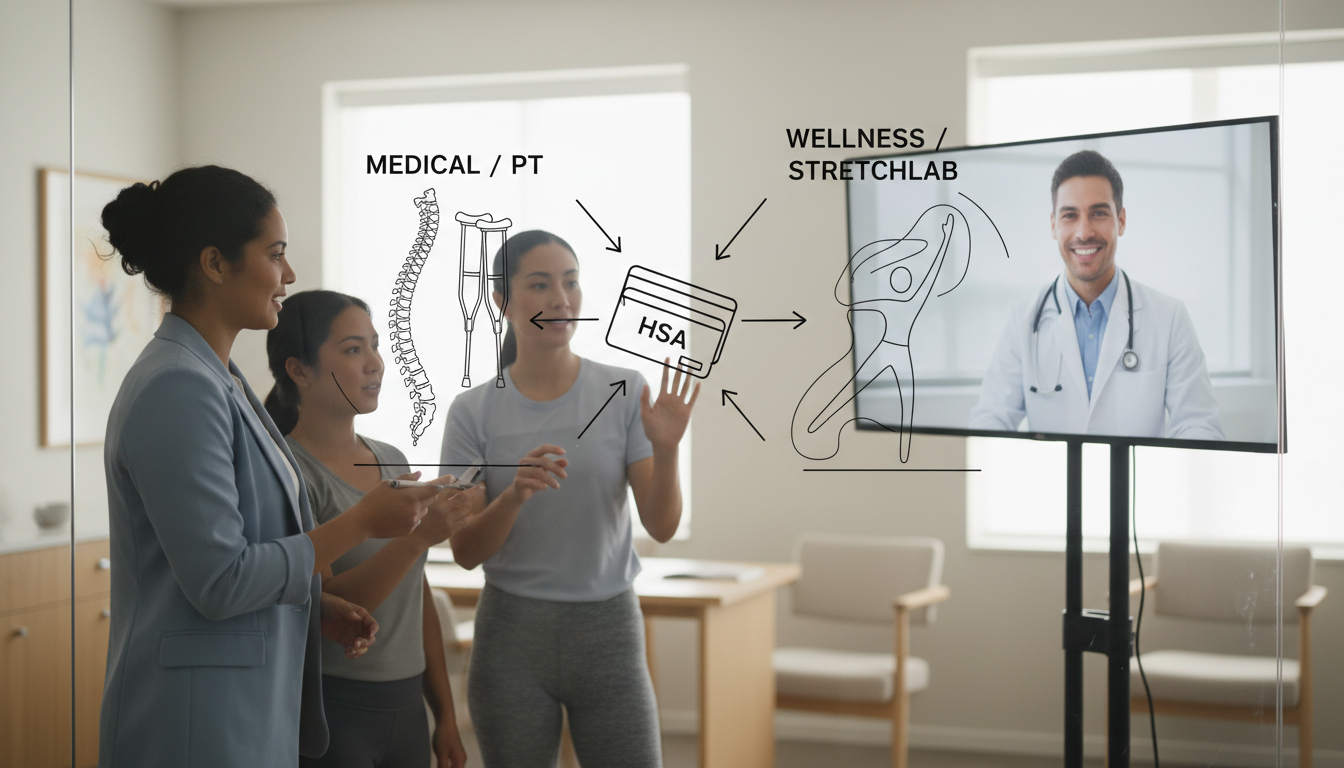
However, there is an important exception: Health Savings Accounts (HSA) and Flexible Spending Accounts (FSA). Many people can use these tax-advantaged accounts to pay for StretchLab sessions. Because HSAs and FSAs can be used for services that "prevent or alleviate a physical or mental defect or illness," an argument can be made that assisted stretching qualifies. Using these pre-tax dollars is like getting an automatic discount of around 30%, depending on your tax bracket (Oreate AI Blog).
Some StretchLab studios can even process HSA and FSA card payments directly (InsuredAndMore.com). Before you book, confirm with your HSA/FSA administrator that the service is an eligible expense under your plan.
Stretch Lab Cost Without Insurance / Cash Pay
Since most people pay for StretchLab without insurance, it is useful to understand the cash-pay prices. The stretch lab cost you pay out-of-pocket depends on three main factors: whether you buy a single session or a membership, the length of your session, and your studio's location.
Single "Drop-In" Sessions If you want to try StretchLab just once or visit infrequently, you can purchase a single session. According to Cost Digest, a 60-minute session can range from $40 to $130, with an average around $85. Shorter 25-minute sessions cost around $55, while longer 50-minute sessions are closer to $105 (InsuredAndMore.com). These one-off sessions are the most expensive way to use the service on a per-visit basis.
Introductory Offers To attract new clients, nearly every StretchLab offers a steeply discounted first session. These are the best deals you will find. ThePricer.org reports that many studios offer an initial 25-minute stretch for $29 or a 50-minute stretch for $49. This allows you to experience a session with a trained Flexologist and see if it's right for you before committing to a pricier package.
Monthly Memberships For anyone planning to go regularly, a monthly membership is the most economical choice. Memberships are structured around the number and length of sessions you get each month. The more sessions you commit to, the lower your per-session cost becomes.
- Base Memberships: A common entry-level plan includes four 25-minute sessions per month for around $149 (InsuredAndMore.com). This breaks down to under $38 per visit.
- Core Memberships: A popular option is four 50-minute sessions per month, which typically costs around $269, or about $67 per session.
- Premium Memberships: For those who want more frequent stretching, a package of eight 50-minute sessions per month can cost over $539 (ThePricer.org).
Location is another major factor. Studios in dense urban centers like New York or Los Angeles may have prices 15% to 25% higher than studios in suburban or rural areas to account for higher rent and operating costs (Cost Digest).
Putting the Stretch Lab Cost in Perspective: Comparing Wellness Investments
To understand its value, it's helpful to compare the monthly cost of a StretchLab membership to other wellness and medical expenses. While StretchLab is a physical service, many people manage their health with a mix of in-person routines and online telehealth services, especially for peptide therapies and hormone optimization.
Costs for these treatments can vary widely. For example, the ursodiol cost for managing liver conditions is often low, as it's a generic drug. In contrast, fertility treatments like the menopur cost can run into thousands of dollars per cycle without insurance. The h100 cost, a type of skin rejuvenation injectable, also represents a significant aesthetic investment per session.
Here’s how a StretchLab membership compares to other monthly health expenses people often research:
| Service / Product | Typical Monthly Cost (2026 Estimate) | Notes |
|---|---|---|
| StretchLab Core Membership | $269 | For four 50-minute sessions. |
| GHRH/GHR Peptide Therapy | $250 - $600+ | The ghrp-2 cost varies by clinic and dosage. |
| Online TRT Program | $99 - $200 | Includes medication and consultations. See our guide on how much TRT is per month. |
| Compounded Semaglutide | $300 - $550 | For weight management from an online provider. |
| H100 Skin Booster | $600 - $800+ | Billed per session; multiple sessions often needed. |
| Menopur Fertility Drug | $2,000 - $5,000+ | Cost for one treatment cycle without insurance coverage. |
| Ursodiol (Generic) | $30 - $60 | Cash price with a prescription discount card. |
As the table shows, a StretchLab membership is a moderate monthly expense, comparable to many online peptide or hormone therapy programs. It is far less than specialized aesthetic or fertility treatments but more than a standard gym membership.
Comparing costs can be overwhelming. Want to see which health optimization options fit your budget and goals? Our free quiz takes 3 minutes and matches you with vetted providers for treatments like peptide therapy and HRT.
How to Save Money on the Stretch Lab Cost
While StretchLab is an investment, there are several effective strategies to reduce the overall stretch lab cost. With a little planning, you can make assisted stretching more affordable.
-
Always Start with an Intro Offer. Never pay full price for your first visit. Almost every StretchLab location advertises a discounted introductory session, such as a 50-minute stretch for $49 (ThePricer.org). This is a low-risk way to try the service and decide if you like it before committing to a membership.
-
Commit to a Membership. If you plan on attending even twice a month, a membership is almost always cheaper than buying single sessions. A single 50-minute session can cost $105, but a membership with four 50-minute sessions for $269 drops the per-session price to about $67. The savings add up quickly.
-
Use Your HSA or FSA Funds. As mentioned earlier, paying with pre-tax dollars from a Health Savings Account or Flexible Spending Account is a huge money-saver. This can effectively give you a discount of 20-35%, depending on your income tax rate. Confirm eligibility with your plan administrator first.
-
Choose Shorter Sessions. Do you really need a full 50-minute session every time? If you are focused on a specific problem area like tight hamstrings or a stiff neck, a 25-minute session might be sufficient. A membership for four 25-minute sessions can be nearly half the price of a 50-minute package.
-
Ask About Local Promotions. Since most StretchLabs are franchises, the individual owner may run special promotions not advertised on the corporate website. Follow your local studio on social media or sign up for their email list to get notified about holiday specials, new year deals, or package discounts.
-
Inquire About Add-Ons. Some memberships may include perks like access to Normatec compression therapy boots at no extra charge (Oreate AI Blog). Be sure to ask what is included with your package to maximize its value. Otherwise, add-ons like compression or cupping can cost between $5 and $40 extra per session (Cost Digest).

Is It Worth the Cost?
Whether the stretch lab cost is "worth it" is a personal decision that depends on your budget, lifestyle, and wellness goals. For many, the answer is a clear yes.
The main value of StretchLab comes from the expertise of its "Flexologists." These are trained professionals who guide you through a PNF (proprioceptive neuromuscular facilitation) stretching routine, a method that is difficult and often less effective to perform on your own. They can identify your specific areas of tightness and ensure you are stretching safely and effectively to improve your range of motion.
For active individuals, regular assisted stretching can aid in muscle recovery, reduce the risk of injury, and improve athletic performance. For those with sedentary jobs, it can counteract the negative effects of sitting all day, like tight hips and back pain. The benefits often extend beyond simple flexibility, contributing to better posture and reduced stress.
When you compare it to alternatives, the value becomes clearer. A physical therapy session can cost more per visit without insurance. While a yoga class provides stretching, it lacks the one-on-one attention and customization of a StretchLab session. If you have chronic stiffness that doesn't improve with self-stretching, the dedicated attention at StretchLab may provide the breakthrough you need. It is a proactive investment in your long-term mobility and quality of life, which is a core component of overall health, just like maintaining proper hormone levels.
Ready to explore all your options for feeling your best? Take our free 3-minute quiz to get matched with a licensed provider who can help you build a plan for your health goals.
FAQs
How much does a single StretchLab session cost?
A single 50-minute session at StretchLab typically costs between $90 and $110, while a 25-minute session is usually around $50 to $60. Prices can vary depending on the studio's location, with urban areas often being more expensive.
Does insurance cover StretchLab?
No, traditional health insurance plans generally do not cover StretchLab sessions. The service is considered a wellness or fitness expense, not a medical treatment. However, you can often use funds from a Health Savings Account (HSA) or Flexible Spending Account (FSA) to pay for it.
Is a StretchLab membership cheaper?
Yes, a membership is significantly cheaper on a per-session basis. For example, a monthly membership for four 50-minute sessions might cost around $269 ($67 per session), which is much less than the typical drop-in rate of over $100 for a single session.
What is a "Flexologist"?
A Flexologist is the title for the trained and certified professionals who perform the one-on-one assisted stretching at StretchLab. They often have backgrounds in personal training, massage therapy, or yoga and must complete StretchLab's proprietary, in-depth training program to earn their certification.
Contributing to evidence-based peptide education and provider transparency.
Too many clinics, not enough clarity?
We don't sell peptides. Tell us your goals and we'll connect you with a vetted provider who can figure out what actually makes sense for you.
See what's right for youRelated articles
How to Actually Find Peptide Therapy Near Me
Don't just Google "peptide therapy near me." Learn how to vet clinics, what questions to ask your doctor, and how to spot a trustworthy provider.
Provider GuideSigns of a Quality Peptide Compounding Pharmacy
Worried about quality? Learn the critical questions to ask any peptide compounding pharmacy, plus the red flags that signal you should stay away.
Provider GuideFinding Legit Peptide Clinics in the UK
Don't just Google 'peptide clinics uk'. Our guide shows you how to find a qualified provider, what to ask in a consult, and how to avoid scams.