Are At Home Testosterone Testing Kits Worth It?
Curious if an at home testosterone testing kit is accurate? This guide covers the pros and cons, how to read your results, and when to see a doctor.
This content is for informational purposes only and does not constitute medical advice. Always consult with a qualified healthcare provider for any health concerns or before making any decisions related to your health or treatment.
An Introduction to At-Home Testosterone Testing
Feeling tired all the time? Is your sex drive lower than it used to be? Difficulty building muscle or losing fat? These are common complaints for men, and sometimes, the reason is low testosterone. You might be curious about your levels but hesitant to schedule a doctor's visit just yet. This is where an at home testosterone testing kit comes in. These kits offer a private and convenient way to get an initial look at your hormone health right from your own home.
Low testosterone is more common than you might think. Data from Numan suggests that one in four men are affected, with that number jumping to 40% in men over 45. Alarmingly, they also report that 90% of men with low testosterone go untreated. For many, an at-home test is the first step toward getting answers. It helps you gather personal health data before deciding to speak with a provider.
These kits act as a screening tool. They are not a substitute for a full medical diagnosis from a doctor, which typically requires a venous blood draw in a clinical setting. As noted by TRT Clinic Guide, professional guidelines still recommend a formal lab test for a definitive diagnosis. Think of an at home testosterone testing kit as a way to see if you even need to open the door to a conversation about what TRT is and if it might be right for you.
How Does an At Home Testosterone Testing Kit Work?
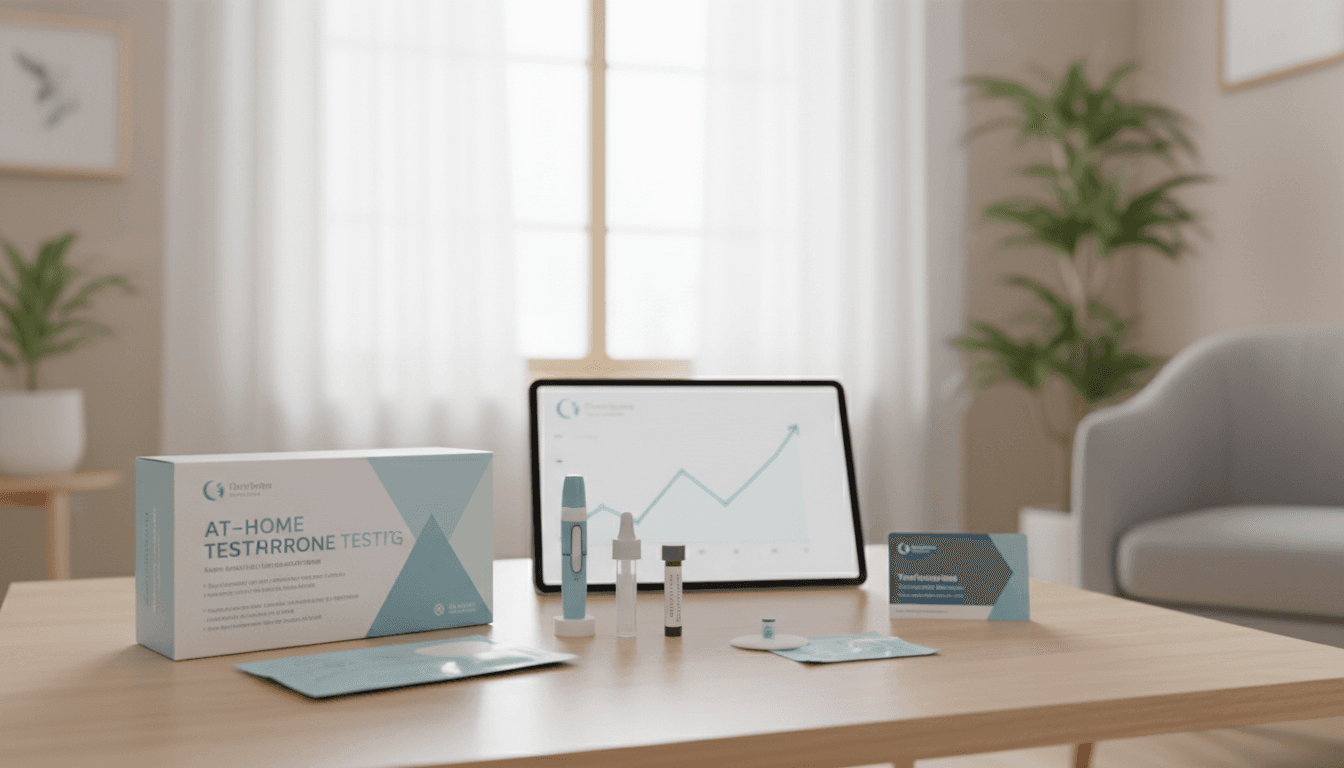
The primary keyword "at home testosterone testing kit" appears in this H2. The core appeal of an at home testosterone testing kit is simplicity. You order it online, it arrives at your door, and you collect a sample without needing to visit a lab. But what happens behind the scenes, and what are you actually measuring?
Collection Methods
Most kits use one of three main sample collection methods:
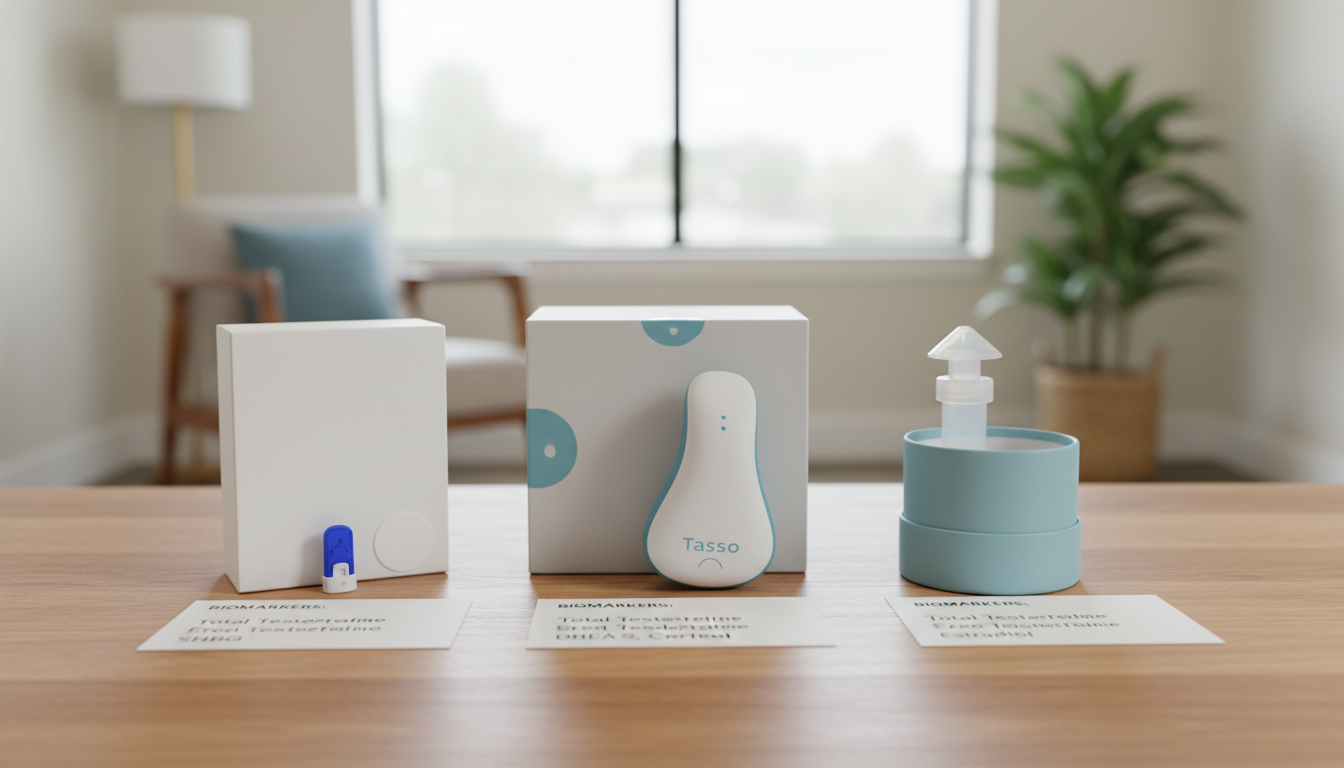
- Finger-Prick (Dried Blood Spot): This is the most common method. You use a small, spring-loaded lancet to prick your finger and dot several drops of blood onto a collection card. This method is generally considered more reliable than saliva for at-home testing, according to a 2024 review from Science in Health.
- Saliva: Some kits require you to spit into a tube. Saliva tests measure free testosterone, but they can be unreliable. They are prone to contamination and collection errors, and organizations like the Endocrine Society do not widely accept them for clinical diagnosis.
- Microtainer (Finger-Prick): This is a more advanced finger-prick method. Instead of drying blood on a card, you use a device like the Tasso+ to collect a small vial of whole blood. Zeuss, a company that uses this method, claims it allows for a more precise assessment of key biomarkers, including blood thickness (hematocrit), which is crucial for safely qualifying for TRT.
Biomarkers Measured
What your test measures depends on the kit you buy. The options range from basic to extensive.
- Basic Kits: A simple testosterone testing kit, like the basic one from LetsGetChecked, may only measure your total testosterone level. This gives you a single data point to see if you fall within the normal range.
- Advanced Kits: More detailed kits provide a clearer picture. For example, Numan's £68.00 kit and Zeuss's $139.00 kit measure a wide array of biomarkers, including:
- Total Testosterone: All the testosterone in your blood.
- Free Testosterone: This is the unbound, biologically active testosterone your body can actually use. Understanding what is free testosterone is critical, as you can have normal total T but low free T and still experience symptoms.
- SHBG (Sex Hormone Binding Globulin): A protein that binds to testosterone, making it inactive. High SHBG can lead to low free T.
- Albumin: Another protein that weakly binds to testosterone.
- Other Markers: Comprehensive kits, like the Male Hormone Complete from LetsGetChecked, may also check estradiol (a form of estrogen), prolactin, and cortisol to provide a fuller hormonal profile.
Once you collect your sample (it's best to do it first thing in the morning while fasted), you mail it to a lab. Reputable companies use CLIA-certified labs for analysis. Within a few days, you'll get your results through a secure online portal, often with a brief interpretation.
Overwhelmed by the options and not sure where to start? Our free quiz can help you determine if testing is right for you and match you with a provider who can guide you. Take the 3-minute quiz at /find-provider to learn more.
Accuracy and Limitations of Your Testosterone Testing Kit
Convenience is great, but it doesn't matter if the results are wrong. So, how accurate are these at-home tests? The answer is complex. They can be a useful starting point, but they have significant limitations compared to traditional lab work.
At-home kits are best viewed as screening tools, not diagnostic instruments. For an initial look at hormone levels, a high-quality kit from a reputable company can provide valuable information. A 2025 pilot study published in ACM Case Reports even used a LetsGetChecked at-home kit to measure testosterone changes in participants, noting the sample was processed in a CLIA-certified and CAP-accredited laboratory. This shows they have a place, even in research settings.
However, their accuracy can be a major issue. A report from TRTed.org highlights a stark contrast: clinical lab tests have a deviation of less than 20% from gold-standard methods, while a study on home kits found results varied wildly. The deviation from a clinical method averaged 194% in men. Several factors contribute to this potential for inaccuracy:
- User Error: Did you collect the sample correctly? Was it at the right time of day? LetsGetChecked warns that samples should be collected in the morning before eating or drinking. Using supplements like biotin or taking steroids can also impact results.
- Testing Method: Many home kits use immunoassay methods. According to TRTed.org, these methods are known to be less accurate, especially in the lower testosterone ranges where a precise number matters most.
- Sample Type and Condition: Saliva tests are notoriously variable. Dried blood spot tests are better, but a 2026 review in Frontiers pointed out a critical flaw for men already on TRT. For those using transdermal testosterone cream for men, at-home saliva and dried blood spot tests often show misleadingly high testosterone levels that don't match what's actually in the bloodstream. This can lead to improper dosing and safety concerns.
For these reasons, the established medical consensus is clear. The Frontiers review states that clinical guidelines from multiple medical societies recommend serum testosterone measurement (a venous blood draw) as the gold standard for both diagnosing low T and monitoring therapy. An at-home test can give you a reason to see a doctor, but a doctor will need a clinical test to confirm the diagnosis.
If your at-home test results are concerning, the next step is talking to a professional. Find a vetted hormone optimization provider near you with our free matching tool.
I Have My Results. What’s the Next Step to Get Testosterone Online?
You've used an at home testosterone testing kit, and the numbers are in. Now what? Your results are not a diagnosis. They are a starting point for a conversation with a qualified medical provider. If your at-home test suggests low testosterone, here is the path forward to potentially getting treatment like testosterone online.
1. Professional Interpretation and Confirmatory Testing
First, a number on a page means little without context. A provider will interpret your results based on your age, symptoms, and overall health. If the results are concerning, they will almost certainly order a new, comprehensive blood test from a clinical lab. This venous blood draw is the standard of care and is required before a legitimate provider will write a prescription. Your at-home test got you in the door; the clinical test confirms what's happening. Looking for a doctor who specializes in this? Check out our list of providers at /clinics.
2. Discussing Treatment Options
If confirmatory lab work confirms a diagnosis of testosterone deficiency, your provider will discuss treatment options. The most common and effective form is testosterone replacement therapy (TRT).
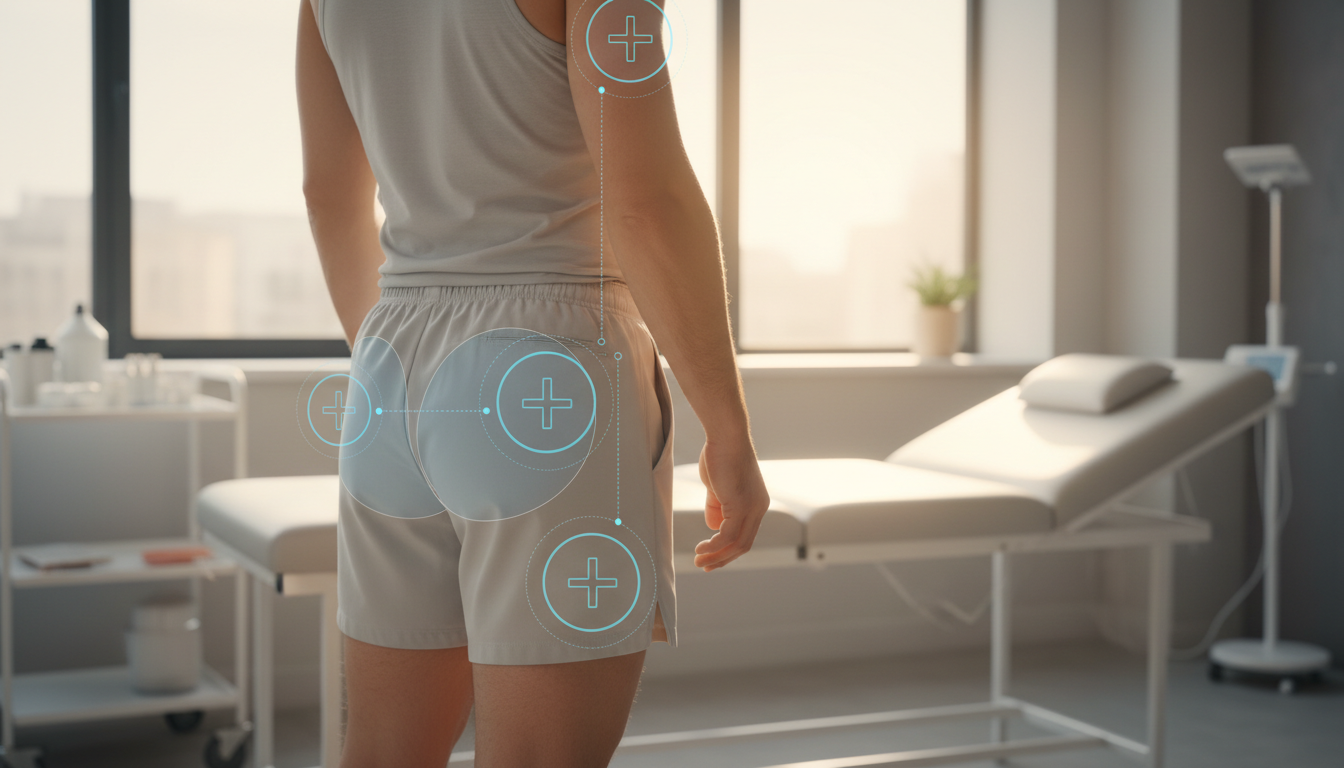
- Testosterone Injections: Often the preferred method for their effectiveness and predictable dosing. You'll likely discuss different esters, with the most common being testosterone cypionate vs testosterone enanthate. The half life of testosterone cypionate is around eight days, which typically means injections once or twice a week. Your provider will teach you where to inject testosterone cypionate, with common testosterone cypionate injection sites being the glutes, deltoids, and thighs. The testosterone injections needle size will depend on whether you are injecting into the muscle (intramuscular) or into fat (subcutaneous). Do not determine your own dose. Your provider will use a testosterone cypionate dosage chart as a guideline but will base your exact dose on your lab work and symptoms. You should also be mindful of the shelf life of testosterone cypionate to ensure your medication remains effective. Learn more at our complete guide on Testosterone Cypionate.
- Testosterone Creams and Gels: Using a testosterone cream for men is another popular option. These are applied daily to the skin. While convenient, they require careful application to avoid transferring the hormone to others. As noted earlier, monitoring levels with at-home kits can be unreliable for men using transdermal products.
3. Finding and Working with an Online Provider
In 2026, getting testosterone online is more accessible than ever through telehealth platforms. These services connect you with licensed physicians who specialize in hormone optimization. They manage your entire treatment, from initial consultation and lab work to prescribing medication and monitoring your progress. This process allows you to manage your health from the privacy of your home. You can learn more about finding the right doctor in our guide to online doctors that prescribe testosterone in the US.
So, Should You Buy an At Home Testosterone Testing Kit?
The primary keyword "at home testosterone testing kit" appears in this H2. After weighing the pros and cons, the question remains: is an at home testosterone testing kit a worthwhile purchase for you? The answer depends on your goals and expectations.
The main advantage is clear. It is a private, low-barrier first step for anyone experiencing symptoms of low T who wants data before engaging with the medical system. It can help you understand your baseline hormone levels conveniently. The cost, which can range from around $69 to over $200 according to Science in Health, is often less than an initial uninsured doctor's visit.
The disadvantages, however, are significant. The potential for inaccuracy is the biggest concern. As shown by data from TRTed.org, results from home kits can deviate substantially from clinical tests. A decision about your health should not be based on a potentially flawed number. Furthermore, these kits cannot be used for a formal diagnosis or for monitoring certain types of TRT, like gels or creams, as highlighted by the 2026 Frontiers review.
So, who are these kits for?
- A good fit for: Men experiencing symptoms like chronic fatigue, low libido, brain fog, or unexplained weight gain who want a preliminary, private screening. An at-home test can provide the motivation needed to seek professional medical advice.
- Not a good fit for: Anyone who needs a definitive medical diagnosis. They are also not suitable for men already on TRT who require accurate monitoring to ensure their treatment is safe and effective. If you are already on therapy, stick with the serum blood tests ordered by your doctor to see if TRT is working for you.
Think of an at home testosterone testing kit as step zero in your health optimization process. It is a tool for information gathering. Step one is, and always should be, consulting with a qualified medical provider to discuss your results and create a safe and effective plan.
Ready to take the next step and talk to a professional? Take our free 3-minute quiz to get matched with a licensed provider who can help you interpret your results and explore treatment options.
FAQs
How accurate is an at home testosterone testing kit? At-home testosterone kits are best used as screening tools, and their accuracy varies. Clinical lab tests, which have a deviation of under 20%, are the gold standard for diagnosis. Studies cited by TRTed.org show that home kit results can deviate significantly from clinical methods, sometimes by a large margin, due to user error and different testing technologies.
What is the best at home testosterone testing kit in 2026? The "best" kit depends on your needs. For a simple screening of total testosterone, a basic test may suffice. For a more detailed look at your hormone health, a comprehensive kit from a company like Numan, Zeuss, or LetsGetChecked is better. Always choose a kit that sends your sample to a CLIA-certified laboratory for analysis.
What do at-home testosterone tests measure? Basic kits typically only measure total testosterone. More advanced kits provide a full hormone panel, which can include total testosterone, free testosterone, SHBG (Sex Hormone Binding Globulin), albumin, estradiol, and other markers like PSA and LH. This provides a more complete picture of your hormonal status.
Can I get TRT based on an at-home test result? No. A legitimate medical provider will not prescribe testosterone replacement therapy based solely on the results of an at-home kit. They will require a confirmatory blood test from a certified clinical laboratory to make a formal diagnosis and determine if a prescription is appropriate.
Contributing to evidence-based peptide education and provider transparency.
Too many clinics, not enough clarity?
We don't sell peptides. Tell us your goals and we'll connect you with a vetted provider who can figure out what actually makes sense for you.
See what's right for youRelated articles
Which Protein Supplements for Muscle Growth Actually Work?
Tired of the hype? Find out which protein supplements for muscle growth are backed by science and learn how to pick the right one for your goals.
Hormone TherapyWhat Are the Real Magnesium Glycinate Benefits?
Uncover the science-backed magnesium glycinate benefits. We explore its effects on sleep, stress, and muscle function and explain why it's a top choice.
Hormone TherapyWhat B12 Shot Benefits Can You Actually Expect?
B12 shots are often hyped for energy, but the real b12 shot benefits are more specific. Learn who is a true candidate and what results to expect.