What B12 Shot Benefits Can You Actually Expect?
B12 shots are often hyped for energy, but the real b12 shot benefits are more specific. Learn who is a true candidate and what results to expect.

This content is for informational purposes only and does not constitute medical advice.
Vitamin B12 is one of the most talked-about vitamins, often promoted as a cure-all for fatigue. This has led many to explore the potential b12 shot benefits, hoping for a quick and effective energy boost. But is it really that simple? The facts are more specific. While B12 injections are a critical medical treatment for some, they aren’t a magic bullet for everyone. Understanding the real benefits of vitamin b12 is key to deciding if this therapy is a good fit for your health goals.
This guide will break down the science-backed benefits of B12 shots, who is most likely to need them, and how they compare to other forms of supplementation in 2026.
An Overview of Vitamin B12 and Why It Matters
Vitamin B12, also known as cobalamin, is an essential nutrient your body needs but cannot produce on its own. It plays a fundamental role in several critical bodily functions, including:
- Red Blood Cell Formation: B12 is necessary to create healthy red blood cells that carry oxygen throughout your body.
- Nerve Function: It helps maintain the protective sheath, known as myelin, that surrounds your nerves.
- DNA Synthesis: It is a key component in the creation and regulation of your DNA.
The recommended daily intake for most adults is 2.4 micrograms, a number that increases for women who are pregnant or lactating. Since B12 is found almost exclusively in animal products like meat, fish, eggs, and dairy, certain groups are at a higher risk of deficiency. According to MedicineNet, this includes vegans, vegetarians, the elderly, and individuals with gastrointestinal conditions that impair nutrient absorption.
When a deficiency occurs, it can lead to a wide range of health issues, from simple fatigue to irreversible nerve damage. This is where B12 supplementation, including injections, becomes a crucial part of a health strategy.
The Core B12 Shot Benefits for True Deficiency
For individuals with a diagnosed vitamin B12 deficiency, injections offer profound and medically necessary benefits. They work by delivering a high dose of B12 directly into the bloodstream, bypassing any potential absorption issues in the gut. Here are the primary b12 shot benefits for those who truly need them.
1. Corrects Anemia and Restores Energy
One of the most common signs of B12 deficiency is megaloblastic anemia. This condition occurs when your body can't produce enough healthy red blood cells. The ones it does produce are too large and function poorly, leading to symptoms like persistent fatigue, weakness, pale skin, and shortness of breath. B12 shots rapidly correct the underlying deficiency, allowing your body to resume normal red blood cell production. As your oxygen-carrying capacity improves, energy levels and stamina are restored.
2. Protects and Repairs the Nervous System
Perhaps the most critical benefit of B12 is its role in nerve health. It is essential for maintaining the myelin sheath that insulates your nerve fibers. Without enough B12, this sheath can degrade, leading to neurological symptoms like:
- Tingling or numbness in the hands and feet (peripheral neuropathy)
- Difficulty with balance and walking
- Memory loss and confusion
- Vision problems
Timely treatment is vital. Research cited by Liv Hospital indicates that B12 therapy started within three to six months of symptom onset can resolve peripheral neuropathy in 80% to 90% of patients. However, if treatment for severe conditions like subacute combined degeneration of the spinal cord is delayed for over six to twelve months, the nerve damage can become permanent.
3. Lowers High Homocysteine Levels
Homocysteine is an amino acid in the blood. High levels have been linked to an increased risk of heart disease, stroke, and other vascular problems. Vitamin B12, along with folate and B6, helps break down homocysteine and convert it into other substances your body needs. A meta-analysis published in Frontiers in Pharmacology confirmed that B12 supplementation, whether through injection or oral methods, is effective at reducing elevated homocysteine levels, which supports cardiovascular health.
If you're experiencing symptoms like persistent fatigue or nerve tingling, it's crucial to understand the cause. Our free Hormone Symptom Checker can be a useful starting point, but a proper diagnosis is essential. Not sure where to begin? Take our free quiz to get matched with a provider who can order the right tests and guide you.
4. Supports Cognitive Function and Mood
While research is ongoing, significant B12 deficiency is often associated with cognitive impairment, including "brain fog," memory issues, and difficulty concentrating. Some studies also suggest a link between low B12 levels and mood disorders like depression. By correcting the deficiency, B12 shots can help clear up these cognitive symptoms and contribute to better mental clarity and mood regulation. The b12 benefits for women, especially during periods of hormonal fluctuation like perimenopause, can be particularly noticeable as they may already be experiencing similar symptoms.

B12 for Energy: Fact vs. Fiction for Those Without Deficiency
Many wellness clinics and IV bars market B12 shots as a universal energy enhancer. The idea of getting a quick "energy shot" is appealing, but the science tells a different story. If you are not deficient in vitamin B12, an injection is unlikely to give you an energy boost.
Guidance from the UK's National Health Service (NHS), referenced by Bolt Pharmacy, states that B12 injections are prescribed for documented deficiency or malabsorption conditions, not for general wellness or fatigue in people with normal B12 levels. Their research review found no clinical evidence that B12 supplementation increases energy in non-deficient individuals.
Why is this? Vitamin B12 is not a stimulant like caffeine. Its "energy-boosting" effect comes from correcting a problem that causes fatigue, such as anemia. If your red blood cells are already healthy and your B12 levels are normal, adding more B12 won't make them work any better. Because B12 is a water-soluble vitamin, your body will simply pass any excess out through your urine. According to BodySpec, B12 has very low toxicity, so while it's unlikely to cause harm, it's also unlikely to provide the advertised benefit if you don't need it.
The energized feeling some people report after a wellness B12 shot could be due to the placebo effect. The act of doing something proactive for your health can itself make you feel better. While this feeling is real, it's not a direct physiological effect of the vitamin itself in a person with adequate B12 levels. To improve energy, it may be more effective to explore other avenues like optimizing your diet, improving sleep, or looking into supplements for muscle support like creatine supplements for muscle growth.
B12 Injections vs. Oral Supplements: Which Is Better in 2026?
For decades, injections were considered the gold standard for treating B12 deficiency. The logic was simple, injections bypass the digestive system, guaranteeing 100% absorption. This remains a crucial benefit for people with specific medical conditions that prevent them from absorbing B12 from food or pills. These conditions include pernicious anemia, Crohn's disease, or a history of gastric bypass surgery.
However, recent research has challenged the idea that injections are superior for everyone. Multiple large-scale studies now show that high-dose oral B12 supplements are just as effective as injections for most people.
A 2023 systematic review published in the Irish Journal of Medical Science analyzed data and found no statistically significant difference in effectiveness between intramuscular, oral, and sublingual B12 administration for raising vitamin levels. Another meta-analysis in Frontiers in Pharmacology came to a similar conclusion, calling oral and sublingual methods a promising and cost-effective alternative.
Furthermore, a pragmatic clinical trial in BMJ Open directly compared the two methods in patients over 65. The study found that oral B12 was no less effective than injections at normalizing B12 levels after eight weeks. A striking finding was that 83.4% of patients preferred taking a pill over receiving a shot.
Here’s a simple breakdown of when to consider each option:
-
When B12 Injections Are Best:
- For severe deficiency with neurological symptoms, where rapid correction is critical.
- For individuals with documented gastrointestinal malabsorption issues.
- When a provider determines that oral therapy is not working.
-
When Oral B12 Supplements Are a Great Choice:
- For mild-to-moderate deficiency without neurological symptoms.
- To correct a dietary shortfall, such as in vegan or vegetarian diets.
- For long-term maintenance after levels have been normalized.
- If you prefer a less invasive, more convenient, and more affordable option.
Deciding between injections and oral supplements depends on your specific health profile and B12 levels. It's a decision best made with a qualified medical provider. Want to find a specialist who understands hormone and vitamin optimization? Our free 3-minute quiz can match you with a vetted provider in your area.
What to Expect: B12 Shot Dosage, Schedule, and Side Effects
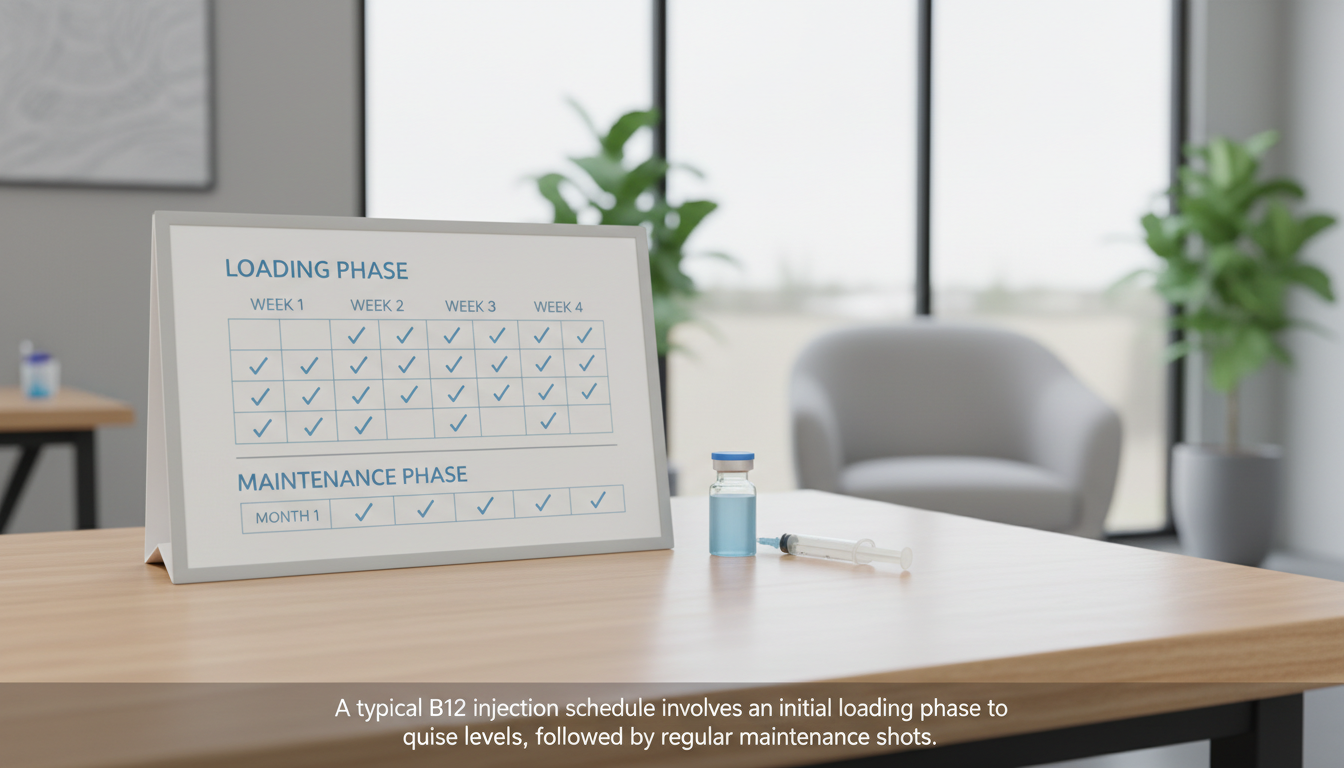
If you and your provider decide that B12 injections are the right path, the process is straightforward. Treatment typically follows a structured schedule to get your levels up and keep them there.
Dosage and Schedule
The protocol usually consists of two phases:
- Loading Phase: This involves a series of injections given close together to quickly replenish your body's B12 stores. BodySpec notes this phase can last from two to six weeks, with injections administered several times per week.
- Maintenance Phase: Once your levels are in a healthy range, the frequency of injections decreases. According to MedicineNet, this might mean one shot every one to three months. The exact schedule depends on the type of B12 used and the underlying cause of your deficiency.
Types of B12
You may encounter a few different forms of injectable B12:
- Cyanocobalamin: A stable, synthetic form that is widely used and cost-effective.
- Hydroxocobalamin: The standard form used in the UK and Europe. It is reported to remain in the body longer than cyanocobalamin, potentially allowing for less frequent injections.
- Methylcobalamin: An active form of B12 that is popular in wellness settings, though more research is needed to confirm its superiority over other forms for treating deficiency.
Side Effects
Vitamin B12 has very low toxicity because your body excretes what it doesn't need. Side effects from injections are generally mild and uncommon. According to BodySpec, the most frequent issues are related to the injection itself, such as:
- Soreness, redness, or itching at the injection site
- A mild feeling of swelling
Serious allergic reactions are rare but possible. You should seek immediate medical help if you experience hives, difficulty breathing, or swelling of your face, lips, or tongue after an injection. For more information on injection techniques, you can read our guide on intramuscular peptide injections.
Getting Started: Testing and Finding a Provider
The first step in any B12 therapy is not the treatment, but the diagnosis. Self-diagnosing a B12 deficiency based on symptoms like fatigue is unreliable, as many other conditions can cause similar issues. A proper diagnosis requires bloodwork.
A provider will typically order a serum vitamin B12 test. They may also test for levels of methylmalonic acid (MMA) and homocysteine. As noted by Liv Hospital, these markers can be more sensitive indicators of a functional B12 deficiency, even if serum B12 levels appear borderline normal.
Armed with these results, you can have an informed conversation with your provider about the underlying issues and the best path forward. Finding a provider who takes a proactive approach to vitamin and hormone optimization can make all the difference.
Ready to take control of your health and find out if B12 therapy is right for you? It starts with a conversation with a qualified professional. Take our free 3-minute quiz to get matched with a licensed provider who can guide you through testing and create a plan that works for you. You can also browse our directory of vetted clinics.
FAQs
How quickly do you feel the benefits of a B12 shot?
While vitamin B12 begins working in your system immediately, you may not feel the full health benefits for days or even weeks. It takes time for your body to produce new red blood cells and begin repairing nerve tissue, so improvements in energy and other symptoms are usually gradual.
Are B12 shots better than pills?
Not necessarily. For most people with mild to moderate B12 deficiency, high-dose oral pills (1,000–2,000 mcg) are just as effective as injections. Shots are generally reserved for severe deficiencies with neurological symptoms or for individuals with diagnosed intestinal conditions that prevent oral absorption.
What are the main b12 shot benefits for women?
The primary b12 shot benefits for women are correcting anemia, protecting nerve health, and supporting cognitive function. These benefits are especially relevant as women may be at higher risk of deficiency due to diet, the increased needs during pregnancy, or hormonal shifts like perimenopause that can cause overlapping symptoms.
Can you get a B12 shot without a deficiency?
Some wellness clinics offer them for general energy boosts, but major health organizations do not recommend this. Clinical evidence shows that B12 injections do not increase energy in people who already have normal levels. Your body will simply excrete what it doesn't use.
What is a typical B12 shot schedule?
A common schedule begins with a "loading phase," where you receive several injections over a few weeks to quickly raise your B12 levels. This is followed by a "maintenance phase," which typically involves one injection every one to three months to keep your levels stable.
Contributing to evidence-based peptide education and provider transparency.
Too many clinics, not enough clarity?
We don't sell peptides. Tell us your goals and we'll connect you with a vetted provider who can figure out what actually makes sense for you.
See what's right for youRelated articles
Which Protein Supplements for Muscle Growth Actually Work?
Tired of the hype? Find out which protein supplements for muscle growth are backed by science and learn how to pick the right one for your goals.
Hormone TherapyWhat Are the Real Magnesium Glycinate Benefits?
Uncover the science-backed magnesium glycinate benefits. We explore its effects on sleep, stress, and muscle function and explain why it's a top choice.
Hormone TherapyWhat's the Actual TRT Cost With Insurance in 2026?
Your TRT cost with insurance in 2026 depends on your plan & clinic. We show real-world price examples for injections, gels, and pellets so you know what to expect.