Which Protein Supplements for Muscle Growth Actually Work?
Tired of the hype? Find out which protein supplements for muscle growth are backed by science and learn how to pick the right one for your goals.

This content is for informational purposes only and does not constitute medical advice. Consult your doctor or a qualified healthcare provider before making any decisions about your health or treatment.
Walk into any supplement store, and you'll face a wall of colorful tubs all promising the same thing: more muscle. The supplement industry is now worth over $56 billion, but the science doesn't always match the marketing hype. When it comes to protein supplements for muscle growth, it's easy to waste money on products that don't deliver. This guide cuts through the noise. We'll break down what the latest 2026 research says, which types of protein are truly effective, and how to choose the right one for your body and your goals.
The Science of Protein and Muscle Growth
To understand supplements, you first need to understand the role of protein. When you lift weights or perform resistance exercise, you create tiny micro-tears in your muscle fibers. Your body then repairs these tears, building the muscle back bigger and stronger. This repair and growth process is called muscle protein synthesis (MPS).
Protein, made up of building blocks called amino acids, provides the raw material for MPS. Without enough protein, your body can't effectively repair and build muscle, no matter how hard you train.
So, how much do you need? For active individuals looking to build muscle, the science is clear. Research from top organizations consistently recommends a daily intake of 1.6 to 2.2 grams of protein per kilogram of your body weight (or about 0.7 to 1.0 grams per pound).
For a 180-pound (82 kg) person, that’s between 131 and 180 grams of protein per day.
Getting this much protein from whole foods like chicken, eggs, and beans is possible, but it can be challenging and expensive. This is where protein supplements for muscle growth become a practical tool to help you bridge the gap and consistently hit your daily target.
The Best Protein Supplements for Muscle Growth: A 2026 Breakdown
Not all protein powders are created equal. They differ in their source, digestion speed, and purity. Here’s a look at the most effective, evidence-backed options available in 2026.
Whey Protein: The Gold Standard
Whey is a milk-derived protein that is a byproduct of cheesemaking. It's popular for good reason. It’s rich in all nine essential amino acids, particularly leucine, which is a key trigger for muscle protein synthesis. A 2022 meta-analysis in the British Journal of Sports Medicine confirmed whey protein's effectiveness for increasing muscle mass and strength, especially when daily protein targets of at least 1.6 g/kg are met.
There are three main types of whey:
- Whey Concentrate: This is the most common and affordable type. It typically contains 70-80% protein, with the remainder being lactose (milk sugar) and fat. It’s a great choice for most people.
- Whey Isolate (WPI): This form is more filtered to remove most of the lactose and fat, resulting in a product that is 90% or more protein. According to PharmaForce, WPI has an exceptional Biological Value (BV) of 159, meaning your body can use it very efficiently. It’s ideal for those with mild lactose intolerance or anyone on a strict diet to minimize carbs and fat.
- Whey Hydrolysate: This whey is "pre-digested" into smaller peptides for the fastest possible absorption. While effective, it's also the most expensive and offers little extra benefit over isolate for most people.
A top-selling example like Optimum Nutrition Gold Standard Whey provides 24 grams of protein and 5.5 grams of naturally occurring BCAAs from a blend of isolate and concentrate. At about $0.88 to $1.37 per serving, it offers excellent value and is Informed Sport certified, meaning it’s tested for banned substances. Some common whey protein side effects include bloating or gas, which are usually due to the lactose in whey concentrate. Choosing an isolate can often resolve this.
Casein Protein: The Slow-Release Option
Casein is the other protein found in milk. Unlike whey, it digests very slowly, releasing amino acids into the bloodstream over several hours. This makes it an excellent choice to take before bed.
A landmark 2012 study found that consuming casein protein before sleep increased overnight muscle protein synthesis by 22%. By providing a steady stream of amino acids while you sleep, casein can help reduce muscle breakdown and support recovery.
Plant-Based Proteins: A Powerful Alternative
For years, many believed that plant-based proteins were inferior to animal-based sources for building muscle. However, the latest science tells a different story.
A major systematic review and meta-analysis of 18 trials, published in Frontiers in Nutrition on April 1, 2026, delivered a clear verdict. It found no statistically significant differences in lean body mass, muscle strength, or physical performance between adults using long-term plant-based protein supplements (mostly soy) and those using animal-based ones. The conclusion was that as long as you consume an adequate total amount of protein, the source is less critical for these outcomes.
Modern plant-based blends have also become much more sophisticated. For example, combining pea and rice protein in a 70:30 ratio can create a complete amino acid profile that rivals whey. Furthermore, new sources are emerging. A 2025 trial found that Vicia faba (fava bean) protein hydrolysate significantly increased leg strength and muscular endurance compared to a placebo.
Feeling overwhelmed by the options? Find out what's best for your personal goals. Take our free quiz to get matched with a provider who can guide you.

Beyond Protein Powder: What Else Works for Muscle Growth?
The supplement industry is flooded with products promising rapid gains. While most fall short, a few others stand alongside protein supplements for muscle growth as proven performers.
The A-List: Creatine & Other Proven Performers
Outside of protein, very few supplements have strong clinical backing. According to FitLabReviews, a science-based ranking platform, only a handful are considered "Tier 1."
- Creatine Monohydrate: This is the most studied and effective supplement for improving strength, power output, and muscle mass. It works by helping your body regenerate ATP, its primary energy currency, during short, intense bursts of effort. A daily dose of 3-5 grams is all you need.
- Caffeine: A proven ergonomic aid, caffeine can improve performance, reduce fatigue, and lower perceived effort. A dose of 3-6 mg per kg of bodyweight taken before a workout is effective.
- Beta-Alanine: This amino acid helps buffer acid in your muscles, delaying fatigue during sets lasting 1-4 minutes. The standard dose is 3.2-6.4 grams per day.
The BCAA Question: Are They Worth The Money?
Branched-Chain Amino Acids (BCAAs) are three essential amino acids: leucine, isoleucine, and valine. They are heavily marketed to promote muscle growth and reduce soreness. But what are the real BCAA benefits?
The science suggests that for most people, they are redundant. If your daily protein intake is sufficient, especially from a high-quality source like whey, you are already getting plenty of BCAAs. For instance, a single scoop of ON Gold Standard Whey contains 5.5 grams of BCAAs. FitLabReviews notes that robust clinical trials do not support taking extra BCAA supplements when protein intake is already adequate (at least 1.6 g/kg/day). You are better off spending that money on more protein powder or creatine.
Therapeutic Peptides: A Different Category
You may also hear about peptide supplements for weight loss or muscle growth. It is critical to understand that these are not dietary supplements like protein powder. Therapeutic peptides like CJC-1295/Ipamorelin or GLP-1 agonists like Semaglutide are powerful prescription compounds that can influence hormone levels and metabolism.
While some peptides show promise for improving body composition, they are used under medical supervision. If you're interested in learning how these advanced therapies work, you can explore our guides on peptide injections for muscle growth or how to find a legitimate peptide clinic. This is a completely different approach from grabbing a tub of protein at the store.
Optimizing your protein intake is just one piece of the puzzle. To see how hormone levels and other factors play a role a role in your health, take our free 3-minute quiz to connect with a specialist.
More Than Muscle: Protein's Role in Hair, Health, and Aging
While many focus on protein for building biceps, its benefits extend to your entire body.
Protein Supplements for Hair Growth
Your hair is made almost entirely of a protein called keratin. If you have a true protein deficiency, your body will ration protein by shifting hair from the growth phase to the resting phase, which can lead to shedding and thinning. In this case, increasing your protein intake with supplements can help restore normal hair growth. However, if your protein intake is already adequate, taking extra protein supplements for hair growth is unlikely to have an effect on male or female pattern baldness, which is primarily driven by genetics and hormones.
Protein's Impact on Women's Health and Body Composition
Protein is just as crucial for women as it is for men. A 2025 systematic review in Frontiers in Nutrition looked at healthy women who combined exercise with multi-ingredient protein supplements. The results were significant. They found that the women gained more fat-free mass (an average of 0.45 kg) and saw greater improvements in both muscle size and strength.
The benefits were even more pronounced for older women, those who were overweight, and in programs lasting over 12 weeks. This highlights protein's importance for maintaining muscle and a healthy metabolism at every stage of life.
Combating Age-Related Muscle Loss
As we get older, we naturally lose muscle mass and strength, a condition known as sarcopenia. This can reduce mobility and increase the risk of falls and injury. Maintaining a higher protein intake, combined with resistance training, is one of the most effective strategies to combat sarcopenia and support healthy aging. For more on this topic, see our guide on the best aging supplements.
Your 2026 Action Plan: What to Consider Before You Buy
Ready to choose a protein supplement? Here’s a simple checklist to guide your decision.
- Calculate Your Needs First: Before you buy anything, figure out your daily protein target (1.6 to 2.2 g per kg of body weight). Use a tool like our online protein calculator to get a personalized number. This will tell you how much of a "gap" you need to fill with a supplement.
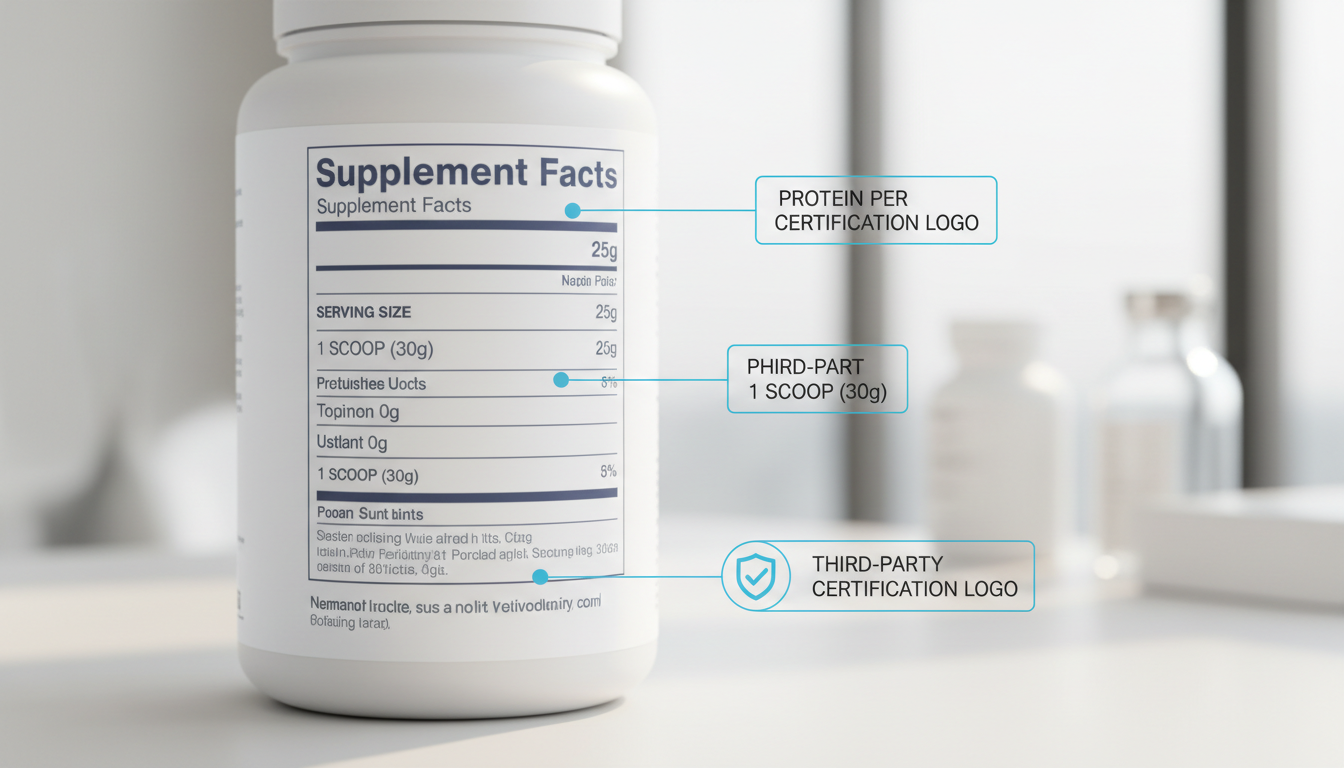
- Read the Label: Look for a few key things on the supplement facts panel. How much protein is in each serving? A good target is 20-30 grams. Check for added sugars or fillers that you don't need.
- Look for Third-Party Certification: Labels like NSF Certified for Sport or Informed Sport mean the product has been independently tested to verify that it contains what it claims to and is free of banned substances. This is a crucial mark of quality control.
- Evaluate Cost vs. Value: Don't just look at the price of the tub. Calculate the cost per serving. A cheaper powder might require two scoops to get the same amount of protein as one scoop of a higher-quality one. A whey isolate might cost more per gram, but it's worth it if you're sensitive to lactose.
Ready to take the next step in your health optimization? Take our free 3-minute quiz to get matched with a licensed provider who can create a plan for your specific goals.
FAQs
How much protein do I need for muscle growth?
For optimal muscle gain, scientific consensus recommends a daily intake of 1.6 to 2.2 grams of protein per kilogram of body weight (about 0.7 to 1.0 grams per pound).
Are plant-based protein supplements as good as whey for building muscle?
Yes. A major 2026 meta-analysis found no significant difference in muscle gain or strength between people using plant-based and animal-based protein supplements, as long as their total daily protein intake was sufficient.
Do I need to take extra BCAAs if I drink whey protein?
Probably not. A single serving of quality whey protein typically contains 5-6 grams of naturally occurring BCAAs. Research shows that if your total protein intake is high enough, additional BCAA supplementation offers no extra muscle-building benefit.
What are the side effects of whey protein?
The most common side effects are digestive, including bloating, gas, and stomach cramps. These are typically caused by lactose in whey concentrate. Switching to a whey isolate, which is virtually lactose-free, often resolves these issues.
When is the best time to take a protein shake?
While many people drink a shake immediately post-workout, research shows that your total daily protein intake is far more important than precise timing. The "anabolic window" is much wider than once thought. Simply focus on hitting your daily protein goal consistently.
Contributing to evidence-based peptide education and provider transparency.
Too many clinics, not enough clarity?
We don't sell peptides. Tell us your goals and we'll connect you with a vetted provider who can figure out what actually makes sense for you.
See what's right for youRelated articles
What Are the Real Magnesium Glycinate Benefits?
Uncover the science-backed magnesium glycinate benefits. We explore its effects on sleep, stress, and muscle function and explain why it's a top choice.
Hormone TherapyWhat B12 Shot Benefits Can You Actually Expect?
B12 shots are often hyped for energy, but the real b12 shot benefits are more specific. Learn who is a true candidate and what results to expect.
Hormone TherapyWhat's the Actual TRT Cost With Insurance in 2026?
Your TRT cost with insurance in 2026 depends on your plan & clinic. We show real-world price examples for injections, gels, and pellets so you know what to expect.