What Are the Actual Collagen Peptides Benefits?
Everyone's talking about collagen peptides benefits. We look past the marketing hype to review the real effects on your skin, joints, hair, and more.

This content is for informational purposes only and does not constitute medical advice. Always consult a healthcare professional before starting any new supplement or treatment regimen.
From skincare shelves to supplement aisles, collagen seems to be everywhere you look. But what does it actually do? The interest in collagen peptides benefits has exploded in recent years, and for good reason. With the global market for collagen peptides reaching $6 billion in 2025 and projected to hit $7.5 billion by 2030, it's clear that consumers are seeing real value (PeptideBond.com). This guide will break down what the science says in 2026 about how these powerful protein fragments can support your health.
An Introduction to Collagen and Its Benefits
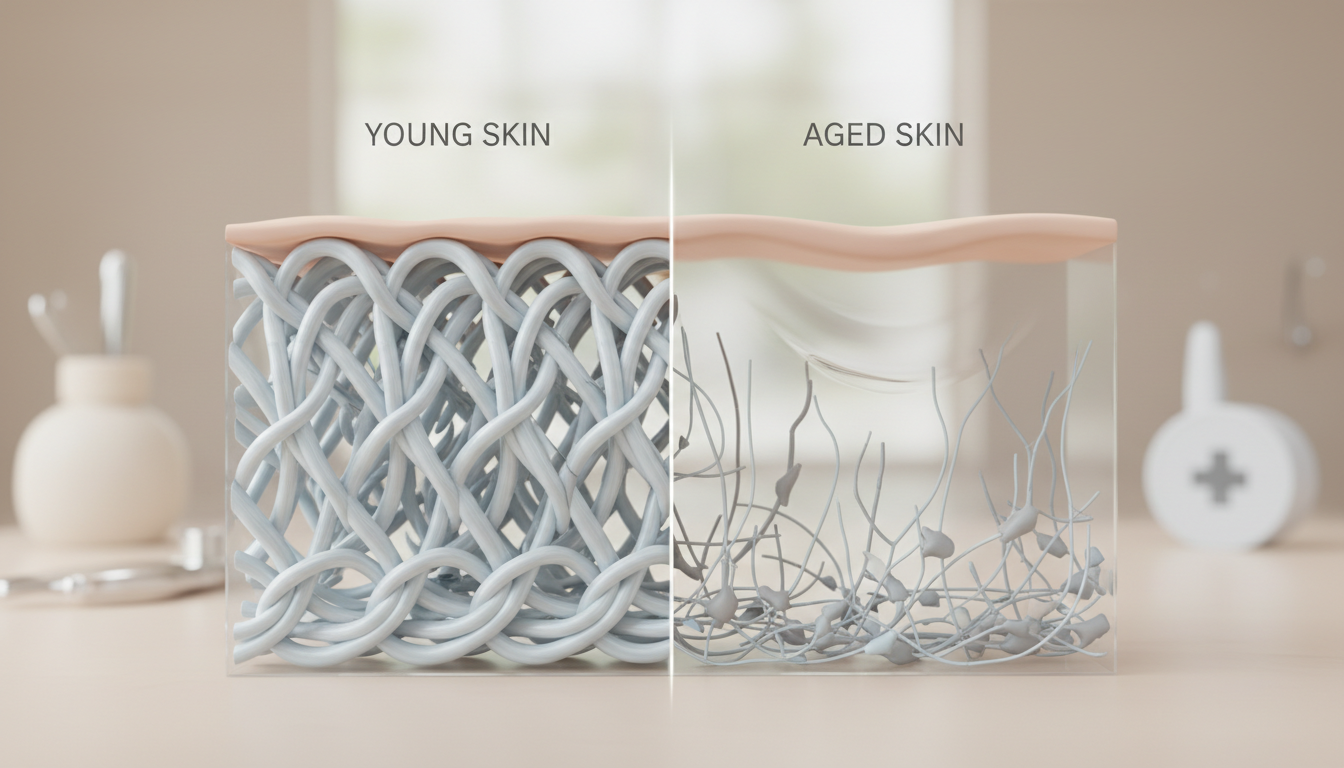
Collagen is the most abundant protein in your body, acting as the primary building block for your skin, bones, muscles, tendons, and ligaments. Think of it as the "glue" that holds everything together. As we age, our natural collagen production declines, leading to common signs of aging like wrinkles and joint stiffness.
Collagen peptides are a special form of collagen. They are created by breaking down full-length collagen molecules into smaller, more easily absorbed chains of amino acids. This process, called hydrolysis, makes them highly bioavailable. Studies show that these small peptide fragments can be detected in the bloodstream within an hour after you take them, ready to be used by the body (eu.vidaglow.com).
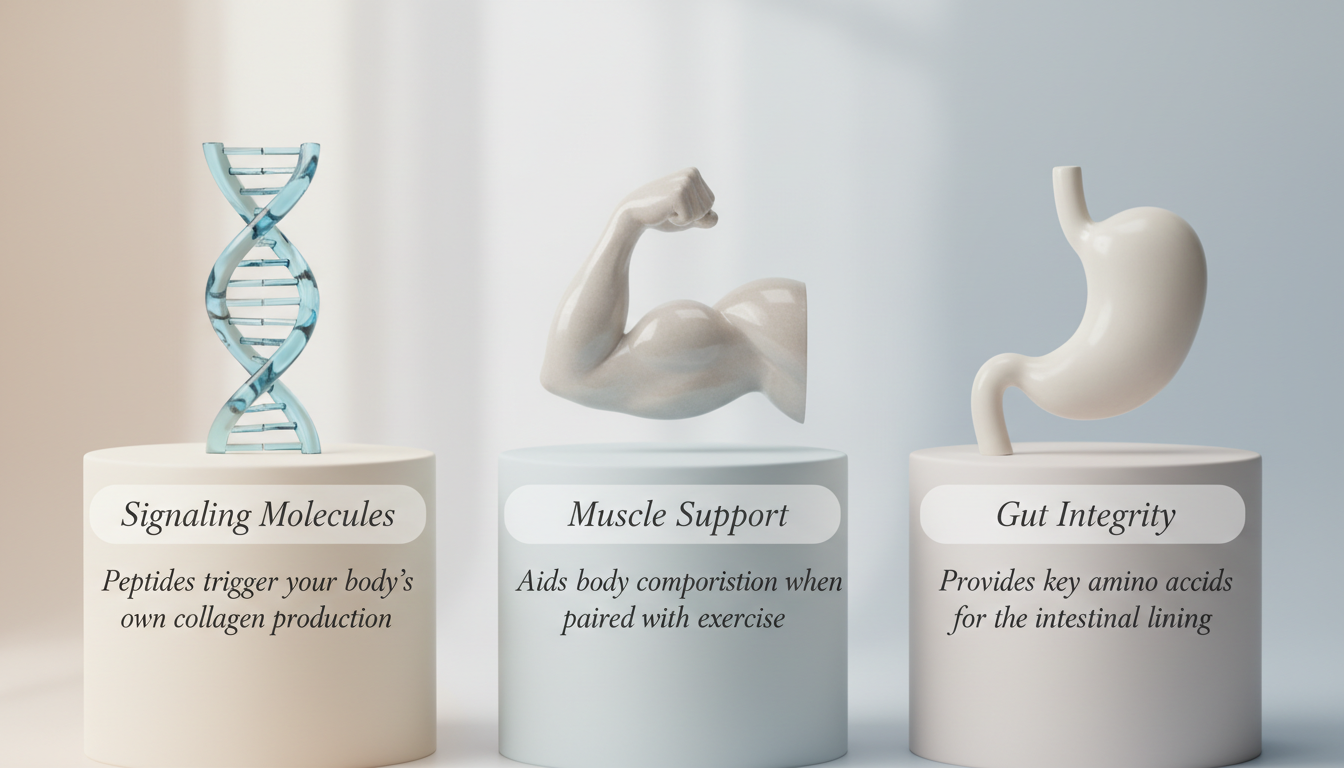
Unlike simply eating collagen-rich foods, these peptides do more than just provide raw materials. Research from PeptideBond.com highlights that specific peptides, like proline-hydroxyproline (Pro-Hyp), act as signaling molecules. They actively stimulate your cells, particularly fibroblasts, to produce more of your own collagen, elastin, and hyaluronic acid.
Due to their strong safety profile and decades of use, collagen peptides have achieved Generally Recognized as Safe (GRAS) status from the FDA in the United States and are approved as a Novel Food ingredient in the European Union (PeptideBond.com). This makes them a trusted addition to many health and wellness routines.
Collagen Peptides Benefits for Skin, Hair, and Nails
One of the most researched and sought-after collagen peptides benefits is their impact on skin health. As our natural collagen factories slow down, the skin's structural integrity weakens, resulting in fine lines, wrinkles, and loss of firmness. Supplementing with collagen peptides can help counteract this process from the inside out.
The evidence is strong and consistent. Multiple clinical trials reviewed by HealthHighroad.com and GLP-1.science show that taking collagen peptides for 8 to 12 weeks can lead to significant improvements in skin elasticity, hydration, and the depth of wrinkles. A 2023 study published in the Journal of Cosmetic Dermatology found that participants taking a fish-derived collagen peptide supplement saw measurable improvements in wrinkles, elasticity, and even skin tone after just three months.
So how much do you need to see these effects? According to a March 2026 review in Food, Nutrition and Health, doses between 2.5 and 5 grams per day are consistently effective for skin improvements. The review pointed out that higher doses don't necessarily lead to better results for skin, and that topical collagen creams are generally less effective due to the large size of the molecules, which prevents them from penetrating the skin's surface.
Beyond just structure, emerging research suggests collagen peptides may also offer protective qualities. A 2026 article in Food, Nutrition and Health highlighted their potential antioxidant properties, which could help defend the skin against damage from UV radiation. This adds another layer to the benefits of collagen for maintaining a youthful appearance. For those interested in other compounds with similar protective effects, learning about antioxidant peptides could be a great next step.
While many users report stronger hair and faster-growing nails, the clinical evidence for these specific benefits is still developing and is not as extensive as the data for skin and joints (HealthHighroad.com).
Feeling overwhelmed by all the options for improving your skin and overall health? It can be tough to know where to start. Take our free 3-minute quiz to get matched with a provider who can help you understand what treatments align with your specific goals.
Exploring Collagen Peptides Benefits for Joints and Bones
While radiant skin gets much of the attention, the support collagen provides for our joints and bones is just as critical for long-term health and mobility. Cartilage, the flexible tissue that cushions your joints, is largely made of collagen. A decline in collagen can lead to discomfort, stiffness, and reduced function.
The good news is that clinical trials have well-documented the ability of collagen peptide supplementation to reduce joint pain (HealthHighroad.com). For these joint-related benefits, studies typically use a dose of around 10 grams of hydrolyzed collagen per day.
A specific form of collagen, known as native or undenatured type II collagen (UC-II), has shown remarkable results for joint health. A groundbreaking randomized, double-blind, placebo-controlled study published in March 2026 investigated its effects. Researchers found that taking just 40 mg of UC-II daily for 180 days significantly improved joint function, reduced pain, and enhanced quality of life in healthy individuals who experienced joint discomfort from physical activity.
Interestingly, this 2026 study also measured a biomarker called CTX-II, which indicates cartilage breakdown. In participants who started with higher levels of joint discomfort, the group taking UC-II saw a decrease in this marker, while the placebo group saw an increase. This suggests that this specific type of collagen may help protect cartilage from further degradation (Nutrition Journal). If you're exploring options for recovery and repair, you might also be interested in comparing other compounds like BPC-157 vs. TB-500 for their restorative properties.
For bone health, collagen provides the framework that minerals like calcium adhere to. While some studies suggest collagen supplementation can help support bone density, the evidence is still considered promising but less definitive than it is for skin and joints (HealthHighroad.com).
Beyond Skin and Joints: Muscle, Gut, and How It All Works
The mechanisms behind collagen peptides benefits are more sophisticated than you might think. It's not just about providing the body with spare parts. As mentioned earlier, ingested peptides act as powerful signaling molecules that kickstart your body’s own regenerative processes.
Body Composition and Muscle Growth
Collagen is a protein, and protein is essential for muscle. While it's not a complete protein like whey, it contains a high concentration of amino acids like glycine, proline, and arginine. Research cited by GLP-1.science has found that collagen supplementation can improve body composition, especially when paired with a resistance training program. The amino acids in collagen support the connective tissues within and around muscles, which is crucial for strength and recovery. This makes it a great addition to a protocol focused on building strength. To understand the bigger picture, it's helpful to learn how protein and muscle growth actually work.
Gut Health Support
The connection between collagen and gut health is another area of growing interest. The lining of your intestinal tract is a single layer of cells held together by "tight junctions." Collagen is rich in amino acids like glutamine and glycine, which are vital fuels for the cells of the gut lining. While more direct research is needed, the theoretical glutamine benefits derived from collagen could support the integrity of the gut barrier. A healthy gut lining is essential for proper nutrient absorption and immune function.
Marine vs. Bovine and Bioavailability
The source of collagen can also influence its effectiveness. Marine collagen, derived from fish, is primarily Type I collagen and is noted for its superior bioavailability. Because its particles are smaller, the body may absorb and utilize them more efficiently (eu.vidaglow.com). Bovine collagen, from cows, is rich in both Type I and Type III collagen, making it a great all-around choice for skin, bones, and joints.
Understanding which supplements work together can be tricky. Want to see which options fit your budget and goals? Our free quiz takes 3 minutes and matches you with vetted providers who can offer guidance based on your health profile.
Maximizing Results: Stacking Collagen with Other Key Nutrients
Taking collagen peptides on their own is effective, but you can enhance their benefits by combining them with other key nutrients that support the same biological pathways.
-
Vitamin C: This is the most important co-factor for collagen. Your body cannot synthesize collagen without it. As noted by both HealthHighroad.com and Frontiers in Nutrition, ensuring adequate vitamin C intake is critical for getting the most out of your supplement. Many collagen powders now include vitamin C in their formulas for this exact reason.
-
L-Citrulline: The primary l-citrulline benefits come from its ability to increase nitric oxide levels in the body. Nitric oxide helps relax blood vessels, improving blood flow. Better circulation means more efficient delivery of oxygen and nutrients, including those valuable collagen peptides, to your skin, joints, and muscles. This creates a powerful synergistic effect.
-
Flaxseed: The benefits of flaxseed are largely due to their high content of alpha-linolenic acid (ALA), a plant-based omega-3 fatty acid. Omega-3s are well-known for their anti-inflammatory properties. Since chronic inflammation can accelerate skin aging and contribute to joint pain, adding flaxseed to a smoothie with your collagen can help tackle the problem from another angle.
-
Vitamin B12: The primary b12 benefits relate to its essential role in red blood cell formation, energy metabolism, and DNA synthesis. Healthy cell turnover is the foundation of skin regeneration and repair. By supporting this fundamental process, Vitamin B12 helps ensure your body can effectively use the signals from collagen peptides to build new, healthy tissue.
By strategically combining these nutrients, you create a more supportive environment for your body to repair tissues and build new collagen. This approach aligns with a comprehensive strategy for anti-aging peptide therapy.
What to Consider When Choosing a Collagen Supplement
Navigating the supplement market can be confusing. Here’s what to look for to ensure you’re choosing a high-quality and effective collagen product.
Type of Collagen:
- Type I: The most abundant in the body. Found in skin, tendons, and bones. This is the main type for skin health.
- Type II: The main component of cartilage. The best choice for joint-specific support, especially in its undenatured form (UC-II).
- Type III: Found alongside Type I in skin, muscles, and blood vessels.
Most general-purpose supplements contain a mix of Type I and III, usually sourced from bovine (cow) or marine (fish) origins.
Source and Form: As mentioned, marine collagen may offer slightly better absorption, while bovine collagen provides a great blend of Type I and III. The most important factor is the form. Look for hydrolyzed collagen or collagen peptides. This means the protein is already broken down for easy absorption. The exception is for joint-specific formulas, where undenatured type II collagen at a 40 mg dose is backed by strong science.
Purity and Safety: Look for products from reputable brands that engage in third-party testing to ensure their products are free from heavy metals and other contaminants. While a March 2026 review mentioned potential risks of contamination and allergies with any supplement (News-Medical.net), collagen from trusted sources has an excellent safety record. If you need help finding a trustworthy source, working with a specialized clinic can be beneficial. You can search for peptide clinics near you to find qualified professionals.
FAQs
How long does it take for collagen peptides to work? For skin benefits like improved hydration and elasticity, most clinical studies show measurable results after 8 to 12 weeks of consistent daily use. Joint benefits may also be noticed within a similar timeframe, though some studies extend to 180 days for maximum effect.
What is the best dose for collagen peptides benefits? For general skin health, doses of 2.5 to 10 grams of hydrolyzed collagen per day are effective. For joint support, 10 grams is a common dose. If using undenatured type II collagen (UC-II) specifically for joints, the clinically effective dose is just 40 milligrams per day.
Can I get enough collagen from food alone? While foods like bone broth, chicken skin, and certain cuts of meat contain collagen, it's in its full-length, less bioavailable form. Collagen peptides are specifically processed for optimal absorption and to provide a concentrated, targeted dose that is difficult to achieve through diet alone.
Are there any side effects of taking collagen? Collagen peptides are widely considered safe with a very low risk of side effects. A small number of people may experience mild digestive symptoms like bloating or a feeling of fullness. Choosing a high-purity product from a reputable source minimizes any risk of contamination.
Does topical collagen cream work? Generally, topical collagen is not effective for increasing collagen levels in the skin. The collagen molecule is too large to penetrate the skin's outer layer. Oral collagen peptides work from within by providing signaling molecules that prompt your body to produce its own collagen.
Ready to explore your options for optimizing your health? Take our free 3-minute quiz to get matched with a licensed provider who can help you build a plan that works for you.
Contributing to evidence-based peptide education and provider transparency.
Too many clinics, not enough clarity?
We don't sell peptides. Tell us your goals and we'll connect you with a vetted provider who can figure out what actually makes sense for you.
See what's right for youRelated articles
What Does Sermorelin Before And After Face Look Like?
See a real sermorelin before and after face timeline. We break down the changes you can expect in skin quality, fine lines, and texture week by week.
Anti-AgingWhat Are the Science-Backed GHK-Cu Peptide Benefits?
Curious about GHK-Cu? We explore the science-backed ghk-cu peptide benefits for skin repair, hair growth, and anti-aging. Learn how it works & more.
Anti-AgingWhat GHK Cu Peptide Before and After Pictures Really Show
Don't just look at ghk cu peptide before and after pictures. Understand the realistic timeline for results on wrinkles, scars, and hair growth.