Why Scientists Are Excited About Antioxidant Peptides
Curious about antioxidant peptides? We break down how these molecules fight free radicals, protect cells from damage, and support long-term health.
This content is for informational purposes only and does not constitute medical advice.
Our bodies are in a constant battle against cellular damage. A key contributor to this damage is oxidative stress, which happens when there's an imbalance between free radicals and the antioxidants that neutralize them. This process is linked to aging, inflammation, and various health issues. While a healthy diet provides many antioxidants, researchers are now focusing on a specific class of molecules with powerful protective properties: antioxidant peptides. These small but mighty protein fragments are emerging as a significant area of interest in both cosmetic science and therapeutic medicine for their ability to directly combat oxidative damage at a cellular level.
What Are Antioxidant Peptides?
Antioxidant peptides are short chains of amino acids that can reduce or prevent cellular damage caused by unstable molecules called free radicals. These peptides work by neutralizing these harmful molecules, protecting cells, proteins, and DNA from oxidative stress, a key factor in aging and disease.
Unlike broader antioxidants like Vitamin C, antioxidant peptides are specific sequences of amino acids that can be derived from natural food sources or synthesized in a lab. They are essentially small pieces of protein, typically containing between two and 20 amino acids. A 2025 review highlighted that byproducts from the fishing industry, like carp, are becoming a sustainable source for these valuable compounds (Carp-Derived Antioxidant Peptides and Hydrolysates, 2025).
The field is advancing rapidly. In March 2026, scientists identified a novel antioxidant peptide called LMPH-PII from the mucus of loaches, an underused protein source (Fractionation, identification and antioxidant activity..., 2026). In the same month, another research team successfully isolated three new peptides (DYPF, WDY, and FGYK) from black-bone chicken bones, turning a poultry byproduct into a potential bioactive ingredient (From Waste to Bioactive Ingredient..., 2026). These discoveries show the vast, untapped potential of finding powerful antioxidant peptides in a variety of natural sources.
How Do Antioxidant Peptides Work?
The primary job of antioxidant peptides is to counter oxidative stress. They achieve this through several distinct biological mechanisms, making them versatile protectors of cellular health. The specific actions can vary depending on the peptide's amino acid sequence and structure.
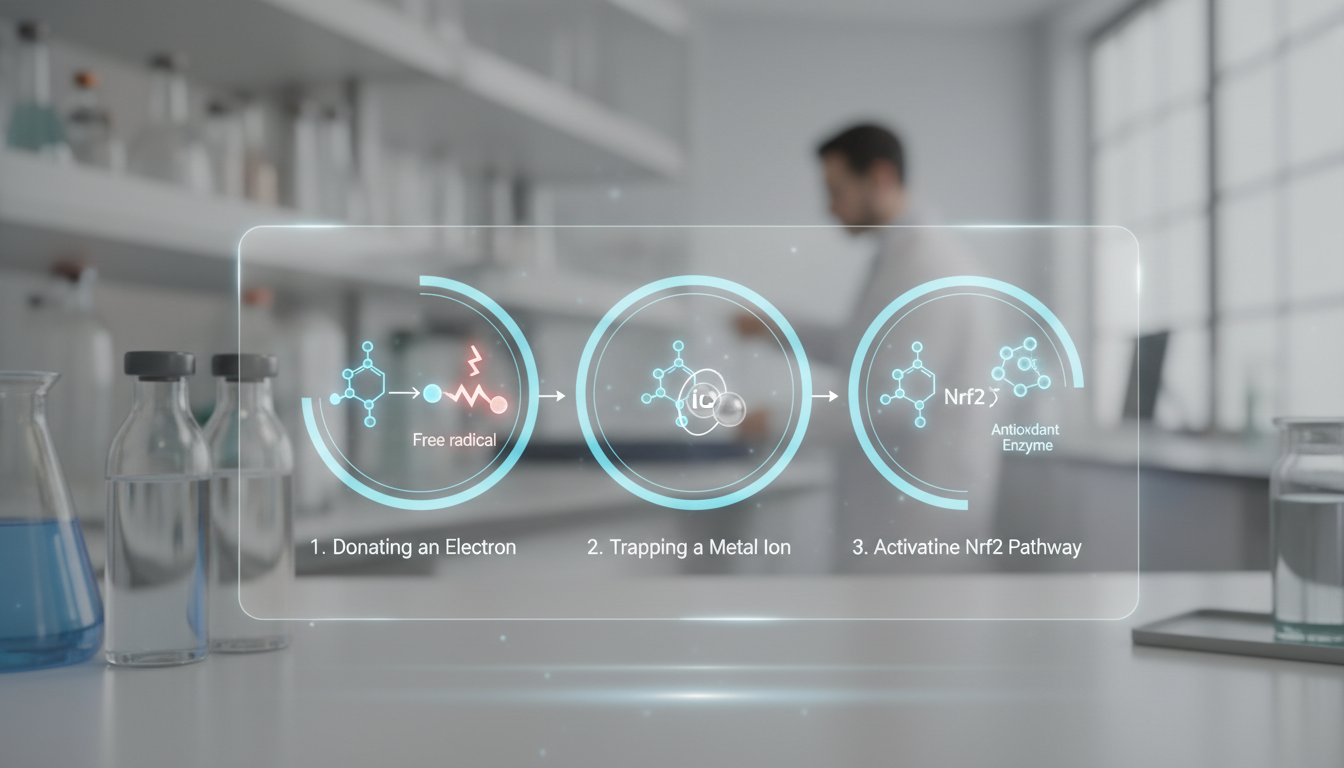
First, they act as direct free radical scavengers. Free radicals are highly reactive molecules with an unpaired electron, causing them to steal electrons from other molecules in a damaging chain reaction. Antioxidant peptides can directly donate an electron to a free radical, which stabilizes it and halts the destructive cascade. A March 2026 study on a new peptide from loach mucus, LMPH-PII, quantified this effect. At a concentration of just 1 mg/mL, it showed a 44.65% scavenging activity against DPPH radicals and a 34.12% activity against hydroxyl radicals, two of the most common and damaging free radicals (Fractionation, identification and antioxidant activity..., 2026).
Second, some peptides perform metal ion chelation. Certain metal ions, like iron and copper, can act as catalysts in reactions that produce free radicals. By binding to these metal ions, a process called chelation, peptides can effectively inactivate them and prevent them from fueling oxidative stress. Computational research from late 2025 used machine-learning models to predict the antioxidant potential of different peptides, with metal chelation (CHEL) being a key predictive score (Antioxidant Peptides in Focus..., 2025).
Third, and perhaps most interestingly, some antioxidant peptides can stimulate the body’s own defense systems. Instead of just acting directly, they can trigger internal pathways designed to fight oxidative stress. Research published in March 2026 on peptides from chicken bones found that they likely work by interacting with the Keap1-Nrf2-ARE pathway. This pathway is a master regulator of the body's antioxidant response, and activating it leads to the production of our own protective enzymes like superoxide dismutase (SOD) and glutathione peroxidase (GSH-Px).
Not sure which peptide or therapy aligns with your health goals? It can be a complex field to explore on your own. Take our free quiz to get matched with a provider who can help you understand your options.
Benefits of Antioxidant Peptides (Evidence-Based)
The unique mechanisms of antioxidant peptides translate into several promising, evidence-backed benefits for both aesthetic and overall health. From rejuvenating skin to protecting internal organs, the research highlights their potential.
Reducing Skin Aging and Improving Skin Health
Oxidative stress is a primary driver of visible skin aging. It breaks down collagen, damages elastin, and contributes to wrinkles, fine lines, and loss of firmness. Antioxidant peptides can protect the skin from this damage, particularly from environmental aggressors like UV radiation and pollution.
One of the most studied antioxidant peptides in skincare is GHK-Cu (copper peptide). A comprehensive 2026 review of recent clinical trials provides compelling data. One study involving 60 women found that using a 0.1% GHK-Cu cream for 12 weeks reduced the appearance of wrinkles by 31% and improved skin elasticity by 28%. Another study showed that a 0.5% GHK-Cu gel applied to post-surgical patients reduced scar volume by an impressive 35% after three months (GHK-Cu Copper Peptide 2026 Review, 2026). These findings suggest GHK-Cu not only has anti-aging effects but also supports the skin's natural repair processes. If you're looking for ways to improve skin firmness, you may want to explore our guide on the best injectable peptides for skin tightening.
Supporting Cellular Health and Organ Function
The protective effects of antioxidant peptides extend beyond the skin. By reducing systemic oxidative stress, they can help protect cells and tissues throughout the body. Chronic oxidative stress is implicated in the functional decline of major organs over time.
A compelling 2026 study investigated the in vivo effects of peptides derived from Douchi, a type of fermented soybean. When administered to immunosuppressed mice, the Douchi peptides led to significant improvements in organ health, specifically for the liver, kidneys, and spleen. The researchers observed that the peptides boosted the levels of the body's own powerful antioxidant enzymes, SOD and GSH-Px, while lowering levels of malondialdehyde (MDA), a key marker of oxidative damage (Purification, structural identification and in vivo antioxidant activity..., 2026). This demonstrates that certain peptides can offer systemic protection and support the health of vital organs. Considering a broader strategy for healthy aging? Our guide on which aging supplements are actually worth it can provide additional context.
Enhancing Wound Healing
Proper wound healing is a complex process that can be impaired by inflammation and oxidative stress. Antioxidant peptides can support this process by creating a more favorable environment for tissue repair. As mentioned, GHK-Cu has shown a clear ability to reduce scar volume, indicating it helps regulate the formation of new tissue.
A 2025 review on peptides from carp also noted that wound-healing properties are one of their key demonstrated bioactivities (Carp-Derived Antioxidant Peptides and Hydrolysates, 2025). By reducing local oxidative stress and inflammation at the wound site, these peptides may help accelerate repair and lead to better cosmetic outcomes. This ability to aid tissue regeneration is a common feature among reparative peptides, such as those discussed in our guide to BPC-157 injections.
Risks and Side Effects of Antioxidant Peptides
While the benefits are promising, it's essential to approach antioxidant peptides with an understanding of the potential risks and side effects. The safety profile largely depends on the specific peptide, its source, its purity, and how it is administered.
For topical applications, the risk is generally low. The 2026 review of GHK-Cu, which analyzed data from 12 studies with nearly 900 participants, found side effects to be mild and localized. The most common were mild erythema (redness), reported by 4.2% of users, and pruritus (itching), reported by 2.1%. Importantly, there was no evidence of systemic copper overload, a theoretical concern with copper peptides. The review did note, however, that long-term safety data beyond one year of use is still limited (GHK-Cu Copper Peptide 2026 Review, 2026).
For ingested or injectable peptides, the risk profile is more complex. The peptides sourced from food byproducts like Douchi, carp, or chicken bones are still in the early stages of research. Their safety for human consumption as concentrated supplements or therapeutics has not been fully established.
A significant risk comes from the source of the peptides. The market for peptides is not uniformly regulated. Sourcing from unvetted online suppliers can expose you to products that are contaminated, impure, or incorrectly dosed. This can lead to unexpected side effects or a complete lack of efficacy. It is crucial to only use peptides obtained through a licensed medical provider and a reputable compounding pharmacy. For a balanced view, consider reading about the general pros and cons of peptide injections.
As with any therapeutic agent, you should always consult with a qualified healthcare provider before starting any new treatment. They can assess your individual health status and help you weigh the potential benefits against the risks.
Want to see which options fit your health goals and budget? Our free quiz takes 3 minutes and matches you with vetted providers who can offer personalized guidance.

How to Get Started and How It's Administered
Accessing antioxidant peptides depends on their classification and intended use. The methods of administration vary widely, from simple over-the-counter products to medically supervised therapies.
1. Topical Application: This is the most common and accessible method. Peptides like GHK-Cu are widely available in cosmetic serums, creams, and gels. You can purchase these products from skincare brands and retailers. They are applied directly to the skin to target concerns like wrinkles, elasticity, and scarring.
2. Dietary Sources and Supplements: Many of the newly discovered antioxidant peptides come from food sources. While you get some benefit from eating foods rich in these peptides (like those made from fermented soy, fish, or bone broth), their concentration is low. Some companies are developing functional foods or nutraceuticals that contain higher concentrations of these protein hydrolysates. These are typically sold as dietary supplements.
3. Injectable Therapy: For systemic effects or higher bioavailability, some peptides are administered via subcutaneous or intramuscular injections. This method bypasses the digestive system, delivering the peptide directly into the bloodstream. Injectable peptides are considered medications and should only be used under the guidance of a medical professional. A doctor can determine the appropriate peptide and dosage for your needs and prescribe it through a legitimate source, such as a specialty or compounding pharmacy. If you are considering this route, it's important to find a legitimate peptide clinic to ensure safety and proper medical supervision. For more information on the process, you can read our guide on how to get peptides.
Regardless of the method, the first step should always be a conversation with a healthcare provider. They can help you determine if peptide therapy is a suitable option for your health goals.
Legal Status and FDA Approval
The regulatory landscape for peptides in the United States is complex and often confusing. A peptide's legal status depends entirely on how it is classified and marketed.
Most antioxidant peptides discussed in recent research, like those from loach mucus or chicken bones, are currently for research purposes only. They are not available for sale as consumer products or approved medical treatments.
Peptides used in cosmetics, such as GHK-Cu, have a different status. The 2026 review on GHK-Cu clearly states that it is classified primarily as a cosmetic ingredient. It does not have any FDA-approved prescription formulations for any medical condition. This means companies can legally include it in skincare products, but they cannot make medical claims about its ability to treat, cure, or prevent a disease.
When a doctor prescribes a peptide for therapeutic use, it is often considered "off-label." This is a common and legal practice where a physician prescribes a drug or compound for a purpose other than what it was officially approved for by the FDA. Many peptide therapies, including those for anti-aging or tissue repair, fall into this category. These prescriptions are typically filled by specialized compounding pharmacies that create the specific formulations for patients.
In summary, very few peptides have formal FDA approval as prescription drugs. Most exist in a gray area as cosmetic ingredients, supplements, or compounds for off-label medical use. This regulatory environment underscores the importance of working with a knowledgeable peptide doctor who can navigate the complexities and ensure you are receiving a safe and legitimate product.
Ready to explore your options with a professional? Take our free 3-minute quiz to get matched with a licensed provider who can help design a plan for you.
FAQs
What are the best antioxidant peptides?
The "best" antioxidant peptide depends on your goal. For cosmetic skin concerns like wrinkles and skin firming, GHK-Cu is one of the most well-researched with strong clinical data supporting its efficacy. For systemic or internal health benefits, many peptides are still in the investigational stage, such as those derived from Douchi or animal byproducts, and are not yet available as mainstream treatments.
Are antioxidant peptides safe?
When used appropriately, many antioxidant peptides have a good safety profile. Topical peptides like GHK-Cu are generally considered safe, with the most common side effects being mild, localized skin irritation. The safety of injectable or oral peptides depends on the specific compound, dosage, and purity. Sourcing peptides from unregulated suppliers poses a significant risk. Always consult a healthcare provider to ensure safety.
Can I get antioxidant peptides from food?
Yes, many protein-rich foods contain peptides with antioxidant properties. Recent 2026 research has identified potent antioxidant peptides in sources like fermented soybeans (Douchi), loach mucus, and chicken bones. Consuming a diet rich in high-quality protein from sources like fish, poultry, and legumes can provide a natural source of these beneficial compounds.
How long does it take for antioxidant peptides to work?
The timeframe for seeing results varies by the peptide and application. For topical peptides like GHK-Cu, cosmetic studies show noticeable improvements in wrinkles and skin elasticity within 8-12 weeks of consistent daily use. For systemic peptides, the time to see or feel benefits would depend on the health marker being measured and the individual's condition.
Are antioxidant peptides legal?
The legality of antioxidant peptides is nuanced. Peptides sold in cosmetic products are legal as long as they are not marketed with medical claims. Peptides sold as supplements exist in a less regulated space. For therapeutic use, a doctor can legally prescribe peptides for off-label use, which are then prepared by a licensed compounding pharmacy.
What is the difference between antioxidants and antioxidant peptides?
"Antioxidant" is a broad term for any substance that inhibits oxidation. This class includes vitamins (like C and E), minerals (like selenium), and plant compounds (like flavonoids). "Antioxidant peptides" are a specific type of antioxidant. They are short chains of amino acids (small proteins) that have the specific function of neutralizing free radicals or supporting the body's own antioxidant systems.
Contributing to evidence-based peptide education and provider transparency.
Too many clinics, not enough clarity?
We don't sell peptides. Tell us your goals and we'll connect you with a vetted provider who can figure out what actually makes sense for you.
See what's right for youRelated articles
How Protein and Muscle Growth Actually Work
It's not just about eating more. Understand the real science of protein and muscle growth to learn how much you need and the best timing to see results.
Peptide ScienceWhat are the best peptides for muscle growth and fat loss?
Exploring peptides for muscle growth and fat loss? Discover the most effective options for body recomposition, how they actually work, and what to expect.
Peptide ScienceThe Key L-Lysine Benefits for Skin, Immunity & Stress
Discover the science-backed l-lysine benefits. Our guide covers how this essential amino acid may boost collagen, fight viruses, and aid calcium absorption.