How Protein and Muscle Growth Actually Work
It's not just about eating more. Understand the real science of protein and muscle growth to learn how much you need and the best timing to see results.
This content is for informational purposes only and does not constitute medical advice. Always consult with a qualified healthcare provider before making any changes to your diet, exercise routine, or supplement regimen.
Building muscle can feel complex, but the core principle is simple. It hinges on the powerful relationship between protein and muscle growth. Whether you are an athlete, a weekend warrior, or someone focused on healthy aging, understanding how to use protein effectively is fundamental. It's the key to repairing, rebuilding, and growing stronger muscle tissue. This guide breaks down the science, separates fact from fiction, and gives you a clear roadmap to optimize your results in 2026.
What is the Connection Between Protein and Muscle Growth?
The link between protein and muscle growth is about providing the raw materials for muscle repair and synthesis. After you challenge your muscles, dietary protein supplies the essential amino acids your body needs to rebuild those muscle fibers stronger and larger than before, a process known as muscle hypertrophy.
Think of your muscles as a brick wall. Exercise, particularly resistance training, creates tiny "cracks" in that wall. Protein provides the "bricks," or amino acids, to not only patch those cracks but also add new layers, making the wall bigger and more resilient over time. This constant cycle of breakdown and repair is called muscle protein turnover. For muscle growth to occur, the rate of muscle protein synthesis (MPS), or building, must be greater than the rate of muscle protein breakdown (MPB). Adequate protein intake is the single most important dietary factor that stimulates MPS, ensuring you have a positive protein balance that favors growth. Without enough protein, your body cannot effectively repair the damage from workouts, and your efforts in the gym may not translate to the muscle gains you expect.
How Does Protein and Muscle Growth Work?
The process of protein and muscle growth is a biological response to stress. When you lift weights or perform other forms of resistance exercise, you create microscopic tears in your muscle fibers. This damage signals your body to initiate a repair process.
Here is a step-by-step breakdown of the mechanism:
- Stimulus (Exercise): Resistance training is the catalyst. It stresses the muscle fibers, causing damage that activates satellite cells, which are muscle stem cells located on the outside of muscle fibers.
- Signaling Cascade: The muscle damage triggers an inflammatory response and releases various growth factors. Your body recognizes that the muscle needs to be repaired and fortified to handle future stress.
- Protein Ingestion and Digestion: You consume protein from sources like meat, dairy, legumes, or a supplement. Your digestive system breaks this protein down into its constituent parts, amino acids. These amino acids are then absorbed into the bloodstream.
- Amino Acid Delivery: The bloodstream transports these amino acids to the damaged muscle tissue. The period after exercise is often called an "anabolic window" because blood flow to the muscles is increased, potentially improving nutrient delivery. Research from PeerJ suggests that liquid protein supplements may have an edge here, showing superior gastric digestion and protein hydrolysis rates in vitro, which could enhance bioavailability during this critical post-exercise period.
- Muscle Protein Synthesis (MPS): The delivered amino acids, especially essential amino acids like leucine, trigger MPS. The activated satellite cells help in the repair process and can also donate their nuclei to the existing muscle fibers, which enhances the fiber's capacity for producing more contractile proteins. This makes the muscle fiber thicker and stronger.
A 2025 study in Scientific Reports highlighted this synergy. It found that even in sedentary adults, a 4-week program combining intensive resistance exercise with an adequate protein intake of 1.5 grams per kilogram of body weight per day significantly increased both muscle mass and strength. This demonstrates that the combination of stimulus and sufficient building blocks is what drives real change.
Feeling unsure about the right approach for your body? Your health profile is unique, and a one-size-fits-all plan doesn't work. Take our free 3-minute quiz to get matched with a provider who can help create a plan based on your specific goals.
The Evidence-Based Benefits of Optimizing Protein for Muscle Growth
Consuming enough protein doesn't just build bigger biceps; it's a cornerstone of overall health, performance, and longevity. The benefits are supported by a vast body of scientific evidence.
Increasing Lean Muscle Mass (Hypertrophy)
This is the most well-known benefit. Protein provides the essential amino acids that are the literal building blocks for new muscle tissue. After resistance training creates micro-tears in your muscles, protein swoops in to repair them, building them back slightly bigger and stronger. This process is called hypertrophy. A comprehensive 2025 review from the Food and Medicine Center, synthesizing data from over 5,000 participants, found that optimal protein intake for maximizing muscle growth plateaus around 1.6 grams per kilogram of body weight per day. While some individuals may see slight additional benefits up to 2.2 g/kg/day, for most, 1.6 g/kg is the point of maximal return when paired with proper training. To easily figure out your target, you can use a protein calculator to get a personalized estimate.
Preserving Muscle During Weight Loss
When you're in a calorie deficit to lose fat, your body can also start breaking down muscle tissue for energy. This is a common concern with weight loss programs, including some GLP-1 medications if not managed correctly, leading to unwanted GLP-1 muscle loss. A higher protein intake helps prevent this. It promotes satiety, helping you stick to your diet, and more importantly, it provides a strong signal to your body to preserve lean muscle mass while preferentially burning fat for fuel. A study in the European Journal of Clinical Nutrition found that in athletes on a 25% calorie-restricted diet, protein intakes of 1.2 g/kg, 1.6 g/kg, and 2.2 g/kg all successfully led to fat loss while increasing fat-free mass and performance, showing that even the lower end of current recommendations is effective for muscle preservation during a cut.
Combating Age-Related Muscle Loss (Sarcopenia)
As we age, we naturally lose muscle mass and strength, a condition called sarcopenia. This can reduce mobility, increase the risk of falls, and negatively impact metabolic health. Protein is a powerful tool to fight this decline. Older adults experience "anabolic resistance," meaning their muscles are less responsive to the growth signals from protein and exercise. Therefore, they need more protein to achieve the same effect as a younger person. The same 2025 review from the Food and Medicine Center recommends 1.2-1.5 g/kg/day for older adults with chronic conditions. A 2026 systematic review in PMC confirmed the powerful synergy of combining protein with exercise, finding that at least 15g of daily protein supplementation alongside resistance training effectively improved biomarkers related to sarcopenia, such as reducing myostatin (a muscle growth inhibitor) and increasing IGF-1 (a growth-promoting hormone). This makes an optimized protein strategy a key part of any anti-aging supplement protocol.
Supporting Injury Recovery
When you're injured, especially if it involves immobilization like a cast or a brace, muscle atrophy (wasting) can happen quickly. Providing your body with ample protein during this time can help minimize muscle loss and provide the necessary nutrients for tissue repair. A clinical trial recruiting in 2026, sponsored by the United States Army Research Institute of Environmental Medicine, is specifically investigating the optimal dose of whey protein (20g vs. 40g) to prevent muscle loss after a leg injury involving five days of immobilization. This highlights how critical protein is for preserving muscle when you can't train. For those exploring advanced recovery options, this nutritional support can be complemented by research peptides like BPC-157, which are studied for their healing properties.
Beyond Diet: Peptides That Influence Muscle Growth
While dietary protein is the foundation, the world of peptide therapy offers ways to further support the body's anabolic systems. Peptides are short chains of amino acids that act as signaling molecules, and some have direct or indirect effects on muscle tissue.
MGF Peptide Benefits
Mechano Growth Factor, or MGF, is a splice variant of Insulin-like Growth Factor 1 (IGF-1). Your body naturally produces it in muscle tissue in response to the mechanical stress of exercise. Its primary function is to stimulate muscle stem cells (satellite cells) to proliferate and to promote the upregulation of muscle protein synthesis, directly contributing to repair and growth. Using synthetic MGF is being researched as a way to amplify this natural process, potentially accelerating recovery and hypertrophy. It is one of the most direct peptide injections for muscle growth currently being studied.
Kisspeptin Peptide Benefits
Kisspeptin's role is more indirect but still significant. This peptide is a master regulator of the reproductive axis, primarily by stimulating the release of Gonadotropin-Releasing Hormone (GnRH). GnRH, in turn, signals the pituitary to release Luteinizing Hormone (LH), which tells the testes to produce testosterone. As a primary anabolic hormone, healthy testosterone levels are crucial for building and maintaining muscle mass. By supporting the foundational hormonal environment, Kisspeptin can play a part in an overall strategy to optimize your body's muscle-building capacity. This can be particularly relevant for those looking to naturally increase testosterone or as a complementary therapy alongside TRT.
Other Beneficial Compounds for Muscle Health
Beyond protein and peptides, other specific compounds can support the cellular environment needed for muscle function and growth.
Taurine Health Benefits
Taurine is an amino sulfonic acid found in high concentrations in muscle, the brain, and the heart. Unlike the amino acids that build proteins, taurine has a different job. It functions as a powerful antioxidant, helps regulate fluid balance and calcium levels within cells, and supports proper muscle contraction. For those who exercise, taurine can help reduce exercise-induced oxidative stress, mitigate muscle damage, and potentially improve endurance. While it doesn't directly build muscle tissue, its health benefits create a better-functioning muscular system that is more resilient to stress and efficient at performing, setting the stage for better growth and recovery.
Trying to figure out which supplements, peptides, or nutritional strategies are right for you can be overwhelming. Take our free quiz to find a provider who can review your health goals and guide you toward the most effective options.
Risks and Side Effects of High Protein Intake
While protein is essential, it is possible to have too much of a good thing. For most healthy people, a high-protein diet is safe, but there are some potential risks and side effects to be aware of.
The most frequently cited concern is kidney damage. The theory is that processing the nitrogen waste from protein metabolism puts extra strain on the kidneys. However, for individuals with healthy, functioning kidneys, extensive research has shown that high protein intake does not cause kidney damage. The concern is valid for people with a pre-existing kidney condition, as a high protein load can accelerate the decline in kidney function. If you have any history of kidney problems, you must consult your doctor before significantly increasing your protein intake. The Scientific Reports study noted that a dose of 1.5 g/kg/day was chosen as it's considered optimal for muscle growth while minimizing potential health risks.
Other more common, less severe side effects include:
- Digestive Discomfort: A sudden, large increase in protein, especially from supplements like whey, can cause bloating, gas, or diarrhea in some individuals. This is often due to lactose or other added ingredients.
- Dehydration: Your body uses more water to flush out the excess nitrogen from protein metabolism. If you increase your protein, you must also increase your water intake to stay properly hydrated.
- Nutrient Deficiencies: If you focus so much on protein that you crowd out other essential foods, you could miss out on vital fiber, vitamins, and minerals from carbohydrates and fats. A balanced approach is always best.
Ultimately, the "risk" is less about the protein itself and more about individual health context and overall dietary balance.
How to Get Started with Optimizing Protein Intake
Getting started is a straightforward process that involves calculation, sourcing, and timing.
- Calculate Your Needs: The first step is to determine your daily protein target. As research shows, a general guideline for active individuals aiming for muscle growth is between 1.6 to 2.2 grams of protein per kilogram of body weight (or about 0.7 to 1.0 grams per pound). You can use our free Protein Calculator tool to get a more precise number based on your age, weight, and activity level.
- Choose Your Sources: You can get protein from whole foods and supplements.
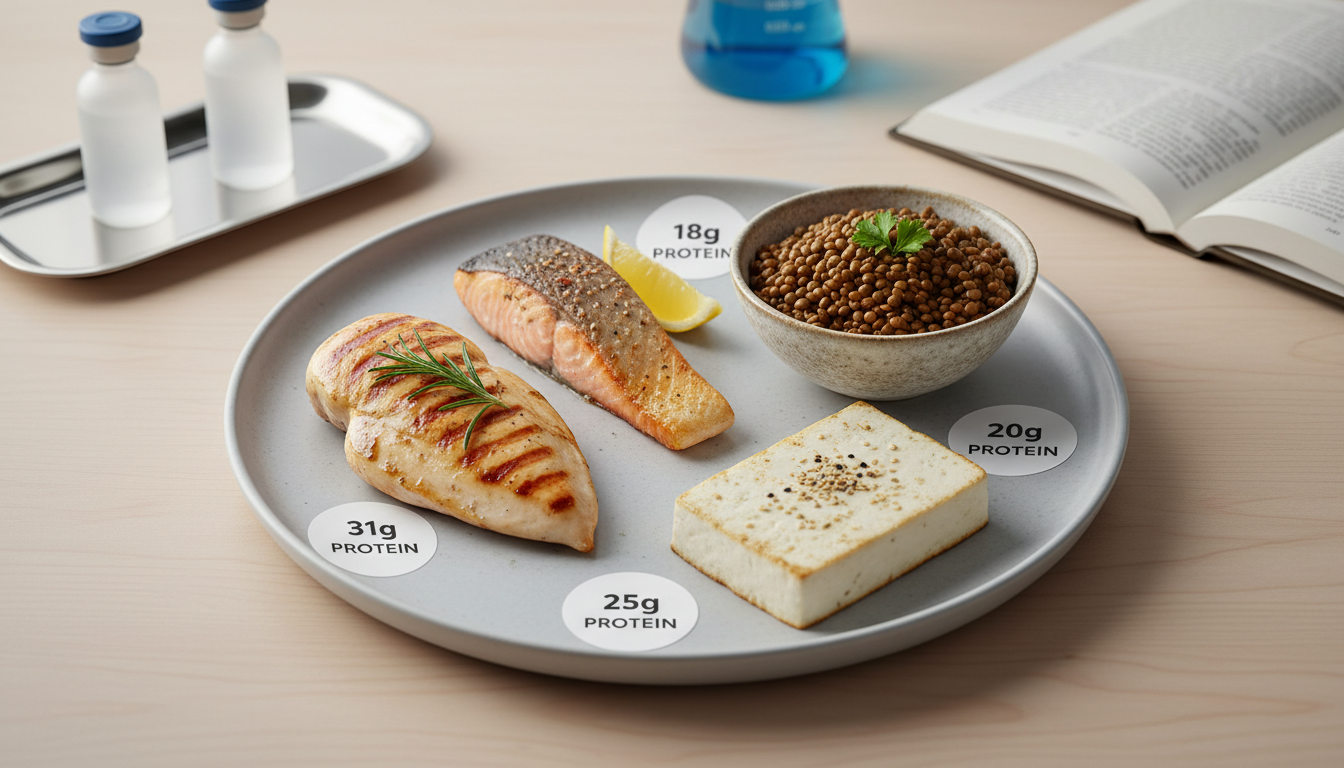
- Whole Foods: Lean meats, poultry, fish, eggs, and dairy are excellent animal-based sources. Legumes, tofu, edamame, nuts, and seeds are great plant-based options.
- Supplements: When it's difficult to meet your needs through food alone, protein supplements for muscle growth are a convenient option. Whey, casein, and egg protein are popular animal-based choices, while soy, pea, and rice protein are common for plant-based diets.
- Consider the Source Type: For a long time, animal protein was considered superior due to its complete amino acid profile. However, a major 2026 systematic review and meta-analysis published in Frontiers in Nutrition analyzed 18 trials and found no statistically significant difference between plant-based and animal-based protein supplementation for changes in lean body mass, fat mass, or muscle strength over the long term (over 6 months). This suggests that as long as your total daily protein intake is sufficient, the source may be less critical than previously thought.
- Time Your Intake: While the post-exercise "anabolic window" isn't as short as once believed, consuming a protein-rich meal or shake within a couple of hours after your workout is beneficial. More importantly, aim to spread your protein intake evenly throughout the day, consuming 20-40 grams per meal to keep MPS elevated.
Understanding Protein Supplement Labels and Regulation
Navigating the supplement aisle can be confusing, partly because of how these products are regulated. Unlike pharmaceuticals, the FDA does not approve dietary supplements for safety and effectiveness before they go to market. The FDA's role is primarily post-market, regulating manufacturing practices and labeling.
This can lead to a gap between what a product label says and what the container holds. A 2024 article from JDSupra highlighted this issue, discussing a class action lawsuit against a protein company for mislabeling calorie counts. The company used a newer, scientifically supported method for calculating calories that resulted in a lower number on the label than the FDA's traditional method would have. This case illustrates how even scientifically-backed claims can lead to legal and consumer trust issues if they don't align strictly with outdated regulatory frameworks.
For consumers, this means you need to be a savvy shopper. Here's what to look for:
- Third-Party Testing: Look for seals from independent organizations like NSF Certified for Sport or Informed-Choice. These groups test supplement batches to verify that they contain what the label claims and are free from banned substances.
- Minimal Ingredients: High-quality protein powders have a short ingredient list. Be wary of products loaded with fillers, proprietary blends, and artificial sweeteners.
- Clinical Consultation: The best way to choose a safe and effective product is to get a recommendation from a qualified professional. A provider from a reputable peptide clinic or a registered dietitian can guide you to trusted brands that align with your health goals.
FAQs
How much protein do I need for muscle growth?
For most active individuals in 2026, the optimal range for muscle growth is between 1.6 and 2.2 grams of protein per kilogram of body weight per day (about 0.7 to 1.0 g/lb). A 2025 review found that benefits typically plateau around the 1.6 g/kg mark. Older adults may need more, around 1.2-1.5 g/kg, to combat age-related anabolic resistance.
Is whey protein better than plant protein for muscle growth?
Not necessarily over the long term. While whey protein is absorbed faster and is rich in leucine, a 2026 meta-analysis covering nearly 2,000 participants found no significant long-term differences in muscle mass or strength gains between plant-based (like soy) and animal-based protein supplements. As long as your total daily intake is sufficient, the source is less important than the quantity. To compare your options, check out this guide on protein supplements for muscle growth.
When is the best time to take protein?
The most critical factor is hitting your total daily protein goal. However, for optimal results, it's best to spread your intake evenly throughout the day (e.g., 20-40g per meal). Consuming a protein-rich meal or shake within a couple of hours after your workout can also help capitalize on the increased sensitivity to amino acids in your muscles.
Can you build muscle without protein supplements?
Absolutely. Protein supplements are a convenience, not a necessity. If you can meet your daily protein requirements through whole food sources like lean meats, fish, eggs, dairy, and legumes, you can build muscle just as effectively. Supplements just make it easier to hit your targets, especially for those with high protein needs or busy schedules.
Does eating too much protein damage your kidneys?
For individuals with healthy, functioning kidneys, the consensus from extensive research is that a high-protein diet is safe and does not cause kidney damage. This concern is primarily for people with pre-existing chronic kidney disease, for whom a high protein load can worsen their condition. Always consult a doctor if you have a history of kidney issues.
What is the link between GLP-1 medications and muscle loss?
GLP-1 agonists like semaglutide and tirzepatide are highly effective for weight loss, but the rapid weight reduction can sometimes include a significant amount of lean muscle mass along with fat. This makes adequate protein intake and resistance training especially critical while using these medications to ensure the weight lost is primarily fat tissue. You can learn more about this in our guide to GLP-1 and muscle loss.
Contributing to evidence-based peptide education and provider transparency.
Too many clinics, not enough clarity?
We don't sell peptides. Tell us your goals and we'll connect you with a vetted provider who can figure out what actually makes sense for you.
See what's right for youRelated articles
What are the best peptides for muscle growth and fat loss?
Exploring peptides for muscle growth and fat loss? Discover the most effective options for body recomposition, how they actually work, and what to expect.
Peptide ScienceThe Key L-Lysine Benefits for Skin, Immunity & Stress
Discover the science-backed l-lysine benefits. Our guide covers how this essential amino acid may boost collagen, fight viruses, and aid calcium absorption.
Peptide ScienceBuild Your GHK-Cu Peptide Injection Dosage Chart PDF
Stop searching for a generic download. This guide helps you build a custom ghk cu peptide injection dosage chart pdf based on common protocols for skin & hair.