Compounded Semaglutide: What You Need to Know in 2026
The FDA ended the semaglutide shortage and cracked down on compounders. Here's what compounded semaglutide actually is, whether it's still available, and what your options are now.
What Is Compounded Semaglutide?
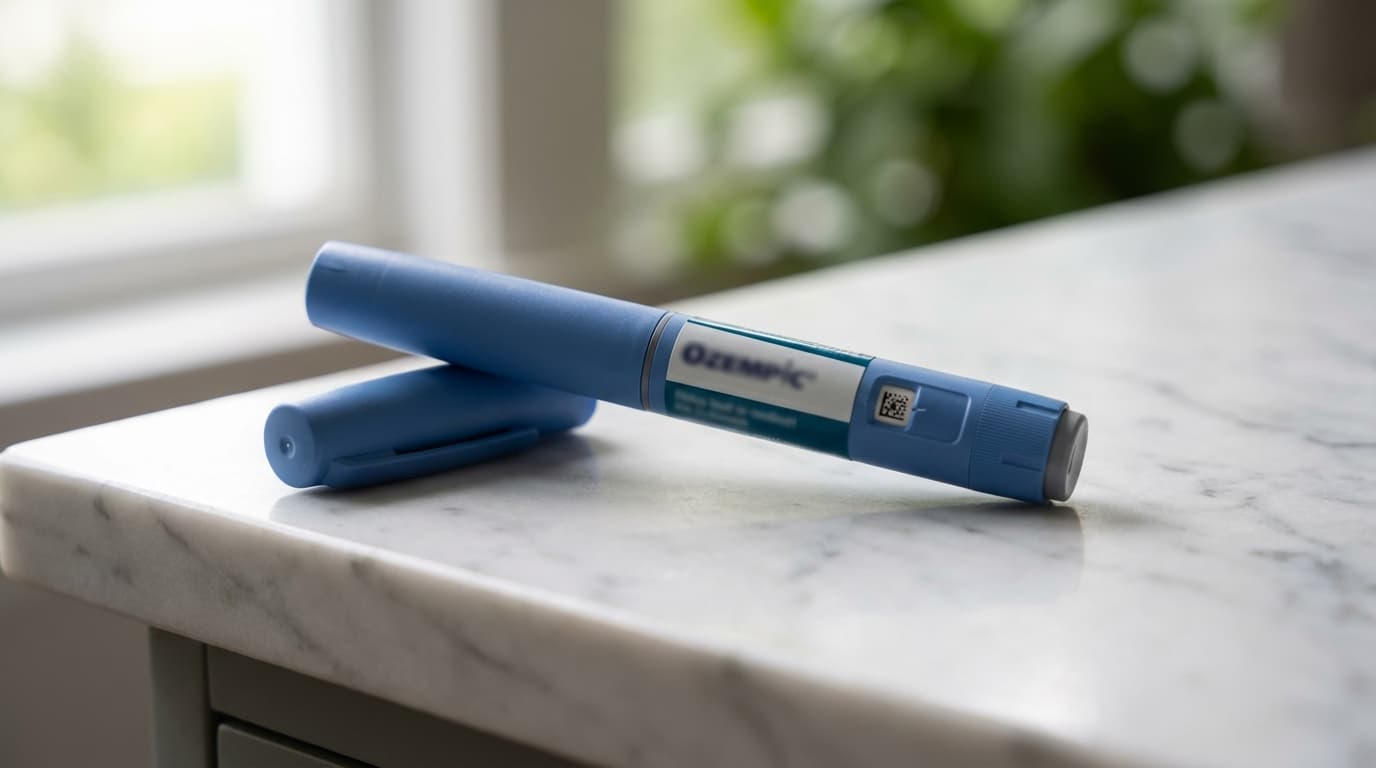
Compounded semaglutide is a pharmacy-mixed version of the same active ingredient found in Ozempic and Wegovy. It's prepared by compounding pharmacies — either state-licensed 503A pharmacies (patient-specific prescriptions) or FDA-registered 503B outsourcing facilities (larger batches) — rather than manufactured by Novo Nordisk.
The key distinction: compounded semaglutide is not FDA-approved. It hasn't gone through the same manufacturing, testing, and quality control processes as brand-name products. It cannot legally be called "Ozempic" or "Wegovy." It is a different product that happens to contain the same molecule.
During the semaglutide shortage that lasted from early 2022 through February 2025, compounding pharmacies were legally permitted to produce semaglutide under Section 503A and 503B of the Federal Food, Drug, and Cosmetic Act. This made GLP-1 therapy accessible to millions of patients who couldn't get brand-name products — often at a fraction of the cost.
That regulatory window has now closed.
The FDA Shortage Is Over
On February 21, 2025, the FDA officially removed semaglutide injection from its drug shortage list. Novo Nordisk had expanded manufacturing capacity with 24/7 production and billions in facility investment. All dose strengths of both Ozempic and Wegovy are now commercially available nationwide.
This matters because the shortage was the legal basis that allowed compounding pharmacies to produce semaglutide at scale. Without an active shortage, the exemption no longer applies.
Is Compounded Semaglutide Still Legal?
Mostly no. Here's the timeline:
- February 2025: FDA declares semaglutide shortage resolved
- March 2025: FDA issues guidance that 503A and 503B compounders must cease producing semaglutide injection
- April 2025: 503A pharmacy deadline to stop compounding semaglutide
- May 2025: 503B outsourcing facility deadline to stop
- March 2026: FDA issues 30 warning letters to telehealth companies still selling or marketing compounded GLP-1 products with false or misleading claims
Compounded semaglutide is now only legal in narrow, patient-specific circumstances — for example, when a patient has a documented allergy to an inactive ingredient in the FDA-approved product and the compounded version is "meaningfully different." Cost savings, convenience, or patient preference do not qualify as valid reasons.
In practice, most compounding pharmacies have stopped producing semaglutide. Those still offering it are operating in a legal gray area that the FDA is actively enforcing against.
Safety Concerns the FDA Has Raised
The FDA has been vocal about specific risks with compounded semaglutide:
Semaglutide sodium salt vs. semaglutide base. Many compounding pharmacies used semaglutide sodium salt or semaglutide acetate rather than the semaglutide base form used in Ozempic and Wegovy. The FDA considers these different active ingredients with no established dosing equivalence — meaning a "1mg" dose of compounded semaglutide sodium may not deliver the same effect as 1mg of brand-name semaglutide.
Contamination and impurity findings. FDA testing of compounded semaglutide samples found alarming quality issues. One sample contained up to 33% unknown impurities and 19% formaldehyde adducts — a type of chemical modification that poses immunogenicity risks and is absent from FDA-approved semaglutide products. Compounding pharmacies are not held to the same Current Good Manufacturing Practice (CGMP) standards as drug manufacturers.
Adverse events. As of mid-2025, the FDA had received over 600 adverse event reports specifically tied to compounded semaglutide, including at least 17 deaths. Novo Nordisk reported approximately 10 deaths and 100 hospitalizations linked to compounded semaglutide in the US. Some cases involved patients taking 5 to 20 times the intended dose due to unclear instructions on multi-dose vials.
No clinical trial data. Compounded formulations haven't been studied in the large-scale trials that established semaglutide's safety and efficacy profile. Differences in formulation, concentration, and inactive ingredients mean the clinical trial data for Ozempic and Wegovy doesn't directly transfer.
Misleading marketing. The March 2026 FDA warning letters specifically targeted telehealth companies making claims like "same as Ozempic" or "FDA-approved semaglutide" for compounded products. These claims are false.
The Hims & Hers Saga
The highest-profile example of the compounding crackdown played out in public between Novo Nordisk and Hims & Hers Health. In April 2025, the two companies announced a collaboration to make obesity treatments more affordable. Novo Nordisk terminated the deal in June 2025, accusing Hims of illegally mass-compounding their drugs.
In February 2026, Hims launched a compounded oral semaglutide pill at $49/month — directly undercutting the newly launched oral Wegovy at $149/month. Novo Nordisk sued Hims for patent infringement within days. Hims withdrew the $49 pill within 48 hours.
By March 2026, the two companies resolved the dispute. Under the new agreement, Hims will offer brand-name Ozempic and Wegovy on its platform, cease marketing compounded GLP-1s except where medically necessary, and transition existing compounded patients to FDA-approved alternatives. Novo dropped the lawsuit.
The message is clear: the era of easily accessible compounded semaglutide is over, and even the biggest telehealth companies are pivoting to brand-name partnerships.
What About Cost?
Cost was the primary reason compounded semaglutide became so popular. At its peak:
- Compounded semaglutide: $150–$350/month
- Brand Wegovy: $1,349/month list price
- Brand Ozempic: $935–$1,027/month list price
That's a 3–8x price difference. For patients without insurance coverage, compounded was often the only financially viable option.
But the cost landscape has shifted dramatically in 2025–2026:
- Novo Nordisk self-pay programs now offer Ozempic at $349–$499/month and Wegovy at similar pricing through NovoCare
- GoodRx introductory pricing offers $199/month for the first two months at low doses
- Oral Wegovy (25mg daily tablet, approved December 2025) launched at approximately $149/month
- Novo Nordisk announced a ~34% list price cut for Ozempic effective January 2027, bringing it to ~$675/month
- Insurance coverage for Wegovy has expanded significantly — many commercial plans now cover it for qualifying patients
The gap between compounded and brand-name pricing has narrowed considerably. And with brand-name options, you get FDA-approved manufacturing quality, clinical trial backing, and legal certainty.
What If You Were on Compounded Semaglutide?
If you were using compounded semaglutide and your pharmacy has stopped producing it (or you're concerned about the legal and safety issues), here's what to do:
1. Talk to your provider. Don't stop GLP-1 therapy abruptly — work with your prescriber to transition to a brand-name alternative. They can help determine the right dose conversion.
2. Check your insurance. Have your provider's office run a prior authorization for Wegovy (for weight loss) or Ozempic (for type 2 diabetes). Coverage has expanded and you may qualify now even if you were denied before.
3. Explore manufacturer programs. Novo Nordisk's self-pay pricing at $349–499/month through NovoCare or the GoodRx partnership at $199/month introductory may be more affordable than you expect.
4. Consider oral Wegovy. The pill form launched in January 2026 and eliminates the injection entirely. If cost was your main barrier to brand-name, the oral version may change the equation.
5. Consider tirzepatide. If you're switching anyway, Zepbound (tirzepatide) through LillyDirect is available at $299–$449/month cash-pay — genuine, FDA-approved medication. Clinical data shows it produces more weight loss than semaglutide. It's worth discussing with your provider.
The Bottom Line
Compounded semaglutide served an important role during the shortage. It made GLP-1 therapy accessible to patients who couldn't get brand-name products. But the shortage is over, the FDA is enforcing, and the safety questions haven't been resolved.
If you're still using compounded semaglutide from a provider who claims it's legal and safe, ask them directly: Where is it compounded? Is the pharmacy state-licensed? Is there an active shortage exemption? Can they provide a certificate of analysis? If they can't answer clearly, that's a red flag.
The good news is that brand-name access has improved dramatically. Between manufacturer self-pay programs, expanded insurance coverage, the oral pill option, and upcoming price cuts, there are more legitimate paths to semaglutide than ever before. Work with a licensed provider to find the right one for you.
Compounded Semaglutide FAQs
Is compounded semaglutide the same as Ozempic?
No. They contain the same active molecule, but compounded semaglutide is not manufactured by Novo Nordisk, not FDA-approved, and may use a different salt form (semaglutide sodium vs. semaglutide base) with unestablished dosing equivalence. The FDA considers them different products.
Can I still get compounded semaglutide in 2026?
In most cases, no. The FDA ended the semaglutide shortage in February 2025, removing the legal basis for large-scale compounding. Some pharmacies may still compound it for specific patients with documented medical necessity (like an allergy to an inactive ingredient in the brand product), but routine compounding for cost savings is no longer permitted.
Is compounded semaglutide dangerous?
Not necessarily dangerous, but it carries risks that brand-name products don't. The FDA has flagged concerns about sterility, potency, the use of semaglutide sodium salt (a different form than the brand), and lack of clinical trial data on compounded formulations. Some patients used compounded semaglutide safely for years. Others received products that were underdosed, contaminated, or formulated incorrectly. Without FDA manufacturing standards, there's no way to know for certain what you're getting.
What's the cheapest way to get real semaglutide now?
As of early 2026, the most affordable FDA-approved semaglutide options are: oral Wegovy at ~$149/month, GoodRx introductory pricing at $199/month for the first two fills, and Novo Nordisk's self-pay program at $349/month for Ozempic. If you're open to tirzepatide instead, Zepbound through LillyDirect starts at $299/month.
Contributing to evidence-based peptide education and provider transparency.
Too many clinics, not enough clarity?
We don't sell peptides. Tell us your goals and we'll connect you with a vetted provider who can figure out what actually makes sense for you.
See what's right for youRelated articles
A Step-by-Step Gelatin Recipe for Weight Loss
Seen the viral "pink trick"? We break down the simple gelatin recipe for weight loss. Learn our step-by-step method to help manage hunger and feel full.
GLP-1 Weight LossOzempic Cost in 2026: What You'll Actually Pay
The 2026 Ozempic cost can be anywhere from $25 to over $1,400 a month. Discover why and learn how to find savings with or without insurance coverage.
GLP-1 Weight LossHow Zep Weight Loss Works and What to Expect
Thinking about zep weight loss? We cover how this drug works, what realistic results look like, common side effects, and how it compares to Ozempic.