The Cons of GHK-Cu Peptide: Is It Really Safe?
Don't use GHK-Cu until you understand the cons of GHK-Cu peptide. We cover the real side effects, the risks of injectables vs. creams, and safety data.

This content is for informational purposes only and does not constitute medical advice.
GHK-Cu peptide has gained a reputation for its skin rejuvenating and wound healing potential. But with growing interest comes important questions about its safety. Understanding the cons of GHK-Cu peptide is critical before considering its use, especially given its murky regulatory status and the major differences between topical and injectable forms. While some research supports its use in creams and serums, the popular off-label use of injectable GHK-Cu is not backed by human clinical trials, creating significant safety gaps. This guide breaks down the known side effects, risks, and contraindications based on the latest 2026 research.
What Are the Common Cons of GHK-Cu Peptide Side effects?
The side effects of GHK-Cu depend almost entirely on how you use it. Topical application is the most studied and generally well-tolerated method. In contrast, injectable use carries a different and less understood risk profile due to a lack of human studies (Peptidings).
For topical use, the most common side effects are localized and mild. A 2023 pooled safety analysis of 12 studies involving 512 people found GHK-Cu to be very well-tolerated. The main issues were:
- Transient Redness: Experienced by 4.2% of users.
- Mild Itching: Reported by 2.8% of participants.
(Source: Peptide Garden)
These reactions are often dose-dependent, meaning they are more likely with higher concentration products. Sensitive skin types may also experience temporary breakouts or "purging" as the skin adjusts (Peptides Lab UK).
Here is a breakdown of common side effects by application method:
| Side Effect | Application Method | Reported Frequency | Notes |
|---|---|---|---|
| Skin Irritation & Redness | Topical | 5% to 10% | Usually mild, transient, and dose-dependent. More common in concentrations over 1-2 mg/mL (Peptide Clinic Locator). |
| Mild Itching or Stinging | Topical | ~2.8% | Often occurs upon application and subsides quickly. |
| Injection Site Pain/Stinging | Injectable | N/A (Anecdotal) | While not studied clinically, this is a common reaction to many subcutaneous injections. Purity of the product is a major factor. |
| Headaches or Nausea | Injectable | N/A (Anecdotal) | Systemic effects are not documented in human trials but are theoretically possible. Their occurrence strongly suggests a need to stop use and consult a provider. |
A significant "con" to consider is product quality. Many reported side effects may not come from the GHK-Cu peptide itself but from contaminants in impure products from unregulated sources. The unregulated market for "research-use only" peptides means that quality control can be inconsistent, making third-party testing essential for safety (RealPeptides.co).
If you are trying to find a safe treatment option, sorting through this information can be difficult. Not sure which treatment is right for you? Take our free quiz to get matched with a provider who can guide you toward clinically-proven therapies.
Serious Side Effects to Watch For
While common side effects are typically mild, several serious risks are associated with GHK-Cu, particularly concerning injectable use and pre-existing health conditions.
1. Allergic Reactions Though rare, true allergic reactions can occur. Individuals with a known sensitivity to copper may develop contact dermatitis, which can appear as itchy bumps or small blisters at the application site (Peptides Lab UK). A severe systemic allergic reaction, or anaphylaxis, is a medical emergency. Signs include hives, swelling of the face, lips, or throat, and difficulty breathing.
2. Copper Toxicity One of the most discussed theoretical risks is copper toxicity. GHK-Cu is a copper-carrying peptide, and introducing large amounts into the body, especially through long-term injections, could lead to copper accumulation. While the risk is considered low for healthy individuals using topical products, the safety of chronic injectable use is not established (Peptide Protocol Wiki). This risk is not theoretical for certain individuals. It is an absolute contraindication for anyone with a copper metabolism disorder like Wilson's disease.
3. The Risk of Unregulated and Impure Products Perhaps the most practical and serious risk is the 'medium' risk associated with product quality (Peptide Protocol Wiki). As of 2026, GHK-Cu is not an FDA-approved drug. It is sold online as a "research chemical," a label that allows sellers to bypass the strict manufacturing and purity standards required for medications. This means the vial you receive could contain:
- The wrong substance entirely.
- A lower or higher concentration than stated.
- Harmful contaminants, like heavy metals or bacterial endotoxins.
These impurities can cause adverse reactions, infections, or render the product ineffective. This risk highlights why sourcing from a vetted compounding pharmacy through a licensed provider is critical for any peptide therapy. You can learn more about finding a trusted clinic in our guide on how to find legitimate peptide clinics.
4. The Risk from Unproven Therapeutic Claims Many of the exciting claims about GHK-Cu's systemic effects, like reversing aging at a genetic level, come from in-vitro (test tube) studies. These studies showed GHK-Cu modulated about 32% of tissue-remodeling genes (Peptide Garden). However, what happens in a petri dish does not always translate to the human body.
As of April 2026, there are zero published human clinical trials for injectable GHK-Cu (Peptidings). Using a substance for systemic benefits without human data is a significant leap of faith and carries unknown risks.

Who Should Avoid GHK-Cu Peptide Completely?
Due to the limited safety data and potential for harm, certain individuals should not use GHK-Cu. According to a 2026 safety review, GHK-Cu has several absolute contraindications.
You should NOT use GHK-Cu if you have any of the following conditions:
- Copper Metabolism Disorders: This includes conditions like Wilson's disease, where the body cannot properly process copper. Using GHK-Cu could lead to dangerous copper accumulation and toxicity (RealPeptides.co, Peptide Protocol Wiki).
- Active Malignancies (Cancer): GHK-Cu promotes cell growth and blood vessel formation (angiogenesis). While this is useful for wound healing, it could theoretically fuel the growth of cancerous tumors. Its use is absolutely contraindicated in individuals with active cancer (RealPeptides.co).
- Pregnancy or Breastfeeding: The effects of GHK-Cu on a developing fetus or a nursing infant are completely unknown. Due to the potential for harm, it should be avoided entirely during pregnancy and lactation (RealPeptides.co).
Conditions Requiring Extreme Caution and Expert Oversight: For some individuals, GHK-Cu is not absolutely off-limits but requires careful consideration and guidance from a knowledgeable healthcare provider.
- Autoimmune Diseases: As GHK-Cu can influence the immune system, its effect on autoimmune conditions is unpredictable.
- Hypotension (Low Blood Pressure): Some anecdotal reports suggest GHK-Cu can lower blood pressure.
- Use of Chelation Agents: These are drugs used to remove heavy metals from the body and would directly conflict with a copper-based peptide.
Unpacking the Cons of GHK-Cu Peptide Drug Interactions
One of the major cons of using a substance without extensive human trials is the unknown potential for drug interactions. Because injectable GHK-Cu has never been formally studied in humans, no official list of drug interactions exists. However, based on its mechanism, we can identify several potential conflicts to discuss with a doctor.
First and foremost, GHK-Cu should not be used with chelation agents. These medications, such as penicillamine, are designed to bind to and remove metals like copper from the body. Using them alongside GHK-Cu would be counterproductive and could cause unpredictable effects (RealPeptides.co).
Second, medications that affect blood pressure, particularly hypotensive agents, may interact with GHK-Cu. Since hypotension is listed as a condition that warrants caution, using GHK-Cu could potentially enhance the effect of blood pressure-lowering drugs, leading to dizziness or fainting.
Third, while there is no direct evidence, it is wise to be cautious when using GHK-Cu with anticoagulants (blood thinners) like warfarin or antiplatelet drugs like aspirin. Peptides that influence tissue repair and blood vessel growth could theoretically affect the clotting process.
The most significant risk remains the unknown. Without formal studies, the full interaction profile is a mystery. This is a primary reason why self-administering research chemicals without medical supervision is so risky.
Trying to figure out if GHK-Cu or another peptide is safe for you? Don't guess. Take our free 3-minute quiz to get matched with a vetted provider who can review your health history and guide you to safer, effective options.
How to Manage Side Effects of GHK-Cu
If you are using GHK-Cu under the guidance of a provider and experience side effects, there are several practical steps you can take to manage them.
For Topical Side Effects (Irritation, Redness, Itching):
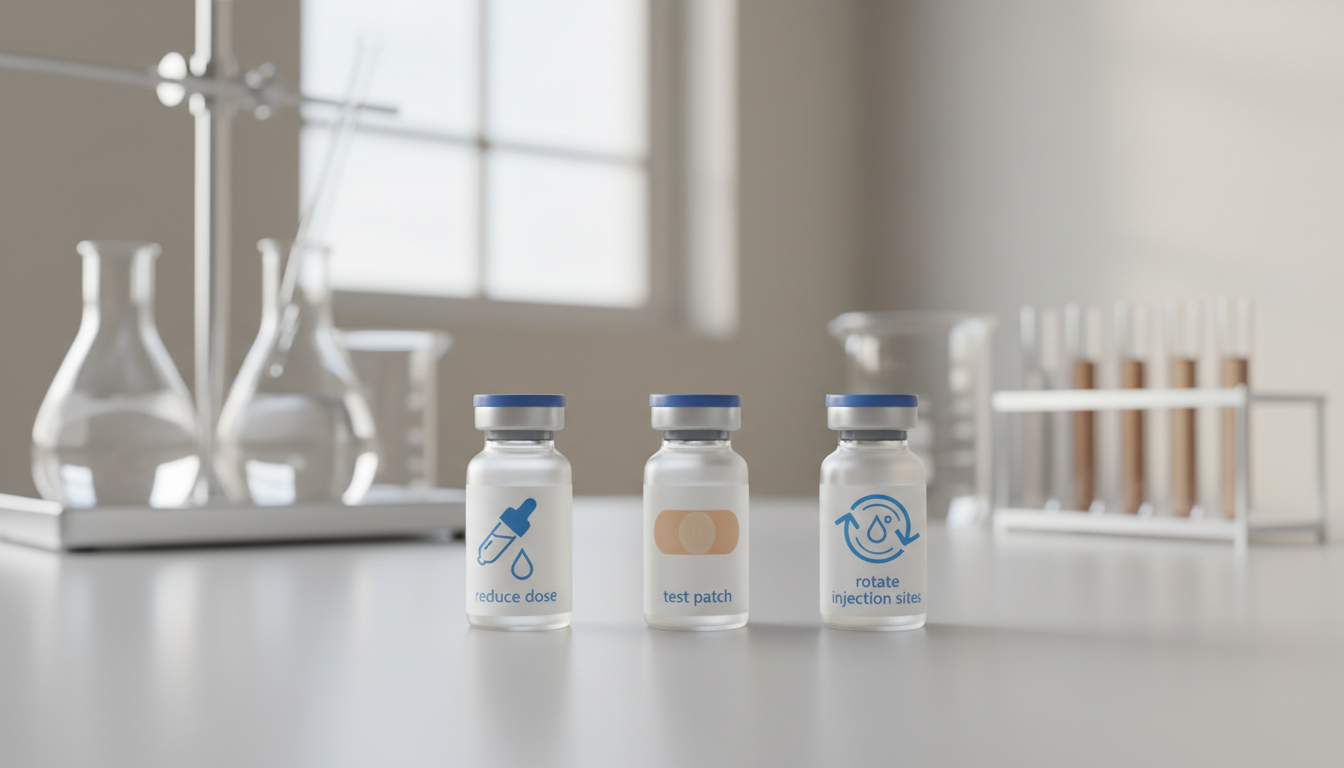
- Reduce the Dose or Frequency: This is the simplest and most effective step. If you are using a serum daily, try switching to every other day. If the reaction is strong, stop use for a few days to let your skin recover.
- Perform a Patch Test: Before applying GHK-Cu to your entire face, apply a small amount to a discreet area, like behind your ear or on your inner arm, for a few days to check for a reaction.
- Change Products: As noted, irritation may be due to impurities or a high concentration (Peptides Lab UK). Switching to a product from a reputable source with third-party testing may resolve the issue. Finding a product with a lower concentration (under 1%) can also help.
- Moisturize: Apply a gentle, hydrating moisturizer after the GHK-Cu product has fully absorbed to help support your skin barrier.
For Injectable Side Effects (Injection Site Reactions):
- Ensure Proper Sterile Technique: Always use a new sterile needle and syringe for each injection and clean the vial top and injection site with an alcohol swab. This reduces the risk of infection and irritation.
- Rotate Injection Sites: Continuously injecting in the same spot can cause lipohypertrophy (a lump under the skin) and irritation. Rotate between different areas of the abdomen, thighs, or glutes.
- Check Your Dilution: If you are reconstituting the peptide yourself, ensure you are using the correct amount of bacteriostatic water. Overly concentrated solutions can cause more stinging. You can learn more about general injection best practices from our guide on how to use peptides.
- Stop and Re-Evaluate: If you experience systemic side effects like headaches, nausea, or dizziness after an injection, stop use immediately. These are signs that the substance is affecting your whole body, and since injectable GHK-Cu lacks human safety data, it is crucial to consult your provider.
When to See a Doctor
Navigating the world of peptides, especially those without FDA approval, requires a cautious approach. It is vital to know when to seek professional medical help.
See a doctor immediately if you experience:
- Signs of a severe allergic reaction (anaphylaxis), such as hives, swelling of the face, tongue, or throat, wheezing, or difficulty breathing.
- Severe chest pain, dizziness, or fainting.
- Any symptom that feels severe or life-threatening.
Schedule a visit with your provider if:
- You experience mild side effects that do not go away with simple management techniques like reducing the dose.
- You develop a persistent rash, lumps, or significant pain at injection sites.
- You are considering starting GHK-Cu and want to discuss the risks, benefits, and the significant lack of human safety data for injectable use.
Remember, self-prescribing and using research chemicals from online sources carries substantial risks. A qualified provider can help you achieve your health goals using methods that are both effective and supported by robust clinical evidence.
Ready to explore safer and clinically-proven options for your health goals? Take our free 3-minute quiz to get matched with a licensed provider who can create a plan for you.
FAQs
What are the biggest cons of GHK-Cu peptide? The biggest cons are the complete lack of human safety data for injectable use, its status as an unapproved "research chemical," and the high risk of receiving impure or improperly dosed products from an unregulated market. For topical use, the cons are much milder, typically involving minor skin irritation.
Is GHK-Cu legal in 2026? GHK-Cu is not FDA-approved for human use. It is sold legally as a cosmetic ingredient and as a "research-use only" chemical. It cannot be legally marketed or sold as a drug to treat any condition. A February 2026 announcement indicated it may be moved back to the FDA's Category 1 list for compounding, but this change is not yet final as of April 2026 (Peptide Garden).
Can GHK-Cu cause copper toxicity? The risk is considered low with standard topical cosmetic use. However, the risk increases with high-dose or long-term injectable use, as the safety profile for this route is unknown. The risk is serious for individuals with copper metabolism disorders like Wilson's disease, who should never use GHK-Cu (Peptide Protocol Wiki).
Are there safer alternatives to injectable GHK-Cu? Yes. For skin rejuvenation goals, topical GHK-Cu creams and serums have clinical support and a much better safety profile. For systemic goals like tissue repair or anti-aging, it is best to consult a provider. They can recommend other peptides with more extensive research, like BPC-157, or other approved therapies that match your health objectives.
Contributing to evidence-based peptide education and provider transparency.
Too many clinics, not enough clarity?
We don't sell peptides. Tell us your goals and we'll connect you with a vetted provider who can figure out what actually makes sense for you.
See what's right for youRelated articles
How Protein and Muscle Growth Actually Work
It's not just about eating more. Understand the real science of protein and muscle growth to learn how much you need and the best timing to see results.
Peptide ScienceWhat are the best peptides for muscle growth and fat loss?
Exploring peptides for muscle growth and fat loss? Discover the most effective options for body recomposition, how they actually work, and what to expect.
Peptide ScienceThe Key L-Lysine Benefits for Skin, Immunity & Stress
Discover the science-backed l-lysine benefits. Our guide covers how this essential amino acid may boost collagen, fight viruses, and aid calcium absorption.