What are the best peptides for muscle growth and fat loss?
Exploring peptides for muscle growth and fat loss? Discover the most effective options for body recomposition, how they actually work, and what to expect.
This content is for informational purposes only and does not constitute medical advice.
Achieving a lean, strong physique often involves the twin goals of building muscle and shedding fat. For many, this is a slow and difficult process. This is why interest in peptides for muscle growth and fat loss has surged in 2026. These compounds are not magic pills, but when used correctly under medical supervision, they represent a powerful new set of tools for body recomposition. Peptides are simply short chains of amino acids that act as signaling molecules in your body, telling your cells what to do. Some tell your stomach to feel full, while others prompt your body to release growth hormone.
This guide breaks down the science behind the most effective peptides available today. We will explore the different types, look at the clinical data, and discuss how to approach this therapy safely and effectively.
An Introduction to Peptides for Body Composition
Peptides are not a new discovery, but their application in hormone optimization and body composition is advancing rapidly. When we talk about peptides for muscle growth and fat loss, we are generally referring to two distinct categories:
- Metabolic Peptides: These primarily target fat loss by influencing appetite, metabolism, and blood sugar. The most well-known are GLP-1 receptor agonists and their newer, more powerful successors.
- Growth Hormone Secretagogues (GHS): These peptides stimulate your pituitary gland to produce and release more of your body's own growth hormone, which plays a key role in building lean muscle and burning fat.
Understanding this distinction is crucial. While both can lead to a better-looking physique, they work through entirely different mechanisms.
It's also vital to distinguish between medical-grade peptides and unregulated alternatives. A significant "grey market" exists for these compounds, selling them as "research chemicals" online (Source: Time.news). These products come with serious risks. They may be contaminated, under-dosed, or contain a completely different substance than advertised. This guide focuses on peptides that are either FDA-approved or can be legally obtained through a doctor's prescription from a licensed compounding pharmacy, ensuring you receive a pure and accurately dosed product.
Ready to explore how peptide therapy could align with your health goals? Take our free 3-minute quiz to get matched with a licensed provider who can create a plan for you.
Peptides for Fat Loss: The GLP-1 Revolution and Beyond
The most significant recent advances in fat loss have come from a class of peptides that mimic incretin hormones. These compounds have delivered results once thought possible only with surgery.
The primary mechanism involves activating receptors for hormones like Glucagon-Like Peptide-1 (GLP-1) and Glucose-dependent Insulinotropic Polypeptide (GIP). This activation leads to several effects that promote weight loss (Source: PeptideMark):
- Reduced Appetite: They act on the brain to increase feelings of fullness (satiety).
- Slower Gastric Emptying: Food stays in the stomach longer, helping you feel full for an extended period.
- Improved Insulin Sensitivity: They help your body use glucose more effectively, reducing fat storage.
Here are the key players in 2026:
Semaglutide
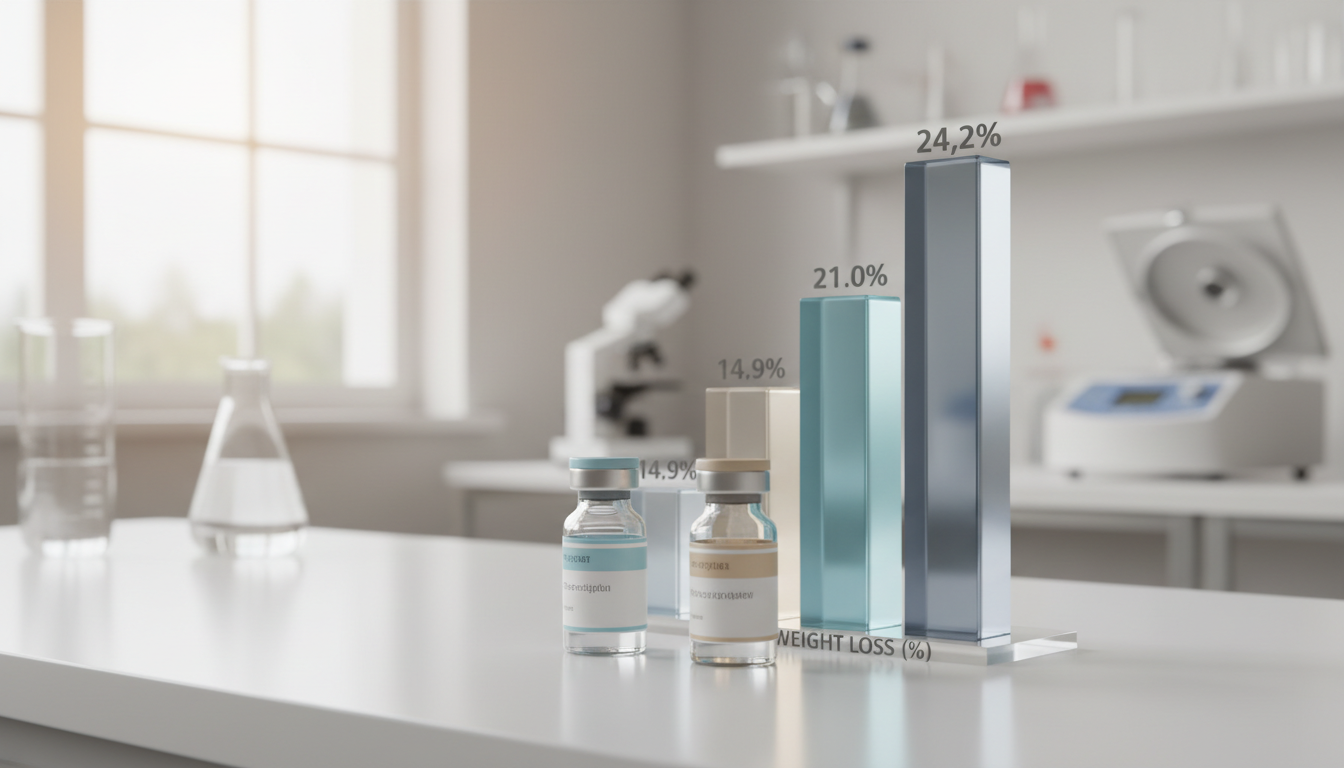
As one of the first widely adopted GLP-1 peptides for weight management, semaglutide set a new standard. In the landmark STEP-1 clinical trial, participants taking a 2.4 mg weekly dose achieved an average body weight reduction of 14.9% over 68 weeks (Source: PeptideMark). Semaglutide is a powerful tool, but rapid weight loss can sometimes lead to the loss of lean muscle mass along with fat. This is a common concern that can be managed with proper nutrition and resistance training. You can read more in our guide to semaglutide and our article on GLP-1s and muscle loss.
Tirzepatide
Tirzepatide is a dual-agonist peptide, meaning it activates both GIP and GLP-1 receptors. This dual action makes it even more effective for weight loss than semaglutide. In the SURMOUNT-1 trial, individuals on the highest dose (15 mg weekly) saw a mean body-weight reduction of approximately 21% over 72 weeks (Source: PeptideMark). This superior efficacy has made tirzepatide the leading FDA-approved peptide for weight loss.
Retatrutide (Investigational)
The next frontier appears to be triple-agonist peptides. Retatrutide, currently in late-stage clinical trials, targets GIP, GLP-1, and glucagon receptors. This third mechanism is particularly interesting because activating the glucagon receptor can increase energy expenditure and fat burning (Source: Retatrutide: Benefits, Dosing & Where to Buy (2026)).
Phase 2 trial data for retatrutide was stunning, showing a mean weight reduction of 24.2% (Source: Best Peptides for Weight Loss 2026: Evidence-Based Ranking). If the Phase 3 TRIUMPH-4 trial results are positive, Retatrutide could receive FDA approval sometime in 2026 and become the most effective weight loss medication ever studied.
Using Peptides for Muscle Growth and Fat Loss: Growth Hormone Secretagogues
While GLP-1 peptides excel at fat loss, another class of peptides focuses on the other side of the equation: building muscle. These are known as Growth Hormone Secretagogues (GHS). Instead of injecting synthetic growth hormone, which can shut down your body's natural production, GHS peptides stimulate your own pituitary gland to release more growth hormone (GH).
An optimized level of growth hormone can provide numerous benefits:
- Increased lean muscle mass
- Reduced body fat
- Improved recovery from exercise
- Enhanced sleep quality
- Better skin elasticity and bone density
The most popular and well-researched GHS combination is a "stack" of two different peptides that work together synergistically.
The CJC-1295 and Ipamorelin Stack
This is the gold standard for GHS therapy. The two peptides work on different receptors in the pituitary gland to produce a strong, natural pulse of growth hormone that mimics the body's own patterns.
- CJC-1295: A Growth Hormone-Releasing Hormone (GHRH) analogue. It tells the pituitary gland to release GH.
- Ipamorelin: A Growth Hormone-Releasing Peptide (GHRP). It amplifies the signal and also reduces somatostatin, a hormone that normally inhibits GH release.
When used together, their effect is 2-3 times greater than using either one alone (Source: OathResearch). A common research protocol involves injecting 100-300 mcg of each peptide once daily, usually before bed to align with the body's natural nighttime GH pulse. Cycles typically run for 8-12 weeks, followed by a break to ensure the pituitary receptors remain sensitive.
Users following these protocols, combined with proper diet and training, have reported gaining 2-5 pounds of lean muscle over a 12-week period, along with noticeable fat loss and improved recovery (Source: OathResearch). For more detail, you can explore our complete CJC-1295 and Ipamorelin guide.
While generally well-tolerated, some mild and temporary side effects can occur, like water retention, headaches, or a head rush feeling shortly after injection.
Advanced Strategies: Stacking for Total Body Recomposition
The ultimate goal for many is simultaneous fat loss and muscle gain, often called "body recomposition." This is notoriously difficult to achieve. However, advanced peptide strategies are making it more attainable, both in clinical research and in practice. The trend of "peptide stacking," or using multiple peptides at once, is growing, but it requires careful consideration and expert guidance (Source: Harper's Bazaar).
Clinically Studied Combination: Bimagrumab + Semaglutide
One of the most exciting developments comes from a Phase 2 trial that combined the fat-loss peptide semaglutide with an investigational muscle-promoting agent called bimagrumab. The results, published in Nature Medicine, were remarkable.
The group receiving the high-dose combination lost an average of 17.8 kg (about 39 pounds) of body weight at 48 weeks. By 72 weeks, the average absolute weight loss was 24.2 kg (over 53 pounds). Most importantly, this incredible fat loss was achieved while preserving muscle mass. This combination directly addresses the common problem of losing muscle during aggressive weight loss, demonstrating a true recomposition effect.
Practical Stacking: GLP-1s with GHS
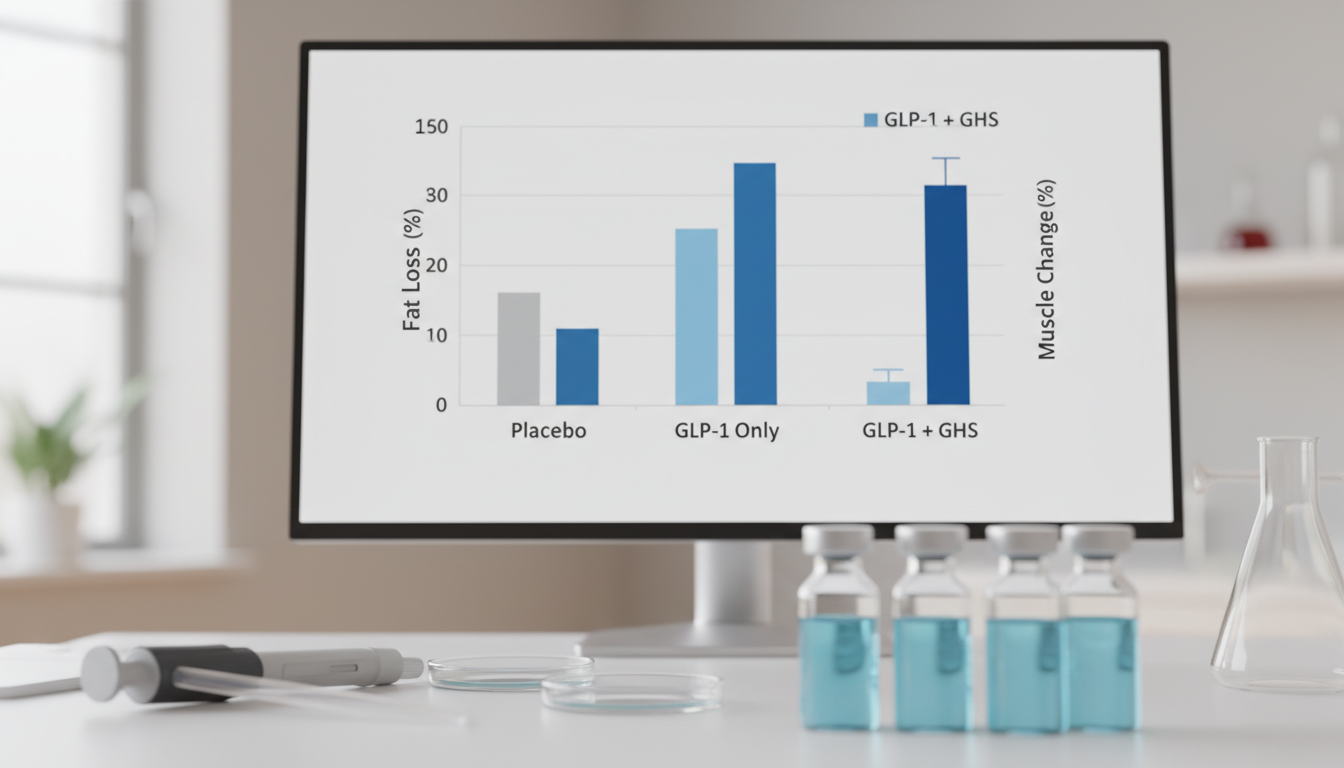
While the bimagrumab combination is still in development, many clinicians help patients achieve a similar effect by combining existing, available peptides. A common strategy is to use a GLP-1 peptide like semaglutide or tirzepatide for aggressive fat loss while simultaneously using a GHS stack like CJC-1295 and Ipamorelin.
The logic is straightforward:
- The GLP-1 peptide creates a significant caloric deficit by suppressing appetite.
- The GHS stack helps preserve, or even build, lean muscle mass during this deficit by elevating growth hormone levels.
This approach helps ensure that the weight being lost is primarily fat, not valuable muscle tissue.
Supporting Recovery with BPC-157 and TB-500
Intense training is essential for building muscle. Peptides like BPC-157 and TB-500 are often used to support the body's recovery and repair processes, allowing for more consistent and productive workouts. These peptides have shown promise in animal studies for healing tendons, ligaments, and muscle tissue.
As of March 2026, the Department of Health and Human Services (HHS) has signaled a re-evaluation of previous restrictions on these peptides. This could restore access to compounds like BPC-157 and TB-500 through state-licensed compounding pharmacies, providing a much safer alternative to the grey market (Source: FDA Peptide Reclassification: 2026 Guide to New Legal Rules). You can learn more about how they compare in our BPC-157 vs. TB-500 article.
Stacking peptides is a complex process that should never be attempted without professional medical guidance. Want to see which options might work for your specific goals and budget? Our free quiz can help you connect with a vetted provider.
What to Consider Before Starting Peptides
Before you begin any peptide protocol, it is essential to proceed with caution and prioritize your health and safety.
First, always work with a qualified medical provider. Self-prescribing and ordering from unregulated "research chemical" websites is incredibly risky. As highlighted by Time.news, these products have no quality control and could be ineffective or dangerous. A doctor can assess your health, order necessary blood work, and determine if you are a good candidate for therapy. They can also write a prescription to a legitimate peptide compounding pharmacy.
Second, understand that peptides are a tool, not a replacement for a healthy lifestyle. To achieve the best results, you must combine peptide therapy with a solid nutrition plan and a consistent exercise routine. Peptides can amplify your efforts, but they cannot do the work for you. For a foundation, check our pillar post on how protein and muscle growth actually work.
Finally, finding the right provider is key. Look for a clinic or doctor with specific experience in hormone optimization and peptide therapy. They will be able to guide you on proper dosing, potential side effects, and creating a sustainable plan. You can start by looking for peptide clinics near you.
Ready to talk to a professional? The first step is finding the right clinic. Take our free 3-minute quiz to get matched with a licensed provider who can guide you.
FAQs
Are peptides for muscle growth and fat loss safe?
When prescribed by a doctor and sourced from a licensed pharmacy, many peptides have a strong safety profile. FDA-approved peptides like semaglutide and tirzepatide have undergone extensive clinical trials. Other peptides, like CJC-1295, are not FDA-approved for general use but have a history of safe application when prescribed by an experienced physician. The primary safety risk comes from using unregulated products from online "research" sites.
How much muscle can you really gain with peptides?
Results vary based on genetics, diet, and training intensity. However, with a growth hormone secretagogue stack like CJC-1295 and Ipamorelin, some research protocols indicate users may gain 2-5 pounds of lean muscle over a 12-week cycle (Source: OathResearch). This is in addition to the fat loss and recovery benefits.
Which peptide is best for fat loss?
As of 2026, the most effective FDA-approved peptide for fat loss is tirzepatide, a dual-agonist that produces an average weight loss of around 21% in clinical trials. The investigational triple-agonist, retatrutide, has shown even better results of over 24% weight loss in Phase 2 trials and may become the top option if it gains FDA approval (Source: PeptideMark).
Can you take peptides for fat loss and muscle growth at the same time?
Yes, this is a popular advanced strategy called "stacking." A clinical trial combining semaglutide (for fat loss) with bimagrumab (for muscle preservation) showed this is highly effective. In practice, clinicians often prescribe a GLP-1 peptide for fat loss alongside a GHS peptide like CJC-1295/Ipamorelin to help preserve and build muscle during a caloric deficit.
Contributing to evidence-based peptide education and provider transparency.
Too many clinics, not enough clarity?
We don't sell peptides. Tell us your goals and we'll connect you with a vetted provider who can figure out what actually makes sense for you.
See what's right for youRelated articles
How Protein and Muscle Growth Actually Work
It's not just about eating more. Understand the real science of protein and muscle growth to learn how much you need and the best timing to see results.
Peptide ScienceThe Key L-Lysine Benefits for Skin, Immunity & Stress
Discover the science-backed l-lysine benefits. Our guide covers how this essential amino acid may boost collagen, fight viruses, and aid calcium absorption.
Peptide ScienceBuild Your GHK-Cu Peptide Injection Dosage Chart PDF
Stop searching for a generic download. This guide helps you build a custom ghk cu peptide injection dosage chart pdf based on common protocols for skin & hair.