How Long Do Mounjaro Side Effects Last? A Timeline
Wondering how long do Mounjaro side effects last? We break down a typical timeline, from the first few days to after a dose increase. See when to expect relief.

This content is for informational purposes only and does not constitute medical advice. Always consult with a qualified healthcare professional for medical advice and treatment.
Starting a new medication like Mounjaro (tirzepatide) comes with a mix of excitement and questions. You are likely looking forward to the potential benefits for blood sugar control or weight management. You also might be wondering what to expect with side effects. One of the most common questions we hear is, "Exactly how long do Mounjaro side effects last?"
The answer isn’t the same for everyone, but by looking at clinical trial data and real-world experiences, we can create a clear timeline. Most side effects are temporary and most intense when you first start or increase your dose. They typically fade as your body adjusts. This article will walk you through what to expect week by week and month by month.
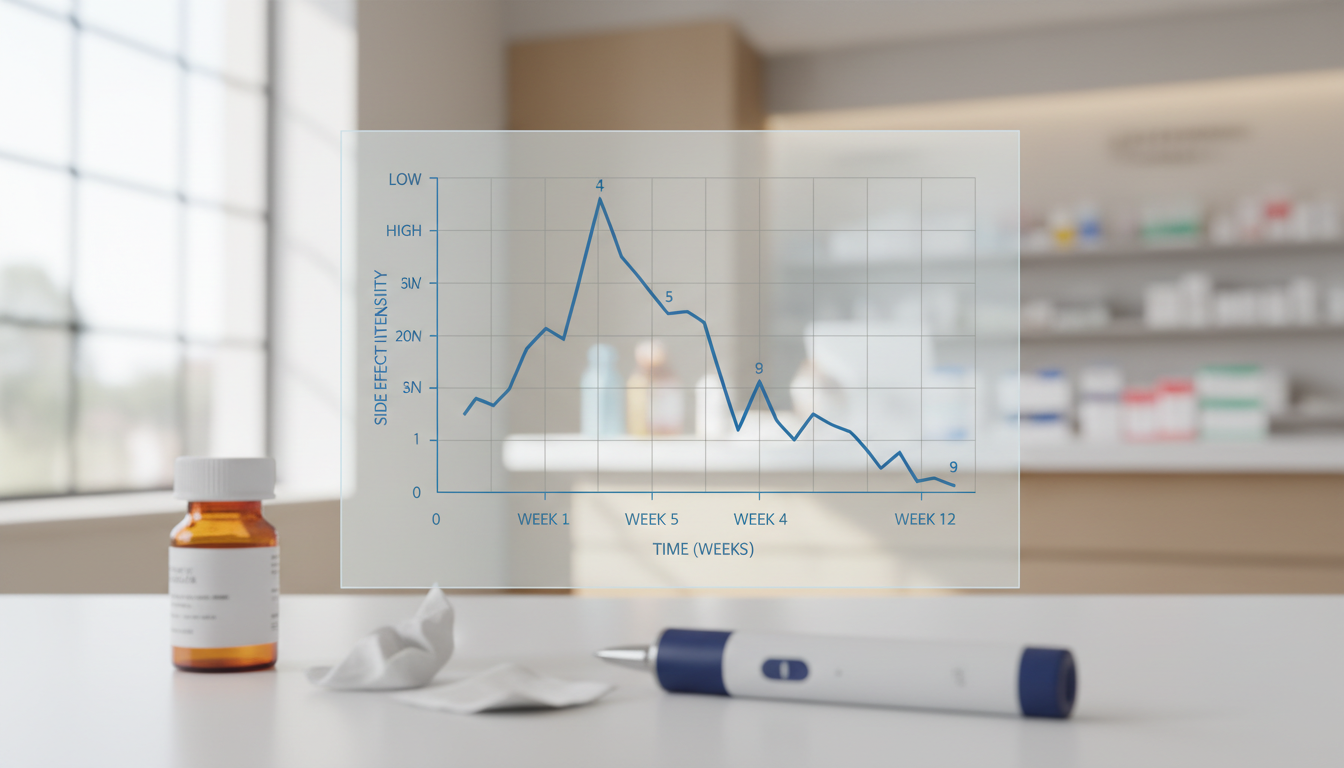
Mounjaro Side Effect Timeline: A Quick Overview
Here’s a high-level look at what you can generally expect. Remember, your experience may vary, and it's essential to talk with your provider about what you're feeling.
| Timeline | Common Side Effects | What to Expect |
|---|---|---|
| Week 1-4 | Nausea, diarrhea, vomiting, decreased appetite. | Effects often start within 1-3 days of your first shot. Symptoms are most noticeable as your body begins to adjust to the 2.5mg starting dose. |
| Month 1-3 | Flare-ups of GI issues with each dose increase, fatigue. | Side effects may reappear for a few days to a couple of weeks after titrating up to 5mg and 7.5mg, but often feel less intense than the initial ones. |
| Month 3-6 | Hair thinning (in some users), occasional constipation. | Your body is likely well-adjusted. Most early GI side effects have subsided. Temporary hair loss, if it occurs, may become noticeable here. |
| Month 6+ | Generally minimal side effects, sustained appetite reduction. | Most users are on a stable maintenance dose. Side effects are typically well-managed or have resolved completely. Long-term monitoring is key. |
The First Few Weeks (Weeks 1-4): Your Body's Introduction
The first month on Mounjaro is all about acclimation. Your provider will start you on the lowest dose, 2.5 mg once a week, for four weeks. This initial dose is not intended for significant glycemic control or weight loss. Its primary purpose is to let your body get used to the medication and minimize side effects (Zepbound Dosing Schedule, Telehealth Ally, 2026).
So, when do Mounjaro side effects start? For most people, they appear within the first 24 to 72 hours after the first injection (Mayfair Weight Loss Clinic, 2026).
The most common side effects you might experience during this period are gastrointestinal, including:
- Nausea: This is the most frequently reported side effect. In clinical trials, nausea affected between 12% and 29% of participants, depending on the study and dosage (WPG, 2026; PandaMeds, 2026). It's caused by the way Mounjaro slows down gastric emptying.
- Diarrhea: Another common issue, reported by 12% to 23% of users in various trials (WPG, 2026).
- Decreased Appetite: This is both a side effect and an intended effect of the medication.
- Vomiting and Constipation: These are also possible and are reported in 5% to 9% of users (Doctors Pharmacy).
The good news is that these initial effects are usually temporary. Many people find their nausea and diarrhea improve significantly within a few days to a couple of weeks as their body adjusts (Drugs.com). By the end of week four, many of these early issues have either resolved or become much more manageable.
If you're finding the initial side effects challenging, it's a good idea to speak with your healthcare provider. Unsure where to start your treatment? Our free quiz can help you find a qualified provider who can guide you through the process.
Settling In (Months 1-3): How Long Do Mounjaro Side Effects Last as You Titrate?
After the first four weeks on the 2.5 mg dose, your provider will likely increase your dose to 5 mg. This is the first therapeutic dose where many people start to see more noticeable weight loss and improvements in blood sugar. The standard Mounjaro titration schedule involves increasing the dose every four weeks, moving from 5 mg to 7.5 mg, and so on, as needed and tolerated (FDA Prescribing Information).
Each time you increase your dose, you may experience a temporary return of side effects. For example, if you felt nauseous during week one, you might feel it again for a few days after your first 5 mg injection.
However, these flare-ups are often shorter and less intense than what you experienced when you first started the medication. Research shows that GI symptoms are most pronounced in the first two to four weeks following each dose increase and typically improve as your body adapts to the new level (Telehealth Ally, 2026). Studies found that for nausea, up to 92% of cases resolve within the first four to eight weeks of treatment at a stable dose (PandaMeds, 2026).
This phase is a balancing act. You and your provider are working to find the dose that gives you the best results with the fewest side effects. If you're struggling with side effects after a dose increase, your provider may keep you at your current dose for longer than four weeks before trying to increase it again.
Finding Your Groove (Months 3-6): Managing Hair Loss and More
By the time you reach the three-to-six-month mark, you are likely either approaching your target maintenance dose or have found a dose that works well for you. For many users, the early, disruptive GI side effects have become a thing of the past. Your body has had time to adjust, and you've likely developed habits to manage any lingering symptoms.
However, a new side effect can sometimes appear in this phase: hair loss. Seeing more hair in your brush can be alarming, but it's important to understand why it happens.
This isn't a direct side effect of the Mounjaro medication itself working on your hair follicles. Instead, it's typically a temporary condition called telogen effluvium, which is caused by the stress of rapid weight loss. When your body loses a significant amount of weight quickly, it can shift more hair follicles into the shedding (telogen) phase.
Here are the key facts about Mounjaro hair loss:
- It's not that common: It affects about 5% of users in clinical trials (Telehealth Ally, 2026).
- It's temporary: The hair loss is due to the weight loss, not the drug. As your weight stabilizes, your hair growth cycle should return to normal. This recovery process usually takes about three to six months.
- It is not permanent baldness: Telogen effluvium is a diffuse shedding, meaning you lose hair from all over your scalp, rather than in patches.
If you're experiencing this, you might be searching for "how to stop mounjaro hair loss female" or even "how to stop mounjaro hair loss overnight." Unfortunately, there's no overnight fix because it's tied to the physiological stress of weight loss. The best strategies involve ensuring you're getting adequate nutrition, especially protein, iron, and other key vitamins. Discussing this with your provider is the best first step.
Feeling overwhelmed by a new diagnosis or treatment plan? It's normal. Getting matched with the right provider can make all the difference. Take our free quiz to connect with a vetted specialist who understands your health goals.
Long-Term Side Effects and Management (6+ Months and Beyond)
For those who continue Mounjaro long-term, what does the side effect profile look like after six months? For most people, the situation is very stable. The common GI side effects that marked the first few months have typically resolved. The sustained appetite reduction often remains, which is part of how the medication continues to be effective for weight management and glycemic control.
While most common side effects are short-lived, Mounjaro does come with warnings about rare but serious potential risks. It's crucial to be aware of them and maintain regular contact with your healthcare provider for ongoing monitoring. These can include:
- Pancreatitis: Inflammation of the pancreas. Seek medical help immediately if you have severe abdominal pain that won't go away, with or without vomiting.
- Gallbladder Problems: This can include gallstones or gallbladder inflammation. This has been reported in under 1% of Mounjaro users (Prescription Doctor).
- Kidney Issues: Dehydration from severe nausea, vomiting, or diarrhea can sometimes lead to acute kidney injury.
- Thyroid C-Cell Tumors: Mounjaro has a boxed warning from the FDA about thyroid tumors. This is based on studies in rats. It is not known if Mounjaro causes these tumors in humans. Because of this risk, you should not use Mounjaro if you or a family member has ever had medullary thyroid carcinoma (MTC) or Multiple Endocrine Neoplasia syndrome type 2 (MEN 2) (FDA Prescribing Information).
These risks are rare, but they highlight why ongoing medical supervision is not optional. Your provider will monitor your health and can help you recognize any warning signs. For a deeper look at the safety profile, you can read our guide on Mounjaro side effects.

Factors That Influence How Long Side Effects of Mounjaro Last
Why does one person barely notice any side effects while another struggles for weeks? Several factors influence your personal timeline and intensity of side effects.
- Dose Titration Speed: The "start low, go slow" approach is proven to help. The standard four-week interval between dose increases gives your body the maximum time to adapt. Rushing this process almost guarantees more intense side effects (Drugs.com).
- Dietary Habits: What you eat plays a huge role. Large, high-fat, or greasy meals can worsen nausea and other GI issues because Mounjaro already slows stomach emptying. Opting for smaller, more frequent, low-fat meals can make a significant difference in how you feel (Mayfair Weight Loss Clinic, 2026). For more tips, check out foods to avoid on GLP-1s, as the advice is very similar for Mounjaro.
- Hydration: Staying well-hydrated is critical. Dehydration can worsen nausea and constipation and, in severe cases, contribute to kidney problems.
- Individual Metabolism and Sensitivity: Simply put, every body is different. Your unique physiology, genetics, and sensitivity to the GIP and GLP-1 hormones that Mounjaro targets will affect your experience.
- Other Medications: If you take other medications, especially those for diabetes like insulin or sulfonylureas, your risk of hypoglycemia (low blood sugar) increases. Your doctor may need to adjust the doses of your other medications to prevent this (FDA Prescribing Information).
Understanding how to manage Mounjaro side effects is key. Simple steps like injecting in the evening, eating bland foods during a nausea flare-up, and communicating openly with your provider can smooth out the adjustment process significantly.
Ready to take the next step in your health? Take our free 3-minute quiz to get matched with a licensed provider who can create a plan that fits your needs and help you manage your treatment from start to finish.
FAQs
When do Mounjaro side effects usually start? Most Mounjaro side effects, particularly nausea and other digestive issues, typically begin within 24 to 72 hours of your first injection or after a dose increase. They are often most noticeable during the first few days.
Do Mounjaro side effects go away on their own? Yes, for most people, the common side effects are temporary and go away on their own. Gastrointestinal issues like nausea and diarrhea usually improve significantly within a few days to a few weeks as your body adjusts to the medication at a stable dose.
How can I stop Mounjaro hair loss? Mounjaro-related hair loss (telogen effluvium) is caused by rapid weight loss, not the drug itself, so it cannot be stopped overnight. The best approach is to ensure you are getting enough protein, vitamins, and minerals. The hair shedding is temporary and typically resolves within 3 to 6 months as your weight stabilizes. Discuss any concerns with your provider.
What are the most common Mounjaro side effects? The most common side effects reported in clinical trials are gastrointestinal. They include nausea, diarrhea, decreased appetite, vomiting, constipation, indigestion, and stomach pain. These are reported in over 5% of patients.
Can you stay on a low dose of Mounjaro? Yes. While the dosing is designed to be increased for maximum effect, some people may achieve their health goals (for weight loss or blood sugar) at a lower dose, like 5 mg or 7.5 mg. If you meet your goals and are tolerating the dose well, your provider may decide to keep you on that maintenance dose.
Contributing to evidence-based peptide education and provider transparency.
Too many clinics, not enough clarity?
We don't sell peptides. Tell us your goals and we'll connect you with a vetted provider who can figure out what actually makes sense for you.
See what's right for youRelated articles
A Step-by-Step Gelatin Recipe for Weight Loss
Seen the viral "pink trick"? We break down the simple gelatin recipe for weight loss. Learn our step-by-step method to help manage hunger and feel full.
GLP-1 Weight LossOzempic Cost in 2026: What You'll Actually Pay
The 2026 Ozempic cost can be anywhere from $25 to over $1,400 a month. Discover why and learn how to find savings with or without insurance coverage.
GLP-1 Weight LossHow Zep Weight Loss Works and What to Expect
Thinking about zep weight loss? We cover how this drug works, what realistic results look like, common side effects, and how it compares to Ozempic.