How to Get Peptides Prescribed by a Doctor
Learn the safe and legal ways to get peptides in 2026. Our step-by-step guide covers consultations, prescriptions, costs, and how to avoid common pitfalls.

This content is for informational purposes only and does not constitute medical advice. Always consult with a qualified healthcare professional before starting any new treatment.
Navigating the world of peptide therapy can feel complex, but understanding how to get peptides safely and legally is the most important first step. Whether you're interested in peptides for weight loss, anti-aging, or tissue repair, the process in 2026 involves more than just a simple purchase. It requires medical oversight, proper sourcing, and a clear understanding of the different types of peptides available. This guide will walk you through the exact steps to get peptide therapy through legitimate medical channels, ensuring your safety and the effectiveness of your treatment.
What You'll Need
Before you begin, it’s helpful to know what the process requires. Getting peptides legally isn't like buying a supplement off the shelf. You'll need to be prepared for a medical process that prioritizes your health.
Here’s a basic checklist of what you'll need:
- A consultation with a healthcare provider: A licensed doctor or nurse practitioner is essential for evaluating your health, determining if peptides are right for you, and writing a prescription.
- Comprehensive lab work: Your provider will order blood tests to establish a baseline of your health markers, including hormones and metabolic function.
- A valid prescription: For any legitimate peptide meant for human use, a prescription is non-negotiable.
- Access to a licensed U.S. pharmacy: This will either be a standard retail pharmacy for FDA-approved drugs or a specialized compounding pharmacy for custom-made peptides.
- A budget for treatment: Costs include consultations, lab work, and the peptides themselves, which can vary widely.
Before You Start
The most critical thing to understand is that not all peptides are created equal. The path you take to get them depends entirely on their legal and regulatory status. In 2026, the peptide market is shaped by recent FDA actions, creating three main categories you need to know.
-
FDA-Approved Peptides: These are drugs that have passed rigorous clinical trials for safety and efficacy. Think of medications like semaglutide (Ozempic, Wegovy) for weight loss and diabetes, or PT-141 (Vyleesi) for low sexual desire in women. These are prescribed by a doctor and filled at a regular pharmacy. They have the most robust scientific backing.
-
Compounded Peptides: This is where much of the recent change has happened. Peptides like BPC-157 and CJC-1295/Ipamorelin fall into this group. They are not FDA-approved drugs but can be legally prescribed by a doctor and custom-made by a licensed 503A compounding pharmacy. A significant regulatory shift occurred in February 2026 when the FDA reclassified approximately 14 popular peptides from a restrictive category back to one that allows for compounding (Peptides Academy). It's crucial to understand this is a reclassification, not an FDA approval (Xcel Peptides). It simply restored a legal pathway for doctors to prescribe them through specific pharmacies.
-
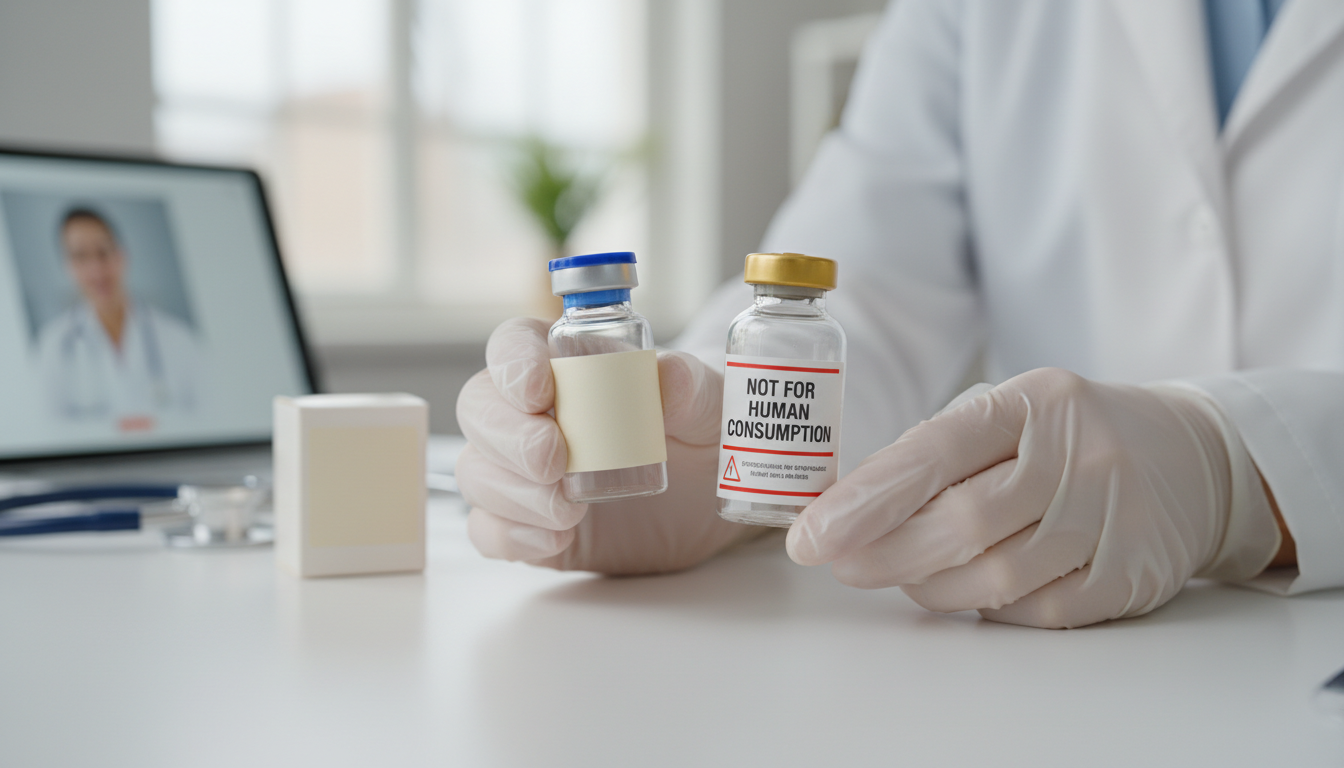
Research Peptides: These are sold online by "research chemical" suppliers and are explicitly labeled "not for human consumption." Buying from these sources is a major risk. The quality, purity, and safety are unknown, and you have no medical guidance. Increased FDA enforcement has caused many of these vendors to close down in 2026 (PeptidesExplorer).
Not sure which treatment path is right for your health goals? A qualified provider can help you understand your options. Take our free quiz to get matched with a provider who specializes in hormone and peptide therapy.
A Step-by-Step Guide on How to Get Peptides
Ready to move forward? Follow these steps to get peptides the right way. This process ensures you are guided by medical professionals and receive high-quality, regulated products.
Step 1: Identify Your Goals and Research Potential Peptides
First, clarify what you hope to achieve. Are you looking for weight management, improved recovery from injuries, better skin and hair, or enhanced athletic performance? Your goals will point you toward certain types of peptides. For example:
- Weight Loss: GLP-1 agonists like semaglutide and tirzepatide are powerful, FDA-approved options.
- Injury Repair & Recovery: Peptides like BPC-157 and TB-500 are commonly explored for their healing properties, often available through compounding pharmacies.
- Anti-Aging & Vitality: Growth hormone secretagogues like CJC-1295/Ipamorelin are used to support cellular health and vitality.
Use resources like our complete guide to peptides to get a general understanding. This initial research helps you have a more informed conversation with your doctor. However, avoid self-diagnosing or deciding on a specific peptide before your consultation. Your provider will make the final recommendation based on your lab work and health profile.
Step 2: Find a Qualified Provider
This is the most important step. You need a licensed healthcare professional to guide you. You have two main options: telehealth clinics or local in-person doctors.
- Telehealth Clinics: These online platforms offer convenience and often specialize in peptide and hormone therapy. They connect you with licensed providers via video calls. This is an efficient way to get expert care from home.
- Local Clinics: An in-person visit with an anti-aging, functional medicine, or hormone specialist is another great option.
When vetting a provider or clinic, look for credentials. Ensure they are staffed by licensed MDs, DOs, or NPs. A legitimate clinic will always require a consultation and lab work before prescribing anything. You can use our directory to find legitimate peptide clinics near you or that serve your state via telehealth.
Step 3: Complete Your Initial Consultation and Lab Work
During your first appointment, you'll discuss your health history, symptoms, and goals with the provider. Be open and honest. This conversation helps the provider determine if you are a good candidate for peptide therapy.
Following the consultation, they will order a comprehensive blood panel. This isn't just a formality. It's essential for safety and effectiveness. The labs provide a baseline to track your progress and ensure the therapy isn't causing any adverse effects. According to PeptideMark, ongoing monitoring with follow-up labs every 8 to 12 weeks is standard practice in responsible peptide therapy. Your panel may include markers for hormones, inflammation, metabolic function, and organ health. This is also where questions about related treatments like TRT often come up.
Step 4: Receive Your Prescription and Treatment Plan
After reviewing your lab results, your provider will create a specific treatment plan if they determine peptide therapy is appropriate for you. This plan will include:
- The specific peptide(s) prescribed.
- The exact dosage and frequency.
- Instructions on how to administer the peptide.
- Dietary and lifestyle recommendations to support your therapy.
You will receive a valid prescription that you can take to the correct type of pharmacy. This is the only legal way to obtain peptides for personal use. If a service offers peptides without a consultation and prescription from a licensed provider, it is not a legitimate medical practice.
Want to see which options fit your budget and goals? Our free quiz takes 3 minutes and matches you with vetted providers who can create a plan based on your unique needs.
Step 5: Order from a Legitimate Pharmacy
Where you get your peptides filled depends on the prescription.
- FDA-Approved Peptides: Drugs like Wegovy, Ozempic, or TYMLOS will be filled at any major retail pharmacy like CVS or Walgreens.
- Compounded Peptides: Peptides like BPC-157 or CJC-1295/Ipamorelin will be sent to a 503A or 503B compounding pharmacy. These are state-licensed facilities that create medications tailored to a specific patient's prescription. Thanks to the 2026 regulatory changes, access to many of these peptides through compounding pharmacies is now more clearly defined (Peptides Academy). Always verify the pharmacy is licensed in the United States.
Step 6: Understand the Costs of Peptides and Related Therapies
Cost is a major factor for many people. Prices vary significantly based on the type of peptide, the source, and your insurance coverage.
- FDA-Approved Peptides: Brand-name GLP-1 drugs like semaglutide and tirzepatide can cost $300 to over $1,000 per month without insurance (PeptidesExplorer). However, a significant 70% price reduction was announced for some of these drugs in 2026, which may lower out-of-pocket costs (PeptideMark). Check our guides on semaglutide cost with insurance for more details.
- Compounded Peptides: These are often more affordable, typically ranging from $100 to $500 per month (PeptideMark). This cost usually includes the peptide itself, but consultation and lab fees are separate.
Many people exploring peptides are also curious about hormone optimization, especially Testosterone Replacement Therapy (TRT). Questions like "how much is trt without insurance" are common. Generally, TRT can cost $200-$500+ per month without insurance, covering consultations, labs, and medication. The question "how much does trt cost with insurance" is harder to answer, as it depends heavily on your plan's deductible and copay, but it can be significantly less, sometimes under $100 per month. A common prescription, testosterone cypionate 200mg, might cost $40-$100 for a 10ml vial without insurance at a pharmacy using a discount card. As for "how much is testosterone pills," oral testosterone is rarely prescribed due to risks to the liver; injections, gels, and creams are the standard.
Step 7: Learn How to Administer Your Peptides
Most peptides are administered via subcutaneous injection into the fat layer just under the skin. While this may sound intimidating, it's a simple and nearly painless process once you learn how. Your provider or a nurse will give you instructions, but here are the basics based on common medical guides (PeptidesRx):
- Reconstitution: Many peptides, especially compounded ones, come as a lyophilized (freeze-dried) powder. You'll need to reconstitute it by adding a specific amount of bacteriostatic water. Our reconstitution calculator tool can help with the math.
- Drawing the Dose: Using a small insulin syringe (typically 28-31 gauge), you will draw your prescribed dose from the vial.
- Injection: Clean the injection site (abdomen, outer thigh, or flank) with an alcohol swab. Pinch a fold of skin and insert the needle at a 90-degree angle. Push the plunger to inject the liquid, then withdraw the needle.
- Disposal: Immediately dispose of the used syringe in a designated sharps container.
Always rotate your injection sites to prevent skin irritation or lipodystrophy, which is a build-up of fatty tissue at the injection site.

Common Mistakes When You Try to Get Peptides
The growing interest in peptides has also led to a lot of misinformation. Avoiding these common mistakes is key to a safe and effective experience.
- Buying from "Research Chemical" Websites: This is the biggest and most dangerous mistake. These products are not intended for human use, have no quality control, and may contain impurities or the wrong substance entirely. Stick to prescribed medications from licensed pharmacies.
- Trying to Get Experimental Peptides: Some peptides, like Retatrutide in 2026, are still in clinical trials and are not yet FDA-approved or legally available for prescription (PeptidesExplorer). The only legitimate way to access them is by enrolling in a clinical trial. Anyone selling them online is doing so illegally.
- Skipping Medical Supervision: Using peptides without a doctor's guidance is risky. You could use the wrong dose, experience unmanaged side effects, or have an underlying condition that makes peptide use unsafe. Lab work and professional oversight are not optional.
- Incorrect Dosing or Administration: More is not better. Taking too much of a peptide can lead to serious side effects, like water retention with growth hormone secretagogues or severe nausea with GLP-1s. Always follow your provider's prescribed protocol.
- Falling for Unrealistic Claims: Peptides are powerful tools, but they are not magic bullets. Be wary of any source that promises miraculous results without mentioning diet, exercise, and potential side effects.
When to Contact Your Doctor
Once you start peptide therapy, maintaining open communication with your provider is essential. Contact your doctor immediately if you experience any severe or unexpected side effects.
Common side effects to monitor for include:
- GLP-1 Agonists (Semaglutide, Tirzepatide): Nausea, vomiting, diarrhea, or constipation are common, especially when starting or increasing a dose (PeptideMark).
- Growth Hormone Secretagogues (Ipamorelin, CJC-1295): Water retention, tingling in hands/feet, or increased hunger.
- PT-141: Flushing, headache, or nausea after injection.
Some FDA-approved peptides carry specific warnings. For example, TYMLOS has a warning for a potential risk of bone cancer (osteosarcoma), and RYBELSUS has a boxed warning for thyroid C-cell tumors (FDA). Your doctor will have discussed these risks with you, but report any concerning symptoms. You should also contact your provider if you feel the treatment isn't working or if you have questions about your protocol. Regular follow-up appointments are part of the process and ensure your treatment remains safe and effective.
Ready to explore your options with a medical professional? Take our free 3-minute quiz to get matched with a licensed provider who can help you navigate peptide therapy safely.
FAQs
How do I know if a peptide clinic is legitimate?
A legitimate peptide clinic will always require a consultation with a licensed medical provider (MD, DO, NP), order comprehensive lab work before prescribing, and use licensed U.S.-based pharmacies to fill prescriptions. Look for transparency in their process and staff credentials. Learn more on how to find a legitimate peptide clinic.
Can I get peptides without a prescription?
No, you cannot legally get peptides for human use without a prescription. Both FDA-approved peptide drugs and peptides from compounding pharmacies require a valid prescription from a licensed healthcare provider. Products sold online without a prescription are typically "research chemicals" and are not safe for human use.
How much does peptide therapy cost per month?
The cost varies widely. Compounded peptides prescribed through a telehealth or functional medicine clinic typically range from $100 to $500 per month. FDA-approved brand-name peptides, like those for weight loss, can cost $300 to over $1,000 per month without insurance, though prices may be changing. Check our guide on peptide therapy cost for a full breakdown.
What's the difference between compounded and FDA-approved peptides?
FDA-approved peptides have undergone extensive, large-scale clinical trials to prove their safety and effectiveness for a specific condition. Compounded peptides are custom-made by a specialized pharmacy based on a doctor's prescription. While legal to prescribe, they have not gone through the same rigorous FDA approval process and often have less human clinical data supporting their use.
Are peptides legal in 2026?
Yes, many peptides are legal in 2026 when obtained correctly. Over 80 peptides are FDA-approved as prescription drugs. Additionally, a key regulatory change in early 2026 reclassified about 14 other peptides, making them legally available for doctors to prescribe through compounding pharmacies. The key is that all legal routes for human use require a prescription from a doctor.
Contributing to evidence-based peptide education and provider transparency.
Too many clinics, not enough clarity?
We don't sell peptides. Tell us your goals and we'll connect you with a vetted provider who can figure out what actually makes sense for you.
See what's right for youRelated articles
How to Actually Find Peptide Therapy Near Me
Don't just Google "peptide therapy near me." Learn how to vet clinics, what questions to ask your doctor, and how to spot a trustworthy provider.
Provider GuideSigns of a Quality Peptide Compounding Pharmacy
Worried about quality? Learn the critical questions to ask any peptide compounding pharmacy, plus the red flags that signal you should stay away.
Provider GuideFinding Legit Peptide Clinics in the UK
Don't just Google 'peptide clinics uk'. Our guide shows you how to find a qualified provider, what to ask in a consult, and how to avoid scams.