GLP-1 Medications Explained in 2026: Semaglutide, Tirzepatide & What's Next
A clear guide to GLP-1 medications for weight loss in 2026 — how they work, how they compare, new oral options, pipeline drugs to watch, and who qualifies for treatment.
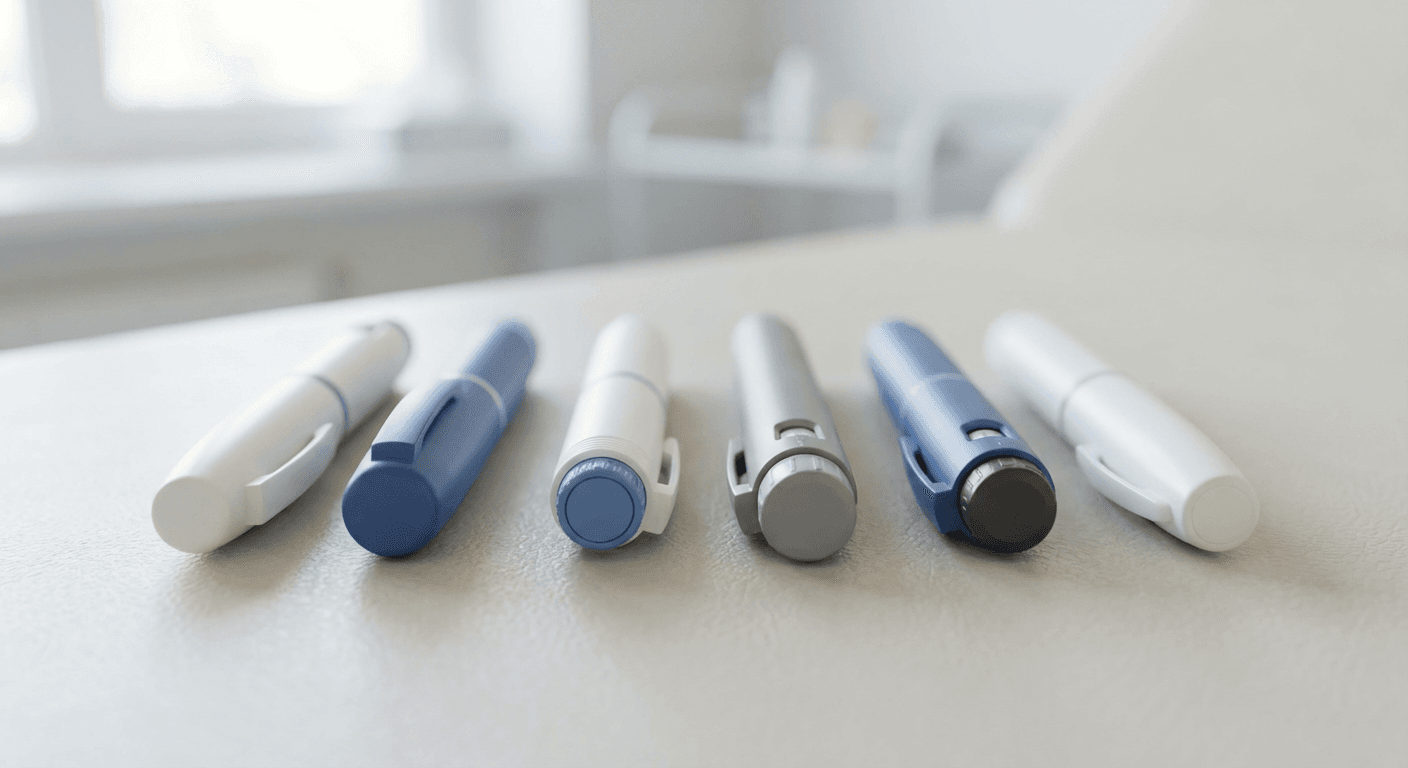
What Are GLP-1 Medications?
GLP-1 medications are a class of drugs that mimic a hormone your body already makes. GLP-1 (glucagon-like peptide-1) is released by cells in your gut after you eat. It tells your brain you're full, signals your pancreas to release insulin, and slows digestion. The problem: natural GLP-1 breaks down in minutes. These drugs are engineered to last much longer.
The first GLP-1 receptor agonist, exenatide (Byetta), was approved in 2005 for type 2 diabetes. Two decades later, the class has exploded. Zepbound became the most-prescribed weight management medication in 2025. Oral Wegovy launched in January 2026, giving patients a pill option for the first time. Semaglutide and tirzepatide dominate the market, and the pipeline behind them keeps pushing average weight loss numbers higher.
If you've heard of Ozempic, Wegovy, Mounjaro, or Zepbound, you already know GLP-1 drugs by their brand names.
How GLP-1 Drugs Work for Weight Loss
GLP-1 receptor agonists target three mechanisms that all feed into weight loss.
Appetite suppression. They activate GLP-1 receptors in the hypothalamus, the part of your brain that regulates hunger. The effect is real and consistent: people on these drugs report less interest in food, smaller portions, and fewer cravings. It doesn't feel like willpower. It feels like the volume on hunger got turned down.
Slower gastric emptying. Food sits in your stomach longer, which extends the feeling of fullness after a meal. This is also why nausea is the most common side effect — your digestive system isn't used to operating at that speed.
Improved insulin signaling. GLP-1 drugs enhance glucose-dependent insulin release, which smooths out blood sugar spikes after eating. Fewer spikes means fewer crashes, and fewer crashes means fewer of the urgent carb cravings that derail people.
Some newer GLP-1 medications also target GIP (glucose-dependent insulinotropic polypeptide) receptors or glucagon receptors, adding extra metabolic effects on top of the GLP-1 mechanism. That's where tirzepatide and the pipeline drugs get interesting.
Semaglutide (Ozempic & Wegovy)
Semaglutide is the GLP-1 medication that started the current wave. Novo Nordisk makes it. Ozempic is approved for type 2 diabetes; Wegovy is the weight-loss-specific version. Same molecule, different dosing and FDA indication. Both are once-weekly injections.
The STEP clinical trials showed average weight loss of 15-17% of body weight over 68 weeks. That moved the needle from "modest benefit" to "this actually works." Cardiovascular benefits have also been demonstrated — Wegovy received an FDA indication for reducing heart attack and stroke risk in adults with obesity.
Oral Wegovy changed the game in early 2026. The FDA approved a 25mg once-daily semaglutide tablet in December 2025, and it launched in January 2026 — the first oral GLP-1 medication approved for weight management. The OASIS 4 trial showed 16.6% mean weight loss. Starting price is around $149/month, a fraction of what the injectable costs. For patients who don't want a weekly shot, this removes the single biggest barrier to treatment.
We have a full breakdown of semaglutide here, covering cost, side effects, and how to get it through a licensed provider.
Brand-name injectable Wegovy runs over $1,300 per month without insurance. Compounded semaglutide availability has been heavily restricted by the FDA as of 2026.
Tirzepatide (Mounjaro & Zepbound)
Tirzepatide, made by Eli Lilly, works differently from semaglutide. It's a dual GIP/GLP-1 receptor agonist, meaning it activates two hormone pathways instead of one. GIP receptors play a role in fat metabolism and insulin sensitivity, so hitting both targets appears to produce stronger weight loss and better blood sugar control.
Mounjaro is the diabetes brand. Zepbound is approved for chronic weight management. Both are weekly injections.
The SURMOUNT-1 trial showed average weight loss of 22.5% at the highest dose over 72 weeks. That's a significant step up from semaglutide's numbers. Some participants lost over 25% of their body weight. The SURMOUNT-5 head-to-head trial put the gap in sharp relief: tirzepatide delivered -20.2% weight loss versus -13.7% for semaglutide. Not a close call.
Zepbound was the most-prescribed weight management medication in 2025, and 2026 is expanding access further. A new multi-dose KwikPen was approved in February 2026, making self-administration easier. Medicare coverage for Zepbound begins April 2026 at a maximum out-of-pocket cost of $50/month — a massive shift for patients over 65 who previously paid full price.
Side effects are similar to semaglutide: nausea, diarrhea, constipation, and abdominal discomfort, particularly during dose escalation. Brand-name Zepbound costs roughly $1,000 to $1,100 per month without insurance, though the Medicare pricing changes that picture for qualifying patients. Compounded tirzepatide is no longer available — compounding ended as supply shortages resolved.
Liraglutide (Saxenda & Victoza)
Liraglutide is the older GLP-1 option. Also from Novo Nordisk. Victoza treats type 2 diabetes. Saxenda is the weight loss version. The key difference from semaglutide: liraglutide requires daily injections instead of weekly ones.
Average weight loss in clinical trials was about 8% of body weight over 56 weeks. Solid, but roughly half of what semaglutide delivers. This is why liraglutide has largely been overtaken in practice, though it remains a reasonable option for patients who don't tolerate semaglutide or tirzepatide well.
Saxenda costs around $1,300 per month at list price. Some insurance plans cover it more readily than the newer agents because it's been on the market since 2014 and has a longer safety track record.
What's Coming Next
The GLP-1 pipeline is deep. Oral Wegovy already arrived (covered above). Here's what else is moving toward market.
Orforglipron (Eli Lilly). This is the one to watch right now. Orforglipron is an oral non-peptide GLP-1 receptor agonist — a small molecule designed from the ground up for oral dosing, not a peptide that needs special formulation to survive your stomach. Phase 3 data showed 12.4% weight loss over 72 weeks. It received the FDA Commissioner's National Priority Voucher in November 2025, and an FDA decision is expected in March 2026. The practical upside: no food or water restrictions, unlike oral semaglutide. If approved, it would be cheaper and easier to manufacture than injectable peptides.
Retatrutide (Eli Lilly). The triple agonist — it hits GIP, GLP-1, and glucagon receptors simultaneously. Phase 2 results were striking: 24.2% weight loss at the highest dose in just 48 weeks, and the curves hadn't plateaued. That's approaching bariatric surgery territory. Phase 3 trials are ongoing, with a projected launch in 2028.
Survodutide (Boehringer Ingelheim). A dual glucagon/GLP-1 receptor agonist. Glucagon drives fat burning and energy expenditure, so this combination attacks weight from both the appetite side and the metabolic rate side. Phase 2 data showed roughly 19% weight loss over 46 weeks. Phase 3 trials are now focused on MASH (metabolic dysfunction-associated steatohepatitis) and liver disease, which could carve out a distinct niche from the pure weight-loss drugs.
The direction is clear: more targets, bigger weight loss numbers, and more oral options. 2026 is the year GLP-1 treatment stops being injection-only.
GLP-1 Medications Compared
Here's how the current and near-term GLP-1 drugs stack up.
| Medication | Mechanism | Avg. Weight Loss | Dosing | FDA Status | Cost Range (no insurance) |
|---|---|---|---|---|---|
| Semaglutide injection (Wegovy) | GLP-1 | 15-17% | Weekly injection | Approved (weight loss) | $1,300+/mo |
| Oral semaglutide (Oral Wegovy) | GLP-1 | 16.6% | Daily pill | Approved Dec 2025 | ~$149/mo |
| Tirzepatide (Zepbound) | GIP + GLP-1 | 20-22.5% | Weekly injection | Approved (weight loss) | $1,000-1,100/mo ($50/mo Medicare) |
| Liraglutide (Saxenda) | GLP-1 | ~8% | Daily injection | Approved (weight loss) | ~$1,300/mo |
| Orforglipron | GLP-1 (small molecule) | 12.4% | Daily pill | FDA decision expected Mar 2026 | TBD |
| Retatrutide | GIP + GLP-1 + Glucagon | 24.2% | Weekly injection | Phase 3 (launch ~2028) | TBD |
| Survodutide | Glucagon + GLP-1 | ~19% | Weekly injection | Phase 3 (MASH focus) | TBD |
Weight loss percentages are based on highest available doses from clinical trial data. Individual results vary. Table updated March 2026.
Who Are GLP-1 Medications For?
FDA approval for GLP-1 weight loss drugs (Wegovy, Zepbound) applies to adults with a BMI of 30 or higher, or a BMI of 27 or higher with at least one weight-related condition like type 2 diabetes, high blood pressure, high cholesterol, or obstructive sleep apnea.
Some providers prescribe off-label for patients who fall slightly outside those criteria, particularly if metabolic markers suggest the benefit outweighs the risk. That's a clinical judgment call between you and your provider.
Who should NOT take GLP-1 medications:
- Anyone with a personal or family history of medullary thyroid carcinoma (MTC) or Multiple Endocrine Neoplasia syndrome type 2 (MEN 2)
- People with a history of pancreatitis should discuss risks carefully with their provider
- Pregnant or breastfeeding women — these drugs should be stopped at least two months before a planned pregnancy
- Patients with severe gastroparesis, since GLP-1 drugs further slow gastric emptying
- Anyone with a history of serious allergic reaction to the specific medication
A thorough intake process matters. A good provider will run baseline bloodwork, review your medical history, screen for contraindications, and start you at a low dose with gradual titration. If someone is willing to prescribe without asking questions, that's a red flag.
GLP-1 Weight Loss Medication FAQs
What is the strongest GLP-1 for weight loss?
Among currently approved medications, tirzepatide (Zepbound) produces the highest average weight loss at about 22.5% of body weight in clinical trials. The SURMOUNT-5 head-to-head trial confirmed the gap: -20.2% for tirzepatide vs. -13.7% for semaglutide. If retatrutide reaches approval around 2028, its triple-agonist approach could push those numbers past 24%. But "strongest" isn't always "best for you." Side effect tolerance, cost, insurance coverage, and your specific health profile all factor in.
Are GLP-1 medications safe long term?
The safety data for semaglutide and liraglutide now spans several years. The most common issues are GI side effects that typically improve over time. Rare but serious risks include pancreatitis, gallbladder problems, and the theoretical thyroid concern flagged in animal studies. Tirzepatide is newer, so its long-term track record is shorter. Ongoing post-marketing surveillance continues for all of these drugs. For most patients who qualify, the cardiovascular and metabolic benefits of significant weight loss outweigh the known risks.
Do you have to take GLP-1 medications forever?
Current evidence says stopping leads to weight regain. The STEP 1 extension trial showed participants regained about two-thirds of lost weight within a year of discontinuing semaglutide. This isn't a flaw in the drug. Obesity involves hormonal and neurological signals that persist, and GLP-1 medications work by counteracting those signals. Most providers treat these as ongoing therapies, similar to blood pressure medication. Some patients successfully taper to a lower maintenance dose.
Can you get GLP-1 medications without being diabetic?
Yes. Wegovy and Zepbound are approved specifically for weight management, separate from diabetes treatment. You don't need a diabetes diagnosis. You do need to meet the BMI criteria (30+, or 27+ with a weight-related condition). Many telehealth platforms and weight management clinics now prescribe GLP-1 drugs to non-diabetic patients who qualify.
What are the alternatives to Ozempic?
Several. Tirzepatide (Mounjaro/Zepbound) is the main competitor and produces greater weight loss in trials. Oral Wegovy launched in January 2026 as a daily pill starting around $149/month — a major alternative for people who want semaglutide without the injection. Liraglutide (Saxenda) is an older daily-injection option. Compounded semaglutide is now heavily restricted by the FDA, and compounded tirzepatide is no longer available. If you're looking beyond GLP-1 drugs entirely, options include phentermine-topiramate (Qsymia), naltrexone-bupropion (Contrave), and bariatric surgery for qualifying patients. Each has different efficacy, side effect profiles, and cost structures. A provider can help you sort through what fits your situation.
Contributing to evidence-based peptide education and provider transparency.
Too many clinics, not enough clarity?
We don't sell peptides. Tell us your goals and we'll connect you with a vetted provider who can figure out what actually makes sense for you.
See what's right for youRelated articles
A Step-by-Step Gelatin Recipe for Weight Loss
Seen the viral "pink trick"? We break down the simple gelatin recipe for weight loss. Learn our step-by-step method to help manage hunger and feel full.
GLP-1 Weight LossOzempic Cost in 2026: What You'll Actually Pay
The 2026 Ozempic cost can be anywhere from $25 to over $1,400 a month. Discover why and learn how to find savings with or without insurance coverage.
GLP-1 Weight LossHow Zep Weight Loss Works and What to Expect
Thinking about zep weight loss? We cover how this drug works, what realistic results look like, common side effects, and how it compares to Ozempic.