Mausoleums Cost in 2026: What You'll Actually Pay
Curious about the mausoleums cost in 2026? Our guide breaks down the price of private vs. community crypts, opening/closing fees, and hidden expenses.
This content is for informational purposes only and does not constitute medical advice. Always consult with a qualified professional for financial or end-of-life planning.
Planning for the future involves many important decisions, and understanding the final arrangements for yourself or a loved one is a significant part of that process. One option many consider is entombment in a mausoleum. However, the mausoleums cost can be a major factor. This guide breaks down the expenses in 2026, so you can understand the investment required. While this is a different kind of financial planning than, say, budgeting for the monthly pitavastatin cost for cholesterol management, the principle is the same. You need clear, accurate numbers to make an informed choice. We'll explore the current cost of different mausoleum types to provide clarity on this major expense.
Quick Mausoleum Price Summary for 2026
The cost of a mausoleum varies dramatically based on whether it is a private structure or a crypt within a larger community building. Private mausoleums offer exclusivity and customization, while community mausoleums provide a more affordable alternative. Here’s a quick overview of what you can expect to pay this year.
| Mausoleum Type |
|---|
| Community Mausoleum Crypt (Single) |
| Community Mausoleum Crypt (Side-by-Side) |
| Cremation Niche (in a Mausoleum) |
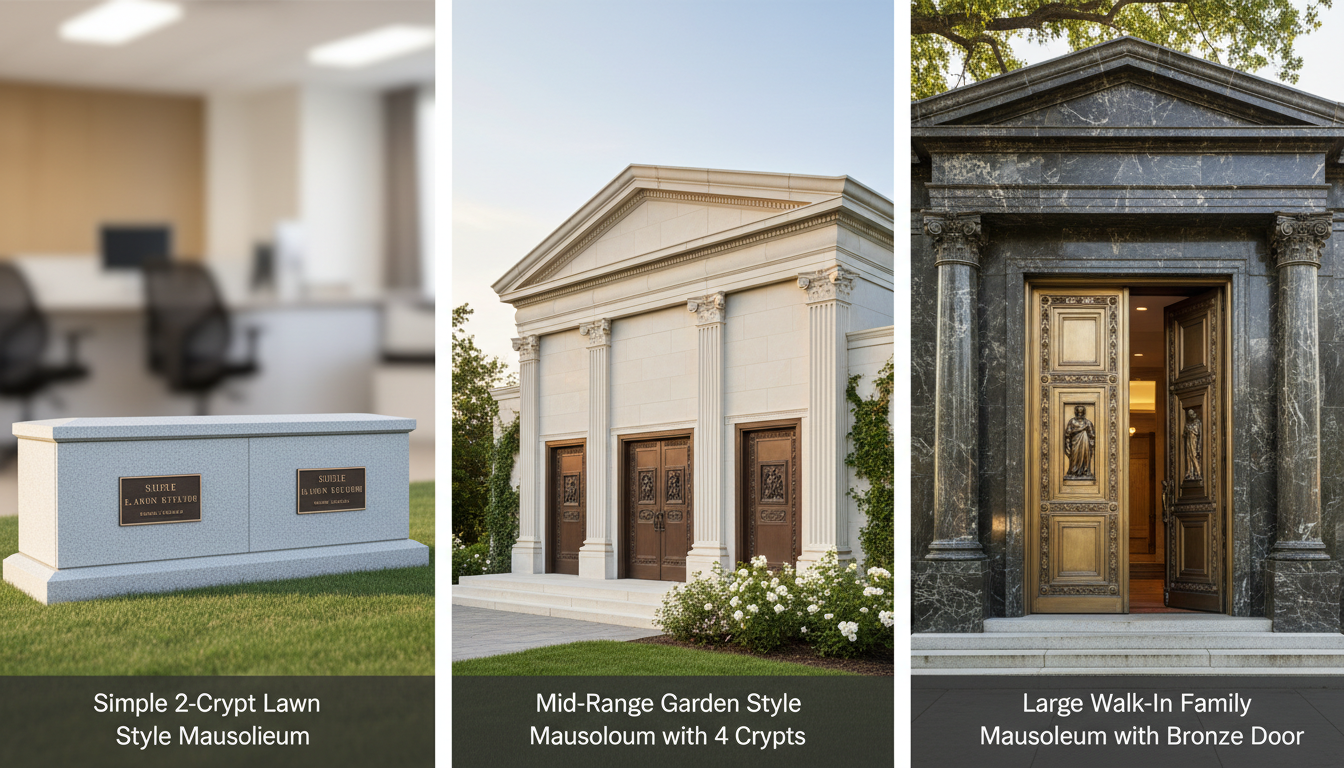
| Private "Lawn Style" Mausoleum (1 Crypt) |
| Private "Lawn Style" Mausoleum (2 Crypts) |
| Private Walk-In Mausoleum (2 Crypts, Vestibule) |
| Private Family Mausoleum (Exterior Crypts) |
| Custom Walk-In Family Mausoleum (2-8+ Crypts) |
Prices are based on 2026 data from Rome Monuments, Peter Troost Monument, PayForFunerals.com, and other industry sources. These are starting prices and do not include the cemetery plot, installation fees, or personalization, which can add thousands to the final cost.
Planning for the future encompasses many aspects of life, from financial legacies to personal health. While we're breaking down mausoleum costs here, if you're also focused on optimizing your healthspan for the years ahead, you're not alone. Many are exploring options from TRT and peptides to advanced wellness strategies. If you want to see what might be right for you, take our free quiz to get matched with a provider.
What Influences Mausoleums Cost?
Several key factors drive the wide price range for mausoleums. Understanding these variables can help you see where your money is going and identify areas where you might be able to save. The total mausoleums cost isn't just one number but a combination of many different choices.
1. Type and Size: As the table above shows, the biggest price driver is the type. A single crypt in a large, shared community mausoleum is the most accessible option, sometimes costing less than a traditional in-ground burial. Conversely, a private, walk-in family mausoleum is a piece of custom architecture, and its price reflects that. The more people the structure is designed to hold, the higher the cost.
2. Materials: Granite is the most common material due to its durability, but not all granite is equal. The color, origin, and quality of the stone significantly affect the price. Common colors like gray are generally more affordable, while rarer colors like blue or highly patterned varieties can be much more expensive (PayforFunerals.com). Some high-end mausoleums might also incorporate marble, bronze, or stained glass, further increasing the cost.
3. Design and Customization: A simple, pre-designed "lawn style" mausoleum will cost far less than a custom-designed structure with unique architectural elements. According to Rome Monuments, styles can range from Classical Revival to Gothic, and each added feature like columns, elaborate roof designs, benches, statues, or custom etchings adds to the final price tag. A custom bronze door alone can add tens of thousands of dollars.
4. Location: The cemetery itself plays a huge role. Plots in major metropolitan areas are more expensive than those in rural locations. Furthermore, the specific location within the cemetery matters. A plot in a highly visible or desirable section will command a premium.
5. Additional Fees: The price quoted by a builder is often just for the structure itself. You must also budget for:
- Cemetery Plot: The land the mausoleum will sit on.
- Foundation & Installation: This can be a complex process involving heavy machinery, sometimes costing thousands of dollars. Rome Monuments notes that a pre-assembled mausoleum for $26,878 does not include freight or crane rental.
- Entombment Fees: The cost for the cemetery to perform the entombment.
- Personalization: Engraving names, dates, and epitaphs.
- Perpetual Care: Many cemeteries charge a one-time fee (often 10-15% of the plot cost) for an endowment fund that covers long-term maintenance of the grounds.
Comparing large-scale expenses can be enlightening. The price tag for a custom family mausoleum can approach that of a luxury vehicle or even a small home. While it's nowhere near the reported cost of a B-2 bomber, which runs into the billions, it highlights that this is a major financial undertaking that requires careful budgeting.

Can Insurance Cover the Mausoleums Cost?
A common question is whether insurance can help pay for a mausoleum. The answer is nuanced. You cannot buy a policy that "insures" the mausoleum itself against damage in the same way you insure your home. However, you can use specific types of insurance to fund the purchase.
There are primarily two ways insurance is used to cover the mausoleums cost:
1. Final Expense Insurance (Burial Insurance): This is a type of whole life insurance policy with a small death benefit, typically ranging from $5,000 to $50,000. It is specifically designed to cover end-of-life expenses. The premiums are usually fixed, and as long as you pay them, the policy remains active. Upon the insured person's passing, the beneficiary receives the death benefit tax-free and can use it for any purpose, including purchasing a mausoleum crypt or contributing to the cost of a private structure.
This is a popular option because the application process is often simple, sometimes with no medical exam required. However, the limited payout means it's usually only sufficient for a crypt in a community mausoleum, not a private family estate. The cost of a crypt, ranging from $5,000 to $15,000, fits well within the coverage amounts of most final expense policies.
2. Traditional Life Insurance (Term or Whole): A larger life insurance policy can also be used to fund a mausoleum. If you have a term or whole life policy with a substantial death benefit ($100,000, $500,000, or more), your beneficiary can allocate a portion of those funds toward end-of-life arrangements. This is the most likely method for funding an expensive private or family mausoleum.
For example, if a family decides on a two-crypt mausoleum starting at $50,000 (Peter Troost Monument), a life insurance payout could easily cover this expense along with other final costs. The decision rests with the beneficiary, unless the policyholder has made their wishes clear through a will or trust.
It's important to differentiate this from using insurance to cover ongoing health expenses. People often wonder about the Zofran cost during a medical treatment or how insurance covers GLP-1 medications. While health insurance helps with those immediate needs, life insurance is a tool for planning future financial obligations, like funeral costs. Deciding if a policy is worth it requires a similar cost-benefit analysis as asking if TRT is worth it for your long-term health goals.
Paying Without Insurance: The Full Cash Price
If you plan to pay for a mausoleum out-of-pocket, it’s crucial to understand the complete, all-in price. The sticker price from a monument company is rarely the final number. Here’s a detailed look at the cash-pay current cost in 2026.
Let's build a realistic scenario for a private, two-crypt "lawn style" mausoleum.
-
The Structure: Research from Rome Monuments and Peter Troost Monument shows that a basic, pre-designed two-crypt granite mausoleum starts between $29,000 and $50,000. Let’s use an average starting figure of $40,000. This price is for a standard granite color and design. Opting for a premium granite or slight modifications could easily add $5,000 to $15,000.
-
The Cemetery Plot: You must buy the land where the mausoleum will be built. The cost for a plot large enough for a small private mausoleum can range from $5,000 to $20,000 or more, depending heavily on the cemetery and its location.
-
Foundation and Installation: The mausoleum needs a concrete foundation. The builder must then transport the structure (which can weigh many tons) to the site and use a crane to set it in place. These costs are often bundled but can range from $4,000 to $10,000. Factors like distance from the quarry and ease of access to the plot affect this price.
-
Cemetery Fees: Cemeteries charge for various services. This includes an "interment and entombment" fee for the act of placing the casket in the crypt, which averages $1,000 to $2,500 per person. They also typically require a one-time contribution to their perpetual care fund, which might be 10-15% of the plot cost, adding another $750 to $3,000.
-
Personalization: Lettering for names and dates is a basic necessity. Expect to pay a few hundred to over a thousand dollars, depending on the complexity. Adding a ceramic portrait, a bronze vase, or custom artwork will increase the cost further.
Total Estimated Cash Cost (2-Crypt Private Mausoleum):
- Mausoleum Structure: $40,000
- Cemetery Plot: $12,000
- Foundation & Installation: $7,000
- Cemetery & Entombment Fees (for two): $5,000
- Perpetual Care Fee: $1,800
- Personalization: $1,200
- Estimated Total: $67,000
This shows how a mausoleum advertised with a starting price of $29,000 can quickly become a $60,000 to $70,000+ project. For a larger, walk-in family mausoleum starting at $265,000 (Johnson Monument), the all-in cost could easily approach $400,000 or more. It's a financial commitment that requires significant planning, similar to how one might plan for large, ongoing health investments beyond what insurance covers.
Investing in a major asset like this is a significant choice. Similarly, people often invest in their current health to improve their quality of life for years to come. If you're exploring ways to optimize your wellness, from hormone balance to metabolic health, knowing your options is key. Our 3-minute quiz can match you with vetted providers who can guide you.
Mausoleum Builder Prices Compared
Unlike finding an online clinic for testosterone therapy, you’ll be working with specialized monument builders for a mausoleum. These companies design, construct, and install these structures. Below is a comparison of starting prices from several well-known builders in the U.S. for 2026. This comparison can help you gauge the market and understand what different providers offer.
| Builder |
|---|
| Rome Monument |
| Peter Troost Monument |
| Johnson Monument |
| PayForFunerals.com (Market Average) |
Note: These are starting prices listed by the companies for the structure only. Final costs will be higher after factoring in the plot, foundation, installation, and other fees.
As you can see, prices are broadly similar for basic structures, but companies may specialize in different areas. Rome Monument provides extensive detail on lower-cost, in-stock options, while Peter Troost and Johnson Monument highlight their capabilities in building large, custom family estates. The "best" provider depends entirely on your specific needs, budget, and desired level of customization.
How to Save Money on Your Mausoleum
Given the substantial investment, many people look for ways to reduce the overall mausoleums cost. Fortunately, there are several practical strategies to make it more affordable without compromising on dignity.
-
Opt for a Community Mausoleum: This is the single most effective way to save money. A crypt in a community mausoleum offers the same protection from the elements as a private one but at a fraction of the price. Costs are shared among hundreds of families, bringing the price for a single crypt down to between $5,000 and $15,000.
-
Choose Pre-Designed Over Custom: Just like buying a model home is cheaper than hiring an architect, choosing a builder’s existing, pre-designed mausoleum is much more cost-effective than a fully custom project. Builders have optimized the construction of these models, reducing labor and design costs.
-
Select Standard Granite: The choice of granite can change the price by tens of thousands of dollars. Sticking with a common, domestically sourced granite like Georgia Gray will be significantly cheaper than an exotic, imported stone like Blue Pearl from Norway.
-
Consider a Columbarium Niche: If cremation is the plan, a niche in a mausoleum (a columbarium) is an extremely affordable option. These small spaces, designed to hold an urn, typically cost between $1,000 and $3,000. This provides a permanent, memorialized location for a fraction of the cost of a full-body crypt.
-
Purchase Pre-Need: Funeral and cemetery costs tend to rise every year due to inflation and increasing land values. By purchasing your mausoleum crypt or private plot "pre-need" (before it is needed), you lock in today’s prices. Many cemeteries and builders also offer payment plans for pre-need purchases, allowing you to spread the cost over several years.
-
Simplify the Design: For private mausoleums, every architectural flourish adds to the bill. Opt for a simple roof design, minimal engraving, and avoid add-ons like benches, statues, or stained-glass windows to keep the final cost closer to the starting price. Managing these costs is like managing other large expenses. Just as you might compare options to manage the Stretch Lab cost, you can compare mausoleum features to fit your budget.
Is a Mausoleum Worth the Cost?
With prices ranging from several thousand to hundreds of thousands of dollars, it's fair to ask if a mausoleum is a worthwhile expense. The answer is deeply personal and depends on family traditions, values, and financial priorities.
Arguments for a Mausoleum:
- Permanence and Protection: Mausoleums offer a clean, dry, and secure space that protects the casket from the elements, which is a primary draw for many.
- Dignity and Prestige: For some, a private mausoleum is a symbol of legacy and a final tribute to a family's history and accomplishments.
- Visitor Comfort: They provide a sheltered place for family and friends to visit, regardless of the weather. Walk-in mausoleums offer a private, peaceful interior space for reflection.
- Family Centralization: A family mausoleum allows multiple generations to be laid to rest in the same location, creating a central point of remembrance.
Arguments Against a Mausoleum:
- The High Cost: The primary drawback is the immense expense, especially for private structures. The money could be used for other purposes, such as an inheritance for living family members or charitable donations.
- Ongoing Maintenance: While perpetual care funds help, there can still be concerns about the long-term upkeep of the structure over many decades or centuries.
- Limited Space: A mausoleum has a finite number of crypts. As a family grows, it may not accommodate everyone, leading to difficult decisions down the line.
Ultimately, the decision balances the desire for a lasting, protected memorial against the significant financial outlay. There is no right or wrong answer, only what feels appropriate for you and your family.
Ready to take control of your future, both in planning and in health? A big part of that is understanding all your options. Take our free 3-minute quiz to get matched with a licensed provider who can help you build a plan for your wellness goals.
FAQs
What is the cheapest mausoleum option in 2026? The most affordable option is a cremation niche within a community mausoleum, which typically costs between $1,000 and $3,000. For full-body burial, a single crypt in an indoor community mausoleum is the least expensive choice, generally ranging from $5,000 to $15,000.
How much does a 2-person mausoleum cost in 2026? A side-by-side crypt for two people in a community mausoleum usually costs between $12,000 and $30,000. A private, non-walk-in two-crypt mausoleum starts around $29,000 to $50,000, but the all-in cost with plot and installation is often closer to $50,000 to $70,000.
Are there ongoing fees for a mausoleum? Yes. Most cemeteries charge a one-time perpetual care fee, often 10-15% of the property cost, which is put into a trust to fund the general maintenance of the cemetery grounds. For private mausoleums, there may also be separate annual maintenance fees for the structure itself, which can range from $200 to $800 per year according to some sources.
Why is the mausoleums cost so high for private structures? Private mausoleums are expensive because they are custom architectural projects. The high cost comes from the quality materials like solid granite, the skilled labor for design and construction, the transportation of extremely heavy materials, the use of cranes for installation, and the land they occupy. The cost difference is similar to that between buying a condo and building a custom home.
Contributing to evidence-based peptide education and provider transparency.
Too many clinics, not enough clarity?
We don't sell peptides. Tell us your goals and we'll connect you with a vetted provider who can figure out what actually makes sense for you.
See what's right for youRelated articles
How to Actually Find Peptide Therapy Near Me
Don't just Google "peptide therapy near me." Learn how to vet clinics, what questions to ask your doctor, and how to spot a trustworthy provider.
Provider GuideSigns of a Quality Peptide Compounding Pharmacy
Worried about quality? Learn the critical questions to ask any peptide compounding pharmacy, plus the red flags that signal you should stay away.
Provider GuideFinding Legit Peptide Clinics in the UK
Don't just Google 'peptide clinics uk'. Our guide shows you how to find a qualified provider, what to ask in a consult, and how to avoid scams.