Is TRT Worth It? An Honest Look at the Pros and Cons
Trying to decide if TRT is worth it? We cut through the hype to cover the real costs, benefits, side effects, and long-term realities of therapy.

This content is for informational purposes only and does not constitute medical advice. Always consult a qualified healthcare provider for any health concerns or before making any decisions related to your health or treatment.
Deciding whether to start Testosterone Replacement Therapy (TRT) is a major health decision. With so much conflicting information online, separating fact from fiction can feel impossible. Many men find themselves asking the same central question: is TRT worth it? The answer depends on your health, goals, and how you feel daily. This guide provides clear, direct answers based on the latest 2026 research to help you have an informed discussion with your doctor.
We'll cover everything from the real costs and updated safety information to the benefits you can realistically expect. For men diagnosed with clinical hypogonadism (low testosterone), optimizing levels can significantly improve quality of life. Let's look at the facts.
General Questions About TRT
What is TRT and who is it officially for?
Testosterone Replacement Therapy, or TRT, is a medical treatment designed to restore testosterone levels to a normal range. It's primarily intended for men diagnosed with hypogonadism, a condition where the body doesn't produce enough testosterone on its own. This can be caused by problems with the testicles (primary hypogonadism) or issues with the pituitary gland or hypothalamus in the brain (secondary hypogonadism). While many men experience a natural decline in testosterone with age, the FDA's approved use of TRT is still for these specific medical conditions, not just for age-related low T (bodyworkstn.com).
To learn more about the fundamentals, read our detailed guide, What Is TRT and Who Is It Actually For?.
How do I know if I have low testosterone?
The only way to know for sure if you have low testosterone is through a blood test. A doctor will typically order a test for total and free testosterone, usually in the morning when levels are highest. Symptoms like fatigue, low libido, and brain fog can suggest low T, but they can also be caused by many other health issues. A blood test provides the objective data needed for a diagnosis. Your provider will interpret your results based on established reference ranges and your specific symptoms.
If you're experiencing symptoms, the first step is to learn how to get your testosterone levels tested and discuss the results with a qualified provider.
What are the common symptoms of low T?
Symptoms of low testosterone can be both physical and mental. Many men report a persistent lack of energy, reduced sex drive (libido), and difficulty achieving or maintaining erections. Other common signs include loss of muscle mass, an increase in body fat, brain fog, and mood changes like irritability or depression. Some men also experience poor sleep quality, reduced body hair, and even hot flashes. Because these symptoms overlap with other conditions, it's crucial to get a proper diagnosis from a healthcare provider rather than self-diagnosing.
What benefits can I realistically expect from TRT?
For men with clinically diagnosed hypogonadism, the benefits of TRT can be significant. Most men report improvements in energy levels, mood, and cognitive function. Many also see an increase in libido and improved sexual function. Physically, TRT can help increase muscle mass and decrease fat mass, especially when combined with a healthy diet and exercise. The landmark TRAVERSE trial also noted a 22.5% reduction in new-onset diabetes among men on TRT (onlinelibrary.wiley.com). It's important to have realistic expectations; TRT restores normal function, it doesn't create superhuman abilities.
See real-world examples in our post on TRT before and after results.
How long does it take for TRT to work?
The timeline for TRT results varies by individual and the symptom. Some benefits appear relatively quickly. For example, improvements in libido can often be noticed within 3 to 6 weeks. Changes in mood, energy, and cognitive function may take a few months to become fully apparent. Physical changes, such as increased muscle mass and reduced body fat, typically take longer, often 3 to 6 months or more, and require consistent exercise and proper nutrition to maximize. Your provider will monitor your progress and blood work to ensure your levels are optimized.
For a deeper dive, check out our article: Does TRT Work? A Realistic Look at the Results.
What are the different types of TRT available in 2026?
In 2026, you have several options for TRT. Injections, like testosterone cypionate, are a common and cost-effective method, typically costing $30-$80 per month (vidavitalmedical.com). Subdermal pellets are inserted under the skin and release testosterone over several months, with an average monthly cost of $100-$200. Topical gels and creams are applied daily. A significant new option is KYZATREX®, an FDA-approved oral testosterone that costs $200-$400 monthly and has been shown to be effective without major liver issues (vidavitalmedical.com). For men concerned about fertility, Enclomiphene is an alternative that stimulates your body's own production.
Learn more about the pros and cons of testosterone tablets for men.
Is TRT a lifelong commitment?
For most men with diagnosed hypogonadism, TRT is considered a long-term or lifelong treatment. The therapy works by supplementing the testosterone your body isn't making. If you stop treatment, your T levels will return to their previous low state, and the symptoms will likely come back. It's not a "cure" but a management strategy. The decision to stop should always be made with your doctor, who can guide you on how to do so safely. Some men use TRT for a period and then stop to see how they feel, but this is less common for those with a confirmed clinical diagnosis.
Not sure if TRT is the right long-term solution for you? Take our free 3-minute quiz to get matched with a provider who can discuss your options. Find your provider now.
Can TRT help with weight loss or muscle gain?
Yes, TRT can aid in changing your body composition. Testosterone plays a key role in regulating fat distribution and building muscle. By restoring levels to a healthy range, TRT can help decrease fat mass, particularly around the abdomen, and increase lean muscle mass. However, TRT is not a magic bullet. These benefits are most significant when you also commit to a consistent strength training routine and a balanced diet. The therapy makes it easier for your body to respond to these efforts, but it doesn't replace the work required.
What is the process for starting TRT?
Starting TRT begins with a consultation with a healthcare provider. You'll discuss your symptoms, medical history, and goals. The next step is comprehensive blood work to measure your testosterone levels and check other important health markers like your complete blood count and PSA (prostate-specific antigen). If the results confirm you have clinically low testosterone and are a good candidate, your provider will discuss treatment options with you. They will help you choose the best method for your lifestyle and budget, write a prescription, and schedule follow-up appointments to monitor your progress and adjust your dose as needed. You can find qualified TRT clinics online or in your area.

Is TRT Worth It from a Safety Perspective?
For many men, the question "is TRT worth it" comes down to safety. A decade of concern over cardiovascular risk has recently been clarified by new research, changing the conversation around TRT's long-term safety profile. Here’s what the latest data from 2026 shows.
Is TRT safe for my heart in 2026?
Recent evidence has greatly improved our understanding of TRT and heart safety. The landmark TRAVERSE trial, involving over 5,200 men with pre-existing or high risk of cardiovascular disease, found that TRT did not increase the risk of major adverse cardiac events (MACE) compared to a placebo (drdidwal.com). In fact, the MACE rate was slightly lower in the testosterone group (7.0%) than the placebo group (7.3%). Based on this strong evidence, the FDA officially removed its "black box" warning for cardiovascular risk from testosterone products in February 2025. This makes TRT in 2026 much safer than previously feared for properly screened men.
Does TRT increase the risk of prostate cancer?
For years, a major concern with TRT was a potential increase in prostate cancer risk. However, a large substudy of the TRAVERSE trial published in 2024 has provided significant reassurance. The study, involving over 5,200 men, found that testosterone therapy did not lead to a higher incidence of high-grade prostate cancer or other serious prostate-related events compared to a placebo over about two years. While PSA levels (a prostate health marker) did increase slightly more in the TRT group, this did not translate to an increased cancer diagnosis rate (jamanetwork.com). Proper monitoring with a healthcare provider remains essential.
What are the most common side effects of TRT?
While TRT is safer than once thought, it's not without potential side effects. One of the most common is an increase in red blood cell count (hematocrit), which can thicken the blood and must be monitored by your doctor. Other possible side effects include acne or oily skin, fluid retention, and potential testicular shrinkage. The recent TRAVERSE trial also highlighted a slightly higher incidence of atrial fibrillation, acute kidney injury, and pulmonary embolism in the testosterone group, even though major cardiac events were not increased (nejm.org). Discussing these downsides of TRT with your provider is a key step.
Why did the FDA change its stance on TRT warnings?
The FDA's decision in 2025 to update TRT labeling was a direct result of compelling new data, primarily from the TRAVERSE trial. This large, randomized, placebo-controlled study was specifically designed to address the cardiovascular safety questions that had lingered for years. The trial's findings clearly showed TRT was "non-inferior" to placebo, meaning it did not increase the risk of heart attack or stroke in the study population. In response, the FDA removed the boxed warning about cardiovascular risk and added a new, less severe warning about the potential for increased blood pressure, emphasizing the need for professional monitoring (bodyworkstn.com).
Can younger men use TRT safely?
TRT use has been rising among younger men. From 2018 to 2022, prescription rates grew by 120% for individuals under 24 (uspharmacist.com). While TRT can be prescribed safely for younger men with confirmed hypogonadism, it requires careful consideration. A primary concern is the potential impact on fertility, as TRT suppresses natural sperm production. Another is the need for a lifelong commitment to therapy. For these reasons, doctors often explore all other potential causes of low T and may suggest alternatives like Enclomiphene first. The decision should be made with a provider who specializes in hormone optimization.
What is the risk of blood clots with TRT?
The risk of blood clots, specifically deep vein thrombosis (DVT) and pulmonary embolism (PE), is a known potential side effect of TRT. The large-scale TRAVERSE trial found a higher incidence of pulmonary embolism in the group receiving testosterone compared to placebo (nejm.org). This risk is thought to be linked to TRT's effect of increasing hematocrit, or the concentration of red blood cells, which can make blood thicker. While the overall risk remains low, it is a critical factor for your doctor to consider, especially if you have other risk factors for blood clots. Regular blood work to monitor hematocrit levels is a standard part of safe TRT management.
Want an expert opinion on whether the benefits of TRT outweigh the risks for you? Our free quiz can match you with a vetted provider who can create a plan for your specific health profile. Take the 3-minute quiz now.
Is TRT Worth It Financially?
Beyond the health apects, a practical concern for many is the price tag. The question "is TRT worth it" often includes, "can I afford it?" In 2026, costs can vary widely depending on the clinic, medication type, and insurance coverage. Here's a realistic breakdown of what you can expect to pay.
How much does TRT cost per month in 2026?
In 2026, the total monthly cost of TRT is a combination of several factors. According to recent data, you can expect to pay $79-$450 for the clinic subscription and consultations, $40-$320 for the medication itself, and an additional $20-$260 for necessary lab work and monitoring (peakedlabs.com). This puts the all-in monthly cost anywhere from roughly $140 on the low end to over $1,000 on the high end. It's crucial to get a clear quote that includes all of these components, as some clinics advertise a low initial price that doesn't include the cost of medication or labs.
For a detailed price analysis, check out our guide on how much TRT costs per month.
Does health insurance cover TRT?
Insurance coverage for TRT can be unpredictable. Most insurance plans will only cover TRT if you have a diagnosis of "classic" or primary/secondary hypogonadism, often requiring multiple blood tests showing very low testosterone levels. They are far less likely to cover treatment for "age-related" low testosterone, which many men experience. Even with coverage, you may still face copays, deductibles, and hassles with prior authorizations. For this reason, many men choose to work with online clinics that offer transparent, direct-to-consumer pricing, bypassing insurance complexities altogether.
What are the costs of different TRT methods?
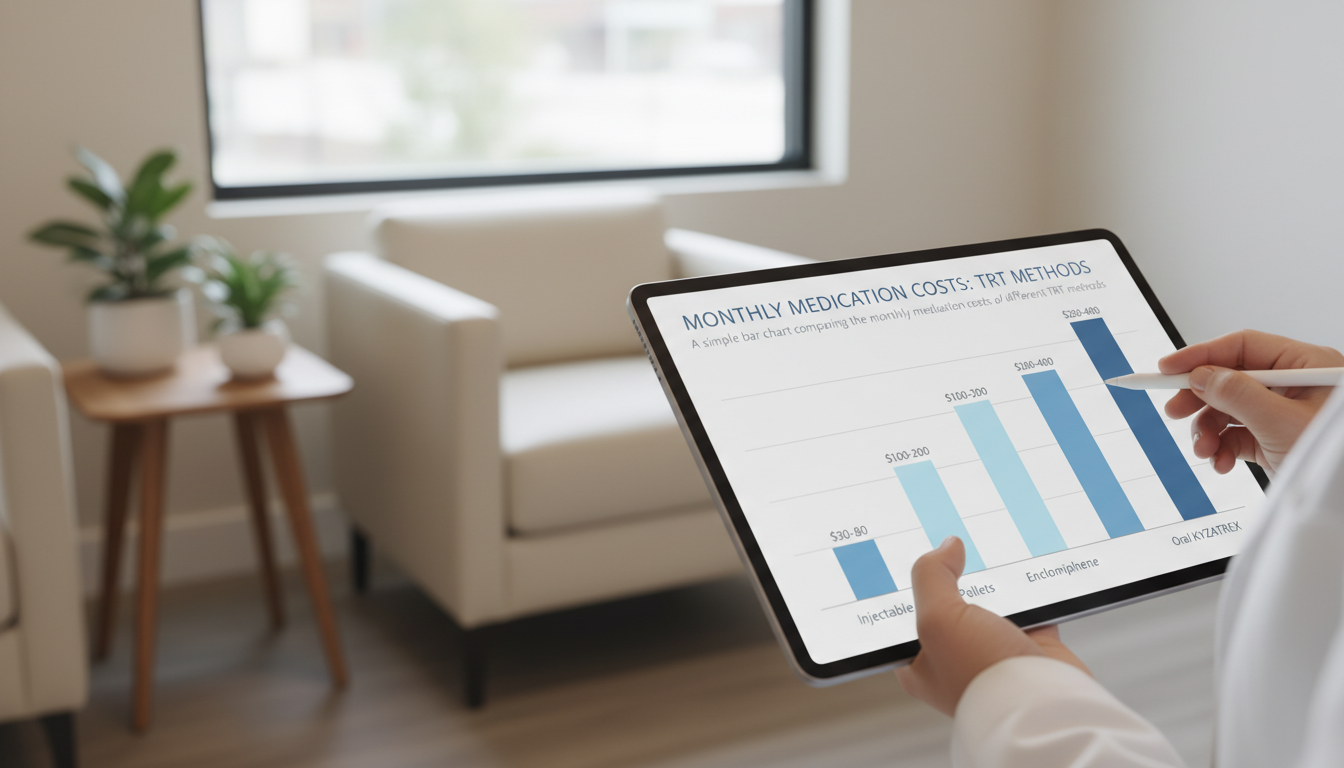
The type of TRT you choose significantly impacts your monthly cost. In 2026, injectable testosterone remains the most affordable option, typically running $30-$80 per month for the medication. Pellet therapy, which requires an in-office procedure every few months, averages out to $100-$200 per month. The new oral testosterone, KYZATREX®, costs between $200-$400 monthly. A popular fertility-sparing alternative, Enclomiphene, generally costs between $100-$200 per month (vidavitalmedical.com). These prices are for the medication only and do not include consultation or lab fees.
Are online TRT clinics a legitimate and affordable option?
Yes, many online TRT clinics are legitimate and can be an affordable and convenient option. A legitimate clinic will always be staffed by licensed clinicians, require comprehensive blood work before prescribing, and have transparent standards for follow-up and monitoring. They often offer competitive pricing by working directly with patients. Before enrolling, verify that the clinic's providers are licensed to practice in your state and be clear on the total costs, including labs and consultations.
Looking for a provider? We've vetted a network of online doctors that prescribe testosterone in the US.
Is TRT considered cost-effective from a health perspective?
Assessing the cost-effectiveness of TRT is complex due to limited research. One Swedish study from 2014 found that TRT was a cost-effective treatment for hypogonadism, generating an additional 1.13 quality-adjusted life-years (QALYs) per patient (ncbi.nlm.nih.gov). In simpler terms, the improvements in quality of life (energy, mood, sexual function) and potential prevention of other health issues (like the reduced diabetes risk seen in the TRAVERSE trial) can provide a strong return on the financial investment. However, this is a personal calculation that you must weigh with your provider.
How can I budget for long-term TRT?
Successful, long-term TRT requires planning. The key is to look past low introductory offers and understand the all-in, ongoing monthly cost. When comparing clinics, ask for a clear breakdown of fees for consultations, medication, and required lab work. Injectable testosterone is often the most budget-friendly option for medication. You can also ask your provider if there are ways to save on lab costs, such as using specific lab companies or ordering tests in bundles. Thinking of TRT as a consistent monthly health investment, like a gym membership, can help with budgeting.
Ready to explore your options and get a clear picture of what TRT might cost for you? Take our free 3-minute quiz to get matched with a licensed provider who can help.
FAQs
Is TRT the same as taking steroids?
No. TRT involves taking a prescribed, physiological dose of testosterone to bring your levels into a normal, healthy range. This is done under medical supervision. Anabolic steroid abuse, in contrast, involves taking supraphysiological (extremely high) doses of testosterone or other synthetic androgens to force muscle growth, often without medical guidance. The goals, dosages, and health risks are completely different.
Can TRT reverse aging?
TRT cannot reverse the aging process. However, because low testosterone is a common part of aging, restoring levels can reverse or improve many symptoms associated with getting older, such as low energy, muscle loss, and decreased libido. It helps you feel healthier and more vital at your current age, but it doesn't make you younger. For more on this topic, you can explore the role of peptide therapy in anti-aging.
Will TRT affect my fertility?
Yes, TRT almost always suppresses or completely shuts down natural sperm production, which can lead to temporary infertility. This is because the external testosterone signals your brain to stop telling the testes to make their own T and sperm. For men who are still planning on having children, this is a critical consideration. Alternatives like Enclomiphene or HCG can be used to boost testosterone while preserving fertility and should be discussed with your provider.
Do I need to stop TRT if my blood pressure increases?
Not necessarily, but it requires immediate attention from your doctor. The FDA added a warning about TRT's potential to increase blood pressure in 2025 (interactivewellness.com). If your blood pressure rises while on TRT, your provider will want to manage it. This could involve adjusting your TRT dose, starting or adjusting blood pressure medication, or making lifestyle changes. It is crucial to have your blood pressure monitored regularly and to never make changes to your treatment plan without medical supervision.
Contributing to evidence-based peptide education and provider transparency.
Too many clinics, not enough clarity?
We don't sell peptides. Tell us your goals and we'll connect you with a vetted provider who can figure out what actually makes sense for you.
See what's right for youRelated articles
Which Protein Supplements for Muscle Growth Actually Work?
Tired of the hype? Find out which protein supplements for muscle growth are backed by science and learn how to pick the right one for your goals.
Hormone TherapyWhat Are the Real Magnesium Glycinate Benefits?
Uncover the science-backed magnesium glycinate benefits. We explore its effects on sleep, stress, and muscle function and explain why it's a top choice.
Hormone TherapyWhat B12 Shot Benefits Can You Actually Expect?
B12 shots are often hyped for energy, but the real b12 shot benefits are more specific. Learn who is a true candidate and what results to expect.