How to Find Reputable Peptide Clinics Near Me
Searching for peptide clinics near me? Don't just pick the first result. This guide gives you the crucial questions to ask and the red flags to avoid.

This content is for informational purposes only and does not constitute medical advice.
The world of peptide therapy is expanding rapidly, moving from niche wellness circles into mainstream health conversations. These powerful amino acid chains are showing promise for everything from weight management and injury recovery to slowing the markers of aging. As interest grows, you might be asking a common question: "How do I find reputable peptide clinics near me?"
This guide is your roadmap for 2026. We'll break down the differences between local and online providers, explore the real costs involved, and detail the most common treatments available. Our goal is to give you the information you need to make a confident and informed decision, whether you're looking for an in-person consultation or the convenience of an online peptide clinic. We will help you understand what to look for, what questions to ask, and how to start your treatment safely and effectively.
What to Look for in Peptide Clinics Near Me: Local vs. Online
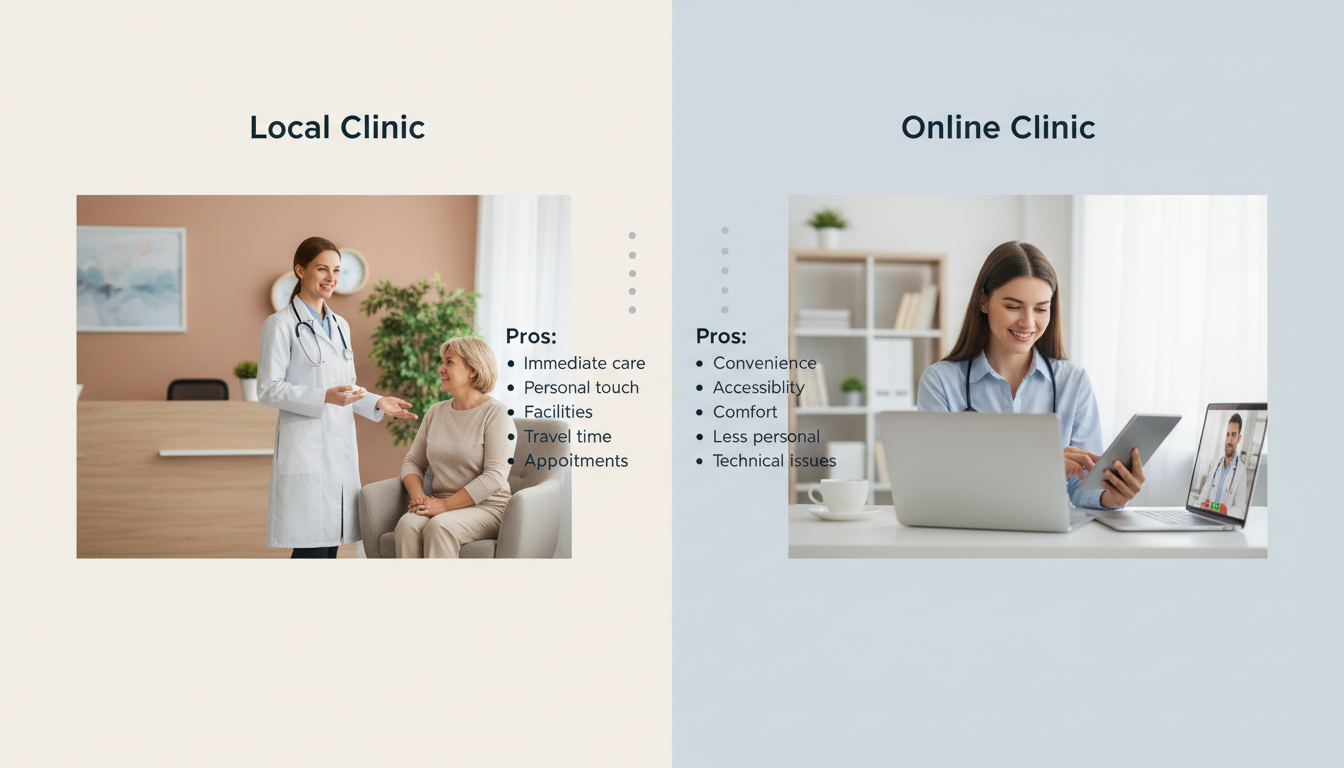
Your first big decision is choosing between a traditional brick-and-mortar clinic and a telehealth provider. Both have their advantages and disadvantages, and the right choice often depends on your location, comfort level, and specific needs.
Local Peptide Clinics
A local clinic offers the benefit of in-person interaction. You can meet your provider face-to-face, have a physical exam, and build a relationship with the local staff. This can be reassuring, especially if you are new to peptide injections.
Finding a local clinic has become easier. For example, clinic aggregators like MyPeptideMatch.com show 99 peptide therapy clinics near Garden Grove, California, and another 56 clinics across Minnesota. These local providers often offer services for weight loss, hormone optimization, and regenerative medicine.
Pros of Local Clinics:
- In-person consultations: A direct connection with your medical provider.
- Physical examinations: Can be valuable for a complete health assessment.
- Community presence: An established local office can provide a sense of trust.
Cons of Local Clinics:
- Geographical limits: Your options are restricted to your driving distance.
- Higher overhead: Costs can sometimes be higher to cover rent and staffing.
- Limited availability: It may take longer to get an appointment.
Online Peptide Clinics
Telehealth has made specialized medicine more accessible than ever. An online peptide clinic connects you with a licensed peptide doctor online through video calls. After a consultation and review of your lab work, they can issue a peptide prescription online, which is then shipped to your home from a licensed compounding pharmacy.
This model offers significant convenience and can provide access to top specialists regardless of where you live. Many people find this is the most practical way to access care.
Pros of Online Clinics:
- Convenience: Consultations from the comfort of your home.
- Greater access: You can work with a specialist from anywhere in the country.
- Competitive pricing: Often lower overhead means more affordable peptide therapy.
Cons of Online Clinics:
- No physical exam: The provider relies on your lab work and self-reported information.
- Self-administration: You will need to learn how to prepare and inject the peptides yourself.
- Vetting is critical: You must verify the provider's credentials and the pharmacy's legitimacy. We have a detailed guide on how to [/blog/find-legitimate-peptide-clinic] do this.
Whether you choose local or online, the most important factor is the quality of the provider. A good clinic will always require a consultation with a licensed medical professional, comprehensive blood work before prescribing, and clear sourcing from a reputable pharmacy.
The Real Cost of Peptide Therapy: A 2026 Price Breakdown
Understanding the potential costs is essential before starting treatment. The price of peptide therapy isn't just about the medication. It includes consultations, lab work, and follow-up care. The total peptide therapy near me cost can vary widely based on the clinic, your location, and the specific peptides in your protocol.
Here’s a look at what you can expect to pay in 2026, based on real clinic pricing.
1. Initial Consultation and Lab Work Before you get a prescription, a reputable clinic will require an initial consultation and comprehensive lab tests.
- Consultations: Some clinics, particularly online, offer free initial consultations to see if you're a good candidate.
- Lab Work: This is a non-negotiable step and usually an out-of-pocket expense. For example, Driven Healthcare in Texas charges $400 for initial lab work and $100 for follow-up labs. This screening is crucial for safety and for creating an effective treatment plan.
2. Program Fees and Provider Access Some clinics structure their pricing around programs rather than à la carte services.
- Dr. Erica Oberg’s 90-day Peptide Optimization Program, for instance, costs $1,750. This fee covers personalized protocols, coaching, and clinical oversight. This structure emphasizes guided treatment over simply selling medication.
3. Medication Costs This is the most variable part of the budget. The peptides themselves are an ongoing expense.
- Dr. Oberg's program estimates an additional $400 to $800 per month for the actual peptide prescriptions.
- Specific treatments can also be priced individually. Driven Healthcare offers NAD+ injections for $10 per shot and IV NAD+ infusions for $275 to $550.
- The cost of popular weight loss peptides like Semaglutide and Tirzepatide depends heavily on whether you use a brand name or a compounded version. You can learn more about the [/blog/cost-of-tirzepatide] and [/blog/compounded-semaglutide-what-to-know] in our other guides.
When comparing clinics, be sure to ask for a full breakdown of costs. A transparent provider will be upfront about all potential fees, from labs to shipping.
If you are unsure which treatment options might fit your health goals and budget, we can help. Take our free 3-minute quiz to get matched with a vetted provider who can provide a personalized quote.
Common Treatments Offered at Peptide Clinics Near Me
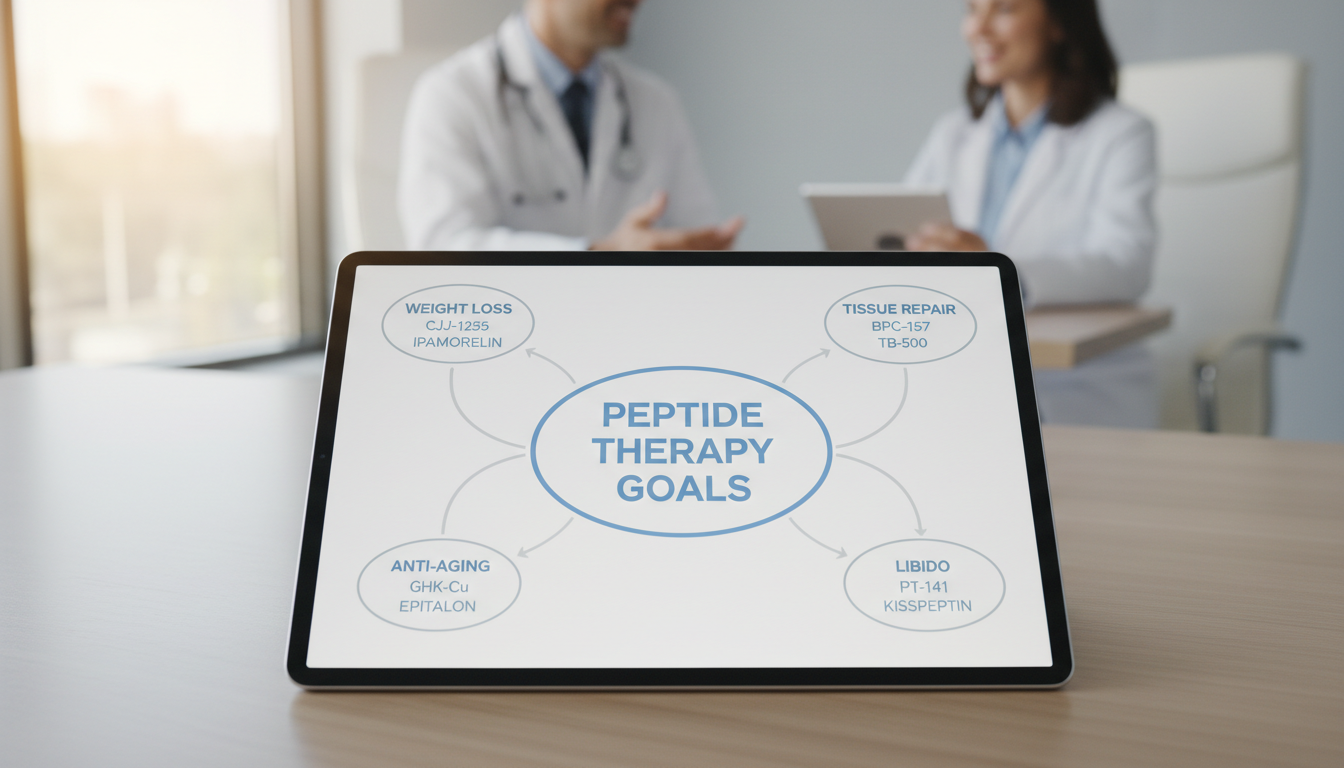
When you search for peptide clinics near me, you'll find they offer a wide range of treatments targeting different health goals. From metabolic health to tissue repair, peptides work by signaling specific cellular functions. Here are some of the most common types of peptide injections you will encounter.
Weight Management and Metabolic Health
This is currently the most popular application for peptide therapy.
- Semaglutide and Tirzepatide: These GLP-1 and GIP/GLP-1 receptor agonists are FDA-approved for managing type 2 diabetes and/or weight loss. As of 2025, over 80 peptide-based drugs have received FDA approval, with these leading the charge in metabolic health (Peptide Protocol Wiki). Research continues to explore new benefits. The University of Texas Medical Branch (UTMB) is running the Moody Longevity Trial to see if tirzepatide can also slow biological aging in adults.
- AOD-9604: This peptide is a fragment of human growth hormone. It is studied for its effects on fat metabolism. However, it is not FDA-approved for human use and is only available for research purposes, making medical supervision essential (MyPeptideMatch.com).
Tissue Repair, Recovery, and Pain Relief
Athletes and individuals recovering from injury often turn to peptides to accelerate healing.
- BPC-157: Known for its systemic healing properties, BPC-157 is often used for muscle, tendon, and gut repair. Many clinics, like those listed in Minnesota and California on MyPeptideMatch.com, offer it for tissue repair. Our guide, [/blog/bpc-157-what-the-research-says], explores the science behind it.
- TB-500: Often used alongside BPC-157, TB-500 is another peptide that may promote healing and reduce inflammation.
Anti-Aging and Growth Hormone Support
As we age, growth hormone production naturally declines. Certain peptides can stimulate the pituitary gland to release more HGH.
- CJC-1295 and Ipamorelin: This combination is one of the most popular for boosting growth hormone levels. It can lead to benefits like improved energy, better sleep, increased muscle mass, and reduced body fat. You can read our full [/blog/cjc-1295-ipamorelin-guide] for more details.
- GHK-Cu: This copper peptide is widely used in skincare for its collagen-boosting abilities but is also available as an injection for systemic benefits. Check out our post on GHK-Cu peptide injection before and after experiences.
Other Specialized Peptides
The field is constantly evolving. Driven Healthcare in Texas lists PT-141 (Bremelanotide), an FDA-approved peptide for enhancing libido in women. Even more advanced applications are being studied, such as a personalized peptide vaccine that showed promising results in extending survival for glioblastoma patients in a recent study published in Nature Communications. This highlights the vast potential of peptide science.
The Process: From Consultation to Your First Injection
Starting peptide therapy involves a clear, medically-supervised process. A trustworthy clinic will guide you through each step to ensure your treatment is safe and effective. Here’s what you can expect.
Step 1: Initial Consultation Your first interaction will be a consultation with a medical provider. This is where you discuss your health history, goals, and any symptoms you're experiencing. Many of the clinics listed on MyPeptideMatch.com offer free initial consultations. This is your opportunity to ask questions about peptides injections benefits and determine if the clinic is a good fit. You should feel heard and respected, not rushed.
Step 2: Diagnostic Lab Work If you and your provider agree to move forward, the next step is comprehensive blood work. This is mandatory for any legitimate peptide clinic. The results give your provider a baseline understanding of your hormone levels, metabolic function, and overall health. This data is what informs their decision on who can prescribe peptides near me for your specific case and what protocol to recommend.
Step 3: Receiving Your Prescription and Peptides After reviewing your lab results, the provider will create your treatment plan. They will write a prescription, which is sent to a licensed U.S. compounding pharmacy. The pharmacy prepares your medication and ships it directly to your home in a temperature-controlled package. It will typically arrive with syringes, alcohol swabs, and bacteriostatic water for reconstitution.
Step 4: Learning to Administer Injections Most therapeutic peptides are administered via subcutaneous injection peptides, meaning just under the skin, usually in the abdomen or thigh. Your clinic should provide clear instructions, often with videos, on how to prepare peptides for injection. This involves:
- Reconstituting: Mixing the lyophilized (freeze-dried) peptide powder with the correct amount of bacteriostatic water. Our free reconstitution calculator can help you get the math right.
- Drawing the Dose: Using an insulin syringe to draw your prescribed dose from the vial.
- Injecting: Cleaning the injection site and administering the medication.
While it may seem intimidating at first, most people find the process quick, easy, and nearly painless.
Want to see which options fit your budget and goals? Our free quiz takes 3 minutes and connects you with providers who can guide you through this process.
What to Consider Before Starting
Peptide therapy can be a powerful tool for health optimization, but it's a medical treatment that requires careful consideration. Before you commit, think about these key points.
First, your provider is your most important partner. The answer to "who can prescribe peptides near me" should always be a licensed medical doctor (MD or DO), nurse practitioner (NP), or physician assistant (PA) with experience in hormone and peptide therapies. Check their credentials and read reviews. A good place to start is finding a trusted [/blog/peptide-doctors].
Second, set realistic expectations. Peptides are not an overnight fix. They work with your body's natural systems, and results take time and consistency. For example, while some people notice improved sleep or energy within weeks, changes in body composition or skin quality may take several months.
Finally, consider the commitment. This includes the financial investment for consultations, labs, and medication, as well as the daily or weekly routine of self-injections. Ensure you are ready for both before you begin.
If you have done your research and feel ready to take the next step, finding the right provider is key.
Ready to explore your options? Take our free 3-minute quiz to get matched with a licensed provider who can help you reach your health goals.
FAQs
How do I find the best peptide clinics near me?
To find the best local or online clinic, focus on these key factors: a licensed medical provider must conduct the consultation, comprehensive lab work must be required before any prescription, the clinic must use a reputable U.S.-based compounding pharmacy, and they should offer clear pricing and ongoing support.
Can I get a peptide prescription online?
Yes. Telehealth platforms allow you to consult with a licensed medical provider who can legally issue a peptide prescription online after a virtual consultation and a review of your lab work. The medication is then shipped to you from a compounding pharmacy.
What are the most common peptides injections benefits?
The benefits depend on the specific peptide used. The most sought-after benefits include medical weight loss (Semaglutide, Tirzepatide), accelerated tissue and injury repair (BPC-157, TB-500), anti-aging effects through growth hormone support (CJC-1295/Ipamorelin), improved skin health (GHK-Cu), and enhanced libido (PT-141).
Is peptide therapy safe?
When overseen by a qualified medical provider, peptide therapy is generally considered safe. Safety depends on using the correct peptide for the right purpose, accurate dosing, and sourcing from a legitimate pharmacy. FDA-approved peptides like Semaglutide have undergone rigorous testing, while others are considered investigational or "research-only," which makes medical guidance even more critical.
How much does peptide therapy cost per month?
The monthly cost varies significantly. After initial one-time costs for consultations and lab work (which can be several hundred dollars), the ongoing cost for the peptides themselves typically ranges from $400 to $800 per month, according to clinical program estimates. The final price depends on the type, dose, and number of peptides in your protocol.
Contributing to evidence-based peptide education and provider transparency.
Too many clinics, not enough clarity?
We don't sell peptides. Tell us your goals and we'll connect you with a vetted provider who can figure out what actually makes sense for you.
See what's right for youRelated articles
How to Actually Find Peptide Therapy Near Me
Don't just Google "peptide therapy near me." Learn how to vet clinics, what questions to ask your doctor, and how to spot a trustworthy provider.
Provider GuideSigns of a Quality Peptide Compounding Pharmacy
Worried about quality? Learn the critical questions to ask any peptide compounding pharmacy, plus the red flags that signal you should stay away.
Provider GuideFinding Legit Peptide Clinics in the UK
Don't just Google 'peptide clinics uk'. Our guide shows you how to find a qualified provider, what to ask in a consult, and how to avoid scams.