Build Your GHK-Cu Peptide Injection Dosage Chart PDF
Stop searching for a generic download. This guide helps you build a custom ghk cu peptide injection dosage chart pdf based on common protocols for skin & hair.
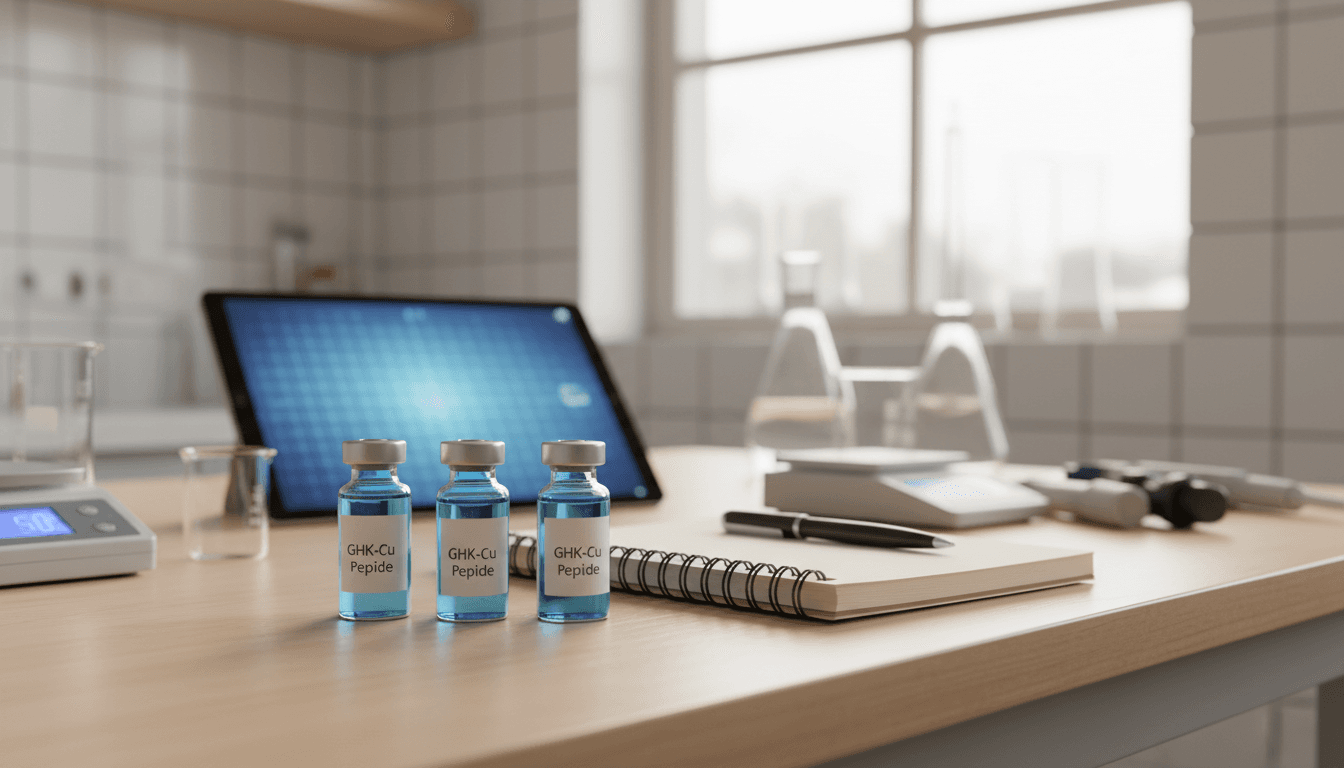
This content is for informational purposes only and does not constitute medical advice.
GHK-Cu is a fascinating peptide, but knowing where to start can be confusing. With so much conflicting information online, you need a clear, science-backed resource. This guide breaks down everything you need to know about creating your own ghk cu peptide injection dosage chart pdf, outlining common research protocols for skin, hair, and overall wellness. While GHK-Cu is not approved by the FDA for any medical use, this article will help you understand the data researchers and providers currently use.
An Introduction to GHK-Cu Peptide Protocols
GHK-Cu is a naturally occurring copper peptide found in human plasma, saliva, and urine. Its levels are highest in our youth and decline significantly as we age. This decline is one reason researchers are so interested in its potential as an anti-aging and regenerative compound.
The peptide, made of the amino acids glycyl-L-histidyl-L-lysine bound to a copper ion, is known to influence over 4,000 human genes (Peptidedosingprotocols.com, 2026). Its primary roles involve stimulating collagen production, promoting wound healing, and exhibiting anti-inflammatory effects. You can learn more about these in our deep dive on GHK-Cu peptide benefits.
There are two main ways to use GHK-Cu: topically as a cream or serum, and systemically via subcutaneous injection. While topical use is common in cosmetics for localized skin improvement, injectable GHK-Cu is explored for more systemic effects. This guide focuses on the injectable route, providing the details you'd find in a ghk cu peptide injection dosage chart pdf.
Unsure if GHK-Cu or another peptide is right for your goals? Take our free quiz to get matched with a provider who can discuss your options and help you build a plan.
GHK-Cu Injection vs. Topical Application
When exploring GHK-Cu, the first decision is choosing the right delivery method. The choice between ghk-cu peptide oral vs injection vs. topical application depends entirely on your goals, as each method works differently.
Topical GHK-Cu
Topical GHK-Cu is the most studied form in human clinical trials. It's widely available in cosmetic serums and creams, typically at concentrations between 1% and 3%. Research shows that these formulations are effective for improving localized skin health. Human studies have demonstrated that daily application can increase skin thickness, improve elasticity, and reduce the appearance of fine lines and wrinkles (The Peptide Effect).
- Best For: Facial skin rejuvenation, reducing wrinkles, improving skin firmness on a specific area.
- How it Works: The peptide is absorbed through the skin to act on the dermal and epidermal layers directly where it is applied.
- Evidence: Supported by multiple human clinical trials for cosmetic purposes.
Injectable GHK-Cu
Injectable GHK-Cu is administered subcutaneously, meaning just under the skin. This method allows the peptide to enter the bloodstream and exert systemic effects throughout the body. While there are no large-scale human trials for injectable GHK-Cu, its use is based on preclinical models and extensive community experience.
- Best For: Systemic anti-aging, body-wide skin improvement, hair growth promotion, and enhanced tissue repair or wound healing.
- How it Works: Enters circulation to influence gene expression and cellular processes throughout the body.
- Evidence: Based on mechanistic data, animal studies, and user-reported protocols. It is not FDA-approved for this use.
Oral GHK-Cu
Oral GHK-Cu is rarely used. Like most peptides, GHK-Cu is a chain of amino acids that would likely be broken down by digestive enzymes in the stomach before it could be absorbed into the bloodstream. This makes it an inefficient delivery method for systemic benefits, which is why injections and topicals are the preferred routes. For more information on how peptides work, check out our complete guide on peptides.

The Complete GHK-Cu Peptide Injection Dosage Chart PDF Guide
This section acts as a detailed guide, similar to what you might find in a ghk cu peptide injection dosage chart pdf. The following protocols are derived from research community data and preclinical studies. They are not FDA-approved dosages and should only be explored under the guidance of a qualified healthcare provider.
It's critical to understand that GHK-Cu for injection is sold for research purposes only. The FDA has classified injectable GHK-Cu as a Category 2 substance, which restricts it from being compounded by 503A pharmacies for individual patient prescriptions (PeptidesExplorer, 2026).
Here is a breakdown of common research dosages:
1. Beginner or Loading Protocol
- Dose: 0.5 mg to 1.0 mg per day.
- Frequency: Injected subcutaneously once daily.
- Purpose: This lower dose is often used to assess tolerance. Many research protocols suggest starting here for the first one to two weeks before increasing the dose (
PeptideClinicLocator, 2026). It's a conservative approach for general wellness and skin support.
2. Standard Protocol (Skin & Hair)
- Dose: 1.0 mg to 2.0 mg per day.
- Frequency: Injected subcutaneously once daily, often on a 5-days-on, 2-days-off schedule.
- Purpose: This is the most common range discussed for goals like improving overall skin quality and supporting
ghk-cu hair growth before and afterresults. The 2.0 mg dose is considered more aggressive (PeptideWiki, 2026).
3. Advanced Protocol (Wound Healing & Bodybuilding)
- Dose: 2.0 mg to 5.0 mg per day.
- Frequency: Injected subcutaneously once daily.
- Purpose: Higher doses are sometimes explored for acute injury recovery, significant wound healing, or by those in the
ghk-cu peptide bodybuildingcommunity seeking enhanced recovery. Doses above 2 mg increase the risk of side effects and should be approached with extreme caution (PeptideDeck, 2026).
What about a GHK-Cu peptide injection dosage chart female? Current research protocols do not specify different dosages for men and women. However, as a general principle, individuals with lower body weight may be more sensitive to compounds. Many women choose to start at the lower end of the beginner protocol (0.5 mg) to assess their individual response before considering an increase.
Clarifying the "GHK-Cu Peptide Injection Dosage 50mg" Confusion When you see "50mg" related to GHK-Cu, this almost always refers to the total amount of lyophilized (freeze-dried) powder in the vial you purchase, not a single injection dose. A 50mg vial contains enough peptide for 25-50 injections at a standard 1-2 mg dose.
Your GHK-Cu Peptide Injection Dosage Protocol: Reconstitution and Cycling
Having a dosage is one thing; knowing how to prepare and administer it is another. This section outlines a full ghk-cu peptide injection dosage protocol, from reconstitution to cycling, helping you create a plan similar to a ghk cu peptide injection dosage chart pdf.
Reconstitution: Preparing Your GHK-Cu
GHK-Cu comes as a lyophilized powder and must be mixed with a sterile liquid before use. This process is called reconstitution.
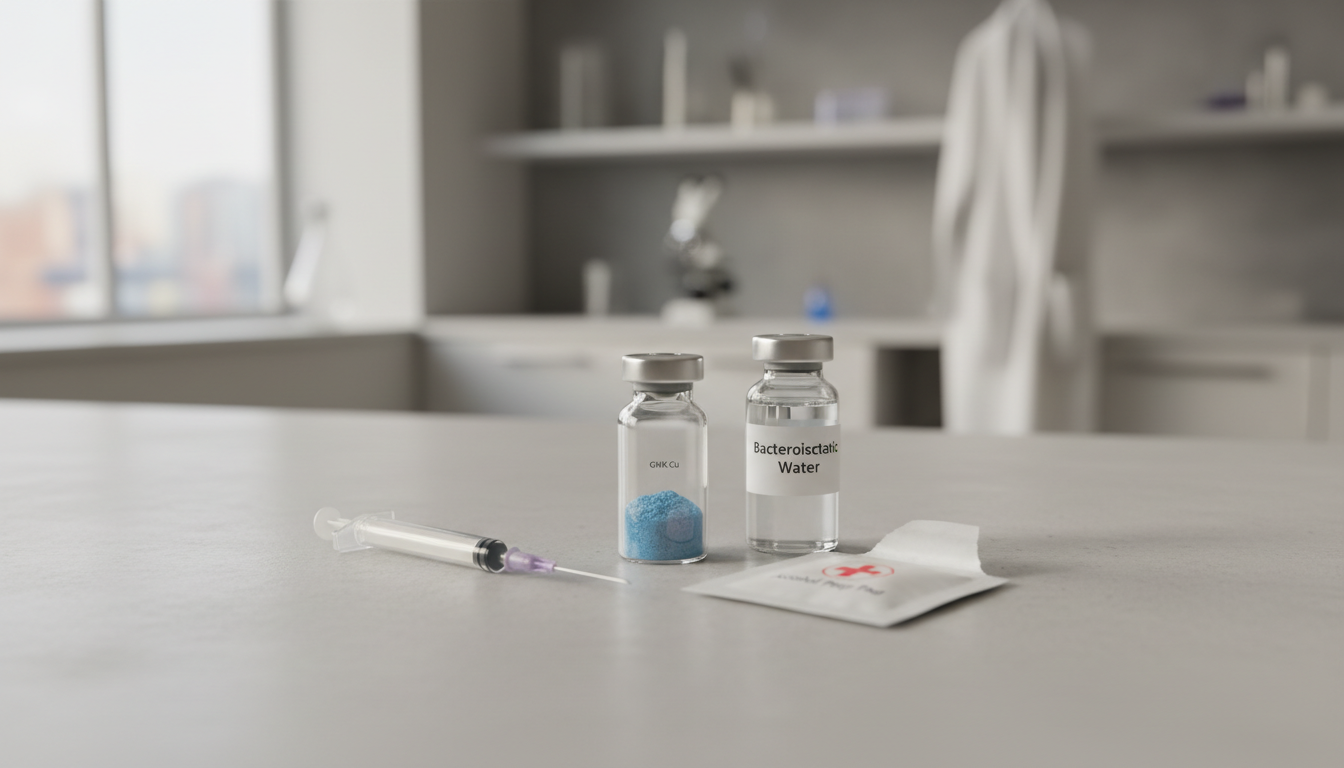
What You'll Need:
- Vial of GHK-Cu powder (e.g., 50mg)
- Vial of Bacteriostatic (BAC) Water
- Alcohol prep pads
- An insulin syringe (for measuring and injecting)
Step-by-Step Reconstitution Guide:
- Clean: Wipe the tops of both the GHK-Cu vial and the BAC water vial with an alcohol pad.
- Draw Water: Use a syringe to draw the desired amount of BAC water. A common ratio is adding 2.5 mL of BAC water to a 50mg GHK-Cu vial.
- Mix Gently: Slowly inject the BAC water into the GHK-Cu vial, aiming the stream against the side of the glass to avoid foaming. Do not shake the vial.
- Dissolve: Gently swirl the vial until all the powder has dissolved. The solution should turn a characteristic blue or blue-green color (
PeptideWiki, 2026). This is normal. - Store: Once reconstituted, store the vial in the refrigerator (2-8 °C). It should be used within 3-4 weeks (
PeptideDeck, 2026).
Using our example (2.5 mL of water in a 50mg vial), the final concentration would be 20mg/mL.
- A 0.1 mL injection (10 units on an insulin syringe) would deliver a 2 mg dose.
- A 0.05 mL injection (5 units on an insulin syringe) would deliver a 1 mg dose.
For precise calculations, always use a peptide reconstitution calculator.
Injection and Timing
GHK-Cu is administered via subcutaneous injection into fatty tissue. Common sites include the abdomen (at least two inches from the navel), thighs, or glutes. The peptide has a relatively short plasma half-life of about 30-60 minutes, but its cellular effects can last much longer (Peptidedosingprotocols.com, 2026). Because of this, a single ghk-cu peptide injection dosage per day is standard.
Cycling to Manage Copper and Sensitivity
Cycling is an important part of any GHK-Cu protocol. The primary reasons are to prevent the potential for excess copper accumulation in the body and to maintain the body's sensitivity to the peptide's effects.
- Common Cycle: 4 to 12 weeks of continuous use, followed by an off-period of at least 4 weeks or an equal amount of time off as on (
PeptidesExplorer,thepeptideguides.com). - Shorter Cycles: Some protocols suggest shorter bursts, such as 14-20 days on followed by an equal period off (
The Peptide Effect).
Feeling overwhelmed by reconstitution protocols and cycling schedules? You don't have to figure it out alone. Take our 3-minute quiz to connect with a clinic that can create a clear and manageable plan for you.
What to Consider Before You Start GHK-Cu Injections
Before looking into where to get GHK-Cu, it's vital to understand the safety, cost, and regulatory landscape.
Safety, Legality, and Sourcing
First and foremost, injectable GHK-Cu is not an FDA-approved drug. It is sold by research chemical companies for laboratory use only. When you see questions about ghk-cu peptide injection where to buy or ghk-cu peptide where to get, the answer is always from a source that markets it for research, not for human consumption.
As mentioned, its Category 2 FDA classification means you cannot obtain injectable GHK-Cu from a typical 503A compounding pharmacy with a doctor's prescription (PeptidesExplorer, 2026). This makes finding a safe, tested source critical. Working with a knowledgeable provider can help you understand the risks and navigate this landscape. You can use our platform to find legitimate peptide clinics in your area.
Potential Side Effects and Costs
The most common side effect of GHK-Cu injections is injection site irritation, including pain, redness, and swelling. This is more common with GHK-Cu than with other peptides, likely due to the copper component. Other less common side effects can include headaches, nausea, or dizziness. Read our full guide on GHK-Cu side effects for more details.
In terms of cost, injectable GHK-Cu is relatively affordable compared to other peptides. Monthly expenses for the peptide and necessary supplies (syringes, BAC water) typically range from $40 to $120 (PeptidesExplorer, 2026). You can review our article on GHK-Cu peptide cost for a more detailed breakdown.
Before and After Expectations
It's important to have realistic expectations. While some users report feeling better or seeing skin improvements within a few weeks, more significant changes take time.
- Skin: Noticeable improvements in skin texture and firmness can take 4-8 weeks.
- Hair: Seeing new hair growth can take 3-6 months or longer.
- Wound Healing: May be accelerated within days to weeks, depending on the injury.
Looking at ghk cu peptide injection before and after pictures can be encouraging, but remember that individual results vary widely based on dosage, consistency, lifestyle, and genetics.
Ready to explore your options with a professional? Take our free 3-minute quiz to get matched with a licensed provider who can help determine if GHK-Cu or another therapy is the right fit for you.
FAQs
What is the standard GHK-Cu injection dosage per day?
The standard GHK-Cu research protocol involves injecting 1 to 2 mg subcutaneously once per day. It is common for users to start with a lower dose, such as 0.5 mg, to assess their tolerance before increasing.
How do you reconstitute a 50mg vial of GHK-Cu?
A common method is to add 2.5 mL of bacteriostatic water to a 50mg vial. This creates a solution where every 0.05 mL (5 units on an insulin syringe) contains 1 mg of GHK-Cu. Always use a peptide reconstitution calculator to ensure your math is correct for your specific vial size and desired dose.
Can GHK-Cu be injected intramuscularly?
No, GHK-Cu is intended for subcutaneous (sub-q) injection into fatty tissue. Anecdotal reports suggest that intramuscular injections of this particular peptide are significantly more painful and are not part of established research protocols.
Is injectable GHK-Cu legal to buy?
GHK-Cu is legal to purchase for research purposes only. It is not an FDA-approved medication for human use. Due to its regulatory classification, injectable GHK-Cu cannot be legally prescribed and filled by standard compounding pharmacies in the U.S.
How long does it take to see results from GHK-Cu injections?
Results vary by individual and goal. Some users report improved skin quality in as little as a few weeks. However, more substantial benefits, such as visible hair regrowth or significant tissue remodeling, can take 3 to 6 months of consistent use.
Contributing to evidence-based peptide education and provider transparency.
Too many clinics, not enough clarity?
We don't sell peptides. Tell us your goals and we'll connect you with a vetted provider who can figure out what actually makes sense for you.
See what's right for youRelated articles
How Protein and Muscle Growth Actually Work
It's not just about eating more. Understand the real science of protein and muscle growth to learn how much you need and the best timing to see results.
Peptide ScienceWhat are the best peptides for muscle growth and fat loss?
Exploring peptides for muscle growth and fat loss? Discover the most effective options for body recomposition, how they actually work, and what to expect.
Peptide ScienceThe Key L-Lysine Benefits for Skin, Immunity & Stress
Discover the science-backed l-lysine benefits. Our guide covers how this essential amino acid may boost collagen, fight viruses, and aid calcium absorption.