Semaglutide (Ozempic & Wegovy): What You Need to Know in 2026
A straightforward guide to semaglutide — how it works for weight loss and diabetes, costs, side effects, and how to get it safely through a licensed provider.
What Is Semaglutide?
Semaglutide mimics GLP-1, a hormone your gut already produces to regulate hunger and blood sugar. Novo Nordisk originally developed it for type 2 diabetes, then the weight loss data from clinical trials changed the conversation entirely.
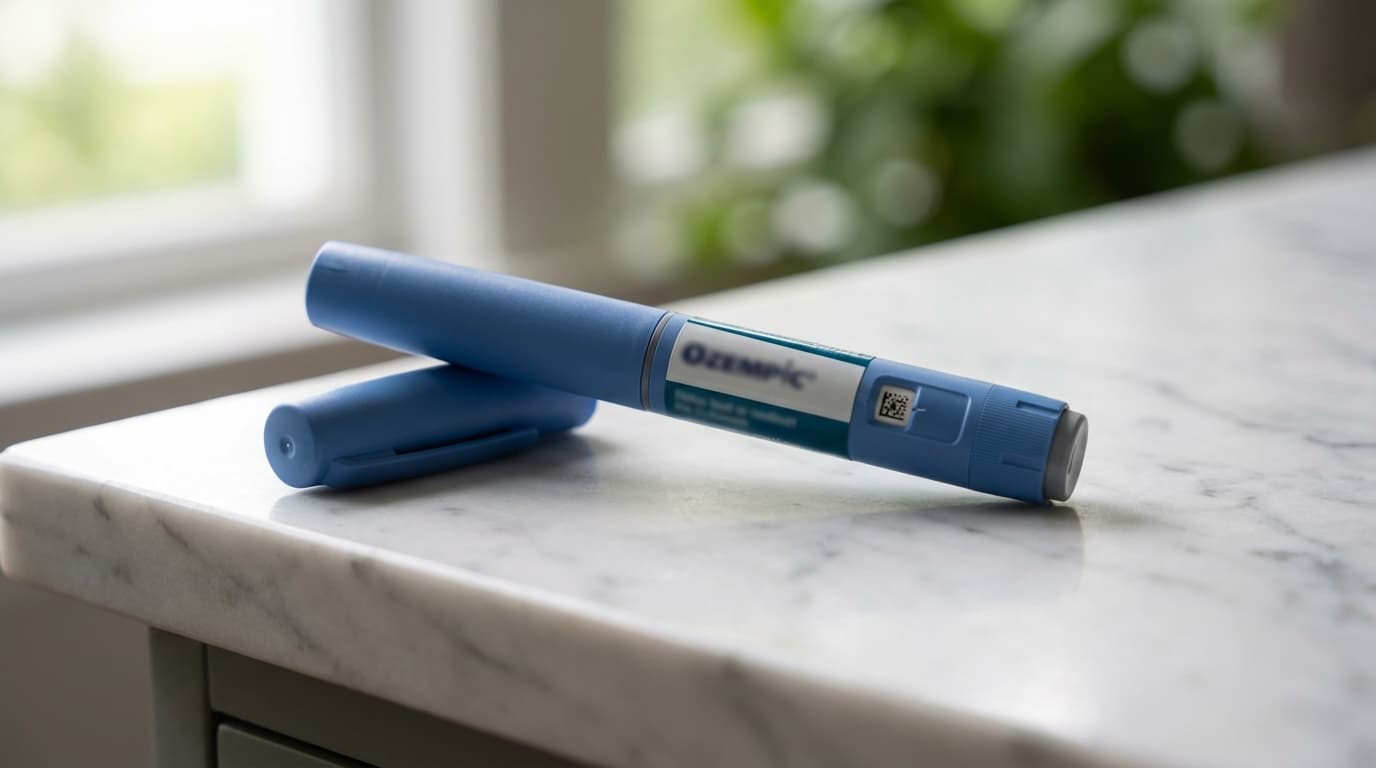
You'll see it sold under several brand names. Ozempic is approved for type 2 diabetes. Wegovy is approved specifically for chronic weight management — available as both a weekly injection and, as of January 2026, a daily pill. Rybelsus is an older oral formulation for diabetes. Same active ingredient across all of them, different dosing and indications.
The biggest recent development: the FDA approved the Wegovy pill (oral semaglutide 25mg) in December 2025, and Novo Nordisk launched it in January 2026 at roughly $149/month starting. No injections. That's a meaningful shift for patients who've been avoiding semaglutide because of needles or cost.
How Does Semaglutide Work for Weight Loss?
It hits three things at once. First, it acts on receptors in your brain that control hunger, so you genuinely feel less interested in eating. Second, it slows down how fast food leaves your stomach, which means you stay full longer after a meal. Third, it improves insulin response to food, smoothing out blood sugar spikes and the cravings that follow them.
The numbers from the STEP trials back this up: participants on semaglutide lost an average of 15-17% of their body weight over 68 weeks. The placebo group lost about 2.4%.
What Does It Cost?
Brand-name Wegovy list price sits around $1,349/month. With insurance, your out-of-pocket depends on your plan. Novo Nordisk now offers cash-pay options through NovoCare: $299/month for the injection, $349/month for the pill at maintenance dose.
Compounded semaglutide used to be available at much lower prices through licensed compounding pharmacies. That window has mostly closed. The FDA declared the semaglutide shortage over in February 2025, grace periods for existing compounders expired in May 2025, and compounded semaglutide is now heavily restricted. A few pharmacies are still navigating legal challenges, but the era of easy, cheap compounded semaglutide is over.
Common Side Effects
Most side effects hit the gut and are tied to dosage:
- Nausea (the most common, and it usually fades within 4-8 weeks)
- Diarrhea or constipation
- Abdominal discomfort
- Headache
- Fatigue
On the serious side, pancreatitis is a known but rare risk. Semaglutide also carries a boxed warning about thyroid C-cell tumors found in animal studies. That link hasn't been established in humans, but it's why providers screen for thyroid issues before prescribing.
How to Get Semaglutide Safely
Go through a licensed provider. A good one will review your full medical history, order baseline bloodwork (metabolic panel, thyroid function, A1C), start you on a low dose, and titrate up gradually based on how you respond.
Avoid buying from unverified online sources, especially anything marketed as "research grade" or shipped without proper labeling. Counterfeit and underdosed product is a real problem in this space, and the risks are well-documented.
Semaglutide and Ozempic FAQs
Is semaglutide the same as Ozempic?
Semaglutide is the active ingredient. Ozempic is one of the brand names it's sold under, approved for type 2 diabetes. Wegovy is the major weight loss brand — now available as both a weekly injection and a daily pill (approved December 2025). Rybelsus is an older oral version for diabetes at a lower dose. Same molecule across all of them, different dosing and FDA indication.
How long do you take semaglutide for weight loss?
Most protocols run indefinitely. The clinical data shows that when people stop taking semaglutide, they regain roughly two-thirds of the weight they lost within a year. That's not a failure of the drug. It's biology. GLP-1 is a hormone your body makes, and semaglutide supplements it. When you remove the supplement, the appetite and metabolic signals return to baseline. Some providers work on tapering to a lower maintenance dose.
Can you get semaglutide without insurance?
Yes. The landscape has changed a lot since 2024. Compounded semaglutide is no longer widely available — the FDA shut down most of that supply chain in 2025. But Novo Nordisk has responded with cash-pay pricing through NovoCare: $299/month for injectable Wegovy and $349/month for the pill at maintenance. The new oral Wegovy starts around $149/month. These are brand-name options, no insurance required. A provider can walk you through which formulation makes sense for you.
What happens when you stop taking semaglutide?
Appetite increases, and weight regain is common. The STEP 1 trial extension showed participants regained about two-thirds of lost weight within a year of stopping. This is why most providers treat semaglutide as an ongoing therapy, similar to blood pressure medication. Stopping abruptly doesn't cause dangerous withdrawal, but the metabolic benefits reverse.
How fast do you lose weight on semaglutide?
In clinical trials, the average was 15 to 17% of body weight over 68 weeks (about 16 months). Most people see noticeable results within the first 4 to 8 weeks after reaching a therapeutic dose. The initial weeks involve slow dose titration to manage side effects, so significant weight loss usually begins after the first month or two. Individual results vary based on starting weight, diet, and activity level.
Contributing to evidence-based peptide education and provider transparency.
Too many clinics, not enough clarity?
We don't sell peptides. Tell us your goals and we'll connect you with a vetted provider who can figure out what actually makes sense for you.
See what's right for youRelated articles
A Step-by-Step Gelatin Recipe for Weight Loss
Seen the viral "pink trick"? We break down the simple gelatin recipe for weight loss. Learn our step-by-step method to help manage hunger and feel full.
GLP-1 Weight LossOzempic Cost in 2026: What You'll Actually Pay
The 2026 Ozempic cost can be anywhere from $25 to over $1,400 a month. Discover why and learn how to find savings with or without insurance coverage.
GLP-1 Weight LossHow Zep Weight Loss Works and What to Expect
Thinking about zep weight loss? We cover how this drug works, what realistic results look like, common side effects, and how it compares to Ozempic.