Finding a Weight Loss Clinic That Actually Works
Not all weight loss clinics are created equal. We explain how the best ones use advanced diagnostics and medical treatments to help you finally achieve results.

This content is for informational purposes only and does not constitute medical advice. Consult with a qualified healthcare professional before making any decisions about your health or treatment.
The idea of a weight loss clinic has changed dramatically. Gone are the days of one-size-fits-all meal plans and weekly weigh-ins as the only tools. In 2026, the best clinics combine medical science, advanced diagnostics, and powerful new medications to help people achieve significant and sustainable results. If you feel like you've tried everything without success, a modern medical weight loss clinic might offer the support and tools you've been missing. This guide will walk you through what to expect, from the medications being used to the costs involved.
A New Era for the Medical Weight Loss Clinic
In the past, weight management was often seen strictly through the lens of diet and exercise. While lifestyle is still the foundation of good health, we now understand that obesity is a complex, chronic condition influenced by genetics, hormones, and metabolism. Today's medical weight loss clinic operates on this principle.
These facilities, whether in-person or online, are led by healthcare professionals who use a clinical approach. The process typically begins not with a diet plan but with a thorough evaluation. This may include:
- A detailed medical history review.
- An analysis of your weight and health goals.
- Comprehensive lab work to check metabolic markers, hormone levels, and overall health.
Based on this information, the provider creates a supervised plan that may include a specific weight loss medicine. The rise of GLP-1 agonist medications, like semaglutide and tirzepatide, has been a major focus. These are not miracle cures, but powerful tools that work with your body's own systems to regulate appetite and blood sugar.
Telehealth has made these services more accessible than ever. Platforms like Valencia Medical and California Trim Clinic connect patients with doctors virtually. As described by California Trim Clinic, the process is streamlined. You have a virtual consultation with a licensed doctor who determines if a prescription is appropriate. If so, the medication is shipped directly to you from a U.S. pharmacy, with ongoing check-ins to monitor your progress (California Trim Clinic). This approach offers convenience and privacy, making it easier for many to seek help.
GLP-1 Medications: The Core of Modern Medical Weight Loss
When you hear about dramatic weight loss results, chances are a GLP-1 medication is involved. These drugs have become the centerpiece of many programs due to their high level of effectiveness. Let's break down the key players.
Tirzepatide (Mounjaro and Zepbound)
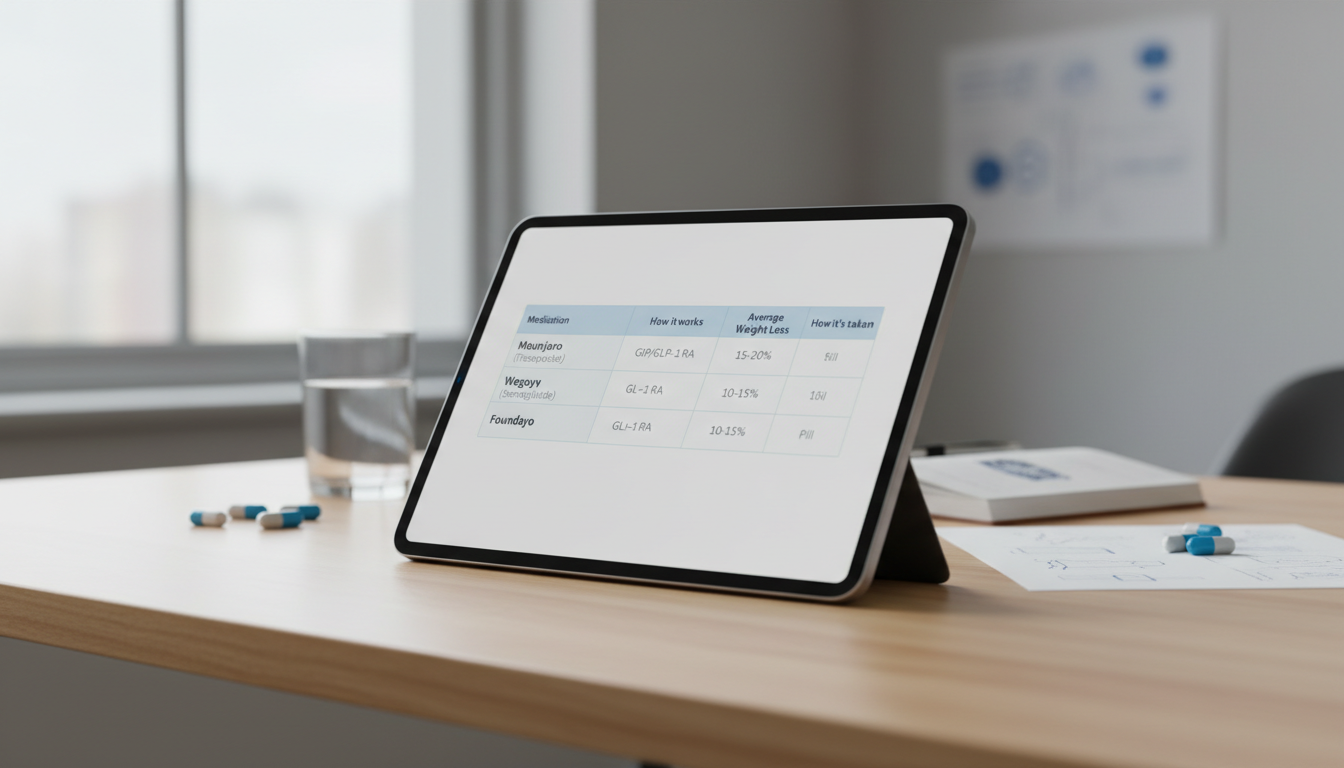
Tirzepatide is a standout in the field of medical weight loss. It is a dual-action agonist, meaning it targets two different receptors, GIP and GLP-1, which both play a role in appetite and insulin regulation. This dual mechanism is why many see such impressive Mounjaro for weight loss results. While Mounjaro is technically approved for type 2 diabetes, its identical twin, Zepbound, is FDA-approved specifically for weight management. Many doctors prescribe weight loss Mounjaro off-label because they contain the same active ingredient.
So, what kind of results are people seeing? Programs like Valencia Medical, which offers clinician-guided GLP-1 plans, report their patients lose an average of 15% to 22% of their body weight. These are not just numbers. For patients like Sarah K., it meant her HbA1c dropped from a dangerous 9.2% to a healthy 5.8% (Valencia Medical). You can find more details about what to expect on our main tirzepatide guide.
Semaglutide (Wegovy and Ozempic) and Liraglutide (Saxenda)
Semaglutide is another highly effective GLP-1 medication. Marketed as Wegovy for weight loss and Ozempic for diabetes, it has helped millions. Saxenda weight loss plans use liraglutide, an older GLP-1 that is still effective but typically results in less weight loss than semaglutide or tirzepatide.
The science behind these drugs continues to advance. On March 19, 2026, the FDA approved a new, higher 7.2 mg dose of Wegovy, called Wegovy HD. This version offers the potential for even greater weight loss than previous doses, though it may come with more frequent side effects like gastrointestinal issues and altered skin sensation (FDA). If you're comparing your options, our article on semaglutide vs. tirzepatide can provide more clarity.
The Rise of Oral Options
Injections aren't the only option. In an effort to make treatment more convenient, Eli Lilly recently gained FDA approval for Foundayo, a new oral GLP-1 pill. In trials, participants on the highest dose lost an average of 12% of their body weight over 72 weeks. The convenience of a pill you can take anytime is a big deal, and with a target price around $399 per month, it aims to make treatment more accessible (Mezha).
Feeling overwhelmed by the options? It's completely normal. Choosing the right medication depends on your health profile, goals, and budget.
Not sure which treatment is right for you? Take our free 3-minute quiz to get matched with a provider who can guide you through the process.
What to Expect: Process, Price, and Practicals at a Weight Loss Clinic
Starting with a weight loss clinic involves a clear, structured process designed for safety and effectiveness. Whether you choose an in-person clinic or a telehealth provider, the core steps are similar.
The Patient Process
- Initial Consultation: You'll meet with a healthcare provider to discuss your history, struggles, and goals. This is where you can ask about everything from Mounjaro weight loss reviews to potential side effects.
- Lab Work: Your doctor will order blood tests to get a baseline of your metabolic health. This is a critical step for ensuring the prescribed treatment is safe for you.
- Prescription and Titration: If a weight loss medicine is deemed appropriate, you'll receive a prescription. You won't start on the highest dose right away. A key question many people have is, "when to increase mounjaro dose for weight loss?" The answer is gradually. Providers use a titration schedule, starting you on a low dose and slowly increasing it every few weeks. This helps your body adjust and minimizes side effects. Our dose titration calculator can help you visualize this process.
- Ongoing Support: This is not a "one and done" prescription. Good clinics provide regular check-ins to monitor your progress, manage any side effects, and adjust your treatment as needed.
When it comes to injections, a common question is about the best place to inject Mounjaro for weight loss. The medication is administered subcutaneously, meaning just under the skin. The most common and effective sites are the abdomen, the front of the thighs, or the back of the upper arms. Your provider will give you detailed instructions. You can also review our general guide on how to inject semaglutide, as the process is very similar.
The Price Tag for Medical Weight Loss
Cost is a major consideration. The Mounjaro weight loss price for the brand-name drug can be over $1,000 a month without good insurance coverage. This is where telehealth clinics have created more accessible pathways.
By working with compounding pharmacies or negotiating directly, some online clinics can offer these powerful medications at a lower price point. For example, California Trim Clinic offers transparent pricing with semaglutide starting at $199/month and tirzepatide starting at $299/month (California Trim Clinic). Valencia Medical has an enrollment fee of just $75 to get started, with medication costs varying after that (Valencia Medical). It's always best to clarify the full monthly cost, including consultations, medication, and shipping. If you want to explore costs further, see our articles on the cost of tirzepatide and how much Mounjaro is without insurance.
Want to see which options fit your budget and goals? Our free quiz takes 3 minutes and matches you with vetted providers offering transparent pricing. Find your provider now.
The Future of Weight Loss: What’s on the Horizon for 2026?
The field of obesity medicine is advancing rapidly. Researchers are continually developing new drugs and therapies that are more effective and have fewer side effects. Here’s a look at what's coming next.
Combination Therapies for Better Results
One of the most exciting developments is the use of combination therapies. A 2026 Phase 2 trial published in Nature Medicine studied the effects of combining bimagrumab with semaglutide. While semaglutide is excellent at reducing appetite, a common concern is the loss of muscle along with fat. Bimagrumab works differently by targeting receptors that promote muscle growth while also reducing fat.
The results were stunning. After 72 weeks, participants on the high-dose combination lost an average of 22.1% of their body weight, compared to 14.2 kg (about 13.5%) with semaglutide alone. Even better, they did so while preserving lean muscle mass (Nature Medicine). This addresses a major concern for people on GLP-1s, which you can read more about in our post on GLP-1s and muscle loss.
New Drugs in the Pipeline
Innovation isn't stopping there. MetaVia is currently in a Phase 1 study for a new drug called DA-1726. It’s a dual agonist targeting both GLP-1 and glucagon receptors, another novel mechanism aimed at boosting energy expenditure. Early data showed promising weight loss, and more results from higher-dose studies are expected in late 2026 (PRNewswire).
Incisionless Surgical Alternatives
For those seeking non-drug options, new procedures are also being developed. USGI Medical has received FDA approval to conduct a major study on its POSE2.0® procedure. This is an incisionless, endoscopic technique that remodels the stomach from the inside to create restriction, helping you feel full faster. It avoids the external cuts and longer recovery of traditional bariatric surgery (BioSpace). These developments show that the future of medical weight loss is about providing a wide range of effective options.
Choosing the Right Clinic and Finding Your Path Forward
With so many choices, finding the right weight loss clinic can feel like a big decision. Look for providers who emphasize a medical approach, with licensed professionals guiding your care. Transparency in pricing and process is also key. You should know exactly what you're paying for and what the treatment plan entails.
Ultimately, the best program is one that is safe, effective, and sustainable for you. The tools available in 2026 are more powerful than ever before, offering real hope for those who have struggled with their weight. Taking the first step to explore these options is a powerful move toward taking control of your health.
Ready to explore your options? Take our free 3-minute quiz to get matched with a licensed provider from a vetted clinic who can help you decide if a medical weight loss plan is right for you.
FAQs
Is Mounjaro approved for weight loss?
No, the brand name Mounjaro is technically FDA-approved for type 2 diabetes. However, the FDA has approved the exact same medication, tirzepatide, under the brand name Zepbound for chronic weight management. Many doctors prescribe Mounjaro "off-label" for weight loss.
What is the average weight loss with Mounjaro?
In clinical trials for its active ingredient, tirzepatide, participants lost an average of 15% to over 22% of their starting body weight over 72 weeks, depending on the dose. Some online clinics report similar average results of 15-22% among their patients.
How much does medical weight loss cost a month?
Costs can vary widely. Without insurance, brand-name drugs like Wegovy or Zepbound can exceed $1,300 per month. However, many telehealth weight loss clinics offer more affordable options. For example, some provide semaglutide starting around $199 per month and tirzepatide starting around $299 per month.
What are the common side effects of GLP-1s like Mounjaro?
The most common side effects are gastrointestinal, including nausea, diarrhea, vomiting, and constipation. These are most likely to occur when you first start the medication or after a dose increase. For most people, they are mild and improve over time. You can learn more about Mounjaro's side effects here.
Can I get weight loss medicine online?
Yes. Reputable telehealth platforms connect you with licensed medical providers who can conduct a virtual consultation, review your lab work, and, if appropriate, prescribe a weight loss medicine like semaglutide or tirzepatide. The medication is then shipped to your home from a regulated U.S. pharmacy.
Contributing to evidence-based peptide education and provider transparency.
Too many clinics, not enough clarity?
We don't sell peptides. Tell us your goals and we'll connect you with a vetted provider who can figure out what actually makes sense for you.
See what's right for you