How Much Is Mounjaro Without Insurance in 2026?
Curious how much Mounjaro is without insurance? We break down the 2026 cash price, pharmacy costs, and uncover real ways to save with or without a coupon.
This content is for informational purposes only and does not constitute medical advice. Always consult with a qualified healthcare professional for medical advice, diagnosis, or treatment.
Mounjaro (tirzepatide) has become a leading medication for managing type 2 diabetes, also widely used for its powerful weight loss effects. But for many, one question stands out above all others: what's the price tag? Understanding how much Mounjaro is without insurance is the first, and often most critical, step for anyone considering this treatment. The sticker shock can be real, with retail prices soaring over a thousand dollars per month.
This guide provides a clear, no-nonsense breakdown of Mounjaro and tirzepatide costs in 2026. We will look at the real numbers you can expect to pay, from the full cash price at the pharmacy to the lower costs available through insurance and other modern alternatives.
Mounjaro & Tirzepatide Cost: A Quick Summary
Costs can vary dramatically depending on your insurance and the specific product you choose. Here is a quick overview of the typical monthly prices you can expect for tirzepatide, the active ingredient in Mounjaro.
| Option | Typical Monthly Cost (2026) | Good For |
|---|---|---|
| Mounjaro (Retail Cash Price) | $1,069 - $1,112 | Patients without any insurance or whose insurance does not cover Mounjaro. |
| Mounjaro (Commercial Insurance + Savings Card) | $25 | Patients with commercial insurance that covers Mounjaro for type 2 diabetes. |
| Mounjaro (Medicare Part D) | ~$50 - $350 | Seniors with Medicare Part D plans that cover Mounjaro for type 2 diabetes. |
| Zepbound (LillyDirect Program) | ~$550 | Cash-paying patients seeking brand-name tirzepatide specifically for weight loss. |
| Compounded Tirzepatide | $300 - $500 | Patients seeking the most affordable tirzepatide option for weight loss or other off-label uses. |
Source: Prices compiled from Telehealth Ally, FormBlends, and Drugs.com, April 2026.
Tirzepatide Cost With Insurance: What to Expect
Your insurance plan is the single biggest factor determining how much you'll pay for Mounjaro. Coverage is not guaranteed and often comes with specific requirements.
Commercial Insurance Plans
If you have insurance through an employer or the marketplace, your first step is to check your plan's formulary. A formulary is the list of drugs your insurance company agrees to cover.
Mounjaro is FDA-approved to treat type 2 diabetes. Most insurance plans that cover it will only do so for this specific diagnosis. Using it for weight loss is considered "off-label" and is frequently denied. If your plan does cover Mounjaro, be prepared for a prior authorization request. This is a process where your doctor must submit documentation to the insurance company proving medical necessity.
The good news is that if your commercial plan covers Mounjaro, you can likely use the Mounjaro Savings Card from the manufacturer, Eli Lilly. According to Drugs.com, this card can lower your monthly copay to as little as $25 for a one or three-month supply. If your plan covers the drug but you still have a high copay, this card can make it much more affordable. Some reports also mention the savings card might lower the cost to around $499 for a month if your insurance doesn't cover it, but you are still commercially insured.
Medicare and Medicaid
For individuals on government-funded plans, the rules are different.
Medicare Part D generally covers Mounjaro for its FDA-approved use: managing type 2 diabetes. Thanks to provisions in the Inflation Reduction Act, many Medicare patients find their copays are significantly lower than commercial ones, often landing around $50 per month, according to a 2026 analysis by Telehealth Ally. However, Medicare does not cover medications solely for weight loss, so Zepbound (tirzepatide for weight management) is not covered.
Medicaid coverage varies widely by state. Some state plans may cover Mounjaro, but it often lands on a higher, more expensive tier and requires strict prior authorization.
Crucially, patients with any government insurance like Medicare, Medicaid, or TRICARE are explicitly excluded from using the Mounjaro Savings Card program, as stated on Lilly's pricing information page. This means the popular $25 offer is not available to these individuals.
Feeling overwhelmed by insurance rules and formularies? It can be confusing. Not sure which treatment is right for you or what you might be covered for? Take our free quiz to get matched with a provider who can help explore your options.
How Much is Mounjaro Without Insurance? The Cash Price
If you don't have insurance or your plan won't cover Mounjaro, you'll be faced with the full retail cash price. So, exactly how much is Mounjaro without insurance?
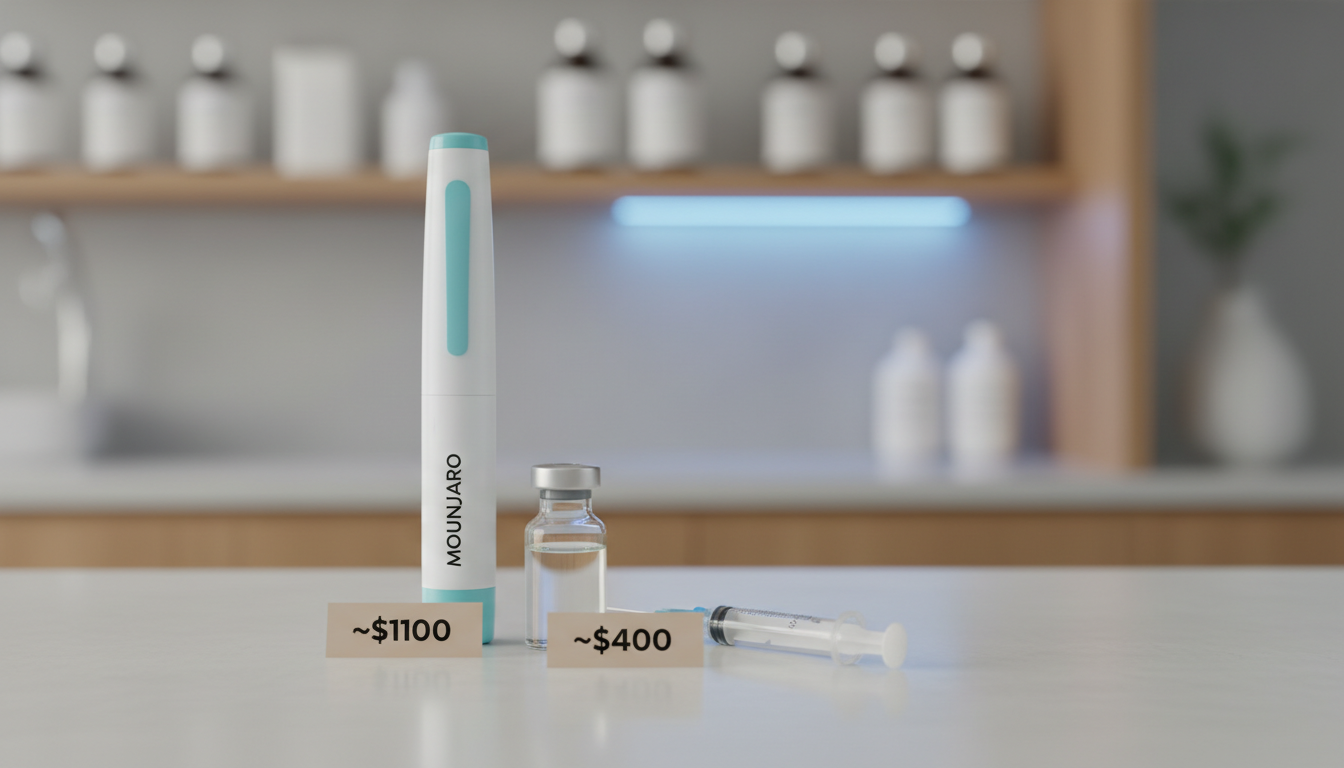
In 2026, the retail price for a one-month supply of Mounjaro typically ranges from $1,069 to $1,112. This price is for a box of four pre-filled auto-injector pens, which is a 28-day supply. This figure is consistent across multiple sources, with Drugs.com listing it at $1,094.26 and Eli Lilly's official list price set at $1,112.16 as of January 2026.
Here are a few key points about the cash price:
- All Doses Cost the Same: Whether you are on the starting 2.5 mg dose or the maximum 15 mg dose, the price per box remains the same.
- What You Get: The cost covers four single-use pens. You do not need to buy separate needles or syringes.
- Pharmacy Variation: While the list price is set by the manufacturer, the final retail price can have slight variations between pharmacies like CVS, Walgreens, or Walmart.
- Discount Cards: Pharmacy discount cards like GoodRx may offer some savings, but they usually only bring the price down slightly to around $995, as reported by Drugs.com. This is still a significant monthly expense for most people.
The reason for this high cost is that Mounjaro is a complex biologic medication that is still under patent protection. This means there is no FDA-approved tirzepatide generic price to drive down competition. You are paying for the brand name, the research and development that went into it, and the convenience of the auto-injector pen. Answering "how much does tirzepatide cost without insurance" for the brand-name version always leads back to this four-figure monthly sum.
How Much is Mounjaro Without Insurance Compared to Online Clinics?
The high retail price of brand-name Mounjaro has led many to seek more affordable alternatives. Online telehealth clinics and compounding pharmacies have emerged as a popular solution, offering access to the same active ingredient, tirzepatide, at a fraction of the cost.
This is where the distinction between "Mounjaro" and "tirzepatide" becomes important. Mounjaro is the brand name. Tirzepatide is the active pharmaceutical ingredient (API). Compounding pharmacies can legally create formulations that contain tirzepatide, often combining it with other ingredients like vitamin B12. This is different from a generic drug. You can learn more about the practice in our guide to compounded semaglutide.
Let's compare the costs of getting tirzepatide through different channels in 2026.
| Provider / Method | Product | Estimated Monthly Cost | What's Included |
|---|---|---|---|
| Retail Pharmacy (Cash Pay) | Mounjaro® | ~$1,100 | Medication only. |
| LillyDirect | Zepbound™ (for weight loss) | ~$550 | Medication and direct-to-patient pharmacy service. |
| FormBlends | Compounded Tirzepatide | Starting at $349 | Medication with physician oversight. |
| RxFox Partner Clinics | Compounded Tirzepatide | $300 - $500 | Consultation, medication, supplies, shipping, and ongoing support. |
The most significant takeaway is the difference in compound tirzepatide cost. Telehealth clinics offering compounded tirzepatide are able to provide it for a monthly fee that is often 50-70% less than brand-name Mounjaro's cash price. This price typically includes your virtual consultation with a doctor, the medication itself (shipped from a licensed pharmacy), all necessary supplies like needles and syringes, and ongoing support from your care team.
For those focused on weight loss, Zepbound is another brand-name option containing tirzepatide. As detailed in our Zepbound cost guide, Eli Lilly offers it through their LillyDirect platform for around $550 per month for those without insurance coverage, making it a cheaper brand-name alternative to Mounjaro.
Want to see which of these options fits your budget and health goals? Take our 3-minute quiz to get matched with vetted providers who offer transparent pricing and comprehensive care plans.
How to Save Money on Tirzepatide
Paying over $1,000 a month is not realistic for most people. Fortunately, there are several strategies you can use to lower the cost of tirzepatide.
- Confirm Your Insurance Coverage: Before anything else, call your insurance provider directly. Ask if Mounjaro or Zepbound are on the formulary, what the coverage criteria are (e.g., type 2 diabetes diagnosis, BMI threshold), and what your estimated copay would be. Don't rely on the website; speak to a representative. For more details, read our guide on insurance coverage for GLP-1s.
- Use the Mounjaro Savings Card (If Eligible): If you have commercial insurance that covers Mounjaro, this is your best option. It can bring your cost down to as low as $25. Remember, this is not for cash-pay patients or those on government plans.
- Apply for a Patient Assistance Program (PAP): Eli Lilly operates the Lilly Cares Foundation Patient Assistance Program. According to Telehealth Ally, this program may provide Mounjaro for free to uninsured U.S. residents with a type 2 diabetes diagnosis who meet specific low-income requirements. Other foundations, like the Patient Access Network, may also offer help, but typically require you to have insurance that covers the drug already.
- Choose Zepbound for Weight Loss (Cash Pay): If you are paying out-of-pocket for weight loss, Zepbound is the more economical brand-name choice. At roughly half the price of Mounjaro, it provides the same active ingredient.
- Explore Compounded Tirzepatide: For many, this is the most effective cost-saving strategy. With monthly costs between $300 and $500, compounded tirzepatide from a reputable online clinic makes the treatment accessible without needing insurance. It is crucial to choose a provider who uses high-quality, state-licensed compounding pharmacies. See our guide on how to find a legitimate peptide clinic.
- Discuss Alternatives with Your Doctor: Tirzepatide is not the only GLP-1 medication. Semaglutide (the active ingredient in Ozempic and Wegovy) is another highly effective option. Sometimes, insurance plans may cover one but not the other. Read our comparison of semaglutide vs. tirzepatide to learn more.
Is Tirzepatide Worth the High Cost?
A monthly cost of several hundred or even a thousand dollars is a significant financial commitment. This leads to the question: is it worth it?
The answer depends on an individual's health goals, financial situation, and the potential long-term benefits. For someone with uncontrolled type 2 diabetes, the benefits of Mounjaro can be profound. It has been shown to dramatically lower A1c levels, reduce the risk of cardiovascular events, and promote significant weight loss, which further improves metabolic health.
From a weight loss perspective, tirzepatide is one of the most effective medications ever developed, with clinical trial participants losing over 20% of their body weight on average. When you compare the monthly cost of the medication to the potential future costs of obesity-related health issues like heart disease, sleep apnea, and joint replacement surgery, the medication's price may be seen as a proactive investment in long-term health.
Ultimately, this is a conversation to have with your healthcare provider. They can help you weigh the clinical benefits against the financial costs and explore all available options to find a sustainable treatment plan that works for you.
Ready to explore your options and find a provider who can create a plan for you? Take our free 3-minute quiz to get matched with a licensed provider who understands your goals and budget.
FAQs
Why is Mounjaro so expensive without insurance?
Mounjaro is expensive because it is a new, complex biologic medication protected by patents. The manufacturer, Eli Lilly, invested heavily in research and development, and the current price reflects those costs and the lack of generic competition.
Is there a generic for Mounjaro or tirzepatide?
No, as of 2026, there is no FDA-approved generic version of Mounjaro. The drug's patents are still active. The closest low-cost alternative is compounded tirzepatide, which is prepared by specialized pharmacies and prescribed by doctors through telehealth clinics. There is no official tirzepatide generic price because a generic does not yet exist.
How much does tirzepatide cost per month?
The monthly cost of tirzepatide varies widely. Brand-name Mounjaro costs over $1,000 without insurance. Brand-name Zepbound costs about $550 through direct-to-patient programs. Compounded tirzepatide is the most affordable option, typically costing between $300 and $500 per month.
Can I get Mounjaro for $25 without insurance?
No. The widely advertised $25 price is only possible for patients who have an eligible commercial insurance plan that already covers Mounjaro. The $25 price is the result of applying the Mounjaro Savings Card to an already covered prescription. It is not available for uninsured or cash-paying patients.
Is Zepbound cheaper than Mounjaro without insurance?
Yes. When paying cash without any insurance, Zepbound is significantly cheaper than Mounjaro. Zepbound's price is around $550 through specific programs, while Mounjaro's retail price is over $1,000. Both medications contain the exact same active ingredient, tirzepatide, but Zepbound is specifically branded and FDA-approved for weight management. For a direct comparison, see our Zepbound Cost Guide.
Contributing to evidence-based peptide education and provider transparency.
Too many clinics, not enough clarity?
We don't sell peptides. Tell us your goals and we'll connect you with a vetted provider who can figure out what actually makes sense for you.
See what's right for youRelated articles
A Step-by-Step Gelatin Recipe for Weight Loss
Seen the viral "pink trick"? We break down the simple gelatin recipe for weight loss. Learn our step-by-step method to help manage hunger and feel full.
GLP-1 Weight LossOzempic Cost in 2026: What You'll Actually Pay
The 2026 Ozempic cost can be anywhere from $25 to over $1,400 a month. Discover why and learn how to find savings with or without insurance coverage.
GLP-1 Weight LossHow Zep Weight Loss Works and What to Expect
Thinking about zep weight loss? We cover how this drug works, what realistic results look like, common side effects, and how it compares to Ozempic.