How to Inject Semaglutide: A Step-by-Step Guide
A practical guide to injecting semaglutide at home — covering injection sites, pen technique, site rotation, storage, travel tips, and what to do if something goes wrong.
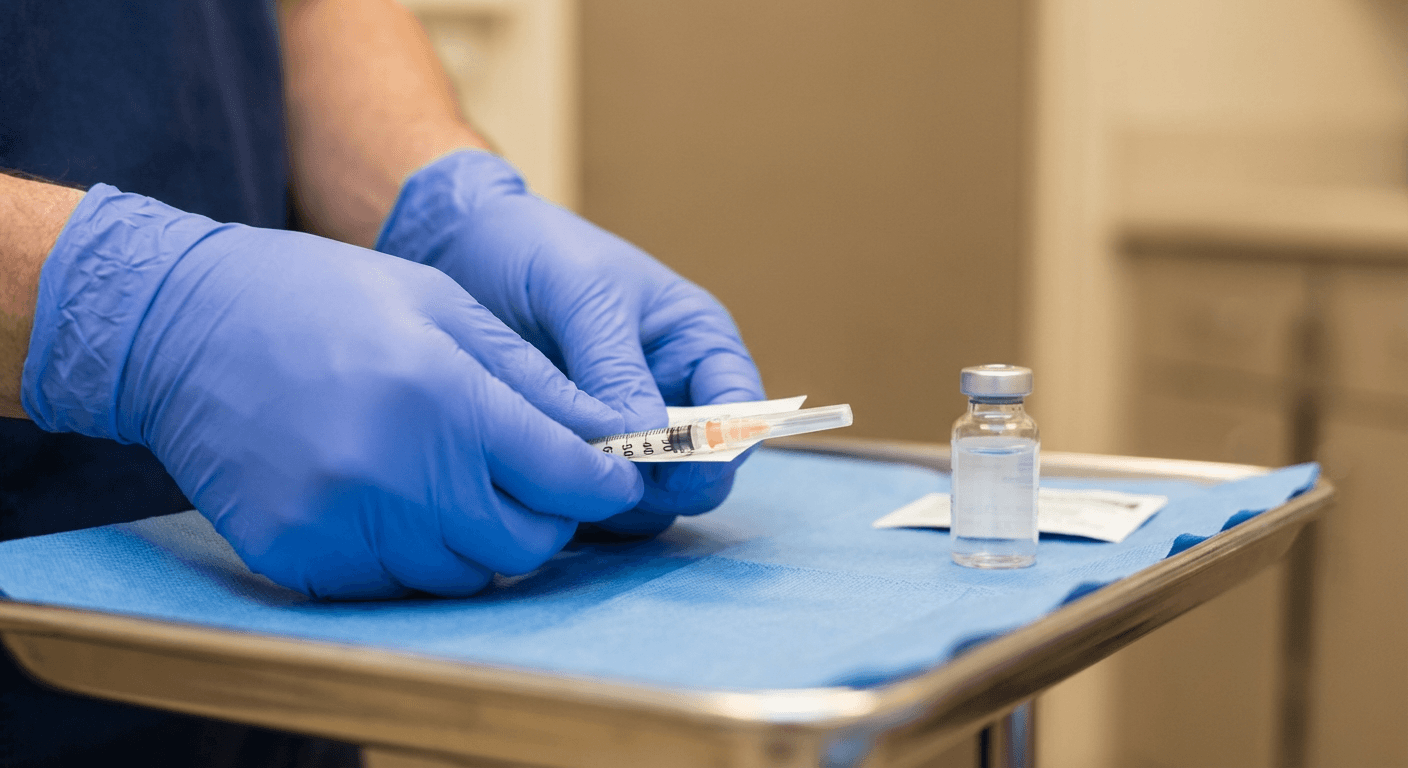
The First Injection Is the Hardest
If you've never given yourself a shot before, the idea of self-injecting a weekly medication feels like a lot. It's normal to be nervous. But the actual process takes about 60 seconds once you've done it a few times, and the needles used for semaglutide are thin enough that most people describe the sensation as a mild pinch or nothing at all.
This guide covers everything you need to know: where to inject, how to use the pen, how to handle the vial-and-syringe method if you're using compounded product, how to store your medication, and what to do when something doesn't go according to plan.
Before You Start: Gather Your Supplies
For a pre-filled pen (Ozempic, Wegovy, Wegovy HD):
- Your semaglutide pen
- A new pen needle (usually provided with your prescription — 32-gauge, 4mm to 8mm)
- An alcohol swab
- A sharps container for used needles
For a vial (compounded semaglutide or research settings):
- Your semaglutide vial
- An insulin syringe (typically 0.5 mL or 1 mL, 29-31 gauge)
- Alcohol swabs (two — one for the vial top, one for the injection site)
- A sharps container
- If you're reconstituting from lyophilized powder, the reconstitution calculator will help you get the mixing ratios right
Wash your hands thoroughly with soap and water before handling anything. This isn't just a suggestion. Injection site infections are preventable, and clean hands are the first line of defense.
Choosing Your Injection Site
Semaglutide is a subcutaneous injection, meaning it goes into the fat layer just beneath the skin — not into muscle. You have three approved injection sites.
Abdomen. This is the most popular choice. Inject at least two inches away from your belly button, staying clear of any scars or the waistband area. The abdomen typically has a consistent fat layer that makes injection easy and absorption reliable. Avoid the area directly below the ribcage.
Thigh. Use the front or outer side of your thigh, roughly in the middle third between your hip and knee. Avoid the inner thigh, where blood vessels and nerves sit closer to the surface.
Upper arm. The back of the upper arm, between the shoulder and elbow, works well. This site is harder to reach yourself, so some people have a partner help. If you're doing it solo, the thigh or abdomen is usually easier.
All three sites absorb semaglutide at roughly the same rate. Choose whichever is most comfortable and accessible for you.
Site Rotation: Why It Matters
Using the same exact spot every week can cause lipodystrophy — a change in the fat tissue that creates hard lumps or indentations under the skin. This isn't just cosmetic. Scar tissue at an overused injection site can affect how well the medication absorbs, leading to inconsistent drug levels.
The fix is simple: rotate. You can stay within the same general area (abdomen, for example) but move at least an inch from your last injection spot. Some people use a clock pattern — imagine your belly button is the center and move to a different "hour" each week. Others alternate between left abdomen, right abdomen, left thigh, and right thigh on a four-week cycle.
A provider who does a thorough onboarding will show you how to rotate and check your injection sites at follow-up visits. If you're looking for that level of care, the provider matching quiz can help you find clinics that take patient education seriously.
How to Inject With a Pre-Filled Pen (Ozempic or Wegovy)
Here's the full process, broken down clearly.
Step 1: Inspect the pen. Pull the cap off and look at the medication through the viewing window. It should be clear, colorless, and free of particles. If it's cloudy, discolored, or has floating bits, don't use it. Contact your pharmacy for a replacement.
Step 2: Attach a new needle. Peel the paper tab off a new pen needle and push it straight onto the pen tip until it's secure. Remove the outer needle cap (save it — you'll need it later to remove the needle). Then remove the inner needle cap and discard it.
Step 3: Check the flow (first use of a new pen only). For a brand-new pen, you need to prime it. Turn the dose selector to the flow check symbol (varies by brand — check your pen's instructions). Point the needle upward and press the dose button. A drop of medication should appear at the needle tip. If nothing comes out, repeat up to six times. If it still doesn't produce a drop, the pen may be defective.
Step 4: Set your dose. For Wegovy, the dose is pre-set. Each pen delivers one fixed dose, so you simply confirm the number in the dose window matches your prescribed amount. For Ozempic, turn the dose selector until the correct dose appears in the dose counter window.
Step 5: Clean the injection site. Wipe the area with an alcohol swab and let it dry completely. Injecting through wet alcohol stings more and can push bacteria into the skin.
Step 6: Inject. Gently pinch a fold of skin at your chosen site. Insert the needle straight in at a 90-degree angle. Press the dose button all the way in and hold. For Ozempic, keep the button pressed for at least six seconds. For Wegovy, hold until you hear two clicks and the dose counter returns to zero. The six-second hold (or the click confirmation) ensures the full dose is delivered — releasing the button early means you may not get the complete amount.
Step 7: Remove and dispose. Pull the needle straight out. If you see a small drop of medication or blood at the injection site, that's normal. Don't rub the area. Place the outer needle cap back on the needle, unscrew it from the pen, and drop it into your sharps container. Replace the pen cap.
The whole process takes under two minutes once you're familiar with it.
How to Inject From a Vial
If you're using semaglutide from a vial — which applies to some compounded formulations — the technique is slightly different.
First, clean the rubber stopper on the vial with an alcohol swab. Draw air into your syringe equal to the volume of medication you need (this prevents a vacuum in the vial). Insert the needle through the rubber stopper, push the air in, then invert the vial and slowly draw back the syringe to your prescribed dose marking.
Check for air bubbles. If you see any, tap the syringe barrel gently with your finger to move them to the top, then push the plunger slightly to expel the air. Draw more medication if needed to reach your exact dose.
Clean your injection site with the second alcohol swab. Pinch the skin, insert the needle at a 90-degree angle, and push the plunger down slowly and steadily. Hold for five to ten seconds before withdrawing. Dispose of the syringe in a sharps container. Never recap a syringe needle or reuse syringes.
If you're working with lyophilized (freeze-dried) semaglutide that needs to be mixed with bacteriostatic water, the reconstitution calculator will determine the exact water volume and resulting concentration for your vial size and target dose.
Storage Requirements
Proper storage keeps semaglutide effective and safe. The rules differ depending on whether the pen is new or in use.
Unopened pens or vials: Store in the refrigerator between 36-46°F (2-8°C). Keep them in the original packaging to protect from light. Stored this way, they're good until the expiration date printed on the label.
After first use: Ozempic pens can be kept at room temperature (59-86°F / 15-30°C) or in the refrigerator for up to 56 days. Wegovy pens allow up to 28 days at room temperature after first use. After those windows, discard the pen even if medication remains.
Never freeze semaglutide. If a pen has been frozen, it's damaged. Don't use it. Store pens away from the back of the refrigerator where temperatures can dip below freezing.
Never expose to heat above 86°F. Leaving a pen in a hot car, near a stove, or in direct sunlight can degrade the medication rapidly. Heat damage isn't always visible — the liquid may still look clear but the semaglutide molecule may have broken down, reducing its effectiveness.
Compounded vials may have different storage requirements depending on the compounding pharmacy's formulation. Always follow the specific instructions provided with your vial. Reconstituted semaglutide from lyophilized powder generally needs refrigeration and has a shorter shelf life (typically 28-30 days).
What to Do When Things Don't Go Perfectly
Real-world injections don't always match the instructional videos. Here's what to do when common hiccups happen.
You see blood at the injection site. This means you nicked a small blood vessel. It's not dangerous. Apply gentle pressure with a clean cotton ball or gauze for a minute or two. A small bruise may develop over the next day. This doesn't affect how well the medication works.
You get a bruise. Bruising is common, especially if you're new to injections or happen to hit a small capillary. It doesn't mean you did anything wrong. Rotating injection sites and avoiding areas where you can see veins near the surface can help reduce frequency. Don't massage the bruised area.
The injection burns or stings. Cold medication straight from the fridge can sting on injection. Let the pen sit at room temperature for 15-30 minutes before injecting. If you're still experiencing stinging, make sure the alcohol swab has fully dried before inserting the needle. Injecting slowly also helps.
You're not sure the full dose went in. With Wegovy pens, the dose counter should read zero and you should hear two clicks. With Ozempic, the dose counter returns to zero after the six-second hold. If you released the button early or the counter doesn't read zero, you may have gotten a partial dose. Do not re-inject to make up the difference. Note what happened and tell your provider at your next check-in. One slightly short dose in a week will not meaningfully affect your treatment.
There's a lump at the injection site. A small, painless lump right after injection is usually the medication pooling under the skin before it absorbs. It should resolve within a few hours. A lump that persists, grows, becomes red or warm, or develops several days later could indicate an infection or a reaction — contact your provider.
You accidentally inject into muscle. This can happen if you inject too deep, especially in a thinner area like the upper arm, or if you don't pinch the skin. Semaglutide injected intramuscularly isn't dangerous, but it may absorb faster and could cause more intense side effects that week. It might also bruise more. Make sure to pinch a skin fold and use the shortest needle available (4mm is typically sufficient for subcutaneous delivery).
Timing Your Injection
Semaglutide is a once-weekly injection, and the key rule is consistency: pick a day of the week and stick with it. You can inject at any time of day — morning, afternoon, or evening — regardless of meals.
Some patients prefer injecting at bedtime so they can sleep through any mild nausea that occurs in the hours after the shot. Others like doing it in the morning so they can monitor how they feel throughout the day. Neither approach is medically superior. The best time is the one you'll actually remember.
If you need to shift your injection day (say, from Tuesday to Saturday because of a schedule change), you can do that as long as there are at least two days between your last injection and the new one. Going forward, Saturday becomes your regular day.
You can change your injection site each week without changing your injection day. The two are independent.
Travel Tips
Traveling with semaglutide requires a bit of planning, but it's straightforward once you know the rules.
Flying: Semaglutide pens and needles are allowed in carry-on luggage. The TSA permits injectable medications and associated supplies. Bring your prescription label or a letter from your provider, though you're unlikely to be asked for it. Never put semaglutide in checked luggage — cargo holds can reach temperatures that damage the medication.
Keeping it cool: If you'll be without refrigeration for more than a few hours, use an insulated travel case with a gel pack. You don't need the pen to be ice-cold — room temperature (under 86°F) is fine for the timeframe listed above (56 days for Ozempic, 28 days for Wegovy after first use). The goal is to avoid heat exposure, not to maintain refrigerator temperatures at all times.
Crossing time zones: You don't need to adjust your injection timing for time zone changes. If you normally inject on Wednesdays at 8 PM Eastern and you're traveling to Pacific time, injecting at 8 PM Pacific that Wednesday is fine. A few hours' difference doesn't affect efficacy.
Disposing of needles while traveling: Bring a small portable sharps container or use a hard-sided container like an empty detergent bottle with a screw cap. Never put used needles in hotel trash cans or airplane waste bins. Most pharmacies will accept full sharps containers for disposal.
International travel note: Semaglutide is available in many countries, but brand names and formulations vary. If you're traveling for an extended period, make sure you have enough supply before you leave. Some countries may not carry the exact pen strength you need.
Pen vs. Oral: Choosing Your Route
As of 2026, you no longer have to inject semaglutide if you don't want to. The oral Wegovy pill (approved December 2025) delivers semaglutide as a daily tablet. It produced 16.6% mean weight loss in the OASIS 4 trial, comparable to the 2.4 mg injection. The starting price is about $149/month.
If needles are the barrier between you and treatment, the oral option removes it entirely. The trade-off is daily dosing with strict fasting requirements versus a once-weekly injection you barely feel. Some patients start with the oral version and switch to injections later for convenience, or vice versa.
Your provider can walk you through which formulation fits your lifestyle. If you don't have a provider yet, the matching quiz takes a couple of minutes and connects you with clinics that offer both options. The cost guide breaks down pricing for all available formulations.
A Note for First-Timers
Your first injection will feel like a bigger deal than it is. Here's what most people report after their first time: "That was it?" The needles are 32-gauge (very thin) and 4mm long. You're going into a fatty area. The actual sensation is minimal.
If you're still anxious, some tips. Have someone with you the first time, not to help technically, but for moral support. Watch a real patient demonstration video (your pen's manufacturer website will have one). Ice the injection site for a minute beforehand if the idea of the needle itself bothers you — the cold numbs the area slightly.
After two or three weekly injections, it becomes routine. The side effects guide covers what to expect in the hours and days after each shot, and the dosing chart maps out your full titration timeline. The drug interaction checker is worth running before your first dose if you take other medications.
Semaglutide Injection FAQ
Where is the best place to inject semaglutide?
The three approved sites are the abdomen (at least two inches from the navel), the front or outer thigh, and the back of the upper arm. Most patients prefer the abdomen because it's easy to reach and has a reliable fat layer for subcutaneous delivery. All three sites absorb the medication at similar rates. The best site is whichever is most comfortable for you. Rotate within and between sites weekly to prevent tissue damage.
How deep should the semaglutide needle go?
Semaglutide is a subcutaneous injection — it goes into the fat layer just under the skin, not into muscle. With a standard 4mm pen needle, inserting the full length of the needle at a 90-degree angle into a pinched skin fold will place it in the correct tissue depth. You don't need to push deep or use a long needle. If you're very lean, your provider may suggest a shorter needle or a shallower angle to avoid muscle.
Can I inject semaglutide in my arm by myself?
Technically yes, though it's the hardest of the three sites to reach solo. You need to pinch the skin on the back of your upper arm while holding the pen and pressing the dose button. Some patients manage it with practice. If it feels awkward or you can't maintain a good skin pinch, use your abdomen or thigh instead. Having a partner inject the upper arm is the easiest approach for that site.
What do I do if I see blood after injecting?
A small amount of blood at the injection site means you nicked a tiny blood vessel. This happens occasionally and is not a problem. Press gently with a cotton ball or clean gauze for a minute. A bruise may appear over the next day — that's normal too. The medication still works as intended. If you notice heavy or prolonged bleeding, or if the site becomes increasingly painful, swollen, or warm over the following days, contact your provider.
Does semaglutide need to be refrigerated?
Before first use, yes — store pens between 36-46°F (2-8°C) in the refrigerator. After first use, Ozempic can stay at room temperature or in the fridge for up to 56 days. Wegovy allows up to 28 days at room temperature after initial use. Never freeze semaglutide and never expose it to temperatures above 86°F. Compounded semaglutide in vials may have different storage windows — check with your compounding pharmacy.
How do I travel with semaglutide?
Carry your pen and needles in your carry-on bag when flying. TSA allows injectable medications through security. Use an insulated pouch to keep the pen within its temperature range, especially in warm climates. Bring enough supply for your entire trip plus a buffer. Carry your prescription information in case of questions. Never put semaglutide in checked luggage, where cargo temperatures fluctuate.
What if I'm afraid of needles — is there an alternative to injecting semaglutide?
Yes. Oral Wegovy, approved in December 2025, delivers semaglutide as a daily pill. It showed 16.6% weight loss in clinical trials, comparable to the standard 2.4 mg weekly injection. The starting price is around $149/month. You can discuss both options with a licensed provider to decide what fits your situation. Needle phobia is a legitimate reason to explore the oral route, and no provider should dismiss that concern.
Contributing to evidence-based peptide education and provider transparency.
Too many clinics, not enough clarity?
We don't sell peptides. Tell us your goals and we'll connect you with a vetted provider who can figure out what actually makes sense for you.
See what's right for youRelated articles
A Step-by-Step Gelatin Recipe for Weight Loss
Seen the viral "pink trick"? We break down the simple gelatin recipe for weight loss. Learn our step-by-step method to help manage hunger and feel full.
GLP-1 Weight LossOzempic Cost in 2026: What You'll Actually Pay
The 2026 Ozempic cost can be anywhere from $25 to over $1,400 a month. Discover why and learn how to find savings with or without insurance coverage.
GLP-1 Weight LossHow Zep Weight Loss Works and What to Expect
Thinking about zep weight loss? We cover how this drug works, what realistic results look like, common side effects, and how it compares to Ozempic.