Which WiFi Providers in My Area Are Actually Good?
Don't just search for wifi providers in my area—find the right one. We break down speeds, real-world pricing, and hidden fees so you can choose wisely.

This content is for informational purposes only and does not constitute medical advice.
Your Complete Guide to Finding WiFi Providers in Your Area
Finding the best wifi providers in my area can feel like a chore. With so many options, confusing promotional deals, and technical jargon, it’s easy to get lost. But in 2026, a reliable internet connection is not a luxury, it's essential. Whether you work from home, stream entertainment, or manage your health through online telehealth platforms, your WiFi is the backbone of your daily life. The good news is that competition is heating up, and prices are becoming more attractive.
This guide will break down everything you need to know. We’ll explore the different types of internet available, from blazing-fast fiber to convenient 5G home internet. We will also analyze the real costs behind the advertised prices. According to a 2026 report, only about 43% of U.S. households currently have access to top-tier fiber-to-the-home service, and 21 million Americans still lack what is considered true broadband speed (at least 100 Mbps). We'll show you how to find out what’s available at your address and choose the plan that’s right for you without overpaying.
Understanding Your Internet Options: Fiber vs. Cable vs. 5G
The first step in choosing an internet provider is understanding the technology they use. The three main types of home internet in 2026 are fiber optic, cable, and 5G home internet. Each has its own strengths and weaknesses, and availability can vary dramatically from one neighborhood to the next.
Fiber Optic Internet
Fiber is the gold standard for home internet. It uses thin strands of glass to transmit data as pulses of light, which allows for incredibly fast and stable connections. The main advantage of fiber is its symmetrical speeds, meaning your upload speeds are just as fast as your download speeds. This is crucial for video conferencing, uploading large files, and online gaming.
Providers like AT&T and Google Fiber are leading the charge in fiber expansion. For example, a recent promotion from AT&T offers fiber internet plans starting at just $35 per month for new customers on a 300 Mbps plan, a price that includes discounts for autopay and paperless billing (AT&T). As of early 2026, fiber-to-the-home is available to 57% of U.S. addresses, but the rollout is ongoing. If it's available in your area, it’s almost always the best choice.
Cable Internet
Cable internet is delivered through the same coaxial cables used for cable TV. It’s widely available and offers fast download speeds that are perfect for streaming 4K movies and general browsing. Major providers include Xfinity, Spectrum, and Mediacom.
The main drawback of cable is that you share bandwidth with your neighbors. This can sometimes lead to slower speeds during peak usage hours, like in the evenings when everyone is streaming. Upload speeds are also significantly slower than download speeds. However, cable providers are offering competitive deals. Mediacom, for instance, has a promotional price of $50 per month for its 300 Mbps plan, which comes with no data caps (Mediacom).
5G Home Internet
The newest player in the game is 5G home internet. This technology uses the same 5G cellular network your smartphone does to deliver wireless internet to your home. It’s an excellent alternative, especially in areas where fiber and cable options are limited or nonexistent. Providers like T-Mobile and Verizon are a major force here.
According to 2026 data, T-Mobile Home Internet is now available to around 55% of U.S. addresses, offering typical download speeds of 165 Mbps for a flat $50 per month with no contracts or data caps. Verizon 5G Home covers about 35% of addresses and can be a bargain for existing mobile customers at just $25 per month (InternetProviders.ai). This technology is rapidly closing the digital divide, offering a competitive choice for millions.
Feeling overwhelmed by the options? While we're talking about optimizing your home setup, it's also a good time to think about personal optimization. Find out how you can improve your well-being by taking our free 3-minute quiz to get matched with a vetted provider.

How to Compare Costs from WiFi Providers in My Area
One of the biggest challenges when searching for wifi providers in my area is decoding the price. The number you see on the billboard is rarely the number that appears on your monthly bill. To make an informed decision, you need to look beyond the headline price.
Promotional Pricing vs. Standard Rates
Most internet service providers (ISPs) lure in new customers with attractive promotional pricing that lasts for the first 12 or 24 months. After that, the price can jump significantly. It's crucial to read the fine print to know what your rate will be in year two and beyond.
Mediacom is transparent about this practice. Their Internet 300 plan is advertised at $50 per month for the first year, but the details show it increases to $65 in year two and $80 in year three (Mediacom). Astound Broadband offers a "Price for Life" guarantee on some plans, like its Gig WiFi for $40 per month, which can provide long-term budget stability (Astound). Always ask what the standard rate is before you sign up. Budgeting is key, whether you are planning for utility bills or considering your long-term health. Understanding the difference between a one-time charge and a recurring expense, a concept we explore in our article on cost vs. price, is essential for financial wellness.
Hidden Fees, Data Caps, and Equipment Costs
The monthly service fee is only part of the story. Be on the lookout for other charges:
- Installation and Activation Fees: Some companies charge a one-time fee to get you set up. Mediacom, for example, has a $75 installation fee and a $25 activation fee.
- Equipment Rental: You'll need a modem and a router. While some providers include this, others charge a monthly rental fee of $10 to $15.
- Data Caps: While less common now, some plans still limit the amount of data you can use per month. Exceeding the cap can result in steep overage fees. Mediacom proudly offers no data caps, a significant plus for heavy users.
Across the United States, home WiFi plans can start as low as around $25 per month, but the average is closer to $40 per month (Allconnect). Some states are more affordable than others. As of March 2026, Ohio is the cheapest state for broadband, with plans starting at $35 per month thanks to heavy competition (InternetProviders.ai). Keeping track of monthly expenses is vital, just as understanding the monthly cost of tirzepatide is for those managing their wellness budgets.
Finding the Best WiFi Providers By Address and for Niche Needs
Internet availability is hyper-local. A provider might serve one side of the street but not the other. That’s why the most effective way to shop is to search for wifi providers by address. This pinpoints exactly which companies and technologies are available to you.
The options for wifi providers dallas might be dominated by AT&T Fiber and Spectrum, while someone looking for wifi providers boston might find Verizon Fios and Xfinity are the main players. This regional variation is why a general search can be misleading. A city like Bend, Oregon, which has a growing tech scene, presents its own unique landscape. Finding reliable internet providers bend oregon might involve choosing between expanding fiber networks and strong 5G home internet coverage. Some smaller towns might have fantastic local options, as seen in guides like our look at Midland, TX internet providers.
Advanced and Niche Internet Uses
For some users, an internet connection is more than just a gateway for Netflix and email. It’s a tool for specialized tasks that require high performance.
- Residential Proxy Providers: A residential proxy masks your computer's IP address with one from a real home internet connection. People use residential proxy providers for market research, ad verification, and accessing geo-restricted content. This requires a very stable connection with high uptime and fast speeds, making fiber the ideal choice. Researchers also rely on fast connections for data collection. For instance, tools like the Clinical Trials FDA Scraper from Apify can pull millions of public data points on drug trials and adverse events, a task that would be impossible on a slow connection (Apify).
- IPTV: Internet Protocol Television (IPTV) delivers television content over the internet instead of through traditional satellite or cable formats. To avoid frustrating buffering and ensure a high-quality stream, you need a connection with high bandwidth and no data caps. Many people frequent an iptv providers forum to discuss which ISPs offer the best performance for streaming. On these forums, providers with no-data-cap plans, like Mediacom, are often highly recommended. If you're curious about this topic, our guide to reputable IPTV providers can help you learn more.
Thinking about which options are right for you, whether for internet or your health? Our free quiz can help guide you. It takes 3 minutes and matches you with vetted providers ready to help you meet your goals. Take the quiz today.
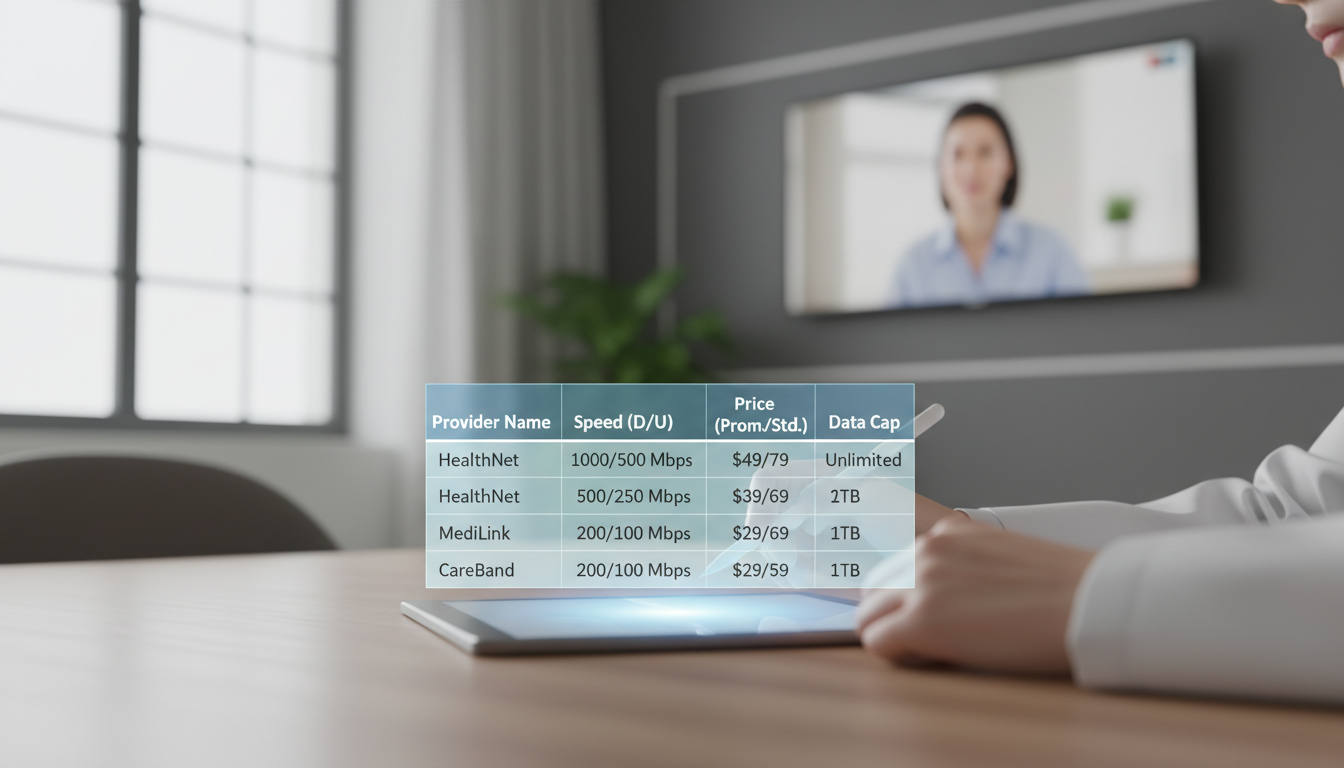
What to Consider Before You Switch
You’ve done the research and found a promising new provider. Before you make the switch, run through this final checklist to ensure you’re making the right move.
- Confirm Availability and Speed: Double-check that the provider can service your specific address with the advertised speed. Don't rely on a general coverage map.
- Read the Contract: Are you signing up for a 12 or 24-month contract? If so, what is the early termination fee (ETF)? Many 5G home internet plans, like T-Mobile's, come with no annual contracts, offering greater flexibility.
- Calculate the Total First-Year Cost: Add up the monthly fee, any installation or activation costs, and equipment rental fees to get a true picture of your first-year expense. This is more useful than just looking at the monthly price.
- Evaluate Your Actual Speed Needs: A gigabit plan sounds great, but you might not need it. For a household that streams, works from home, and does some online gaming, a 300-500 Mbps plan is often more than enough. Overpaying for speed you won't use is a common mistake.
- Check Customer Service Reviews: Look up provider reviews for your specific area. A provider might have a great reputation nationally but poor service locally. See what current customers say about reliability and support.
Making a careful choice now saves you headaches later. Just as you might research the downsides of TRT before starting a new therapy, it pays to understand the potential cons of an internet provider before committing.
FAQs
How do I find all wifi providers in my area?
The most reliable way is to use online search tools on aggregator websites or the FCC's National Broadband Map. You enter your physical address, and these tools will show you a list of all the providers and plan types available specifically for your home.
What is a good internet speed for home use in 2026?
For most households, a plan with 100 to 300 Mbps download speed is excellent. This is sufficient for multiple people to stream in 4K, work from home on video calls, and play online games without issue. If you only browse the web and check email, you can get by with speeds under 100 Mbps.
Is fiber internet better than cable?
Generally, yes. Fiber optic internet offers faster and more reliable service, especially when it comes to upload speeds. This makes it superior for video conferencing and uploading large files. However, cable is still a great option that is more widely available and can provide very fast download speeds.
Can I get fast internet without a cable or phone line?
Yes, absolutely. 5G home internet is the leading alternative. It uses a wireless signal from a provider's cellular network, so it requires no physical lines to your house. Providers like T-Mobile and Verizon offer plans with competitive speeds and pricing, making it a viable option for millions.
Ready to explore your options for personal optimization? Take our free 3-minute quiz to get matched with a licensed provider who can help you reach your wellness goals.
Contributing to evidence-based peptide education and provider transparency.
Too many clinics, not enough clarity?
We don't sell peptides. Tell us your goals and we'll connect you with a vetted provider who can figure out what actually makes sense for you.
See what's right for youRelated articles
How to Actually Find Peptide Therapy Near Me
Don't just Google "peptide therapy near me." Learn how to vet clinics, what questions to ask your doctor, and how to spot a trustworthy provider.
Provider GuideSigns of a Quality Peptide Compounding Pharmacy
Worried about quality? Learn the critical questions to ask any peptide compounding pharmacy, plus the red flags that signal you should stay away.
Provider GuideFinding Legit Peptide Clinics in the UK
Don't just Google 'peptide clinics uk'. Our guide shows you how to find a qualified provider, what to ask in a consult, and how to avoid scams.