What Are the Best Injectable Peptides for Skin Tightening?
Curious about the best injectable peptides for skin tightening? We break down how GHK-Cu, CJC-1295, and others work to rebuild collagen from within.
This content is for informational purposes only and does not constitute medical advice. Always consult with a qualified healthcare provider before beginning any new treatment.
The desire for firmer, more youthful skin has led many to explore options beyond creams and serums. While topical treatments have their place, a growing number of people are asking about the best injectable peptides for skin tightening. These compounds work from the inside out, signaling your body to repair and rebuild skin at a cellular level.
Unlike surface-level treatments, injectable peptides can have a more direct and systemic impact on collagen production, inflammation, and overall tissue health. But this approach is not without its complexities, including a confusing regulatory landscape and the critical need for medical supervision. This guide breaks down the most discussed injectable peptides for skin in 2026, examining the science, the risks, and who might benefit most.
How We Evaluated the Best Injectable Peptides for Skin Tightening
Choosing the right peptide therapy is a significant decision that requires careful consideration. Our evaluation of the best injectable peptides for skin tightening is based on several key factors, moving beyond online hype to focus on what matters for your health and results.
First, we looked at the mechanism of action. Peptides are not all the same. Some are signal peptides that tell your cells to produce more collagen, while others are carrier peptides that deliver essential minerals for tissue repair (Elite Bioscience). Understanding how a peptide works is the first step in determining if it aligns with your goals.
Second, we examined the available research. Many peptides gaining popularity online are sold as 'research chemicals' and lack high-quality human evidence for safety or effectiveness (The Conversation). We prioritized peptides with some level of human study, even if small, and clearly state when evidence is primarily from animal models.
Third, we considered the regulatory status. The FDA has been closely watching the peptide market. For example, a September 2024 update placed peptides like BPC-157 and injectable GHK-Cu into a category with "significant safety risks" (Meto blog). However, as of February 27, 2026, a major reclassification is expected to move many of these back into a category that allows licensed compounding pharmacies to prepare them with a doctor's prescription (Formation Med). This is a critical development for safe access.
Finally, we assessed the intended purpose. Some peptides are excellent for global anti-aging, while others excel at targeted tissue repair. This guide helps you understand the difference so you can have a more informed discussion with your doctor.
Feeling unsure about where to start? A qualified provider can help you make sense of your options. Take our free 3-minute quiz to get matched with a licensed provider in your area.
1. GHK-Cu (Copper Peptide)
GHK-Cu, often called the copper peptide, is one of the most well-researched peptides for skin health. It's a carrier peptide, meaning its primary job is to transport and deliver copper ions to cells, an element critical for many regenerative processes.
What It Is and How It Works
GHK-Cu is a naturally occurring peptide-copper complex found in human plasma that declines with age. Its power lies in its ability to regulate numerous cellular pathways. By delivering copper, it stimulates the production of collagen and elastin, the two main structural proteins that give skin its firmness and elasticity.
Scientific evidence supports its effectiveness. Studies on fibroblast cells, which are responsible for creating collagen, show that GHK-Cu can increase collagen synthesis by a remarkable 70-80% (SeekPeptides). This translates to real-world results like increased skin thickness and a measurable reduction in fine lines and wrinkles over several months of consistent use. It also has potent anti-inflammatory and antioxidant properties, helping protect the skin from damage.
Pros and Cons
Pros:
- Strong Scientific Backing: GHK-Cu has more clinical data supporting its skin benefits than many other injectable peptides.
- Multiple Benefits: It not only boosts collagen but also supports wound healing, reduces inflammation, and acts as an antioxidant.
- Systemic and Local Effects: When injected, it can promote skin health systemically while also being used for targeted local treatment.
Cons:
- Regulatory Scrutiny: Injectable GHK-Cu was previously placed on the FDA's Category 2 list due to safety concerns when sourced from unregulated channels (Meto blog).
- Requires Professional Sourcing: The quality and purity of GHK-Cu can vary wildly on the open market, making professional sourcing from a compounding pharmacy essential.
Who It's Best For & Regulatory Update
GHK-Cu is an excellent choice for individuals whose primary goal is direct skin rejuvenation, wrinkle reduction, and improved firmness. It is one of the best peptides for skin injection when the focus is squarely on cosmetic improvement.
The most important news for 2026 is its regulatory shift. GHK-Cu is among the peptides expected to return to Category 1 status as of February 27, 2026 (Formation Med). This means that with a physician's prescription, it can be legally prepared by licensed compounding pharmacies. This change provides a much safer avenue for access compared to buying unregulated "research" products online. You can learn more about its applications in our guides to GHK-Cu peptide cost and GHK-Cu injection results.
2. BPC-157
BPC-157, which stands for Body Protection Compound-157, has earned a reputation as a powerhouse for healing. Originally isolated from human gastric juice, this peptide is primarily known for accelerating the repair of tendons, ligaments, muscles, and the gut. Its potential benefits for skin are largely a secondary effect of its powerful regenerative properties.
What It Is and How It Works
BPC-157 works mainly by promoting angiogenesis, the formation of new blood vessels. Healthy blood flow is critical for delivering oxygen and nutrients to damaged tissues, which is the foundation of any healing process. By improving circulation at a micro-level, BPC-157 helps the body repair itself more efficiently.
This mechanism is what gives it potential skin benefits. For issues like stubborn wounds, scars, or recovery after a cosmetic procedure, improved blood flow can accelerate healing and may lead to better tissue quality. However, its role in general cosmetic skin tightening is less direct and not well-documented in clinical studies compared to peptides like GHK-Cu.
Pros and Cons
Pros:
- Exceptional Healing: It is highly effective for a wide range of tissue injuries.
- Systemic Repair: Can be injected subcutaneously to provide systemic healing benefits throughout the body.
- Anti-Inflammatory: It helps modulate inflammation, which is a key factor in both injury and skin aging.
Cons:
- Limited Cosmetic Evidence: There is very little research directly examining BPC-157 for cosmetic skin tightening (SeekPeptides). Its benefits are inferred from its healing mechanisms.
- Significant Safety Concerns: The FDA placed BPC-157 on its Category 2 list in September 2024, citing "significant safety risks" (Meto blog). Its pro-angiogenic effect, while great for healing, raises theoretical concerns about promoting the growth of unwanted tissues (The Conversation).
- Not a First-Line Skin Peptide: It is not typically recommended for someone whose sole goal is improving skin laxity.
Who It's Best For
BPC-157 is best suited for individuals who are primarily focused on healing an injury, whether it's a nagging sports injury, gut issue, or recovery from surgery. The potential improvements in skin quality are best viewed as a positive side effect of a broader healing protocol. If you're considering it, exploring a BPC-157 peptide injection protocol should be done under strict medical guidance. You can also see how it compares to similar peptides in our BPC-157 vs. TB-500 guide.
3. CJC-1295 + Ipamorelin
This popular combination is not a direct skin peptide. Instead, it works by stimulating your body's own production of growth hormone (GH). This approach offers broad anti-aging benefits, with skin tightening being just one of several positive outcomes. It is one of the most common stacks used in peptide therapy for anti-aging.
What It Is and How It Works
CJC-1295 is a Growth Hormone Releasing Hormone (GHRH) analogue, and Ipamorelin is a Growth Hormone Releasing Peptide (GHRP). Here's how they work together:
- CJC-1295 tells the pituitary gland to release growth hormone.
- Ipamorelin amplifies this signal and selectively stimulates GH release without significantly affecting other hormones like cortisol.
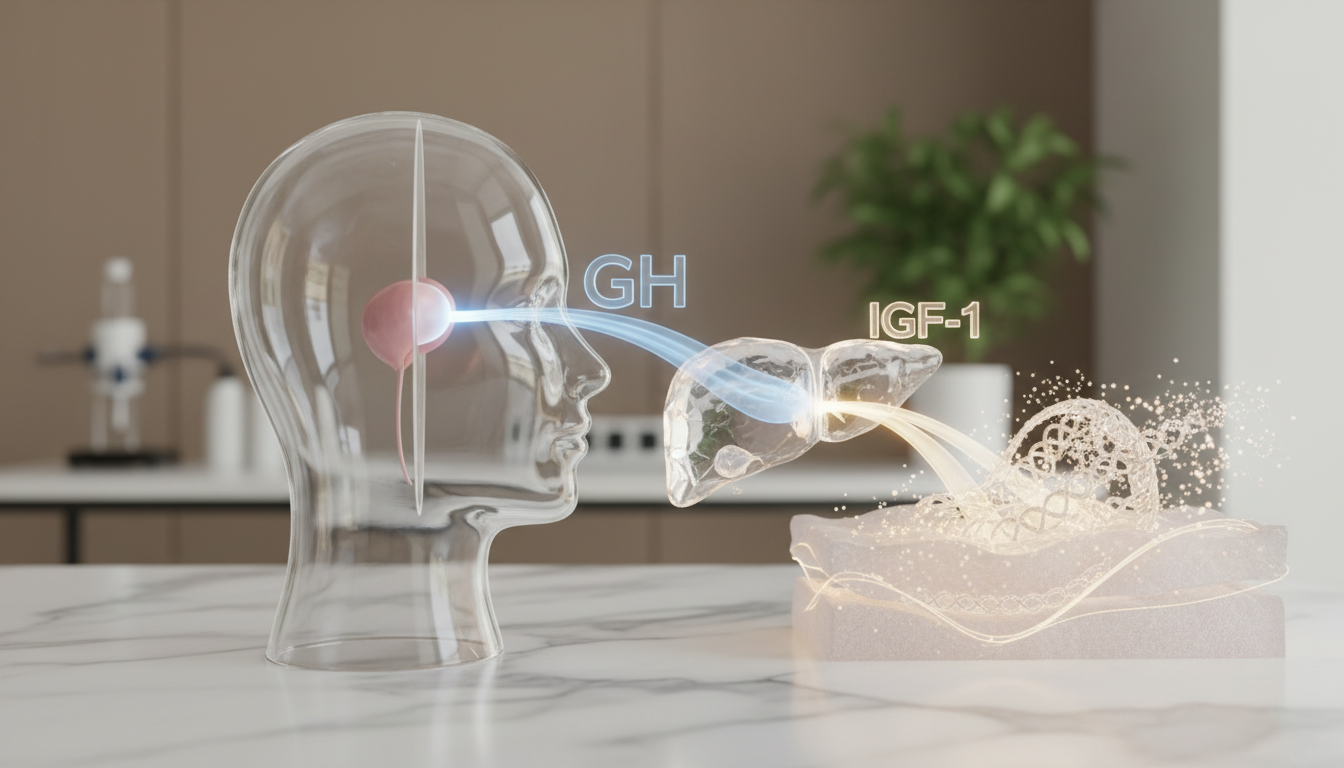
This one-two punch results in a stronger, more natural pulse of growth hormone from your own pituitary gland, mimicking the patterns seen in youth. Elevated GH levels signal the liver to produce more Insulin-like Growth Factor 1 (IGF-1). IGF-1 is a key player in cellular repair and regeneration. For the skin, this means increased collagen synthesis, improved cell turnover, and better skin hydration, leading to a firmer and more youthful appearance over time.
Pros and Cons
Pros:
- Systemic Anti-Aging: The benefits go far beyond the skin, potentially improving sleep quality, body composition (less fat, more muscle), energy levels, and cognitive function.
- Natural GH Release: It encourages your body to make its own GH, which is considered safer than injecting synthetic HGH directly.
- Supported by Human Data: Studies confirm that compounds like CJC-1295 can effectively increase GH and IGF-1 levels in humans (Meto blog).
Cons:
- Indirect Effect on Skin: Skin improvement is a downstream effect, so it may not be as targeted or rapid as a peptide like GHK-Cu.
- Requires Consistency: This is not a one-time treatment. It requires a consistent injection schedule, often daily, for several months to see meaningful results.
- Potential Side Effects: While generally well-tolerated, side effects can include temporary water retention, tingling in the hands or feet, and increased hunger.
Who It's Best For
The CJC-1295 and Ipamorelin stack is ideal for individuals over 30 who are looking for a comprehensive anti-aging strategy, not just a skin-focused one. If you're experiencing signs of age-related GH decline like fatigue, slower recovery, and changes in body composition alongside skin laxity, this combination may be a great fit. For a deep dive into this protocol, check out our CJC-1295 + Ipamorelin guide.
Want to see which options fit your health goals and budget? Our free quiz takes 3 minutes and matches you with vetted providers who can create a plan for you.
4. TB-500 (Thymosin Beta-4)
Much like its frequent partner BPC-157, TB-500 is a peptide celebrated for its profound healing and regenerative capabilities. It is a synthetic version of Thymosin Beta-4, a protein that plays a vital role in tissue repair throughout the body. Its application for skin tightening is, again, an extension of its primary function as a recovery agent.
What It Is and How It Works
TB-500's core function is to promote cell migration and differentiation. Think of it as a coordinator at a construction site. When tissue is damaged, TB-500 helps direct the necessary repair cells to the area. It specifically upregulates actin, a protein essential for cell structure and movement.
This process is crucial for wound healing, reducing inflammation, and promoting the growth of new blood vessels. In the context of skin, this means it can help repair damage from sun exposure, injuries, or procedures. By creating a healthier, more robust cellular environment, it can theoretically contribute to improved skin structure and integrity.
Pros and Cons
Pros:
- Potent Healing Agent: It is highly effective at accelerating recovery from both soft tissue and skin injuries.
- Reduces Inflammation: Its anti-inflammatory properties can help calm irritated skin and reduce systemic inflammation.
- Flexible Administration: It can be used for both systemic and localized repair protocols.
Cons:
- Indirect Skin Tightening Effects: Similar to BPC-157, research directly linking TB-500 to cosmetic skin firming is very limited (SeekPeptides).
- Regulatory Concerns: The FDA also placed TB-500 (Thymosin Beta-4) on its Category 2 list in September 2024 due to safety concerns and a lack of high-quality human data for its popular uses (Meto blog).
- Best Used for Repair: Its strengths are in recovery and regeneration, not as a standalone cosmetic treatment.
Who It's Best For
TB-500 is most appropriate for individuals focused on accelerated healing. This could be post-surgery, after an injury, or for athletes looking to improve recovery times. People who use TB-500 for these purposes may notice an improvement in their skin's health and resilience as a secondary benefit. It is often stacked with BPC-157 for a more comprehensive healing effect, a topic we cover in our BPC-157 vs. TB-500 guide.
5. A Look at Other Peptides: Topical vs. Injectable Insights
The world of peptides extends far beyond injectables. In fact, some of the most studied skin peptides are found in topical creams and serums. Understanding them helps put the role of the best injectable peptides for skin into perspective.
-
Argireline (Acetyl Hexapeptide-8): Often nicknamed "Botox in a jar," Argireline is a neurotransmitter-inhibiting peptide. It works by interfering with the nerve signals that cause facial muscles to contract, leading to a relaxation of wrinkles. Topical formulas have been shown to reduce wrinkle depth by up to 48% in four weeks (Elite Bioscience). While effective on the surface, its effect is temporary and localized, unlike a systemic injectable.
-
Matrixyl 3000: This is a combination of two signal peptides (Palmitoyl Tripeptide-1 and Palmitoyl Tetrapeptide-7). These peptides act as messengers, telling your skin cells to ramp up collagen production. It's a key ingredient in many anti-aging creams, and research has shown topical use can increase collagen synthesis by up to 258% (Elite Bioscience). This demonstrates the power of signal peptides, a mechanism that injectable therapy aims to trigger on a deeper level.
-
Emerging Research Peptides: The field is constantly evolving. Recent double-blind clinical trials have highlighted the potential of other topical peptides. For instance, Tetrapeptide-68 was shown to significantly reduce wrinkles around the eyes over 12 weeks (MDPI). Another peptide, OS-01, improved skin barrier function and texture by targeting cellular senescence, the process of cellular aging (Wiley).
These examples show that different peptides have highly specific jobs. Topical treatments are great for targeting the epidermis, but they face the challenge of skin penetration. Injectable peptides bypass this barrier entirely, allowing for a broader and deeper biological reach. This distinction is key when deciding which approach is right for you.
How to Choose the Best Injectable Peptides for Your Skin
Navigating the world of injectable peptides can be overwhelming. Making a safe and effective choice involves more than just picking a name from a list. Here are the steps to take.
1. Consult a Qualified Professional This is the most critical step. Self-prescribing peptides is risky. The products sold on unregulated websites as "research chemicals" come with no guarantee of purity or safety (The Conversation). A knowledgeable provider can assess your health, understand your goals, and determine if you are a good candidate. They can also provide access to peptides from reputable, licensed compounding pharmacies. Find a trusted clinic in our directory or by searching "best peptide therapy near me."
2. Define Your Primary Goal Be clear about what you want to achieve.
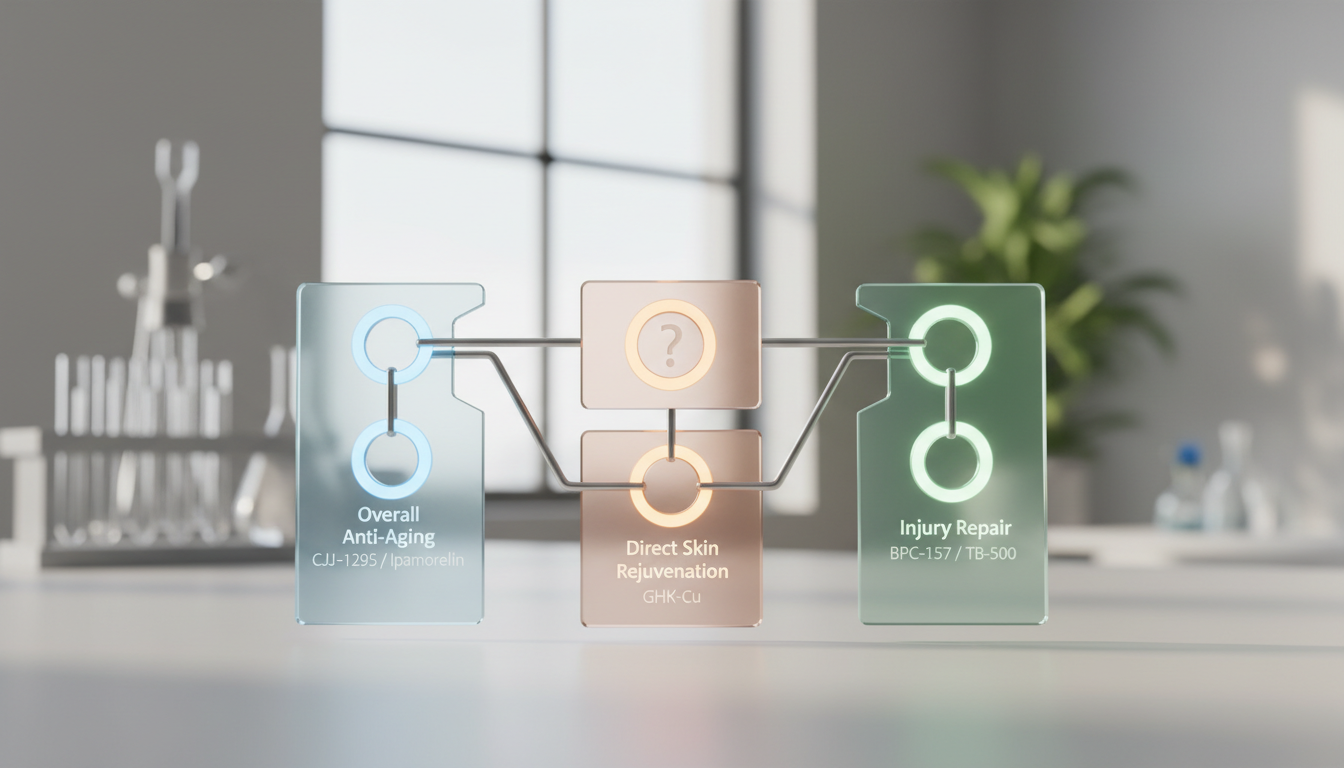
- For direct skin rejuvenation: If your main goal is firmer skin and fewer wrinkles, a peptide like GHK-Cu is likely the most direct route.
- For overall anti-aging: If you also want to improve energy, sleep, and body composition, a GHRH/GHRP combination like CJC-1295 + Ipamorelin may be more suitable.
- For healing and recovery: If you are dealing with an injury, peptides like BPC-157 or TB-500 are the primary choices, with skin improvement as a potential bonus.
3. Understand the Timeline and Commitment Peptide therapy is not a quick fix. While subtle improvements might appear in a few weeks, meaningful structural changes to the skin take time. You should expect to follow a protocol for at least 2 to 4 months to see significant results, with maximum effects often appearing after 6 to 12 months of consistent use (SeekPeptides).
4. Prioritize Safe Sourcing The 2026 FDA reclassification is a major step forward, allowing safer access to certain peptides (Formation Med). Insist on sourcing your peptides only through a licensed US compounding pharmacy with a valid prescription from your doctor. This is the only way to ensure you are receiving a sterile, pure, and accurately dosed product. You can learn more about finding a provider in our guide to locating a legitimate peptide clinic.
Ready to explore your options with a professional? Take our free 3-minute quiz to get matched with a licensed provider who can help design a safe and effective plan based on your unique needs.
FAQs
Are injectable peptides for skin tightening safe?
Safety depends heavily on the specific peptide, the dosage, and most importantly, the source. Many peptides are not FDA-approved for cosmetic use and can be risky if purchased from unregulated "research chemical" websites. The 2026 FDA reclassification has made peptides like GHK-Cu accessible through licensed compounding pharmacies with a doctor's prescription, which is a much safer option. Always work with a qualified healthcare provider.
How long does it take for injectable peptides to tighten skin?
It's a gradual process. According to research guides, you may notice subtle improvements in skin texture and hydration within 2 to 4 weeks. However, significant collagen-driven tightening and wrinkle reduction typically take 2 to 4 months of consistent use, with maximal results often seen at the 6 to 12-month mark.
Can I stack injectable peptides for better skin results?
"Stacking," or combining multiple peptides, is a common practice, but it should only be done under medical supervision. While some combinations are popular online, there is very little formal human clinical data to support the safety or enhanced efficacy of specific stacks for skin tightening. A provider can help design a protocol that is appropriate for you.
What's the difference between injectable and topical peptides?
Topical peptides are applied to the skin's surface and are limited by how well they can penetrate the skin barrier. Injectable peptides are delivered under the skin or into the muscle, bypassing this barrier completely. This allows for systemic or deeper local effects but also requires strict medical oversight.
Which is the best injectable peptide for skin?
GHK-Cu is often considered one of the best injectable peptides for skin because it has strong clinical data showing it can increase collagen synthesis by 70-80%. However, the "best" peptide is relative to an individual's goals. For broad anti-aging, CJC-1295 + Ipamorelin might be better. A discussion with your doctor is the best way to determine the right choice for you.
Contributing to evidence-based peptide education and provider transparency.
Too many clinics, not enough clarity?
We don't sell peptides. Tell us your goals and we'll connect you with a vetted provider who can figure out what actually makes sense for you.
See what's right for youRelated articles
What Does Sermorelin Before And After Face Look Like?
See a real sermorelin before and after face timeline. We break down the changes you can expect in skin quality, fine lines, and texture week by week.
Anti-AgingWhat Are the Science-Backed GHK-Cu Peptide Benefits?
Curious about GHK-Cu? We explore the science-backed ghk-cu peptide benefits for skin repair, hair growth, and anti-aging. Learn how it works & more.
Anti-AgingWhat GHK Cu Peptide Before and After Pictures Really Show
Don't just look at ghk cu peptide before and after pictures. Understand the realistic timeline for results on wrinkles, scars, and hair growth.