How Much Does GoodRx Finasteride Cost in 2026?
Don't overpay for your hair loss medication. This guide shows you how to use a GoodRx finasteride coupon and reveals the real cost at the pharmacy.
This content is for informational purposes only and does not constitute medical advice. Consult with a qualified healthcare professional before starting any new medication or treatment.
An Introduction to Finasteride for Hair Loss
Hair loss is a common concern. So common, in fact, that about half of all men in the United States will experience some degree of thinning or baldness by the time they reach age 50 (MarketScreener). For decades, men have been looking for an effective, accessible, and affordable solution. One of the most clinically proven options is finasteride.
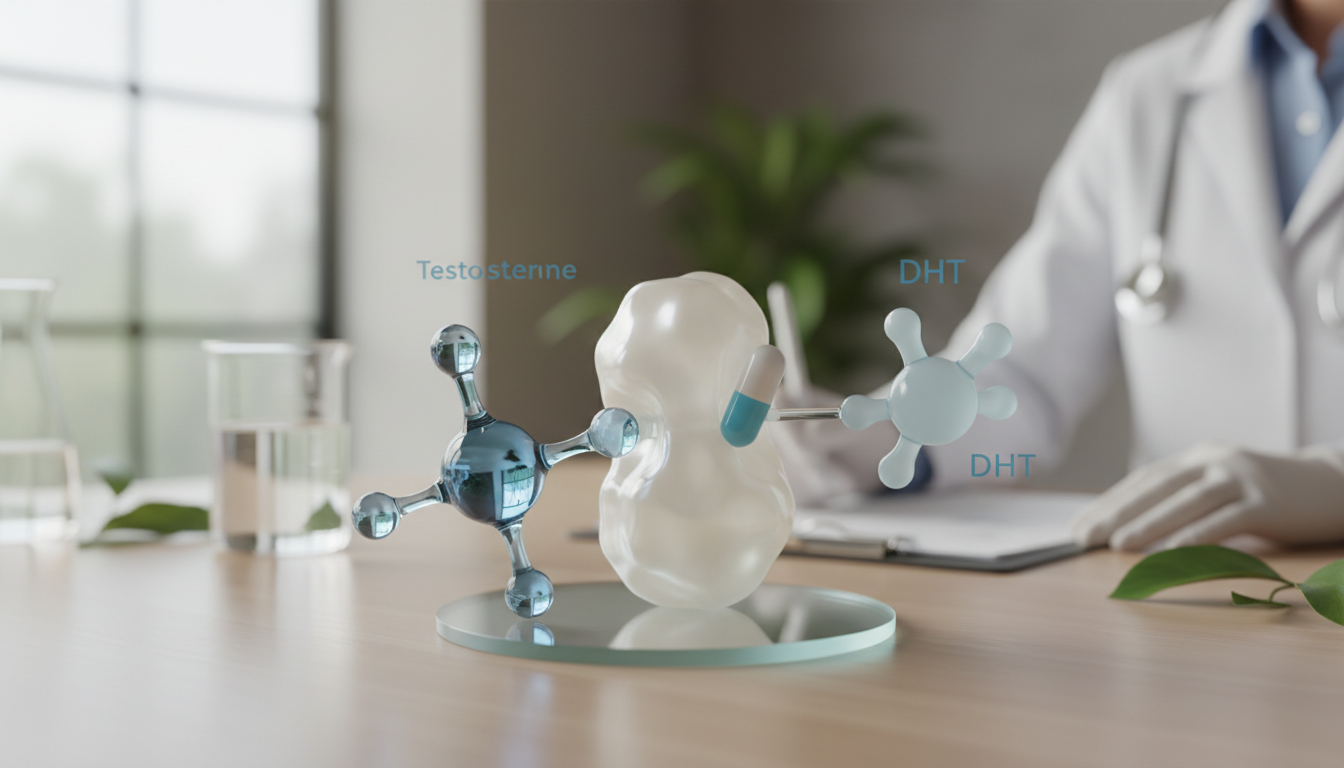
Finasteride is a prescription medication used to treat male pattern hair loss. You might know it by its brand name, Propecia. It works by blocking an enzyme called 5-alpha reductase, which is responsible for converting testosterone into dihydrotestosterone (DHT). High levels of DHT can shrink hair follicles on the scalp, leading to hair loss. By lowering DHT, finasteride can help slow this process and, in some cases, even promote regrowth. Because it requires a prescription and can be costly, many people search for ways to save money, making GoodRx finasteride a popular topic.
While finasteride is primarily known for hair loss in its 1mg dose, a higher 5mg dose (brand name Proscar) is used to treat symptoms of an enlarged prostate, also known as benign prostatic hyperplasia (BPH) (Medical News Today). This guide will focus on the 1mg dose for hair loss, breaking down costs, explaining how to get a prescription, and exploring alternatives so you can make an informed decision with your doctor.
Using GoodRx for Finasteride: A 2026 Cost Breakdown
The cost of medication is a major factor for many people, especially for a long-term treatment like finasteride. Brand-name Propecia can cost anywhere from $70 to $90 for a one-month supply, a price that is out of reach for many (ManyTreatments). This is where generic finasteride and savings tools become critical.
Using GoodRx for finasteride is one of the most effective ways to lower the cost at your local pharmacy. GoodRx is a free service that provides coupons to reduce the price of prescription drugs. The average retail price for a 30-day supply of generic finasteride 1mg is around $62.53, but with a GoodRx coupon, that price can drop to as low as $8.98, representing a potential saving of over 85% (GoodRx.com). More typically, you can expect to pay between $10 and $25 per month for the medication itself when using a coupon (ManyTreatments).
However, there's a step you need to take before you get to the pharmacy counter. Finasteride requires a prescription from a licensed healthcare provider. A traditional in-person doctor's visit to get this prescription can add an upfront cost of $75 to $150, which is something to factor into your total budget (ManyTreatments).
It is also important to know that health insurance rarely covers finasteride 1mg for hair loss because it is designated a "cosmetic" treatment. The good news is that if you have a Health Savings Account (HSA) or Flexible Spending Account (FSA), you can use those pre-tax funds to pay for both the doctor's visit and the medication, as long as you have a valid prescription.
Other ways to save include:
- Warehouse Clubs: Pharmacies like Costco often offer very competitive cash prices. For example, in 2026, Costco Pharmacy lists 30 tablets of 1mg finasteride for $28.36, which is an excellent price without needing a coupon (Costco.com).
- Buying in Bulk: Ask your doctor for a 90-day prescription. Often, buying a three-month supply is cheaper per-pill than buying a one-month supply.
- Mail-Order Pharmacies: Some services offer lower prices by shipping directly to your home, cutting out the overhead of a brick-and-mortar location.
Not sure which path is best for your budget and needs? Talking to a professional can clarify your options. Take our free quiz to get matched with a provider who can help.
Beyond GoodRx: Finasteride Subscriptions and Telehealth
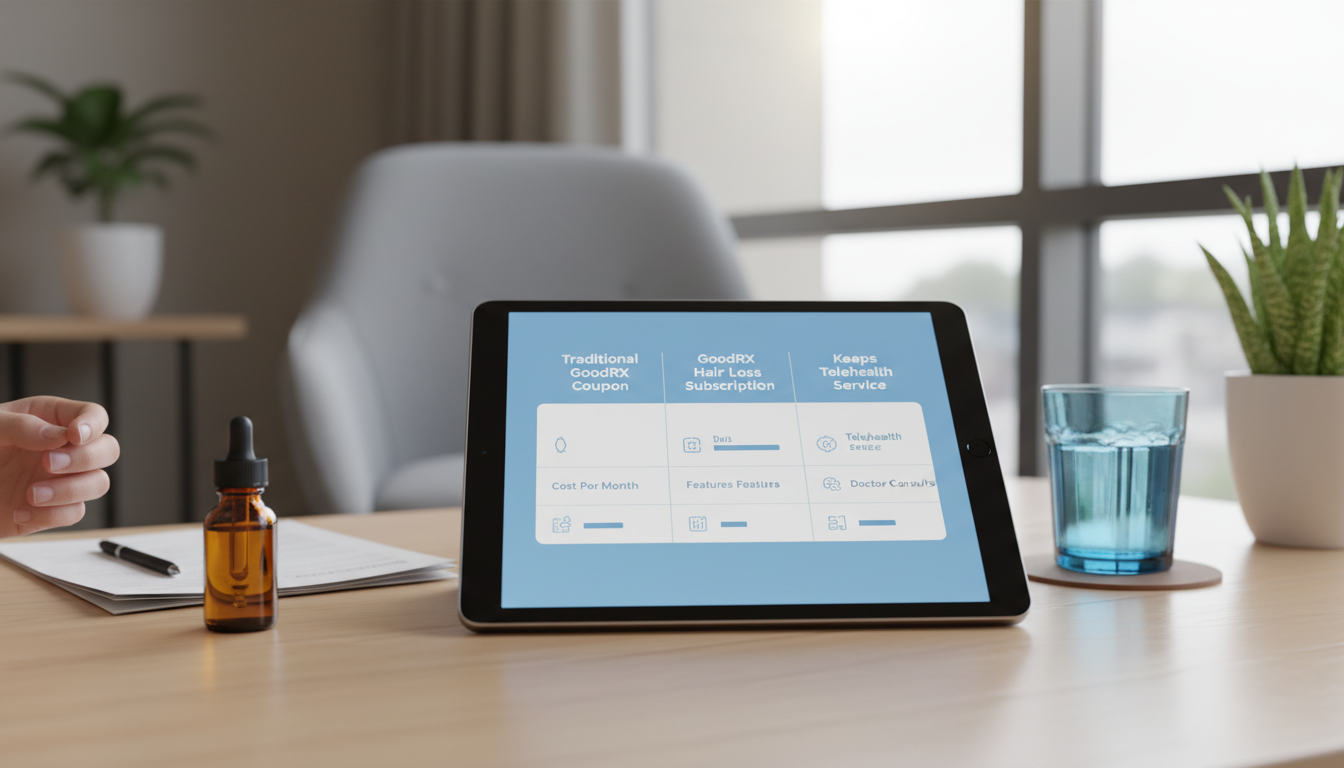
The traditional model of seeing a doctor and then going to a pharmacy is no longer the only option. The rise of telehealth has created a more streamlined and often more affordable path for getting treatments like finasteride. These platforms bundle the doctor's consultation, prescription, and medication into one simple monthly fee.
Recognizing this trend, GoodRx itself launched a new hair loss subscription service for men on October 15, 2025 (GoodRx Investors). This service is designed to simplify access to affordable, clinically proven treatments. For a starting price as low as $16 per month, the subscription includes:
- A virtual consultation with a licensed medical professional.
- A prescription for oral finasteride or oral minoxidil, if appropriate.
- Discreet medication delivery directly to your home.
This all-in-one model eliminates the separate, upfront cost of a doctor's visit, which makes it an attractive alternative to the traditional coupon method. Other popular telehealth platforms, such as Hims (you can read more about the Hims price model here) and Keeps, offer similar services. Keeps, for instance, provides generic finasteride for a monthly cost of $20 to $55 (ManyTreatments).
When comparing these models, the choice comes down to convenience versus control.
- Telehealth Subscriptions: This route is incredibly convenient. You handle everything from your phone or computer, and the medication shows up at your door. The bundled pricing is predictable and often cheaper than paying for a doctor's visit and medication separately.
- GoodRx Coupon Method: This path gives you more control. You can choose your own doctor and pharmacy. If you already have a primary care physician you like, you can simply ask them for a prescription and then use a GoodRx coupon at the pharmacy of your choice.
The key takeaway is that you have more options than ever in 2026. Whether you prefer a subscription service or the traditional pharmacy route, the price of generic finasteride is highly manageable.
Want to compare telehealth providers and see which is right for you? Our 3-minute quiz can match you with vetted clinics and help you find the best fit.
Finasteride Safety, Side Effects, and Topical Alternatives
No discussion of finasteride is complete without addressing safety and potential side effects. While the medication is approved by the FDA and considered safe for most men, it's essential to be aware of the risks. The hormonal pathways that control hair loss are complex. While finasteride works by lowering DHT, a byproduct of testosterone, other methods aim to increase testosterone directly for different health goals.
According to GoodRx, side effects from oral finasteride are not common. When they do occur, they are most often sexual in nature and include:
- Lower sex drive (affecting about 2% of users)
- Erectile dysfunction (affecting about 1% of users)
- Ejaculation problems (affecting about 1% of users)
For most men who experience these side effects, they resolve after stopping the medication. However, there have been reports of persistent issues after discontinuation. A large-scale analysis of the FDA Adverse Event Reporting System (FAERS) from 2004 to 2024 found 11,557 reports where finasteride was the primary suspected drug. The analysis confirmed that common adverse events included erectile dysfunction and general sexual dysfunction. It also noted that some less common reported conditions, like Peyronie's disease, were not listed on the drug insert at the time of the study (medRxiv).
For men concerned about these systemic side effects, topical finasteride has emerged as a promising alternative. The goal of topical application is to concentrate the drug's effects on the scalp and minimize its absorption into the bloodstream.
Recent research has shown positive results. A retrospective study published in May 2024 looked at patient outcomes from a gel containing 0.1% finasteride and 3% minoxidil. At just six weeks, 62.2% of patients reported positive changes in hair appearance. Crucially, the study found no difference in the incidence of sexual side effects compared to oral finasteride (Wiley Online Library). Similarly, a 2023 study found that a topical combination of 0.25% finasteride and 5% minoxidil was more effective for improving hair density than either medication alone, and no sexual side effects were reported across any group (International Journal of Trichology).
However, the evidence isn't universally one-sided. An April 2025 study found that a combination of topical finasteride and minoxidil produced similar improvements in hair density as topical minoxidil used alone (Springer Nature). This suggests that for some individuals, adding topical finasteride might not provide a significant additional benefit over minoxidil. This is a key area to discuss with a provider who understands the nuances of different hormone therapy approaches, including treatments like TRT.
Your Next Steps: Deciding Between Telehealth and GoodRx Finasteride
You've learned about how finasteride works, the costs, the different ways to get it, and the potential side effects. Now it's time to decide on your next steps. The choice depends on your personal preferences, budget, and comfort level with different treatment models.
Here are the key points to consider:
-
Oral vs. Topical: Are you comfortable with the low but present risk of systemic side effects from oral finasteride? If not, a topical formulation might be a better starting point. This is the first and most important conversation to have with a healthcare provider. They can help you weigh the effectiveness against the risk profile.
-
Prescription Method: Do you value convenience and predictable, all-in-one pricing? A telehealth subscription might be perfect for you. These services make the process simple and discreet. Or do you prefer to work with your own doctor and have the freedom to choose your pharmacy? If so, getting a prescription and using a GoodRx finasteride coupon gives you that flexibility.
-
Realistic Expectations: Remember that finasteride is not an overnight fix. It typically takes at least three to six months of consistent daily use to see a noticeable slowing of hair loss or any regrowth. The goal is stabilization and maintenance.
The most critical step is to consult a professional. Self-diagnosing the cause of your hair loss can be misleading. A doctor can confirm you have male pattern baldness and rule out other potential causes. They are your best resource for creating a safe and effective treatment plan. Finding the right provider is key, and there are many excellent peptide and hormone clinics available through online platforms.
Ready to take the next step and speak with a professional? Take our free 3-minute quiz to get matched with a licensed provider who can create a plan for you.
Frequently Asked Questions
How much does finasteride cost with GoodRx?
With a GoodRx coupon, a 30-day supply of generic 1mg finasteride typically costs between $10 and $25 at most pharmacies in 2026. Prices can be as low as $9 depending on the pharmacy and location, representing a significant discount from the average retail price.
Is finasteride covered by insurance for hair loss?
No, health insurance policies almost never cover finasteride when it's prescribed for hair loss, as it is considered a cosmetic treatment. However, you can use funds from an HSA or FSA to pay for the medication and any associated doctor's visits if you have a valid prescription.
Can I get finasteride without a doctor?
No, finasteride is a prescription-only medication in the United States. You must have a consultation with a licensed healthcare provider to get a prescription. Telehealth services have made this process much more convenient by offering virtual consultations online.
How long does it take for finasteride to work?
It typically takes at least three to six months of consistent, daily use to see noticeable results, such as a slowing of hair loss or initial signs of regrowth. Maximum benefits are usually seen after one to two years of continuous treatment.
Are the sexual side effects of finasteride permanent?
Sexual side effects from finasteride are uncommon, affecting only 1-2% of users. For most men who experience them, these side effects go away after they stop taking the medication. However, there have been reports of side effects persisting after discontinuation. You should discuss any concerns with your healthcare provider.
Contributing to evidence-based peptide education and provider transparency.
Too many clinics, not enough clarity?
We don't sell peptides. Tell us your goals and we'll connect you with a vetted provider who can figure out what actually makes sense for you.
See what's right for youRelated articles
Which Protein Supplements for Muscle Growth Actually Work?
Tired of the hype? Find out which protein supplements for muscle growth are backed by science and learn how to pick the right one for your goals.
Hormone TherapyWhat Are the Real Magnesium Glycinate Benefits?
Uncover the science-backed magnesium glycinate benefits. We explore its effects on sleep, stress, and muscle function and explain why it's a top choice.
Hormone TherapyWhat B12 Shot Benefits Can You Actually Expect?
B12 shots are often hyped for energy, but the real b12 shot benefits are more specific. Learn who is a true candidate and what results to expect.