The Real Growth Hormone Cost in 2026
Wondering about the real growth hormone cost? We explain factors that make prices range from $500 to $3,000+ and how to find an affordable option.
This content is for informational purposes only and does not constitute medical advice. Please consult with a qualified healthcare professional before making any decisions about your health or treatment.
Figuring out the real growth hormone cost can feel overwhelming. You see prices ranging from a few hundred dollars to thousands per month, and it's hard to know what's true. Whether you have a diagnosed medical condition or are exploring hormone optimization, the financial aspect is a major factor. This guide breaks down the numbers for 2026, so you can understand what to expect. We will explore the cost of FDA-approved HGH injections, how insurance plays a role, and the prices you can expect from online clinics.
A Quick Look at Monthly Growth Hormone Costs in 2026
The price of growth hormone therapy varies dramatically based on the type, dosage, and source. Here’s a quick summary of what you can expect to pay per month.
| Therapy Type | Typical Monthly Cost (Cash Price) | Insurance Coverage | Notes |
|---|---|---|---|
| FDA-Approved HGH (Somatropin) | $500 - $7,500+ | Possible with prior authorization for approved conditions. | Brands include Genotropin, Humatrope, Norditropin. Cost depends heavily on dosage. (Source: CostHelper) |
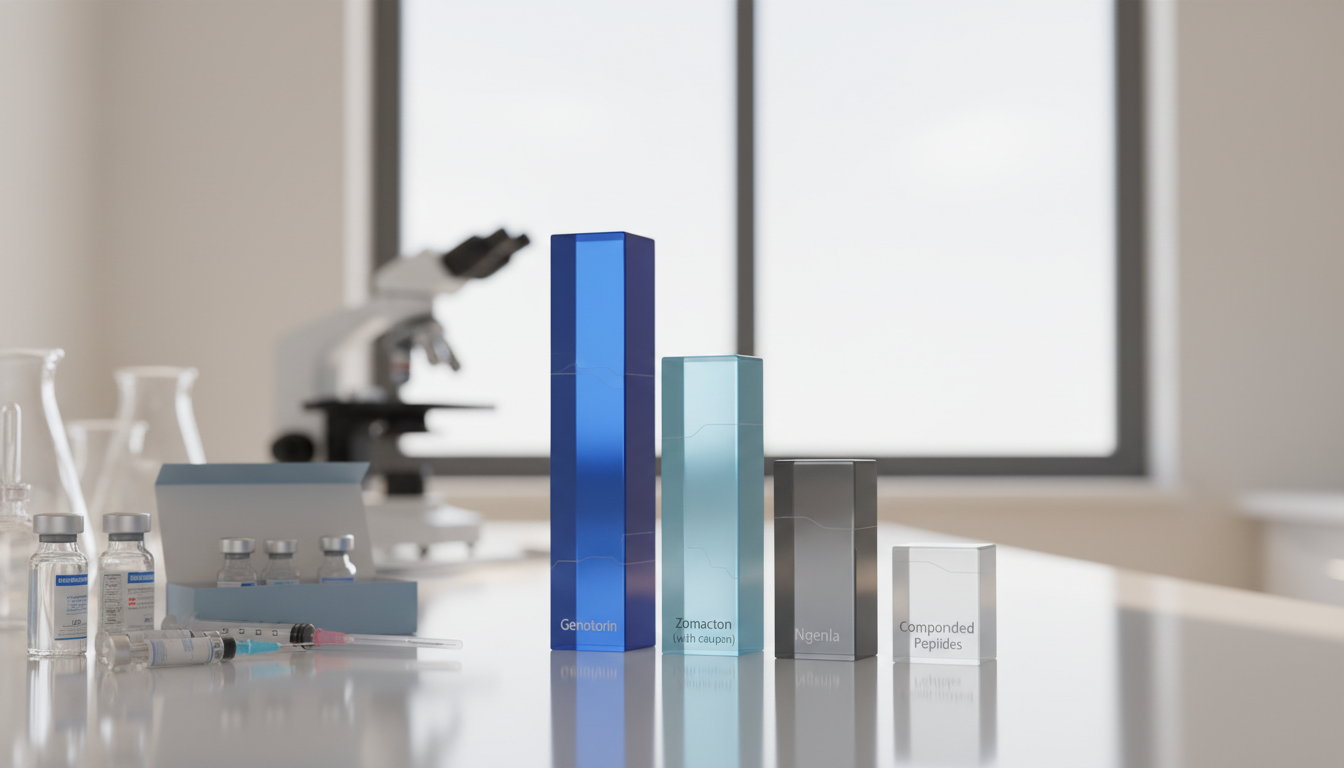
| Zomacton (Somatropin with Coupon) | ~$562 | Possible with prior authorization. | A specific brand of somatropin that can be more affordable using discount cards like GoodRx. (Source: GoodRx) |
| Ngenla (Pediatric Weekly HGH) | $8,300 (WAC) | Possible for pediatric GHD; patient assistance available. | A newer, long-acting formula for children to reduce injection frequency. (Source: Managed Healthcare Executive) |
| GHRH Peptides (Research Only) | $150 - $400 | No | These are not FDA-approved for human use and cannot be legally prescribed. (Source: Peptide Clinic Locator) |
| GHRH/GHRP Peptides (Compounded) | $250 - $600 | No | Prescribed by doctors for off-label use and dispensed by compounding pharmacies. Includes sermorelin, CJC-1295, ipamorelin. |
Not sure which treatment is right for you? Our free quiz can help you get matched with a provider who can discuss your options based on your goals and budget. Take the 3-minute quiz now.
What is the Growth Hormone Cost With Insurance?
For many, the first question is whether health insurance will cover growth hormone therapy. The answer is a definite "maybe." Insurance companies will only consider covering FDA-approved recombinant human growth hormone (HGH) if it is proven to be medically necessary.
"Medically necessary" is the key phrase here. Insurers like Cigna have very specific policies outlining what qualifies. Coverage is typically reserved for diagnosed conditions such as:
- Adult or Pediatric Growth Hormone Deficiency (GHD)
- Turner Syndrome
- Prader-Willi Syndrome
- Idiopathic Short Stature (ISS) in children, but only if they are significantly below the average height (e.g., a height standard deviation score under -2.25).
Even with a qualifying diagnosis, you'll need to go through a prior authorization process. This means your doctor must submit detailed medical records, lab results, and justification to the insurance company before they will agree to pay.
If you are approved, your out-of-pocket growth hormone cost will depend on your specific plan. Most insurance plans cover up to 80% of the cost for approved specialty drugs. However, you will still be responsible for deductibles, copays, and coinsurance. According to CostHelper, insured patients can still face monthly copays ranging from $300 to $700 or more.
Some insurance plans, like Cigna's, have a "preferred" list of drugs. They may require you to try a specific brand of somatropin, such as Genotropin or Omnitrope, before they will consider covering a non-preferred brand.
It's critical to understand what your insurance will not cover. Cigna's policy explicitly states that growth hormone is not covered for off-label uses like anti-aging, obesity, or to improve athletic performance. If you are seeking therapy for these reasons, you should expect to pay the full price out of pocket. For more details on what's covered, it's always best to check your plan's formulary or speak directly with a representative.
What is the Growth Hormone Cost Without Insurance? (Cash Pay)
If you don't have insurance or your plan denies coverage, you'll be looking at the cash price. The cash pay HGH injections cost can be substantial. According to CostHelper, patients without insurance can expect to pay anywhere from $500 to $7,500 per month for daily injections of FDA-approved HGH.
Why such a massive range? The final price depends on several factors:
- Dosage: This is the biggest driver of cost. A patient with adult GHD will require a much lower dose than a child with a severe deficiency or an athlete using it for performance enhancement. Higher dosages, often associated with
human growth hormone bodybuilding dosageprotocols, significantly inflate the monthly expense. - Brand Name: Different brands of somatropin have different price points. For example, a month's supply of Genotropin can range from around $227 for a very low dose to over $2,197 for a higher dose (Source: Drugs.com). The new pediatric weekly injection, Ngenla, has a wholesale acquisition cost of $8,300 per month, highlighting the high end of the market (Source: Managed Healthcare Executive).
- Pharmacy: Prices can vary between different pharmacies.
For a clearer picture, let's look at some real-world cash prices for 2026:
- Zomacton: The average retail price is about $692 for a common supply, but a GoodRx coupon can lower this to approximately $561.
- Genotropin: A pack of seven 2mg injections can cost nearly $2,200 without discounts.
- General Somatropin: The broad range of $500 to $7,500 reflects the variability in daily dosing needs.
It's also important to distinguish between FDA-approved HGH and other compounds. Growth Hormone-Releasing Hormones (GHRHs), for example, are often discussed in this context. However, these are designated for research purposes only by the FDA and cannot be legally prescribed. Supplies from research chemical websites might cost between $150 and $400 a month, but this route comes with significant legal and safety risks, and no insurance will ever cover it (Source: MyPeptideMatch). If you and your doctor decide on a GHRH-like peptide, it will be a compounded medication prescribed off-label, like CJC-1295 or Sermorelin. You can learn more about the difference in our guide to HGH vs. HGH Peptides.
Online Clinic Prices for HGH and Peptides Compared
Online telehealth clinics have become a popular option for hormone optimization. They offer convenience, but pricing structures can be confusing. These clinics often prescribe either FDA-approved HGH or, more commonly, compounded peptides that stimulate your body's own growth hormone production.
The cost at an online clinic typically includes more than just the medication. You're also paying for the doctor's consultation, ongoing monitoring, and customer support. Here's a realistic comparison of what you might find at four different types of online clinics in 2026. Note that these are generalized estimates to illustrate the different models available.
| Feature | Clinic A (Budget Peptides) | Clinic B (All-Inclusive HGH) | Clinic C (Premium Full Service) | Clinic D (Pay-Per-Service) |
|---|---|---|---|---|
| Initial Consultation | $99 | Included in monthly fee | $250 - $350 | $150 |
| Required Lab Work | ~$150 (Patient pays) | Included | Included | ~$150 (Patient pays) |
| Medication Type | Compounded Peptides (e.g., CJC-1295/Ipamorelin) | Compounded or Brand-Name HGH | HGH and/or Peptides, Plus Other Therapies | HGH or Peptides |
| Monthly Medication Cost | $250 - $400 | $600 - $1,200 | $1,000 - $2,500+ | Varies ($400 - $1,500+) |
| Subscription Model | Yes, monthly fee | Yes, monthly fee | Yes, monthly or annual fee | No subscription, pay as you go |
As you can see, the "cheapest" option isn't always clear. Clinic A might have a low monthly medication cost but requires you to pay for labs separately. Clinic B offers an all-inclusive price, which can be simpler to budget for. Clinic C provides a high-touch service with a premium price tag, while Clinic D offers flexibility but could end up being more expensive if you need frequent consultations.
When choosing a clinic, it's crucial to ask for a complete breakdown of all potential costs before committing. Want to see which options fit your budget and goals? Our free quiz takes just a few minutes and matches you with vetted providers who offer transparent pricing. Find your provider today.
How to Save Money on the Cost of Growth Hormone
The high growth hormone cost can be a barrier for many, but there are several strategies you can use to make treatment more affordable.
-
Use Insurance if Possible: The most impactful way to save is to get insurance coverage. Work closely with your doctor to ensure all paperwork for prior authorization is complete and accurately reflects your medical need according to your insurer's guidelines. Don't give up after the first denial, as appeals can sometimes be successful.
-
Explore Patient Assistance Programs (PAPs): Most pharmaceutical companies that make brand-name HGH offer PAPs for uninsured or under-insured patients. For instance, Pfizer offers assistance programs for medications like Genotropin and Ngenla. These programs can significantly reduce or even eliminate the cost for eligible individuals based on income.
-
Look for Copay Cards and Coupons: If you have commercial insurance, you may be eligible for a manufacturer's copay card. Pfizer’s program for Genotropin can bring the monthly cost down to $0 for some patients. For cash payers, discount cards like GoodRx can provide significant savings. The example of saving over $130 on Zomacton shows how effective this can be (Source: GoodRx).
-
Discuss Compounded Options with Your Doctor: Instead of brand-name HGH, your doctor might determine that a compounded peptide, such as Sermorelin or CJC-1295 with Ipamorelin, is a suitable alternative. These medications are made by specialized compounding pharmacies and are often much less expensive than somatropin, typically falling in the $250-$600 monthly range. You can learn more about this option by reading our guide on CJC-1295/Ipamorelin cost.
-
Choose the Right Dosing and Delivery Device: For some medications, cost can vary by the delivery device (e.g., vials vs. pens) or concentration. Ask your doctor and pharmacist if there is a more cost-effective version of your prescribed medication that would work for you.
-
Compare Pharmacy Prices: Don't assume the first price you're quoted is the best one. Call different local pharmacies and check online mail-order pharmacies to compare prices for your specific prescription.
By being a proactive patient and exploring all avenues, you can find ways to manage the significant expense of growth hormone therapy.
Is Growth Hormone Therapy Worth the Cost?
Deciding if the high price of HGH is "worth it" depends entirely on your reason for seeking treatment.
For individuals with a confirmed medical diagnosis like adult GHD, the answer is often a resounding yes. The condition can cause debilitating symptoms like chronic fatigue, loss of muscle mass, increased body fat, poor bone density, and mental fog. The benefits of taking human growth hormone in these cases can be life-changing, restoring energy levels, improving body composition, and enhancing overall quality of life. For these patients, the cost is an investment in their fundamental health and well-being. You can read more about what HGH does in our explainer on human growth hormone.
The calculation becomes more complex for those considering it for off-label purposes like anti-aging or bodybuilding. While some effects of growth hormone might seem desirable, such as reduced wrinkles or faster muscle gain, these uses are not FDA-approved for a reason. The doses often used for bodybuilding are much higher than medical doses, which dramatically increases the risk of hgh growth hormone side effects.
Common growth hormone side effects bodybuilding users report include carpal tunnel syndrome, significant joint pain, fluid retention (edema), and an increased risk of developing insulin resistance or type 2 diabetes. Our guide on HGH side effects in males covers these risks in detail. When you weigh these potential negative outcomes against a monthly cost that can easily exceed $1,000, the value proposition becomes questionable for many.
Ultimately, the decision is a personal one that must be made in consultation with a qualified medical professional who can assess your health, explain the real risks and benefits, and help you determine if the potential rewards justify the financial and physical costs.
Ready to explore your options with a professional? Take our free 3-minute quiz to get matched with a licensed provider who can help you make an informed decision.
FAQs
How much does HGH cost per month? Without insurance, the cost of FDA-approved HGH injections typically ranges from $500 to $7,500 per month. The price depends heavily on the required dosage, the brand, and the pharmacy. With insurance coverage for a diagnosed medical condition, your out-of-pocket cost could be as low as your copay, but it can still be several hundred dollars per month.
Is HGH cheaper than peptides? Generally, yes, HGH is significantly more expensive. FDA-approved HGH (somatropin) is a biologic drug that is costly to produce. Peptide secretagogues like Sermorelin or CJC-1295/Ipamorelin, which are prescribed off-label and prepared by compounding pharmacies, are much cheaper, typically costing between $250 and $600 per month.
Will insurance cover HGH for anti-aging or bodybuilding? No. Insurance companies will not cover HGH for anti-aging, bodybuilding, or general wellness. Coverage is strictly limited to FDA-approved indications where it is deemed medically necessary, such as diagnosed Growth Hormone Deficiency (GHD). Using HGH for these purposes is considered an out-of-pocket expense.
What is the cost of growth hormone for bodybuilding? Prescribing HGH for bodybuilding is illegal in the United States. Therefore, any cost would be associated with the black market, which is unregulated and dangerous. Users often require high doses, which would theoretically cost thousands of dollars per month and dramatically increase the risk of serious side effects like joint problems, insulin resistance, and organ enlargement.
Why is HGH so expensive? HGH is a biologic, a complex protein molecule made using recombinant DNA technology. The manufacturing process is far more complicated and expensive than for traditional chemical drugs. It is also classified as a specialty medication, a category of drugs that treats complex or chronic conditions and comes with a high price tag due to research, development, and manufacturing costs.
Contributing to evidence-based peptide education and provider transparency.
Too many clinics, not enough clarity?
We don't sell peptides. Tell us your goals and we'll connect you with a vetted provider who can figure out what actually makes sense for you.
See what's right for youRelated articles
Popular Peptides for Men & What They're Used For
From BPC-157 for healing to CJC-1295 for growth, we explain the most common peptides for men and how they could benefit your health and fitness goals.
Growth HormoneDo Peptide Injections for Muscle Growth Actually Work?
Considering peptide injections for muscle growth? We explain the science, the most popular stacks, and the real risks vs. benefits for building lean mass.
Growth HormoneWhat Does Human Growth Hormone Actually Do for You?
Curious about human growth hormone? We explain how this vital hormone works, its role in metabolism, and why it's so debated for anti-aging and performance.