Does Insurance Cover Ozempic, Wegovy, or Zepbound in 2026?
A clear breakdown of GLP-1 insurance coverage in 2026: what Medicare, Medicaid, and private plans cover, how to handle denials, and cash-pay alternatives when coverage falls through.
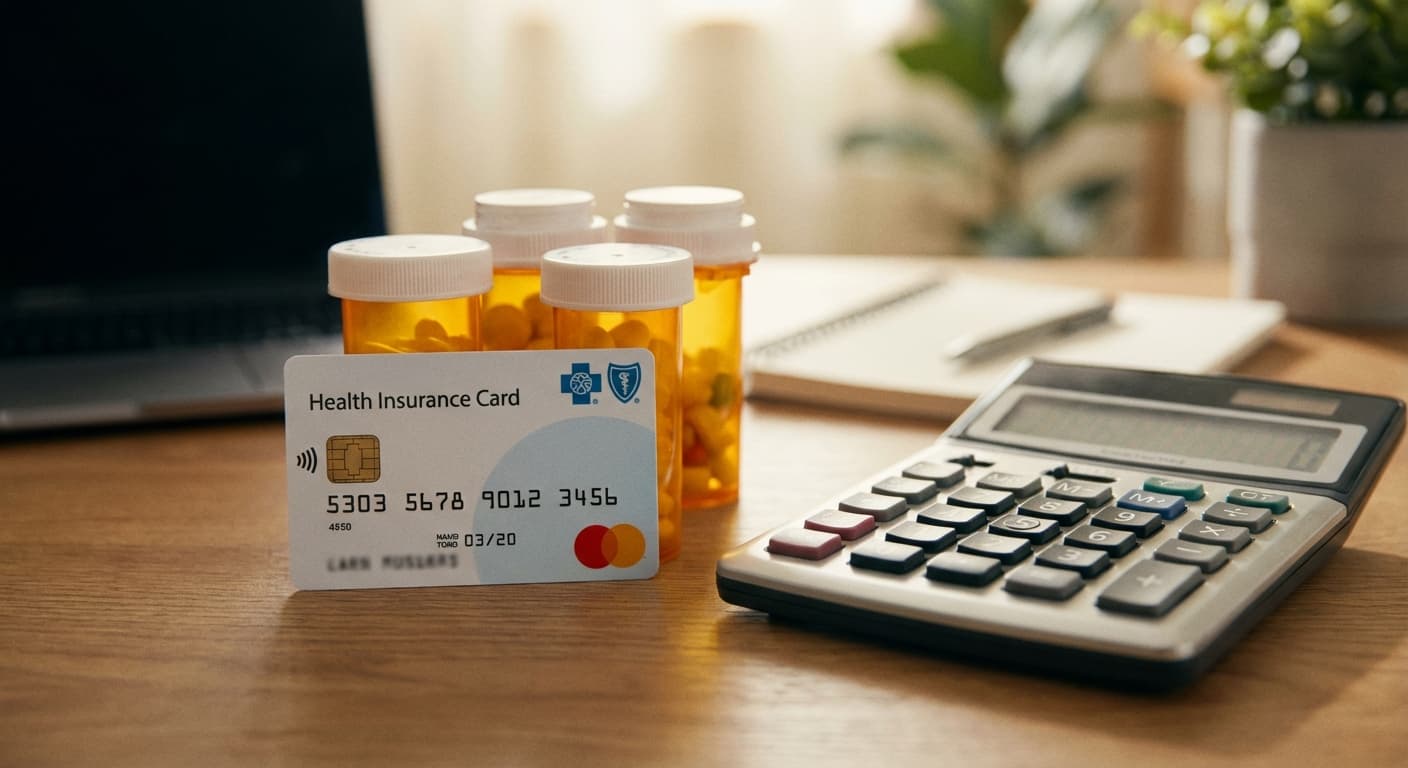
The Short Answer
It depends on why you're taking it, which drug it is, and what kind of insurance you have. That's not a satisfying answer, but it's the honest one. Insurance coverage for GLP-1 medications in 2026 is a patchwork — some patients pay $25 a month, others pay full price out of pocket.
Here's what actually determines your cost: the indication (diabetes vs. weight loss), the specific drug (Ozempic, Wegovy, or Zepbound), and your plan type (Medicare, employer-sponsored, marketplace, or Medicaid). We'll walk through each one.
If you already know your situation and just want a number, try the GLP-1 cost calculator to estimate what you'd pay.
Diabetes Indication vs. Weight Loss Indication: Why It Matters So Much
This is the single biggest factor in whether insurance says yes or no.
Ozempic is FDA-approved for type 2 diabetes. If you have a diabetes diagnosis, most commercial insurance plans and Medicare Part D cover it. You'll likely need prior authorization, but the approval rate for diabetic patients is high.
Wegovy is FDA-approved for chronic weight management in adults with a BMI of 30+ (or 27+ with a weight-related condition like high blood pressure or sleep apnea). It's also approved to reduce cardiovascular risk in adults with heart disease who are overweight or obese. Insurance coverage for Wegovy depends heavily on whether your plan covers weight loss drugs at all.
Zepbound is FDA-approved for weight loss and for moderate-to-severe obstructive sleep apnea in adults with obesity. Like Wegovy, coverage depends on your plan's willingness to cover anti-obesity medications.
The core problem: many insurance plans still treat obesity as a lifestyle issue rather than a chronic disease. Drugs prescribed for weight loss get excluded from formularies that happily cover the same class of medication for diabetes. That's been slowly changing, but the gap remains wide.
For a deeper look at how these drugs compare, check out our semaglutide vs. tirzepatide comparison.
Medicare Coverage in 2026: The GLP-1 Bridge Changes Everything
Medicare has historically refused to cover drugs prescribed solely for weight loss. Federal law (the Social Security Act) explicitly excluded anti-obesity medications from Part D coverage. That's finally changing — sort of.
What Medicare covers right now (early 2026):
- Ozempic for type 2 diabetes — covered under Part D with standard prior authorization
- Wegovy for cardiovascular risk reduction — covered when prescribed to reduce the risk of heart attack, stroke, or cardiovascular death in adults with established heart disease who are overweight or obese
- Zepbound for obstructive sleep apnea — covered when prescribed for moderate-to-severe OSA in adults with obesity
Notice that none of those indications are "weight loss." Medicare beneficiaries who want GLP-1s specifically for weight management have been paying entirely out of pocket — until now.
The Medicare GLP-1 Bridge (starting July 2026):
CMS announced this program in late 2025. Starting July 1, 2026, eligible Medicare Part D beneficiaries can get Wegovy (injection or pill) or Zepbound for weight loss at a $50 per month copay. The program runs through December 31, 2026, and serves as a bridge to the larger BALANCE model launching in January 2027.
Eligibility requires a BMI of 35 or higher, or a BMI of 27+ with qualifying clinical criteria. You must be enrolled in a Part D plan for 2026. The Bridge operates outside the normal Part D benefit structure, so your $50 copay won't count toward your Part D deductible or the $2,100 annual out-of-pocket cap.
This is a big deal for the 65+ population. If you're on Medicare and have been paying $300 to $450 a month through manufacturer programs, your costs could drop to $50 starting in July.
What's coming in 2027 — the BALANCE Model:
The BALANCE model will give Part D plan sponsors the option to cover GLP-1s for weight loss as part of a broader program that includes lifestyle interventions. It's voluntary for insurers, so coverage will vary by plan. Medicaid participation begins as early as May 2026 for states that opt in.
Private Insurance Coverage: The Current Reality
Private insurance coverage for GLP-1 weight loss drugs has actually gotten worse in some ways, even as the drugs have gotten more popular.
The numbers aren't great. Over 41 million people with private insurance have no coverage for Wegovy. Over 109 million have no Zepbound coverage. Only about 20-25% of commercial plans cover weight loss medications. Large employers (5,000+ employees) are more likely to offer coverage (roughly 43% do), but that still leaves more than half without it.
Prior authorization is nearly universal. Even when your plan covers a GLP-1 for weight loss, over 88% of plans require prior authorization. That means your provider has to submit clinical documentation proving you meet the insurer's criteria before they'll approve the prescription.
Typical prior authorization requirements include:
- Documented BMI of 30+ (or 27+ with a comorbidity)
- Evidence of prior weight loss attempts (diet programs, exercise, sometimes other medications)
- Lab work showing weight-related health markers
- Ongoing documentation of weight loss progress to continue coverage
Formulary games. Some plans cover Wegovy but not Zepbound. Some cover Zepbound but dropped Wegovy. CVS Caremark, one of the largest pharmacy benefit managers, removed Zepbound from its standard formulary in mid-2025 in favor of Wegovy. Your coverage depends on which PBM your employer uses and what deals they've negotiated with manufacturers.
If you're not sure what your plan covers, call the number on the back of your insurance card and ask specifically about anti-obesity medications. Get the answer in writing if you can.
What to Do If You're Denied Coverage
Getting denied doesn't have to be the end of the conversation. The data on appeals is surprisingly encouraging: up to 80% of GLP-1 prior authorization denials are overturned on appeal, yet fewer than 11% of patients actually file one.
Step 1: Read the denial letter carefully. It will specify the exact reason — "not medically necessary," "plan exclusion," "step therapy required," or something else. The reason determines your strategy.
Step 2: Get a Letter of Medical Necessity from your provider. This is the cornerstone of a successful appeal. The letter should detail your BMI, relevant comorbidities, lab results, and why GLP-1 therapy is appropriate for you specifically. Generic template letters get denied. Specific, evidence-backed letters get approved.
Step 3: Document your treatment history. If the denial involves step therapy (the insurer wants you to try cheaper options first), include records of prior medications you've tried (phentermine, metformin, orlistat) along with dates, side effects, and outcomes. Proof of structured diet or exercise programs also helps.
Step 4: Ask for a peer-to-peer review. Your provider can request a direct conversation with the insurance company's medical director. These conversations often move the needle where written appeals don't.
Step 5: File within the deadline. You typically have 180 days to appeal. If the internal appeal fails, you can request an external review by an independent third party. Nearly 40% of external reviews overturn the insurer's decision, and under the ACA, insurers must honor the external reviewer's ruling.
A good provider will handle most of this process for you. If you're looking for one who specializes in GLP-1 prescribing and insurance logistics, take the quiz to get matched.
Manufacturer Savings Programs: Your Best Cash-Pay Option
If insurance won't cover your GLP-1, the manufacturers have stepped up with savings programs that bring costs down significantly from list price.
NovoCare (Novo Nordisk — Wegovy and Ozempic):
- With commercial insurance: Pay as little as $25/month through the savings card (maximum savings of $100 per monthly fill)
- Self-pay injectable Wegovy: $349/month at maintenance dose. New patients can get starter doses (0.25mg and 0.5mg) at $199/month through June 30, 2026
- Self-pay Wegovy pill: Starting at $149/month for the 1.5mg and 4mg doses (4mg offer valid through August 31, 2026, then $199/month)
- Important restriction: Medicare and Medicaid beneficiaries are not eligible for NovoCare savings, even if they choose to pay cash
LillyDirect (Eli Lilly — Zepbound):
- Self-pay pricing: $299/month for the 2.5mg dose, $399/month for 5mg, and $449/month for higher doses (7.5mg through 15mg)
- Refill requirement: You must refill within 45 days to keep the discounted pricing. Miss the window and prices jump to $599-$1,049 depending on dose
- Program expiration: Current savings card expires December 31, 2026
These programs have made GLP-1s accessible to millions of people who don't have insurance coverage. The prices aren't cheap, but they're a fraction of the $1,000-$1,400 monthly list prices. For a detailed cost comparison, see our full peptide therapy cost guide.
Cash-Pay Alternatives and What Happened to Compounding
If you followed the GLP-1 market in 2023-2024, you might remember compounded semaglutide being available for $150-$300 a month. That era is largely over.
The FDA declared the semaglutide shortage resolved in February 2025. Grace periods for compounders expired in May 2025. Compounded tirzepatide is effectively gone. Some 503B pharmacies still compound semaglutide, but the supply chain is shrinking fast, and the FDA has been aggressive — issuing warning letters to over 130 telehealth and compounding companies through early 2026.
In February 2026, the HHS General Counsel referred Hims & Hers to the DOJ for investigation after the company announced a $49/month compounded semaglutide pill. Hims pulled the product within 48 hours and later partnered with Novo Nordisk to offer brand-name products instead. That sequence tells you where the regulatory wind is blowing.
If a provider is still offering compounded semaglutide at unusually low prices, ask hard questions about sourcing. Novo Nordisk's own testing of some compounded products found impurity levels as high as 86%. The savings aren't worth the risk.
The practical path forward for most people is brand-name medication through a manufacturer savings program or insurance. Use our cost calculator to model what you'd actually pay.
How a Provider Helps With Insurance
One of the most underrated benefits of working with a provider who specializes in GLP-1 therapy is insurance support. Good providers know which formulations are more likely to get approved by specific insurers. They know how to write letters of medical necessity that actually work. They know when to push for a peer-to-peer review and when to pivot to a manufacturer savings program instead.
This is especially true for the diabetes-vs-weight-loss indication question. If you have prediabetes or metabolic syndrome, a knowledgeable provider may be able to prescribe in a way that improves your chances of coverage — while staying completely within appropriate clinical guidelines.
If you're not sure where to start, take the provider-matching quiz to get connected with a licensed prescriber who can evaluate your situation and help you figure out the most affordable path.
GLP-1 Insurance Coverage FAQ
Does Medicare cover Ozempic for weight loss in 2026?
Not for weight loss specifically. Medicare Part D covers Ozempic for type 2 diabetes. If you're using it off-label for weight loss, Medicare won't pay. Starting July 2026, the Medicare GLP-1 Bridge program will cover Wegovy and Zepbound (not Ozempic) for weight loss at a $50 monthly copay for eligible beneficiaries with a BMI of 35+ or 27+ with clinical criteria. For more on the differences between Ozempic and Wegovy, see our semaglutide guide.
Does insurance cover Wegovy for weight loss?
Some plans do, but most don't. Only about 20-25% of commercial insurance plans cover anti-obesity medications. Even when covered, you'll almost certainly need prior authorization — documentation of your BMI, comorbidities, and prior weight loss attempts. Large employer plans (5,000+ employees) are more likely to cover it, with about 43% offering coverage. Check your specific plan's formulary and call your insurer to ask about anti-obesity medication coverage.
How much does Zepbound cost without insurance in 2026?
Through LillyDirect's self-pay program, Zepbound starts at $299/month for the 2.5mg dose and goes up to $449/month for higher doses (7.5mg-15mg). You need to refill within 45 days to keep the discounted pricing. Without any savings program, the retail list price is $1,050-$1,200 per month. For Medicare beneficiaries, the GLP-1 Bridge program starting July 2026 will offer Zepbound at $50/month. Estimate your costs with our GLP-1 cost calculator.
Can I appeal if my insurance denies my GLP-1 prescription?
Yes, and you should. Up to 80% of prior authorization denials for GLP-1s are overturned on appeal, but fewer than 11% of patients bother to file one. Start with a Letter of Medical Necessity from your provider, document your treatment history, and request a peer-to-peer review. If the internal appeal fails, request an external review — nearly 40% of those overturn the denial, and insurers must honor the result. Finding a provider who specializes in GLP-1 prescribing makes this process much easier.
Is compounded semaglutide still available in 2026?
Barely. The FDA ended the semaglutide shortage in February 2025, grace periods expired in May 2025, and the agency has issued warning letters to over 130 companies. Some 503B pharmacies still compound semaglutide, but availability is declining. The FDA referred Hims & Hers to the DOJ in February 2026 over compounded semaglutide products, and the company pulled its compounded offerings shortly after. For most patients, brand-name medication through NovoCare or LillyDirect savings programs is the safer and more reliable path. See our cost guide for current pricing.
What's the cheapest way to get a GLP-1 in 2026?
For Medicare beneficiaries, the GLP-1 Bridge program starting July 2026 offers Wegovy or Zepbound at $50/month. For everyone else, the Wegovy pill through NovoCare starts at $149/month at lower doses. Zepbound through LillyDirect starts at $299/month. If you have commercial insurance that covers weight loss drugs, copays can be as low as $25/month with a manufacturer savings card. Use our weight loss calculator to project results and our cost calculator to compare pricing across options.
Contributing to evidence-based peptide education and provider transparency.
Too many clinics, not enough clarity?
We don't sell peptides. Tell us your goals and we'll connect you with a vetted provider who can figure out what actually makes sense for you.
See what's right for youRelated articles
A Step-by-Step Gelatin Recipe for Weight Loss
Seen the viral "pink trick"? We break down the simple gelatin recipe for weight loss. Learn our step-by-step method to help manage hunger and feel full.
GLP-1 Weight LossOzempic Cost in 2026: What You'll Actually Pay
The 2026 Ozempic cost can be anywhere from $25 to over $1,400 a month. Discover why and learn how to find savings with or without insurance coverage.
GLP-1 Weight LossHow Zep Weight Loss Works and What to Expect
Thinking about zep weight loss? We cover how this drug works, what realistic results look like, common side effects, and how it compares to Ozempic.