When Is BPC-157 Effective Orally & When It's Not
Wondering is BPC-157 effective orally? While it's uniquely stable in stomach acid, its effect depends on your issue. Learn when oral BPC works and when another form might be better.
This content is for informational purposes only and does not constitute medical advice.
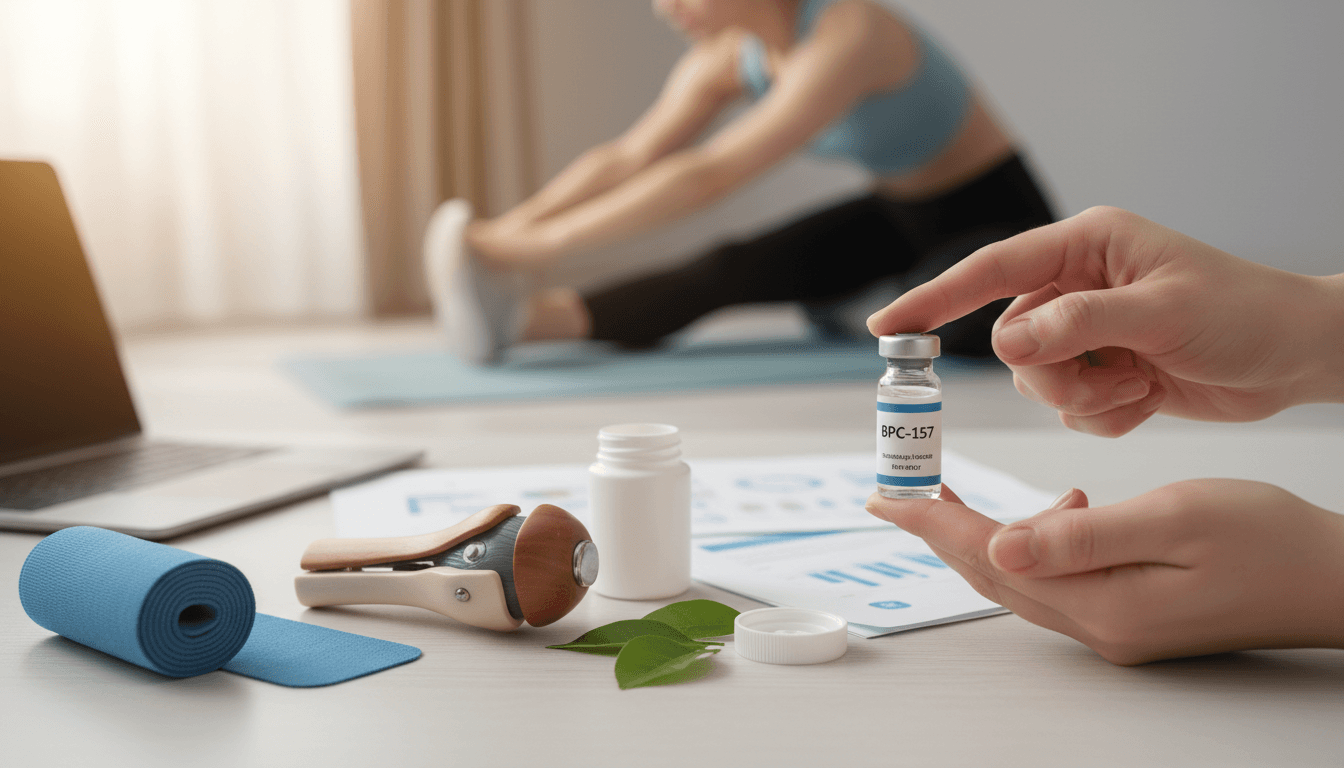
BPC-157 is a peptide that attracts a lot of attention for its potential healing properties. A common question that comes up is, is BPC-157 effective orally? The answer isn't a simple yes or no. Unlike most peptides, BPC-157 is incredibly stable in stomach acid, which gives it a unique advantage for oral use. However, its effectiveness depends entirely on your specific health goals. For issues inside the gastrointestinal tract, oral BPC-157 appears to be very effective. For injuries to muscles, tendons, or joints, the evidence points toward a different method of administration. This guide will answer your most common questions.
General BPC-157 Questions
What is BPC-157?
BPC-157 stands for Body Protection Compound 157. It is a synthetic peptide chain made of 15 amino acids. It was derived from a protective protein found in human gastric juice. Because of its origin, it is unusually stable and resistant to breakdown in the digestive system. Researchers are studying its potential to accelerate healing in many different tissues, including the gut, muscle, tendon, ligament, and bone. Its main areas of investigation include repairing damage from NSAIDs, improving gut health, and speeding up recovery from injuries.
Is BPC-157 prescribed by doctors?
The short answer is no, not in the traditional sense. The FDA has not approved BPC-157 for any medical use, so you cannot get a prescription for it from a standard pharmacy. However, some specialized medical providers in peptide therapy or hormone optimization clinics may offer it. After a thorough consultation, they might prescribe it as an experimental compound from a compounding pharmacy. Because is bpc 157 prescribed is a frequent question, it's important to understand this distinction. It’s not a mainstream medication but a compound used by specific practitioners.
Is BPC-157 legal to possess?
The legal status of BPC-157 is complicated. It is not a controlled substance. It is often sold online under the label "research chemical, not for human consumption." This occupies a legal gray area. While you can possess it, obtaining it without a prescription from a licensed provider and a reputable compounding pharmacy carries risks. These unregulated products may have issues with purity, safety, and dose accuracy. The safest approach is always working with a qualified medical clinic. For more details on this topic, read our guide on how to find a legitimate peptide clinic.
Has BPC-157 been studied in humans?
Yes, but the human data is very limited. Early-stage clinical trials for inflammatory bowel disease (IBD) showed that BPC-157 was well-tolerated. Unfortunately, the full results of these trials were not published in peer-reviewed journals. There is also an ongoing trial for multiple sclerosis. Almost all other research, especially for musculoskeletal injuries, has been done in animal models. A significant gap exists in human clinical studies, particularly ones that directly compare oral and injectable BPC-157. This lack of extensive human data is a primary reason it remains unapproved by the FDA.
What are the main potential benefits?
Research, primarily in animal studies, suggests BPC-157 has a wide range of potential healing effects. It appears to promote the formation of new blood vessels, a process called angiogenesis, which is vital for healing. It has shown promise in repairing gut lining damage from conditions like ulcers and IBD. Other studies point to accelerated healing of tendons, ligaments, and muscle tissue. It may also counteract damage from NSAID pain relievers. You can explore a deeper dive into the science in our post on BPC-157 research.
What are the known side effects?
Based on the limited human trials for IBD and multiple sclerosis, BPC-157 appears to have a good safety profile with no significant toxicity reported (Frontiers in Pharmacology, 2021). However, the lack of large-scale, long-term human studies means the full side effect profile is unknown. Anecdotal reports are generally mild and may include site reactions for injections. The biggest risk comes from using products from unregulated sources, which may contain impurities. For a complete overview, check our article on BPC-157 side effects. Always discuss potential risks with a provider.
What is the cost of peptide therapy?
Many people ask, what is the cost of peptide therapy? It varies widely. The price depends on the specific peptide, the dosage, the duration of treatment, and the clinic's pricing structure. For a peptide like BPC-157, a one-month supply could range from $200 to over $500. This often includes the peptide itself, consultation fees, and necessary supplies. More complex protocols involving multiple peptides, such as CJC-1295 and Ipamorelin, will have different costs. The best way to get an accurate estimate is to have a consultation with a provider.
How is BPC-157 different from other peptides?
BPC-157's most unique feature is its origin and stability. Being derived from a protein in human gastric juice makes it extraordinarily resistant to stomach acid and digestive enzymes. Most other peptides, like the growth-hormone-releasing peptides CJC-1295 or Ipamorelin, would be destroyed in the stomach and must be injected. This stability is what makes oral administration of BPC-157 even possible. While other peptides might target growth hormone release or skin health, BPC-157's primary researched function is cytoprotection, or cell protection and repair, especially in the GI tract.
Confused about which peptide protocol might be right for your goals? The world of peptides can be complex. Take our free 3-minute quiz to get matched with a licensed provider who can create a plan based on your health needs.
Is BPC-157 Effective Orally vs. Injectable?
How does oral BPC-157 work in the gut?
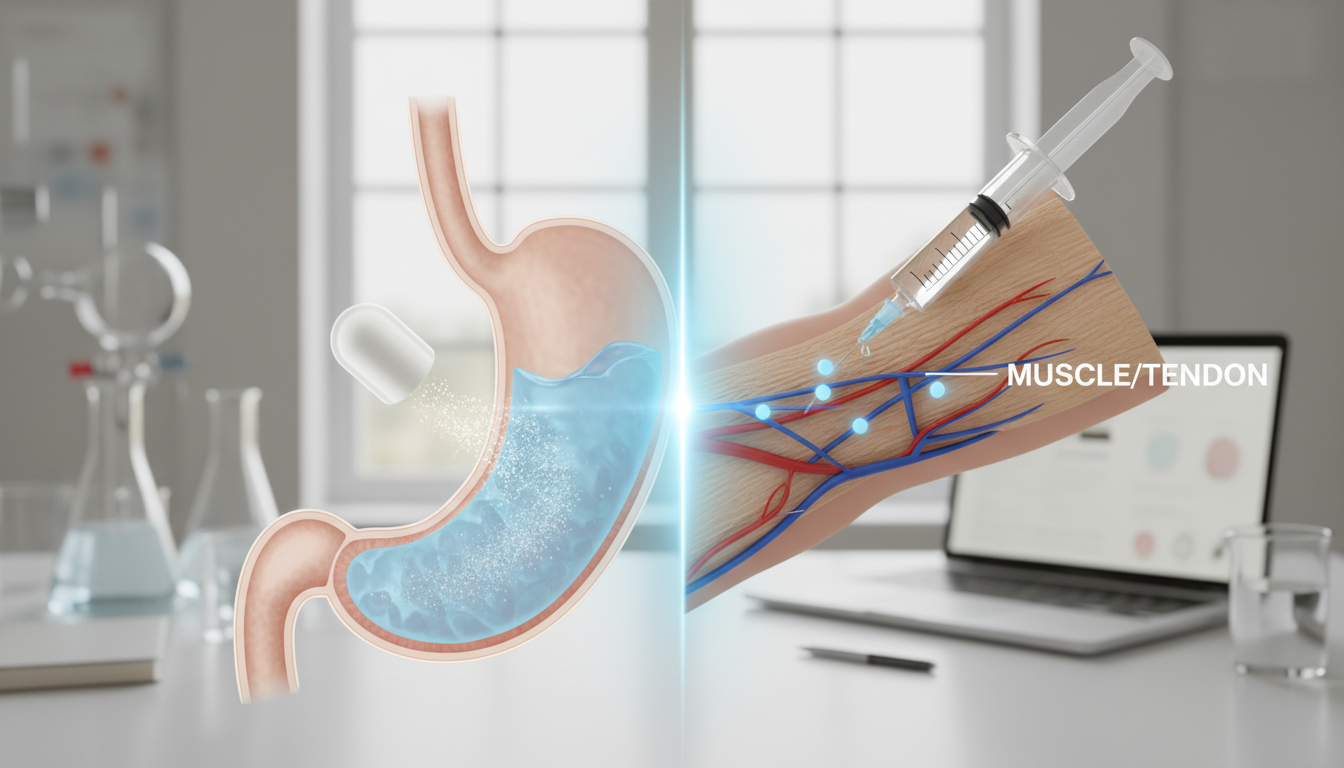
Oral BPC-157 works so well for gut issues because of its unique stability. When you take a BPC-157 capsule, it travels to your stomach and intestines largely intact. Research shows it can remain stable in gastric juice for over 24 hours (PeptideNerds). This allows it to act directly on the lining of the GI tract. It doesn't need to be absorbed into the bloodstream to be effective for these local issues. Preclinical studies show it can help repair damage from NSAIDs, reduce inflammation in IBD models, and heal ulcers. It works at the site of the problem.
Is oral BPC-157 good for muscle and joint injuries?
For muscle, tendon, or joint injuries, oral BPC-157 is likely not the best choice. These injuries require the peptide to travel through the bloodstream to reach the damaged tissue. This is known as systemic exposure. According to research, the systemic bioavailability of oral BPC-157 is very low, with some animal studies estimating it to be under 2 percent (CalcMyPeptide). Another source suggests it might be as high as 10 percent. In either case, it's a small fraction compared to injections. For these types of injuries, injectable BPC-157 is considered necessary to deliver therapeutically relevant levels to the target tissue.
What is the bioavailability of oral BPC-157?
Bioavailability is the proportion of a substance that enters the bloodstream and has an active effect. For BPC-157, the route of administration drastically changes this value. Oral BPC-157 has high local bioavailability in the gut but very low systemic bioavailability, estimated between 2 to 10 percent in animal studies.
In contrast, subcutaneous (under the skin) injections offer much higher systemic bioavailability. One study in rats showed 14-19 percent bioavailability, while a study in dogs showed 45-51 percent (PeptideNerds). Many sources suggest that for humans, subcutaneous injection provides nearly 100 percent bioavailability, ensuring the peptide circulates throughout the body. Our full BPC-157 capsule vs. injection comparison breaks this down further.
What is BPC-157 injection administration like?
Discussions of BPC-157 injection administration usually refer to subcutaneous injections. This involves injecting the peptide into the fatty tissue just under the skin, often in the abdomen or thigh. The peptide typically comes as a lyophilized (freeze-dried) powder that must be reconstituted with bacteriostatic water. The process is straightforward but must be done hygienically. A small insulin syringe is used for the injection. The dosage will be determined by your provider and can be calculated using our free reconstitution calculator. Many users find the process simple and nearly painless.
Deciding between oral or injectable peptides can be tricky and depends on your specific goals. Want to see which options fit your health needs and budget? Our free quiz takes 3 minutes and matches you with vetted providers who can guide you.
Is BPC-157 Effective Orally for Specific Conditions?
Is oral BPC-157 effective for gut health?
Yes, this is where oral BPC-157 shines. Because it survives the harsh stomach environment, it can directly contact and repair the lining of the gastrointestinal tract. Research supports this. One striking study in rats showed that oral BPC-157 could completely heal a stomach perforation. It also corrected severe complications like high pressure in the brain, portal vein, and caval vein that resulted from the injury (FASEB Journal, 2022). This highlights its powerful local anti-ulcer and healing effects. For conditions like leaky gut, IBD, or gastritis, the oral route is considered the most logical and effective delivery method.
Is oral BPC-157 good for skin and wound healing?
For healing skin wounds like cuts or burns, oral BPC-157 is probably not the ideal method. While BPC-157 itself has demonstrated powerful wound healing properties for many tissues, including skin (PMC, 2021), the issue is delivery. To heal a skin wound, the peptide needs to get to the site of the injury through the bloodstream. Due to its very low systemic bioavailability, an oral dose won't deliver a significant amount of the peptide to the skin. An injectable form would be much more efficient at raising systemic levels to promote healing in tissues outside of the GI tract.
Can oral BPC-157 help with systemic inflammation?
This is a bit of a gray area. Systemic inflammation requires a substance to circulate throughout the body to have an effect. As we've covered, oral BPC-157 has poor absorption into the bloodstream. Therefore, injectable BPC-157 is a much more reliable way to address widespread inflammation. While the powerful effects on the gut from oral administration could indirectly reduce some systemic inflammation linked to gut health, it's not a direct mechanism. If the primary goal is to lower systemic inflammation, a provider will almost certainly recommend an injectable form for more predictable results.
Does oral BPC-157 work as well as injections?
The question isn't which one is better, but which one is right for the job. Asking is BPC-157 effective orally compared to injections is like asking if a hammer is better than a screwdriver. They are different tools for different tasks.
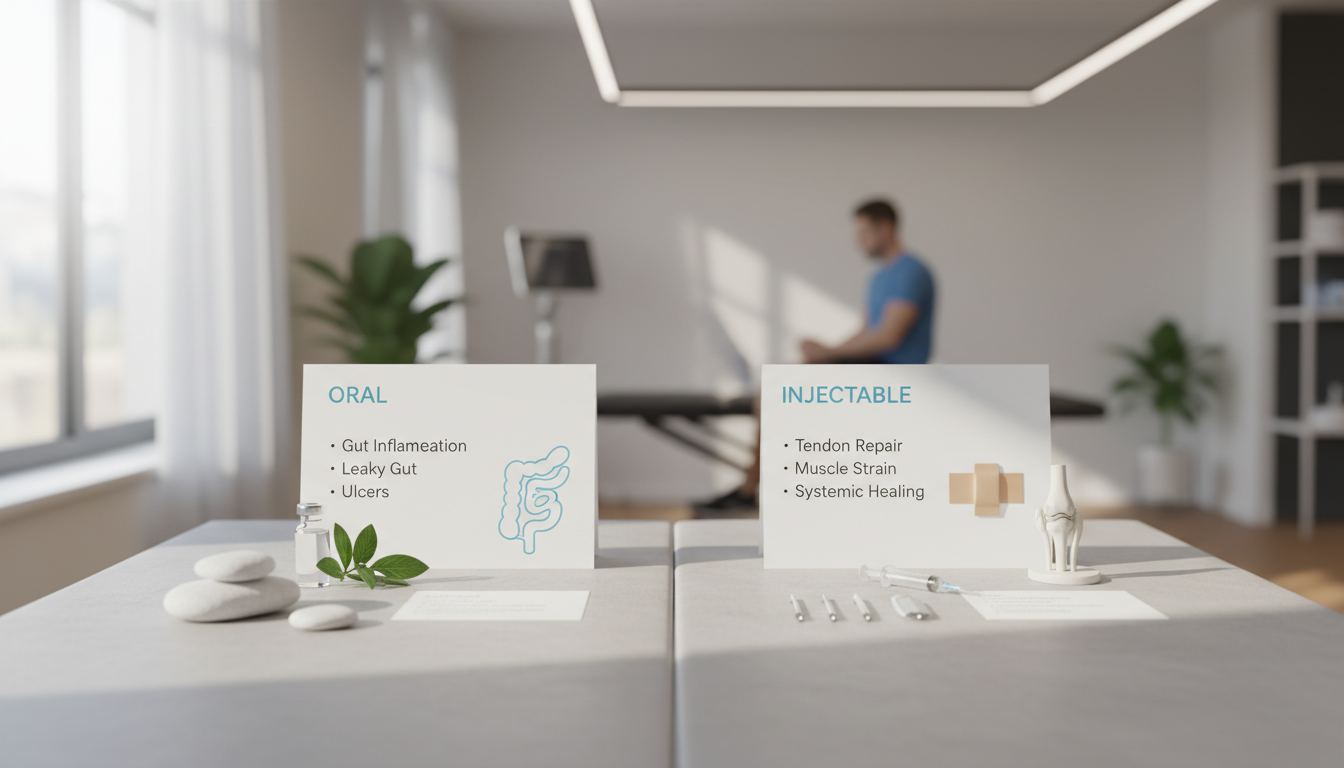
- Oral BPC-157 is the superior choice for localized issues within the GI tract. It delivers a high concentration of the peptide directly to the stomach and intestinal lining.
- Injectable BPC-157 is the superior choice for systemic issues. It bypasses the digestive system to deliver a high, predictable dose to the bloodstream, reaching muscles, tendons, ligaments, and other tissues.
The choice depends entirely on the therapeutic goal. You can see how peptides stack up for different goals with our peptide comparison tool.
Safety, Cost, and Finding a Provider
Is BPC-157 safe to take orally?
Based on limited human data, BPC-157 appears to be well-tolerated. However, it's crucial to understand that it is not FDA-approved, and comprehensive human safety data is lacking (droracle.ai). The biggest safety concern is the source of the peptide. Products sold on the internet for "research" are not regulated and can have inconsistent quality and purity. Working with a medical professional who sources from a reputable compounding pharmacy is the only way to mitigate these risks. Before starting any new investigational compound, you must discuss the potential risks and benefits with a qualified provider.
How much does oral BPC-157 cost?
The cost of oral BPC-157 capsules can vary but generally falls within a predictable range. A one-month supply of oral BPC-157 from a peptide therapy clinic may cost between $150 and $350. This price often reflects the purity of the product, the dosage, and the overhead of the clinic. It may be slightly more or less expensive than the injectable form, depending on the required dosage and protocol. You can get a better sense of general peptide pricing from our main guide on peptide therapy cost.
How can I find a reputable BPC-157 provider?
Finding a trustworthy provider is the most important step. Look for licensed medical doctors (MDs) or nurse practitioners (NPs) who specialize in hormone optimization or peptide therapy. Avoid websites that sell BPC-157 directly to consumers without a consultation or prescription. A reputable clinic will require a consultation, review your health history, and potentially order lab work before creating a protocol. They will also source their peptides from licensed and regulated compounding pharmacies in the US.
Ready to explore your options with a qualified professional? Take our free 3-minute quiz to get matched with a licensed provider who can determine if a therapy like BPC-157 is right for you and your health goals.
FAQs
Is BPC-157 orally bioavailable?
Yes, but with a critical distinction. BPC-157 has high local bioavailability within the gastrointestinal tract, allowing it to act directly on the gut lining. However, it has very low systemic bioavailability, meaning only a small fraction (likely under 10%) enters the bloodstream to affect other parts of the body.
What is better, BPC-157 pills or injection?
Neither is universally "better" as they serve different purposes. BPC-157 pills are the preferred choice for gut-specific issues like ulcers, inflammation, or leaky gut. BPC-157 injections are necessary for healing tissues outside the gut, such as muscle strains, tendon tears, or joint injuries, because they deliver the peptide systemically.
Can you get a prescription for BPC-157?
You cannot get a standard prescription for BPC-157 from your family doctor to be filled at a a normal pharmacy because it is not an FDA-approved drug. However, specialized doctors at peptide or anti-aging clinics can evaluate your case and, if appropriate, prescribe it from a compounding pharmacy for off-label use.
How long does oral BPC-157 take to work?
The timeline for effects can vary significantly. For gastrointestinal issues, some individuals report feeling improvements in symptoms like bloating or discomfort within days to a couple of weeks. For more significant healing, such as repairing the gut lining, a protocol may last one to three months. Documented timelines for systemic effects from oral use are not available due to a lack of research.
Contributing to evidence-based peptide education and provider transparency.
Too many clinics, not enough clarity?
We don't sell peptides. Tell us your goals and we'll connect you with a vetted provider who can figure out what actually makes sense for you.
See what's right for youRelated articles
What Are the GHK-Cu Peptide Benefits and Side Effects?
Everyone is talking about GHK-Cu. This safety guide offers a balanced look at the ghk cu peptide benefits and side effects, cutting through the hype.
Tissue RepairThe Truth About Oral BPC 157 Side Effects
Considering oral BPC-157? We break down the potential oral BPC 157 side effects, looking at what animal studies and real user anecdotes actually report.
Tissue RepairBPC-157 Side Effects: What We Actually Know
While lauded for healing, a clear look at the BPC-157 side effects is crucial. We separate the hype from reality and review what's known about its safety.