BPC-157 Capsule vs Injection: Which One Is Better?
In the BPC-157 capsule vs injection debate, one form isn't always best. See how each works for gut health vs. local injuries and their pros & cons.
This content is for informational purposes only and does not constitute medical advice. Always consult with a qualified healthcare provider before starting any new treatment or supplement.
If you're exploring peptide therapy for recovery, you've likely come across BPC-157. This synthetic peptide has gained significant attention for its potential healing properties. But a critical question quickly arises. Which form is better in the BPC-157 capsule vs injection debate? The answer isn't simple, as each has distinct advantages, drawbacks, and ideal use cases.
This guide will break down the science, cost, and practical differences between injectable and oral BPC-157. We'll look at what the research says, compare side effects, and help you understand which option might align with your specific health goals. While BPC-157 is often discussed for physical repair, it's part of a larger world of wellness compounds. For example, many people also look into the powerful cellular energy and anti-aging effects of other treatments, like those discussed in our guide to NAD injections benefits.
Quick Comparison: BPC-157 Capsule vs Injection
For those who want a fast answer, this table highlights the main differences between the two delivery methods.
| Feature | BPC-157 Injection | BPC-157 Capsule |
|---|---|---|
| Primary Use Case | Systemic or localized tissue repair (muscle, tendon, ligament) | Gastrointestinal (GI) health and gut lining support |
| Bioavailability | High (80% to over 95%) | Low to Moderate (15% to 65%) |
| Speed of Action | Fast. Effects can begin within 2-3 hours. | Slow. Effects can take 24-48 hours to begin. |
| Results Timeline | Faster improvements, often noted in 2-3 weeks. | Slower improvements, often taking 6-8 weeks for noticeable change. |
| Cost Per Dose | Lower long-term ($0.15 - $12) | Higher long-term ($0.50 - $5) |
| Convenience | Requires mixing, storing, and self-injecting. | As easy as swallowing a pill. |
| Primary Target | Enters the bloodstream for widespread or targeted effects. | Acts primarily on the digestive tract. |
Deciding between BPC-157 capsule vs injection depends entirely on your goals. Not sure which approach is right for you? Take our free quiz to get matched with a provider who can help guide you through the options.
What Are BPC-157 Injections?
Injectable BPC-157 is a synthetic peptide chain that you administer yourself, typically through a subcutaneous injection. This means you inject it into the fatty tissue just under the skin, often around the abdomen or near the site of an injury. This form is a lyophilized (freeze-dried) powder that must be reconstituted with bacteriostatic water before use. You can learn more about general peptide injection therapy in our detailed guide.
The main reason injections are popular is their high bioavailability. By delivering the peptide directly into your system, you bypass the digestive tract, ensuring that a much higher percentage of the compound becomes active in your body. This makes it the preferred method in most research settings (Peptide Dossier, 2026).
Because of its direct delivery, injectable BPC-157 is considered superior for addressing issues outside of the gut. This includes muscle tears, tendonitis, and joint pain. For example, someone with a nagging wrist injury might perform a bpc-157 wrist injection nearby (subcutaneously) in the hopes of concentrating the peptide's effects locally. Nearly all published data on BPC-157 for musculoskeletal targets used this injectable method (Peptidenerds, 2026).
What Are BPC-157 Capsules?
BPC-157 capsules are the oral alternative to injections. They contain the same peptide but are designed to be swallowed. This method offers a huge advantage in convenience, as it requires no needles, mixing, or special storage procedures beyond keeping them in a cool, dry place.
However, the primary challenge for any oral peptide is surviving the harsh environment of the stomach. Many peptides are simply proteins, and the digestive system is designed to break them down. BPC-157 is unusual because research shows it is remarkably stable in gastric juice for over 24 hours (Peptidenerds, 2026). This stability allows it to remain intact long enough to exert its effects, particularly within the gastrointestinal tract.
For this reason, BPC-157 capsules are almost exclusively recommended for gut-related issues. Preclinical studies support the use of oral BPC-157 for gastrointestinal problems (Peptidenerds, 2026). People exploring it for conditions like leaky gut, IBS, or general digestive discomfort may opt for the oral route. While some of the peptide may be absorbed systemically, the concentration is much lower and less predictable than with an injection.
Key Differences in BPC-157 Capsule vs Injection
Understanding how these two forms work is critical. The differences in absorption, speed, and effectiveness will determine which one, if any, is appropriate for your situation.
Bioavailability and Absorption
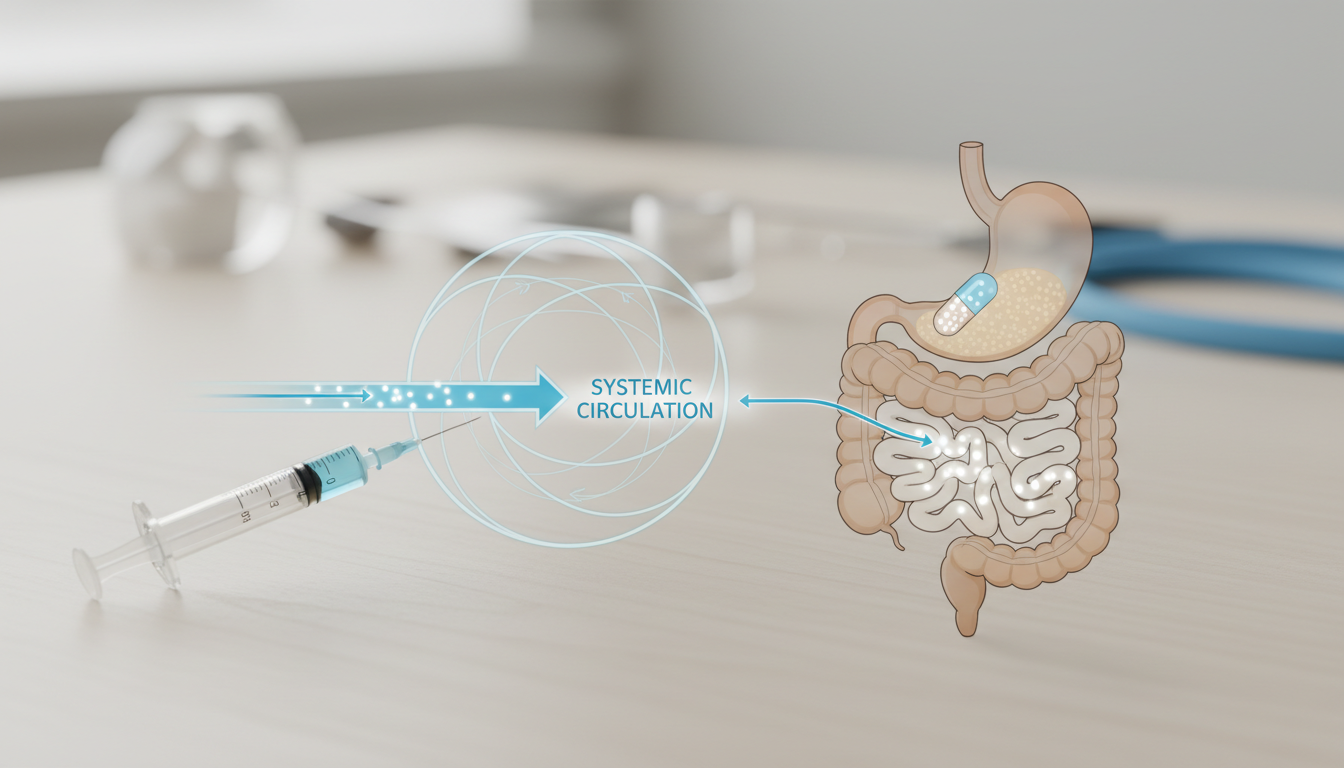
Bioavailability refers to the percentage of a substance that enters your circulation and becomes active. This is the most significant difference when comparing BPC-157 capsule vs injection.
- Injections: Sources report a bioavailability of 80% to over 98% (All About Peptides; Peptide Dossier, 2026). This means almost the entire dose is available for your body to use. It leads to reliable and potent systemic effects.
- Capsules: The data here is less consistent. Some sources suggest a bioavailability as high as 65%, while others place it in the 15-40% range (All About Peptides; Peptide Dossier, 2026). This wide range highlights the unpredictability of oral absorption. The peptide must survive digestion and then pass through the gut wall and liver, where much of it can be broken down before reaching the rest of the body.
The bottom line is that injections provide a 4 to 5 times higher systemic effect compared to oral forms (Peptide Dossier, 2026).
Effectiveness and Primary Use
The delivery method directly influences where the peptide works best.
- Injections for Systemic and Local Repair: Because they deliver BPC-157 to the bloodstream, injections are decisively superior for joint, tendon, and muscle healing. The peptide can travel throughout the body to act on distant injuries or be administered near a specific problem area for more concentrated effects. Almost all research on musculoskeletal healing has used the injectable form for this reason.
- Capsules for Gut Health: Oral BPC-157's journey through the digestive system makes it a natural choice for gut-related issues. It can directly interact with the intestinal lining, which is why it's considered for conditions like IBD, leaky gut, and other inflammatory gut problems. While some may enter the bloodstream, it's not potent enough for reliable musculoskeletal healing.
Speed of Results
Patience is a virtue, but the time it takes to see results varies dramatically between the two forms.
- Injections: Effects can begin within hours. One source notes that injections start working within 2-3 hours (All About Peptides). For tissue repair, users often report noticeable improvements in as little as 2-3 weeks (Peptide Dossier, 2026).
- Capsules: The process is much slower. It can take 24-48 hours for effects to even begin (All About Peptides). For tangible results, the timeline extends to around 6-8 weeks, assuming the goal is systemic and not just gut-focused.
Side Effects: BPC-157 Capsule vs Injection Compared
No substance is without potential side effects. As of 2026, human safety data on BPC-157 is extremely limited, so most reports are anecdotal. It’s critical to review the potential BPC-157 side effects with your provider before starting. Here’s a comparison of what is commonly reported.
| Administration Method | Common Potential Side Effects |
|---|---|
| BPC-157 Injection | - Injection site reactions (pain, redness, swelling, itching) - Dizziness or lightheadedness - Changes in blood pressure - Nausea or fatigue (less common) |
| BPC-157 Capsule | - Mild gastrointestinal upset - Nausea - Bloating or gas - Headaches |
The side effects of bpc-157 injections are mostly related to the act of injection itself. These are typically mild and subside quickly. Systemic side effects like flushing or dizziness are possible but appear to be less common.
Conversely, bpc-157 oral side effects are centered on the digestive system. Since the capsule releases its contents in your gut, it can sometimes cause temporary discomfort as your body adjusts. It's important to remember that these are based on user reports, not large-scale clinical trials.
Considering the side effects and effectiveness is key. If you want guidance tailored to your health profile, our free quiz can connect you with a provider who can review your options with you.
The Cost Breakdown: BPC-157 Capsule vs Injection
Cost is a major factor for many people. When you compare the price of BPC-157 capsule vs injection, injections are almost always cheaper for long-term use, even though the initial purchase might seem higher.
-
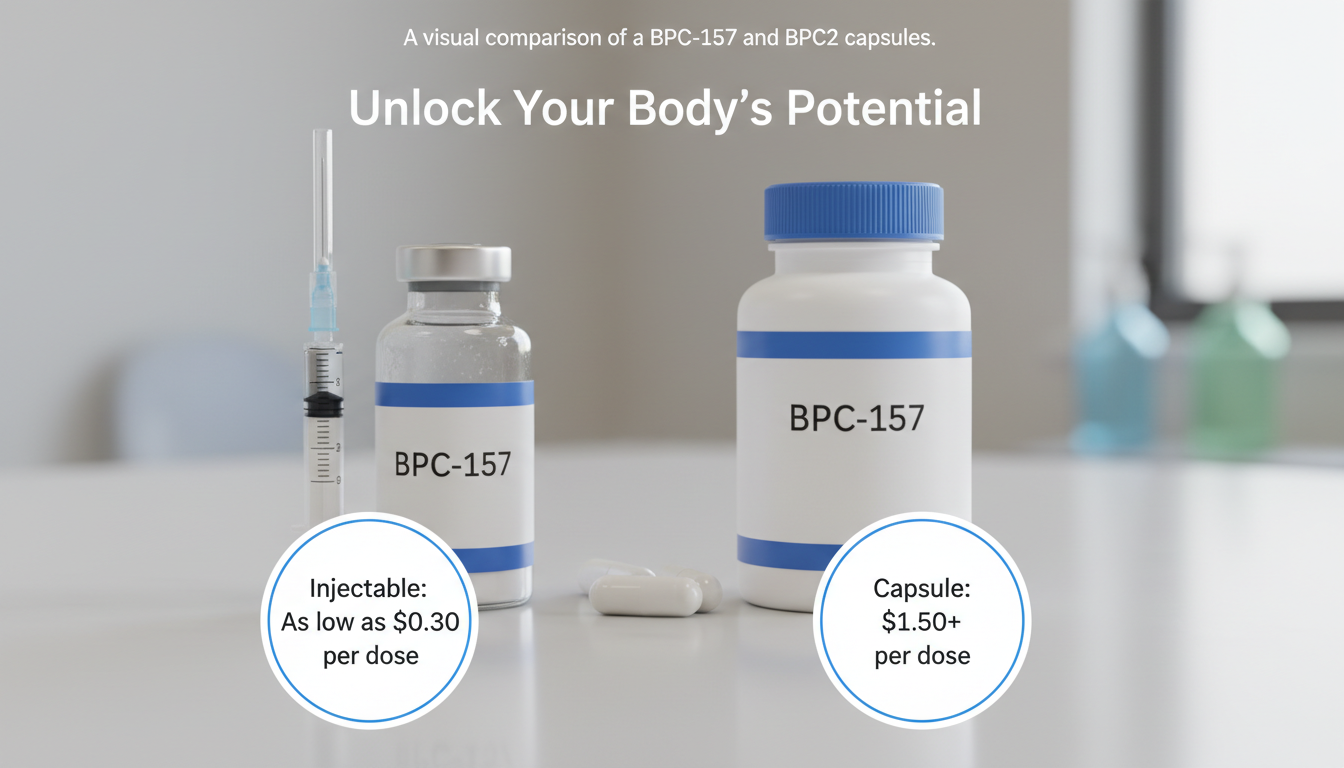
BPC-157 Capsule Cost: Capsules are simpler to price. One analysis found they cost around $0.50 to $1.50 per 500 mcg dose (Peptide Dossier, 2026). Another source places a typical dose at $3 to $5 (All About Peptides). Expect to pay roughly $60 to $120 for a one-month supply. The cost is straightforward and requires no extra supplies.
-
BPC-157 Injection Cost: This is a bit more complex. You buy the peptide as a powder in a vial (e.g., 5 mg). You also need to buy bacteriostatic water and syringes.
- Per-Vial Cost: A 5 mg vial can cost anywhere from $50 to $90.
- Per-Dose Cost: If you take a standard 250 mcg dose, a 5 mg vial contains 20 doses. This brings the cost per dose down to just $0.15 to $0.35 after initial supply costs, making it dramatically cheaper than capsules for long-term use (Peptide Dossier, 2026).
- Per-Dose from Clinic: Some clinics may offer pre-filled syringes, which are much more convenient but also more expensive, with prices ranging from $8 to $12 per dose (All About Peptides).
Although injections have a higher upfront cost for the vial and supplies, the per-dose price is significantly lower, making it the more economical choice for anyone planning to use it for more than a few weeks. You can find more detail in our BPC-157 dosing chart.
Who Should Choose Capsules? Who Should Choose Injections?
This is the most important question. The choice between a BPC-157 capsule vs injection comes down to your primary goal.
You might choose BPC-157 INJECTIONS if:
- Your goal is tissue repair. For nagging injuries to tendons, ligaments, or muscles, injections are the clear winner due to their high bioavailability and systemic action.
- You need faster results. If you're an athlete or someone trying to recover from an acute injury, the speed of injections is a major advantage.
- You want predictable, systemic effects. Injections provide a reliable dose directly into your bloodstream for body-wide benefits.
- You are comfortable with self-injection. The process can be intimidating at first but becomes routine for most people.
You might choose BPC-157 CAPSULES if:
- Your main concern is gut health. For issues like IBS, leaky gut, or general GI inflammation, oral BPC-157 is designed to act directly on the problem area.
- You have a strong aversion to needles. Convenience and comfort are valid reasons to choose capsules, as long as you have realistic expectations about their potency for non-gut issues.
- You are doing a short-term trial. If you're simply curious about BPC-157, capsules offer an easy entry point without the commitment of learning to inject.
What about stacking BPC-157 and TB-500?
Many users combine BPC-157 with another healing peptide called TB-500 for a synergistic effect. If you're considering using BPC-157 and TB-500 together, the injection route is almost universally preferred. TB-500, like BPC-157, is most effective when delivered systemically via injection. While some vendors sell bpc-157 tb-500 capsules vs injection, the oral combination has questionable bioavailability and is unlikely to provide the same level of benefit as an injectable stack. You can read more in our comparison of BPC-157 vs. TB-500.
The Regulatory Landscape in 2026
It's crucial to understand that BPC-157 is not approved by the FDA for human use. Its legal status has been a topic of much debate. In late 2023, the FDA placed BPC-157 on a "do not compound" list, making it illegal for compounding pharmacies to prepare (Peptides Explorer, 2026). This caused major disruptions.
However, in a significant development on February 27, 2026, HHS Secretary Robert F. Kennedy Jr. announced that BPC-157 would be reclassified, restoring its legal status for compounding, though formal FDA changes are still pending. This move is expected to improve access for researchers and patients obtaining a bpc-157 peptide prescription from a legitimate clinic. Despite this, it remains an investigational compound. As of 2026, the first randomized, placebo-controlled human trial for BPC-157 in musculoskeletal healing is just beginning to recruit participants, with results not expected until 2027 or 2028 (Peptide Garden, 2026).
This information is critical for anyone considering BPC-157. You should only obtain it through reputable channels, ideally with guidance from a medical professional. Learn more about the FDA's stance on peptide therapy here.
Ready to find out if BPC-157 is a good fit for you and connect with a legitimate provider? Take our free 3-minute quiz to get matched with a licensed professional who can discuss your options.
FAQs
Is oral BPC-157 a waste of money?
No, it is not a waste of money if used for its intended purpose. Oral BPC-157 is specifically suited for addressing gastrointestinal health due to its direct action on the gut lining. It is considered much less effective for muscle or joint repair, where injections are superior.
Can you take BPC-157 capsules and injections at the same time?
While theoretically possible, this is generally not recommended without medical supervision. Combining both could lead to improper dosing and is unnecessary for most people. Injections provide systemic effects that cover the whole body, while capsules target the gut. A provider can help you determine the right approach.
How do I get a BPC-157 peptide prescription?
You can get a bpc-157 peptide prescription by consulting with a licensed medical provider who specializes in hormone optimization or peptide therapy. Following the 2026 reclassification, compounding pharmacies can legally prepare BPC-157 with a valid prescription from such a provider. Many telehealth platforms, like those you can find through the RxFox clinic finder, can connect you with qualified doctors.
Is injectable BPC-157 better for long-term use?
From a cost and efficacy standpoint for systemic repair, yes. Injections offer a significantly lower cost per dose and deliver a much more potent and predictable effect for healing muscles, tendons, and joints, making them the preferred choice for any use longer than a few weeks.
Contributing to evidence-based peptide education and provider transparency.
Too many clinics, not enough clarity?
We don't sell peptides. Tell us your goals and we'll connect you with a vetted provider who can figure out what actually makes sense for you.
See what's right for youRelated articles
What Are the GHK-Cu Peptide Benefits and Side Effects?
Everyone is talking about GHK-Cu. This safety guide offers a balanced look at the ghk cu peptide benefits and side effects, cutting through the hype.
Tissue RepairThe Truth About Oral BPC 157 Side Effects
Considering oral BPC-157? We break down the potential oral BPC 157 side effects, looking at what animal studies and real user anecdotes actually report.
Tissue RepairWhen Is BPC-157 Effective Orally & When It's Not
Wondering is BPC-157 effective orally? While it's uniquely stable in stomach acid, its effect depends on your issue. Learn when oral BPC works and when another form might be better.