How to Get Semaglutide Online: Telehealth Weight Loss Providers in 2026
A practical guide to getting semaglutide prescribed online through telehealth in 2026 — what to expect, what to avoid, and how to find a provider who does it right.
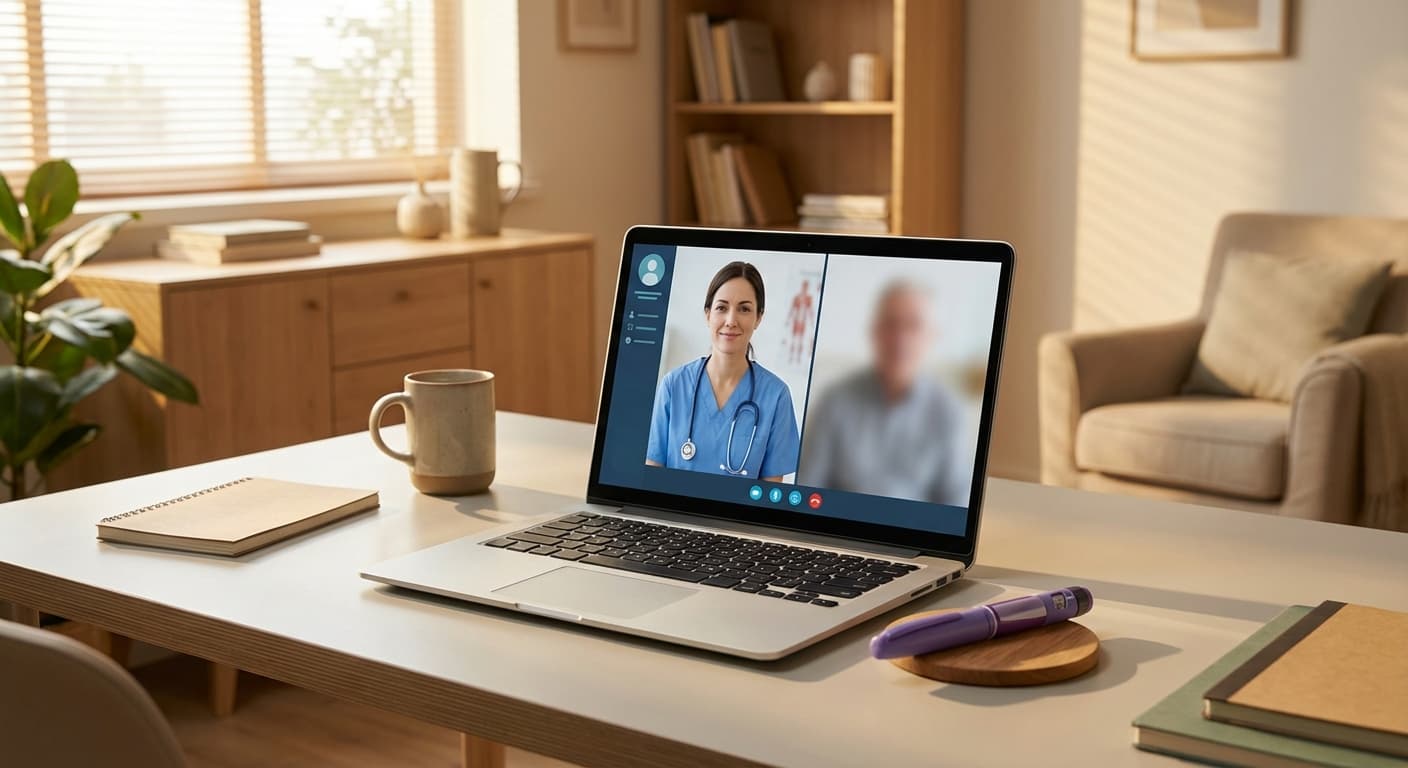
You Can Get Semaglutide Prescribed Online. Here's How.
Telehealth has become the most common way people start GLP-1 therapy for weight loss. You don't need to visit a brick-and-mortar clinic. A licensed provider can evaluate you over video, order labs, write a prescription, and manage your dose titration — all remotely.
But not every telehealth platform operates the same way. Some provide genuine medical care with proper evaluations, follow-ups, and licensed prescribers. Others are essentially prescription mills with a website. The difference matters for your safety, your results, and your wallet.
This guide covers how the process works in 2026, what a legitimate consultation looks like, the red flags that should make you close the browser tab, and how to find a provider worth your time and money.
How Telehealth Prescribing Works for GLP-1s
The basic flow is straightforward. You sign up with a telehealth platform or provider, complete a medical intake form, have a consultation (usually video, sometimes asynchronous), get labs done, and (if you qualify) receive a prescription sent to a pharmacy.
Here's what each step should look like when done properly:
Medical intake. You fill out a detailed questionnaire covering your weight history, current medications, medical conditions, family history, and weight loss goals. This isn't a three-question form. A thorough intake takes 10-15 minutes and asks about things like thyroid conditions, pancreatitis history, gallbladder issues, and mental health.
Consultation. A licensed provider (physician, nurse practitioner, or physician assistant) reviews your intake and discusses your situation with you. This should be a real conversation — not a rubber stamp. The provider should ask about your eating patterns, prior weight loss attempts, and what's motivating you to explore medication. They should also explain how semaglutide works, what side effects to expect, and how long treatment typically lasts.
Lab work. Good providers require baseline bloodwork before prescribing. At minimum: a metabolic panel, A1C (to check for diabetes or prediabetes), and thyroid function tests. Some also order a lipid panel and kidney function markers. You'll either go to a local lab (LabCorp or Quest, usually) or submit recent labs if they're less than 3-6 months old.
Prescription. If you qualify, the provider writes a prescription — typically for Wegovy (the FDA-approved weight loss formulation) or, in some cases, Ozempic off-label. The prescription goes to a retail pharmacy, a mail-order pharmacy, or the manufacturer's direct pharmacy (NovoCare or LillyDirect). For a breakdown of the differences between these medications, check our GLP-1 overview.
Follow-up. This is where many platforms fall short. Proper GLP-1 management requires regular check-ins during dose titration — typically every 4 weeks for the first 3-4 months. Your provider should be monitoring side effects, adjusting doses, and tracking progress. After you reach maintenance dose, follow-ups can space out to every 2-3 months.
What a Good Telehealth Consultation Looks Like
There's a wide range of quality in the telehealth GLP-1 space. The best providers treat this as ongoing medical care. The worst treat it as a transaction.
Signs you're working with a good provider:
- They require a synchronous consultation (video or phone call) before prescribing — not just an asynchronous text exchange
- They order and review bloodwork before writing the first prescription
- They discuss your full medical history, not just your weight
- They explain the titration schedule and set expectations about the timeline for results
- They ask about your diet, activity level, and support system
- They discuss when to contact them between scheduled visits (persistent vomiting, severe abdominal pain, signs of pancreatitis)
- They have a plan for ongoing monitoring and don't just write a prescription and disappear
- They're transparent about costs — the consultation fee, medication cost, and any monthly membership fee are clearly stated before you commit
If the provider spends less than 10 minutes with you and doesn't mention bloodwork, that's not a medical consultation. That's a checkout page with a white coat.
Red Flags: When to Walk Away
The FDA has been cracking down hard on the telehealth GLP-1 space. In March 2026 alone, the agency issued 30 warning letters to telehealth companies for false or misleading marketing of compounded GLP-1 products. That came on top of over 100 warning letters issued in 2025.
Here's what to watch for:
No real medical evaluation. If you can get a prescription by filling out a brief form and paying, without ever speaking to a provider or submitting labs, you're dealing with a prescription mill. Semaglutide requires medical supervision. Period.
Still selling compounded semaglutide as if it's equivalent to Wegovy or Ozempic. The FDA has been explicit: compounded drugs are not reviewed for safety, effectiveness, or quality. Companies cannot legally claim their compounded product is "the same as" an FDA-approved medication. Novo Nordisk's testing found impurity levels as high as 86% in some compounded semaglutide products.
Suspiciously low prices with no explanation. If someone is offering semaglutide for $99/month in 2026, ask what you're actually getting. Brand-name Wegovy through NovoCare starts at $149/month for the pill at lower doses. Anything substantially below that price point raises questions about what's in the vial.
No follow-up protocol. A provider who writes a prescription and doesn't schedule a follow-up appointment isn't managing your care. They're selling you a drug. GLP-1 therapy requires dose titration, side effect monitoring, and periodic lab work.
Pressure to buy from their in-house pharmacy. Some platforms steer you toward their own pharmacy or a specific compounding pharmacy where they have a financial arrangement. A legitimate provider should let you fill your prescription wherever you choose.
No information about the prescriber's credentials. You should know who is writing your prescription — their name, license type, and the state(s) where they're licensed. If the platform won't tell you who your provider is until after you've paid, that's a problem.
For more on evaluating clinics and providers, read our guide to finding a legitimate peptide clinic.
Major Telehealth Platforms for GLP-1s in 2026
The telehealth GLP-1 market has consolidated significantly since the compounding crackdown. Most platforms now prescribe brand-name medications and connect patients with retail or manufacturer pharmacies. Here's a snapshot of how the major players operate:
Ro (Ro Body Program): Monthly membership of $145 that covers provider access, insurance support, and ongoing care. Medication is separate — Ro integrates with NovoCare Pharmacy, so eligible cash-paying patients can access Wegovy and Ozempic through manufacturer pricing. Insurance concierge service helps with prior authorization.
Hers (Hims & Hers): After its regulatory clash with the FDA in February 2026 over compounded semaglutide, Hers pivoted to a partnership with Novo Nordisk for brand-name products. Plans start at $69/month for oral medication kits (10-month commitment, paid upfront). Higher tiers include brand-name GLP-1 prescriptions.
Noom Med: Combines GLP-1 prescribing with Noom's behavior-based weight management program. GLP-1Rx plans start at $129/month. Microdose options start at $99/month. Medication cost is separate. The behavioral coaching component is Noom's differentiator from pure prescribing platforms.
Sesame: Functions as a marketplace connecting patients with providers. You book a consultation (often $30-$80), and the provider writes a prescription you fill at a pharmacy of your choice. Lower overhead than subscription-based platforms, but less hand-holding.
Walgreens Weight Management: Offers Wegovy pills with a promotional price of $149/month for the first two months (through August 31, 2026), then $299/month. Includes telehealth consultations through their provider network.
PlushCare: Board-certified physicians available for virtual consultations. Prescribes FDA-approved GLP-1s with follow-up care. Works with most major insurance plans for covered medications.
These platforms all take slightly different approaches to pricing, membership models, and clinical support. The right one depends on whether you have insurance, how much structure you want, and what you're willing to pay for the platform on top of the medication itself.
Don't want to research platforms? Take the provider quiz and get matched based on your specific situation — insurance status, location, goals, and budget.
State Licensing: Why Location Matters
Telehealth providers must be licensed in the state where the patient is physically located during the consultation. This is a federal and state law requirement that hasn't changed.
What this means for you: the provider writing your prescription needs a medical license in your state. Most large telehealth platforms employ providers licensed in all 50 states, but some smaller practices or independent providers may only cover certain states.
A few things to know:
- The Interstate Medical Licensure Compact allows faster licensure across participating states, but it doesn't eliminate the requirement
- Some states (like Texas) require an initial live consultation before the provider can delegate ongoing management
- If a pharmacy isn't licensed in your state, it cannot legally ship medication to you — and the prescribing provider can be held liable
- Your prescription must be sent to a pharmacy that operates legally in your state
This is mostly a behind-the-scenes concern, but it's worth verifying. If a platform can't tell you that your specific provider is licensed in your state, that's a red flag.
The Compounding Question in 2026
If you're looking for semaglutide online, you'll still encounter companies offering compounded versions. Here's the current state of play.
The FDA ended the semaglutide shortage in February 2025. Grace periods for existing compounded inventory expired in May 2025. In March 2026, the FDA issued 30 additional warning letters to telehealth companies still marketing compounded GLP-1 products with false or misleading claims.
The Hims & Hers saga captures the trajectory: in February 2026, the company announced a $49/month compounded semaglutide pill. Within 48 hours, HHS referred the company to the DOJ for investigation, and Hims pulled the product. By March, Hims had struck a partnership with Novo Nordisk to sell brand-name semaglutide instead.
Some 503B outsourcing facilities may still legally compound semaglutide under specific conditions, but the pool is shrinking fast. If a telehealth provider is offering compounded semaglutide in 2026, verify the pharmacy's registration status and understand that the product is not FDA-approved and may carry quality risks.
For most patients, brand-name medication through manufacturer savings programs is the more reliable path. The Wegovy pill at $149-$349/month through NovoCare has eliminated much of the cost advantage that compounding once offered. For detailed pricing, see our cost guide.
What You'll Actually Pay
The total cost of getting semaglutide online breaks down into a few components:
Platform/membership fee: $0 to $145/month depending on the platform. Some charge nothing upfront and build their margin into pharmacy arrangements. Others charge a monthly membership that covers provider access and support.
Consultation fee: $0 to $300 for the initial evaluation. Many platforms include this in the membership fee. Marketplace-style platforms like Sesame charge per visit.
Lab work: $100 to $400 depending on the panel and whether your insurance covers diagnostic labs. Some platforms include labs in their program fee. Others send you to Quest or LabCorp and you pay separately.
Medication (the big number):
- Wegovy pill: $149-$349/month through NovoCare (self-pay)
- Wegovy injection: $349/month through NovoCare (self-pay), or $199/month for starter doses through June 2026
- Ozempic: $900-$1,100/month retail; typically lower with insurance for diabetic patients
- With commercial insurance that covers it: potentially $25-$300/month copay
Supplies: $10-$30/month for injection supplies (syringes, alcohol swabs, sharps container) if using the injectable. Not needed for the pill.
Estimate your total monthly cost with our GLP-1 cost calculator, or check the weight loss calculator to project what results you might expect.
How to Choose the Right Telehealth Provider
Skip the platform comparison charts for a moment. The most important thing is the quality of the individual provider writing your prescription. The platform is just the delivery mechanism.
Ask yourself these questions:
Does this provider require labs before prescribing? If not, move on. Semaglutide affects thyroid function, blood sugar, and kidney markers. A provider who doesn't check these first isn't practicing good medicine.
Is there a clear follow-up schedule? You should have check-ins every 4 weeks during dose titration and every 2-3 months after reaching maintenance. If the platform's model is "pay, get a prescription, figure the rest out yourself," that's not ongoing care.
Can I reach my provider between visits? Things come up. Persistent nausea, injection site reactions, rapid weight loss, or signs of more serious side effects need attention before your next scheduled appointment. Good platforms offer messaging access to your care team.
Is the provider transparent about what they're prescribing and why? They should explain whether they're writing for Wegovy or Ozempic, why they chose that formulation, and how the dosing will progress over time. If you're curious about tirzepatide as an alternative, they should be willing to discuss it. See our semaglutide vs. tirzepatide comparison for background.
Are the total costs clear before I commit? Add up the membership, consultation, labs, and medication. That's your real monthly cost. Some platforms advertise a low starting price that doesn't include the medication — which is like advertising a car without the engine.
If sorting through all of this feels overwhelming, that's exactly why we built the provider matching tool. Answer a few questions about your situation, and we'll connect you with a licensed prescriber who fits your needs.
Getting Semaglutide Online FAQ
Is it legal to get semaglutide prescribed online?
Yes. Telehealth prescribing of semaglutide is legal when done by a licensed provider in the state where you're located. The provider must conduct an appropriate medical evaluation — reviewing your health history, ordering labs, and determining that semaglutide is clinically appropriate for you. The prescription is then filled at a licensed pharmacy. What's not legal: buying semaglutide without a prescription from an unregulated website.
Do I need to see a doctor in person to get Ozempic or Wegovy?
No. A telehealth consultation with a licensed provider is sufficient in most states. Some states have specific requirements about the type of consultation (video vs. phone vs. asynchronous), but no state currently requires an in-person visit before a GLP-1 can be prescribed. That said, you will need to get bloodwork done at a local lab in most cases. For help finding a provider, take the quiz.
How much does it cost to get semaglutide through telehealth?
Total monthly costs vary widely. On the low end, the Wegovy pill through NovoCare self-pay starts at $149/month for medication, plus whatever the platform charges for access ($0-$145/month). On the high end, brand-name Wegovy injectable at retail is $1,349/month plus platform fees. Most self-pay patients end up in the $200-$500/month range when you add up medication and platform costs. Use the GLP-1 cost calculator to estimate your specific costs.
Can I get compounded semaglutide online in 2026?
The compounded semaglutide market has contracted dramatically. The FDA ended the semaglutide shortage in February 2025, most compounder grace periods expired in May 2025, and the FDA issued 130+ warning letters to telehealth and compounding companies through early 2026. Some 503B pharmacies may still legally compound semaglutide, but availability is limited and declining. For most patients, brand-name medication through manufacturer savings programs is the safer option. See our cost guide for current pricing across all options.
What should I look for in a telehealth weight loss provider?
Look for providers who require baseline bloodwork, conduct a real medical evaluation (not just a form), have a clear follow-up schedule during dose titration, are transparent about total costs, and can tell you exactly who is writing your prescription and in what state they're licensed. Avoid any platform that doesn't require labs, offers prescriptions after a minimal questionnaire, or can't clearly explain what medication they're prescribing and why. Our clinic finding guide covers this in more detail.
How quickly can I get semaglutide after a telehealth visit?
Most patients receive their medication within 3-7 days of the initial consultation, assuming labs are completed and the provider approves treatment. Some platforms offer expedited shipping. If you're going through insurance, prior authorization can add 1-2 weeks. Cash-pay through manufacturer direct programs (NovoCare, LillyDirect) tends to be faster since there's no insurance approval step. The medication itself starts at a low dose and takes 16-20 weeks to titrate up to the full therapeutic dose.
Contributing to evidence-based peptide education and provider transparency.
Too many clinics, not enough clarity?
We don't sell peptides. Tell us your goals and we'll connect you with a vetted provider who can figure out what actually makes sense for you.
See what's right for youRelated articles
A Step-by-Step Gelatin Recipe for Weight Loss
Seen the viral "pink trick"? We break down the simple gelatin recipe for weight loss. Learn our step-by-step method to help manage hunger and feel full.
GLP-1 Weight LossOzempic Cost in 2026: What You'll Actually Pay
The 2026 Ozempic cost can be anywhere from $25 to over $1,400 a month. Discover why and learn how to find savings with or without insurance coverage.
GLP-1 Weight LossHow Zep Weight Loss Works and What to Expect
Thinking about zep weight loss? We cover how this drug works, what realistic results look like, common side effects, and how it compares to Ozempic.