What Are the Real Testosterone Injection Benefits?
Tired of low energy and motivation? We break down the real testosterone injection benefits, from sex drive and muscle mass to mental clarity and beyond.

This content is for informational purposes only and does not constitute medical advice. Always consult a qualified healthcare provider for any health concerns or before starting a new treatment.
If you're a man dealing with constant fatigue, low motivation, or a lagging sex drive, you might be looking into Testosterone Replacement Therapy (TRT). Among the different options, injections are a common starting point. Understanding the real testosterone injection benefits is key to deciding if this path is right for you. The goal of medically supervised TRT isn't to create superhuman strength, but to restore your hormone levels to a healthy, normal range. This distinction is crucial. When your testosterone is optimized, not artificially inflated, you can experience significant improvements in your physical and mental well-being.
As of 2026, our understanding of TRT's safety and effectiveness is clearer than ever. Recent large-scale studies have provided valuable insights, leading to updated guidelines from regulators. These changes help men and their doctors make more informed decisions about treatment. For a complete overview of what TRT is and who it's for, you can read our foundational guide, What Is TRT and Who Is It Actually For?. This article will focus specifically on injections, covering the benefits, the different types of medication, what to expect, and the potential risks involved.
The Core Testosterone Injection Benefits for Men
When prescribed for confirmed hypogonadism (clinically low testosterone), the list of potential testosterone injection benefits is significant. It’s not just about feeling a little more energetic. It’s about a fundamental shift in your quality of life by addressing the root cause of many debilitating symptoms. Research, including major clinical studies like the Testosterone Trials and the TRAVERSE trial, confirms that bringing testosterone levels back into the normal range offers real, measurable improvements.
Here’s a breakdown of the key benefits you might experience:
1. Revitalized Physical Health and Energy:
- Increased Sex Drive (Libido): This is often one of the first and most noticeable effects. A 2025 report highlighted that TRT provides moderate but consistent benefits for sexual function for men with confirmed low T (GlobeNewswire).
- Improved Body Composition: Testosterone plays a vital role in regulating fat distribution and muscle mass. TRT can help you build lean muscle more easily and reduce stubborn body fat, particularly around the midsection.
- Greater Energy and Stamina: The crushing fatigue that often comes with low testosterone can lift, replaced by a more stable and reliable energy source throughout the day.
- Stronger Bones: Testosterone helps maintain bone mineral density. Long-term, untreated low T can lead to osteoporosis, and TRT can help mitigate this risk.
2. Enhanced Mental and Emotional Well-being: The mental side effects of testosterone injections are often positive when levels are correctly managed. Men on TRT frequently report:
- Improved Mood and Reduced Depressive Symptoms: Low testosterone is strongly linked to low mood, irritability, and even clinical depression. The TRAVERSE trial supported findings that TRT can have a positive impact on mood.
- Increased Motivation and Drive: That feeling of being "stuck" or unmotivated can be a hormonal issue. Restoring testosterone can reignite your competitive edge and desire to pursue goals.
- Better Cognitive Function: Some men report clearer thinking, improved memory, and better spatial awareness once their levels are optimized.
3. Potential Long-Term Health Protections: Emerging research from 2025 and 2026 points to even more profound benefits. A large 2025 study of over 52,000 diabetic men with hypogonadism found that TRT was associated with a significantly lower risk of major health problems. Specifically, it was linked to:
- An 8% reduced risk of acute kidney injury.
- A 19% reduced risk of kidney failure requiring therapy.
- A 15% reduced risk of heart attack.
- A 12% reduced risk of ischemic stroke.
This data suggests that for specific populations, testosterone therapy could be a key intervention for preventing serious kidney and cardiovascular issues (Springer Nature Link).
If you're experiencing symptoms of low T and wondering if treatment could help, the first step is getting clarity. Take our free 3-minute quiz to get matched with a licensed provider who can help you understand your options.
A Guide to TRT Medications, Doses, and TRT Risks and Benefits
Once a doctor confirms you have low testosterone (typically a total level below 300 ng/dL) along with symptoms, you can discuss treatment. Injections are a common and effective choice. Here's what you need to know about the different TRT medications, typical dosages, and the full picture of TRT risks and benefits.
Common Injectable TRT Medications
Not all testosterone injections are the same. They differ primarily by the "ester" attached to the testosterone molecule. This ester controls how quickly the hormone is released into your body.
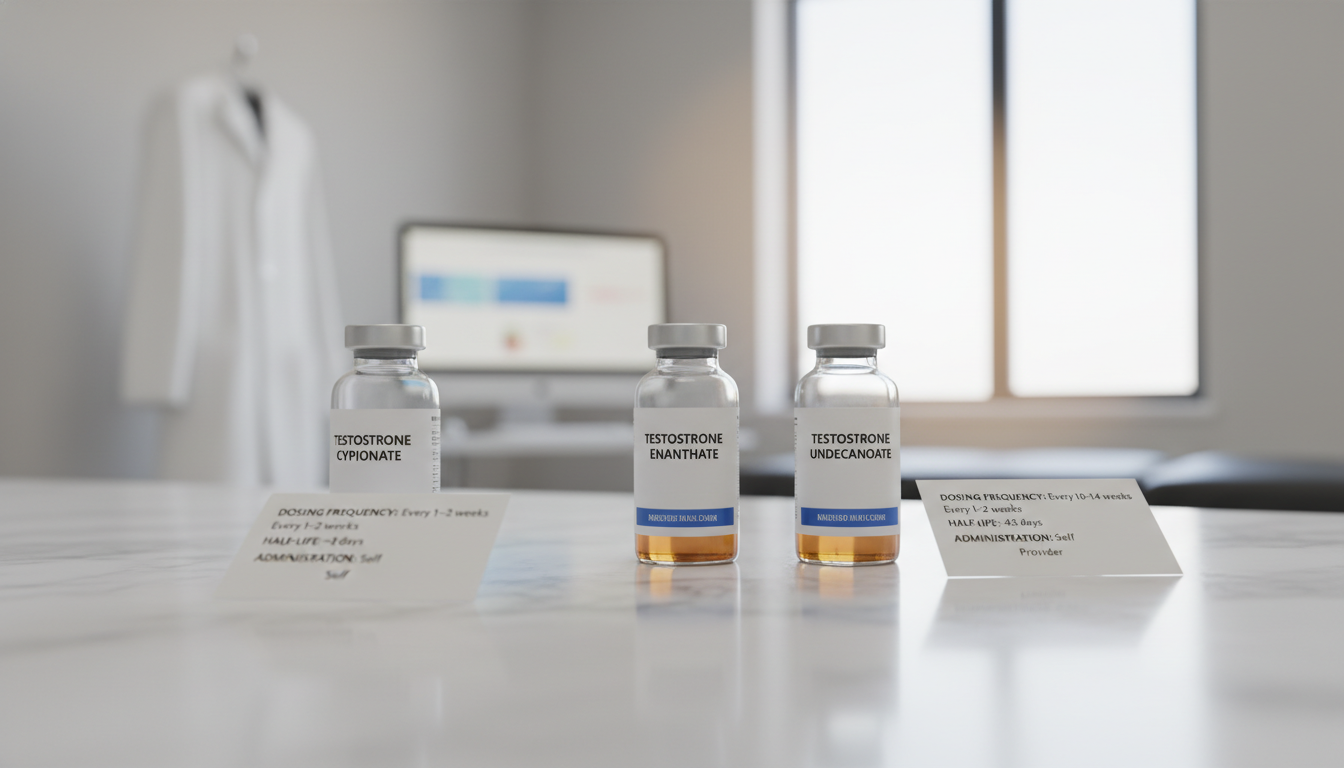
- Testosterone Cypionate: This is one of the most widely prescribed forms in the US. It's an oil-based injectable with a half-life of about 8 days. It's typically administered every one to two weeks, as detailed in its prescribing information for DEPO-Testosterone (accessdata.fda.gov). Many men and their doctors prefer to split the dose into smaller, more frequent injections (e.g., twice a week) to maintain more stable blood levels and minimize side effects.
- Testosterone Enanthate: Very similar to cypionate, enanthate has a slightly shorter half-life. The choice between cypionate and enanthate often comes down to provider preference and availability, as they are largely interchangeable. A 2025 study found it to be safe and effective, with outcomes comparable to longer-acting versions (PubMed).
- Testosterone Undecanoate (Aveed): This is a long-acting formulation that represents a major difference in treatment protocol. It's administered by a healthcare provider in their office. After an initial dose and a second dose four weeks later, injections are only needed once every 10 weeks (AveedUSA). This is a great option for men who want to avoid frequent self-injections. However, it requires in-office visits and is only available through a restricted safety program (REMS) due to a rare risk of serious lung and allergic reactions.
If you are needle-averse, other options like testosterone tablets for men exist, but injections remain a cost-effective and reliable standard.
What Is a Typical TRT Dosage Per Week?
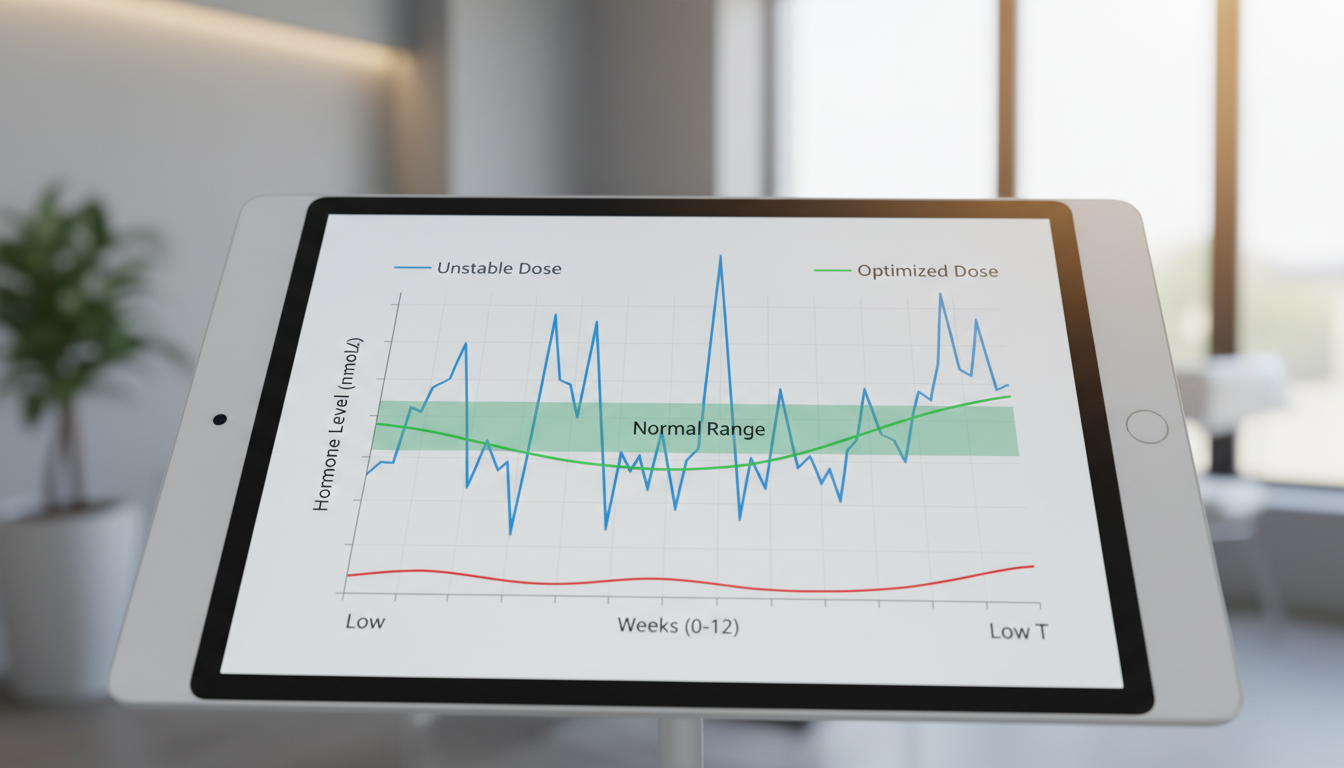
There is no one-size-fits-all TRT dosage per week. Your dose will be determined by your doctor based on your starting testosterone levels, your body weight, and your response to treatment. The goal is to bring your trough levels (your testosterone level right before your next injection) into the mid-normal range.
- For Testosterone Cypionate/Enanthate, a common starting dose is 100-200 mg every 7 to 14 days. However, modern protocols often favor 50-100 mg injected every 3.5 to 7 days to prevent the "peak and trough" effect that can cause mood swings and other side effects.
- For Testosterone Undecanoate (Aveed), the standard dose is 750 mg every 10 weeks after the initial loading phase. Clinical trials have shown this protocol keeps 94% of men within the normal testosterone range for the full 10-week period (Johns Hopkins University).
Understanding the Risks and Side Effects
While the testosterone injection benefits are clear, it's essential to understand the risks. Fortunately, recent data has clarified many long-standing concerns.
- Cardiovascular Health: A major fear was that TRT increased the risk of heart attacks. However, the large-scale TRAVERSE trial found no increase in major cardiovascular events for men on TRT compared to a placebo. As a result, in 2025, the FDA removed its most severe boxed warning about cardiovascular risk from testosterone labels (interactivewellness.com). A new warning about potential increases in blood pressure was added in early 2026, highlighting the need for regular monitoring.
- Prostate Health: Another long-standing concern was prostate cancer risk. The TRAVERSE trial also provided reassuring data here, showing no increased risk of high-grade prostate cancer after 33 months of therapy (MedPageToday).
- Other Side Effects:
- Increased Red Blood Cell Count (Hematocrit): Testosterone stimulates red blood cell production. If levels get too high (polycythemia), it can thicken the blood and increase clotting risk. This is managed through regular blood work and, if needed, blood donation.
- PIP (Post-Injection Pain): Some soreness or a small lump at the injection site is common, especially when you first start. This is known as
pip after testosterone injection. Proper injection technique and rotating sites can help minimize this. - Estrogen Conversion (Aromatization): The body can convert some testosterone into estrogen. High estrogen can lead to water retention, moodiness, and gynecomastia (enlarged breast tissue). This is managed by adjusting the TRT dose or, in some cases, using an aromatase inhibitor.
- Skin and Hair: Some men may experience acne or an acceleration of male pattern baldness if they are genetically predisposed. These are often considered
low dose testosterone side effectsthat can be managed by finding the lowest effective dose.
Want to see which TRT options fit your health profile and budget? Our free quiz takes 3 minutes and matches you with vetted providers who can guide you through the process.
What to Expect: Starting and Coming Off of TRT Injections
Making the decision to start TRT is significant. It's a medical therapy, not a temporary supplement. Understanding the an entire process, from the first injection to the possibility of stopping, is crucial. It helps you set realistic expectations and commit to the ongoing management required.
Starting Your TRT Regimen
The process of starting TRT is systematic and doctor-led. It’s more than just getting a prescription.
- Initial Diagnosis and Bloodwork: Before you get a single injection, your provider will require comprehensive blood tests. This measures your total and free testosterone, estradiol (estrogen), PSA (prostate-specific antigen), and a complete blood count (CBC) to establish a baseline. You can use a hormone symptom checker to prepare for this conversation.
- Choosing a Medication and Dose: Based on your bloodwork, symptoms, and lifestyle, you and your doctor will decide on the best medication. You'll discuss the pros and cons of short-acting injections like cypionate versus long-acting ones like Aveed.
- The First Few Months (The "Dial-In" Period): The initial months are about finding your optimal dose. You likely won't feel perfect overnight. Some benefits, like improved libido, may appear within a few weeks. Others, like changes in body composition, can take 3-6 months. Your doctor will schedule follow-up blood tests every 6-8 weeks to see how your body is responding and make small adjustments to your dose or frequency. This is a critical period for honest communication with your provider.
- Long-Term Management: Once your dose is dialed in, you'll settle into a long-term protocol. This involves regular injections and follow-up bloodwork every 6 to 12 months to ensure your levels remain stable and to monitor for any potential side effects. The results can be life-changing, as many TRT before and after accounts show.
Understanding the Difference Between TRT and Steroid Use
It's vital to understand the difference between TRT and testosterone used for illicit bodybuilding.
- TRT (Testosterone Replacement Therapy): This is a medical treatment to bring a man with clinically low testosterone back into the normal physiological range. Doses are conservative and aimed at health and well-being.
- Anabolic Steroid Use: This involves using testosterone and other compounds at "supraphysiological" doses (many times the normal amount) for extreme muscle growth. This is not medically supervised and carries severe health risks.
TRT is about health optimization, not extreme performance enhancement.
The Consequences of Coming Off of TRT
Many men ask, "What happens if I want to stop?" This is a critical question. Coming off of TRT is a significant process that must be medically supervised.
When you introduce external testosterone, your brain's pituitary gland stops sending signals (LH and FSH) to your testes to produce their own testosterone. Your natural production shuts down. If you simply stop injections, you will not only return to your previous low-T state, but you will likely plunge to even lower levels for a period of time, as your body struggles to restart its own production.
This crash can cause severe symptoms:
- Intense fatigue and lethargy
- Depression and anxiety
- Complete loss of libido
- Potential loss of muscle mass and gain of fat
To avoid this, a doctor will guide you through a "restart" protocol, sometimes called Post-Cycle Therapy (PCT). This involves using other medications, such as HCG (human chorionic gonadotropin), Clomiphene (Clomid), or Tamoxifen (Nolvadex), to stimulate your testes and pituitary gland to resume natural testosterone production. This process can take several weeks or months and success is not guaranteed, especially for older men or those who have been on TRT for many years. TRT should be viewed as a long-term, and often lifelong, commitment.
What to Consider Before Your First Injection
Before you commit to TRT, there are a few final, practical points to consider. This therapy can be a fantastic tool for the right person, but going in with open eyes is the best approach.
Cost and Accessibility:
The price of TRT can vary. According to a 2026 guide, injectable testosterone cypionate or enanthate generally costs between $30 to $80 per month for the medication itself when using insurance or discount cards (VidaVital MD). If you're looking for the price of a specific vial, you can check our guide on the testosterone cypionate 200mg price without insurance. Costs for doctor visits and regular bloodwork will be additional. Telehealth platforms have made access easier, but it's important to choose a reputable provider. While information on the testosterone injection price in Pakistan or other countries is highly variable, these US-based figures provide a solid baseline.
Finding the Right Provider: Your experience with TRT will be heavily influenced by your doctor's expertise. You need a provider who specializes in hormone optimization and stays current with the latest research. They should be thorough in their initial diagnosis and committed to careful follow-up monitoring. You can find online doctors that prescribe testosterone in the US or search for local specialists in our clinics directory. A good doctor will discuss all benefits and risks openly.
It's a Commitment: Remember, TRT is a therapy, not a quick fix. It requires a commitment to a consistent injection schedule, regular blood tests, and an ongoing relationship with your healthcare provider. The impressive testosterone injection benefits come from this consistency. You should also adopt a healthy lifestyle, including a balanced diet and regular exercise, to get the most out of your treatment. Combining TRT and peptides under medical guidance is another advanced strategy some men explore for further optimization.
Ready to explore your options with a professional? Take our free 3-minute quiz to get matched with a licensed provider who can create a plan for your specific needs and goals.
FAQs
What are the main testosterone injection benefits?
The main benefits of testosterone injections for men with confirmed hypogonadism include increased libido and sexual function, improved energy and mood, enhanced muscle mass and reduced body fat, and greater bone density. Recent 2025 research also suggests it may reduce the risk of kidney and cardiovascular problems in diabetic men.
How often do you need testosterone injections?
It depends on the type. Testosterone cypionate or enanthate are typically injected every 7-14 days, though many modern protocols use smaller, twice-weekly injections for more stable levels. Testosterone undecanoate (Aveed) is a long-acting option administered by a provider just once every 10 weeks after an initial loading period.
Is TRT safe in 2026?
TRT is considered safe for men with diagnosed hypogonadism when medically supervised. In 2025, the FDA removed the major cardiovascular risk warning from T products based on the TRAVERSE trial, which showed no increased risk of heart attack or stroke. However, a new warning for increased blood pressure was added in 2026, so monitoring is essential.
What is the difference between TRT and taking testosterone for bodybuilding?
TRT (Testosterone Replacement Therapy) is a medical treatment that uses conservative doses to restore a man's testosterone to a normal, healthy range to treat symptoms of deficiency. Bodybuilding use involves taking supraphysiological (abnormally high) doses to maximize muscle growth, which is not medically supervised and carries substantially higher health risks.
What happens if you stop taking TRT injections?
When you stop TRT, your body's natural testosterone production will be suppressed. This leads to a "crash" where your testosterone levels fall very low, causing a severe return of symptoms like fatigue, depression, and low libido. Restarting natural production requires a specific, doctor-supervised protocol that can take months.
Contributing to evidence-based peptide education and provider transparency.
Too many clinics, not enough clarity?
We don't sell peptides. Tell us your goals and we'll connect you with a vetted provider who can figure out what actually makes sense for you.
See what's right for youRelated articles
Which Protein Supplements for Muscle Growth Actually Work?
Tired of the hype? Find out which protein supplements for muscle growth are backed by science and learn how to pick the right one for your goals.
Hormone TherapyWhat Are the Real Magnesium Glycinate Benefits?
Uncover the science-backed magnesium glycinate benefits. We explore its effects on sleep, stress, and muscle function and explain why it's a top choice.
Hormone TherapyWhat B12 Shot Benefits Can You Actually Expect?
B12 shots are often hyped for energy, but the real b12 shot benefits are more specific. Learn who is a true candidate and what results to expect.