What Actually Happens When You Take HGH Injections?
Curious about HGH injections? We cut through the hype to explain the real benefits, potential side effects, and the legitimate process for getting a prescription.
This content is for informational purposes only and does not constitute medical advice.
An interest in optimizing health and performance has brought a lot of attention to hormone therapies. Among them, HGH injections are one of the most talked about and misunderstood. While stories of athletes and celebrities using human growth hormone circulate widely, the reality of accessing and using this therapy is far more complex. For anyone with a a diagnosed deficiency, HGH can offer significant benefits. But for others exploring wellness options, the high cost and strict regulations are major barriers. This guide breaks down what HGH injections are, how much they actually cost in 2026, and details the more accessible alternatives that are gaining popularity.
An Introduction to Growth Hormone Therapy
Human Growth Hormone (HGH), or somatropin, is a critical hormone produced by the pituitary gland. It plays a key role in growth during childhood and adolescence. In adults, it affects metabolism, body composition, cell repair, and overall vitality. When the body doesn't produce enough, it can lead to a condition called Growth Hormone Deficiency (GHD), which may cause symptoms like increased body fat, reduced muscle mass, fatigue, and poor quality of life.
Therapy for this condition involves replacing or stimulating the body's own growth hormone. This is where treatments like HGH injections and peptide therapies come into play. While prescription HGH directly replaces the hormone, other therapies called secretagogues work by encouraging your own body to produce more.
Understanding the difference is key to making an informed decision. This article will cover the latest options available in 2026, from traditional daily injections to new weekly formulations and more affordable peptide alternatives.
What Are HGH Injections & Why Are They Prescribed?
True HGH injections contain recombinant human growth hormone, a synthetic version called somatropin that is identical to the hormone produced by your body. It is a powerful biologic drug and a controlled substance, meaning its prescription and use are tightly regulated by the FDA.
HGH is not a casual anti-aging or bodybuilding supplement. It is an FDA-approved medication for a few specific conditions:
- Adult Growth Hormone Deficiency (AGHD): This is the primary indication for adults, diagnosed through specific blood tests (like IGF-1 levels) and stimulation tests.
- Pediatric Growth Hormone Deficiency: For children who are not growing at a normal rate.
- Other Specific Conditions: This includes Turner syndrome, Prader-Willi syndrome, chronic kidney disease, and muscle wasting associated with HIV/AIDS.
In a recent development this year, the FDA approved Novo Nordisk’s once-weekly Sogroya® for three additional pediatric conditions, including Idiopathic Short Stature (ISS) and growth failure associated with Noonan Syndrome (PRNewswire). This decision expands options for children but highlights that approvals remain tied to specific, diagnosed medical needs.
Getting a prescription for HGH involves a comprehensive evaluation by an endocrinologist or hormone specialist. This process almost always includes detailed blood work and a physical exam to confirm a clinical need. Because of its potential for misuse, doctors cannot prescribe it for unapproved uses like enhancing athletic performance or for general anti-aging purposes.
For many people exploring hormone optimization, their journey may also involve looking into other therapies like TRT. Men with GHD sometimes have co-occurring low testosterone. A physician might create a plan that includes both. While discussing hormone therapies, it's common to hear about a specific testosterone cypionate dosage, but it is vital to know that getting this hormone is not as simple as asking about CVS testosterone availability. Just like HGH, testosterone requires a prescription and close medical supervision. You can learn more about what TRT is and how it works in our detailed guide.
Not sure which treatment is right for you? Take our free quiz to get matched with a provider who can guide you through the diagnostic process.
The Real Cost of HGH Injections vs. Alternatives in 2026
The number one question most people have about HGH injections is about the price. The cost is substantial and often the biggest factor in any treatment decision. In 2026, the price landscape for growth hormone therapies has a wide range, from very expensive prescription drugs to more affordable alternatives.
Prescription HGH (Somatropin): Brand-name HGH injections are by far the most expensive option. According to a 2026 cost analysis from PeptideClinicLocator, a monthly supply of Somatropin can cost between $500 and $3,000. This high price is due to complex manufacturing, brand patents, and its status as a biologic drug. Insurance may cover it for FDA-approved conditions, but coverage is never guaranteed and often requires significant documentation.
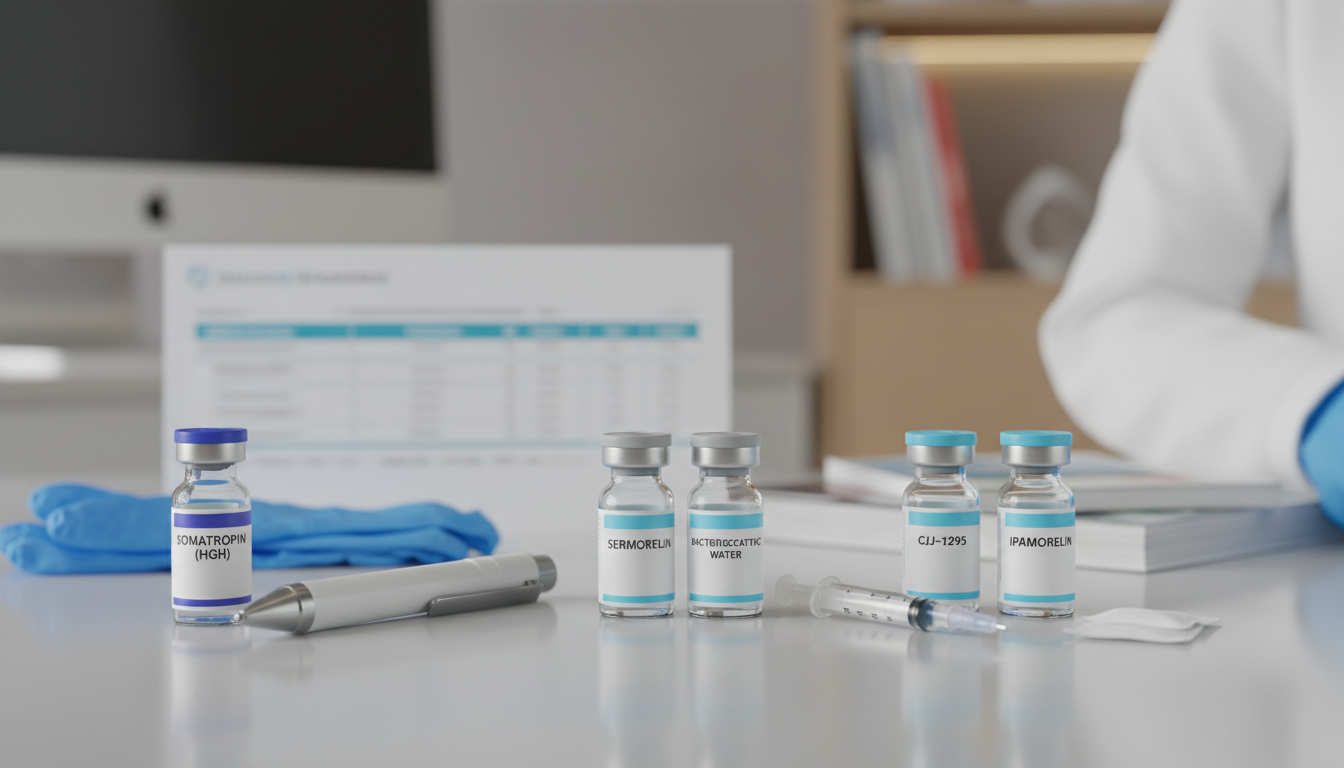
Growth Hormone Secretagogue Peptides: Because of the high cost and strict regulation of HGH, many people turn to growth hormone secretagogues. These are peptides that signal your pituitary gland to release its own growth hormone. They don't replace GH but instead support your body’s natural production. This approach is considered by many to be a more sustainable and affordable way to address flagging GH levels. You can learn more about peptides in our complete guide to what peptides are.
Here’s a breakdown of the most common alternatives in 2026:
-
Sermorelin: This is one of the most well-known and prescribed secretagogues. According to PeakedLabs, clinics offer Sermorelin programs ranging from $99 to over $500 per month. Another 2026 report from PeptideClinicLocator puts the typical monthly cost between $150 and $400. The initial month is often more expensive, ranging from $350 to $1,100, because it includes consultations and comprehensive lab work. Sermorelin is not covered by insurance, but it is eligible for HSA/FSA payment when prescribed by a doctor. Industry insiders are watching for an HHS reclassification expected in the second half of 2026, which may stabilize pricing by allowing more pharmacies to compound it legally.
-
CJC-1295 and Ipamorelin: This combination is another popular option, often considered more advanced than Sermorelin alone. A 2026 analysis from PeakedLabs notes that a monthly supply of this stack typically costs $200 to $350. A realistic six-month budget for a quality telehealth program, including all fees and labs, falls between $1,400 and $2,500. For a deep dive, check out our guide on CJC-1295 + Ipamorelin.
-
GHRH (Growth Hormone-Releasing Hormone): It's important to clarify the status of GHRH. It is available for research purposes only and is not FDA-approved for therapeutic use. As a result, its main legal use is within clinical research studies. For research purposes, it costs approximately $150 to $400 per month, with no insurance or HSA/FSA eligibility (PeptideClinicLocator).
Comparing these costs and benefits can be confusing. To find out which approach might align with your goals and budget, take our free 3-minute quiz to get matched with a provider.
The Rise of Weekly HGH Injections & Long-Acting GH Treatments
For decades, the standard of care for growth hormone deficiency has been daily subcutaneous injections. While effective, the need for daily shots can be a significant burden for patients, especially children and their families. This has driven a major push in medical research toward developing long-acting growth hormone (LAGH) treatments that only need to be administered once a week. In 2026, several of these weekly options are becoming more established.
This shift represents a significant improvement in quality of life for patients who require HGH therapy. Here are the key developments:
-
Sogroya® (Somapacitan-beco): Developed by Novo Nordisk, Sogroya® was one of the first once-weekly HGH treatments to gain FDA approval. This year, its use was expanded to three new pediatric indications based on the REAL8 study. The study confirmed that once-weekly Sogroya® was just as effective as daily somatropin injections at increasing annualized height velocity, with a comparable safety profile (PRNewswire). This offers a much more convenient option for families managing conditions like Idiopathic Short Stature.
-
Somatrogon: Another promising once-weekly option, somatrogon has been the subject of extensive research. A phase 3 study published in PubMed involving 228 children with GHD found that weekly somatrogon was noninferior to daily somatropin. The children on the weekly dose grew an average of 10.10 cm per year, compared to 9.78 cm per year for those on daily doses. The safety profiles were nearly identical. Research is also underway for adults. A recent phase 3 study highlighted by UCLA Health investigated the safety and efficacy of weekly somatrogon for adults with GHD, with a focus on its effects on body composition and IGF-I levels.
-
TransCon® hGH (Lonapegsomatropin): Ascendis Pharma also has a weekly competitor. Recent topline results from its Phase 2 trial in children with Turner syndrome showed that its once-weekly TransCon® hGH achieved an annualized height velocity of 9.05 cm/year, which was comparable to the 9.04 cm/year seen with daily HGH. The safety and tolerability were also similar.
These advancements show that the future of HGH therapy is moving toward less frequent dosing without sacrificing efficacy. While these new branded options are still expensive, they signal a trend toward more manageable treatment protocols.
The science of hormone therapy is always advancing. If you want to connect with a provider who stays on top of these latest developments, our free quiz can match you with a vetted clinical team.
What to Consider Before Starting Treatment
Embarking on any hormone therapy is a major decision that requires careful thought and professional guidance. Whether you are considering prescription HGH or peptide alternatives, here are the key steps and considerations.
First and foremost, never attempt to self-diagnose or self-prescribe. The only safe and legal way to access these therapies is through a licensed medical provider. When searching for a doctor, it is important to find a legitimate peptide clinic or a board-certified endocrinologist who specializes in hormone health. You can browse qualified providers in our clinics directory.
A quality provider will focus on the entire clinical process, not just the initial price. As a 2026 guide from PeakedLabs points out, factors like clinician continuity, the reliability of medication refills, and how quickly your provider can make adjustments are crucial for successful outcomes.
The process typically begins with an in-depth consultation to discuss your symptoms, health history, and goals. This is followed by comprehensive blood work to measure key markers, primarily Insulin-like Growth Factor 1 (IGF-1), which is used to assess growth hormone status. You can learn more about what to expect from this type of testing by reading about how to test your testosterone levels, as the process is similar.
Finally, create a realistic budget. As discussed, these therapies are an ongoing financial commitment. A six-month program for Sermorelin can cost anywhere from $750 to $3,700, while a CJC-1295/Ipamorelin stack can run from $1,400 to $2,500. Before starting, it is also smart to focus on foundational health. Lifestyle factors like diet, exercise, and sleep are critical for hormone balance. Before exploring injections, some people look into natural ways to support hormone health. While many myths exist, like the popular oysters and testosterone connection, a healthy lifestyle is always the best place to start.
Ready to explore your options with a professional? Take our free 3-minute quiz to get matched with a licensed provider who can design a plan for you.
FAQs
How much do HGH injections cost per month?
Prescription HGH injections (brand name Somatropin) typically cost between $500 and $3,000 per month in 2026. More affordable alternatives that stimulate your body's own GH production, like the peptide Sermorelin, generally range from $150 to $400 per month.
Can you get HGH injections for anti-aging?
No, the FDA has not approved HGH for anti-aging purposes. It is a controlled substance that can only be legally prescribed for specific, diagnosed medical conditions, such as adult growth hormone deficiency confirmed by blood tests.
Are weekly HGH injections better than daily?
In clinical trials, once-weekly HGH injections like Sogroya® have been proven to be as effective and safe as traditional daily injections. Their primary benefit is greater convenience, which can help patients stick to their treatment plan. The best option depends on a doctor's recommendation and individual patient needs.
Can I use my HSA/FSA for Sermorelin?
Yes. If a licensed physician prescribes Sermorelin to treat a medical condition, the cost is a qualified medical expense. This means it is typically eligible for payment using funds from a Health Savings Account (HSA) or Flexible Spending Account (FSA).
Can you combine HGH injections with testosterone?
In cases where a patient is diagnosed with both growth hormone deficiency and low testosterone, a doctor may prescribe both therapies together. Combining treatments, such as using a standard testosterone cypionate dosage with HGH, must be done under the strict supervision of a qualified medical provider to ensure safety and effectiveness.
Contributing to evidence-based peptide education and provider transparency.
Too many clinics, not enough clarity?
We don't sell peptides. Tell us your goals and we'll connect you with a vetted provider who can figure out what actually makes sense for you.
See what's right for youRelated articles
Popular Peptides for Men & What They're Used For
From BPC-157 for healing to CJC-1295 for growth, we explain the most common peptides for men and how they could benefit your health and fitness goals.
Growth HormoneDo Peptide Injections for Muscle Growth Actually Work?
Considering peptide injections for muscle growth? We explain the science, the most popular stacks, and the real risks vs. benefits for building lean mass.
Growth HormoneWhat Does Human Growth Hormone Actually Do for You?
Curious about human growth hormone? We explain how this vital hormone works, its role in metabolism, and why it's so debated for anti-aging and performance.