Is Tirzepatide a Peptide or GLP-1? It's Both.
Searching 'is tirzepatide a peptide or glp 1'? We explain the simple answer (it's both!) and what that means for how this dual-action drug really works.

This content is for informational purposes only and does not constitute medical advice. Consult with a qualified healthcare provider before making any decisions about your health or treatment.
The world of metabolic health is buzzing with new treatments, and it's easy to get lost in the terminology. You might hear terms like "peptide" and "GLP-1" used interchangeably, leading to the common question: is tirzepatide a peptide or GLP-1? The simple answer is both. Tirzepatide is a synthetic peptide that functions as a GLP-1 receptor agonist, but its unique power comes from also acting on another receptor, GIP.
This dual-action mechanism sets it apart from single-action GLP-1 drugs like semaglutide (Ozempic, Wegovy). Understanding this difference is key to knowing why tirzepatide has become such a significant option for managing weight and type 2 diabetes. In this guide, we'll break down the science in simple terms, compare tirzepatide to other GLP-1s, and help you understand which option might be right for you.
Tirzepatide vs. Traditional GLP-1 Agonists: A Quick Comparison
While tirzepatide does act on the GLP-1 receptor, it's not just a GLP-1 agonist. Its dual-receptor action makes it a first-in-class medicine. Here’s a quick look at how it stacks up against a traditional GLP-1 agonist like semaglutide.
| Feature | Tirzepatide (Zepbound/Mounjaro) | Pure GLP-1 Agonist (e.g., Semaglutide) |
|---|---|---|
| Class | Dual GLP-1/GIP Receptor Agonist Peptide | GLP-1 Receptor Agonist Peptide |
| Mechanism | Activates both GLP-1 and GIP hormone pathways | Activates only the GLP-1 hormone pathway |
| Primary Use | Type 2 Diabetes, Chronic Weight Management, Sleep Apnea | Type 2 Diabetes, Chronic Weight Management |
| Avg. Weight Loss | Up to 22.5% of body weight in clinical trials | Around 15% of body weight in clinical trials |
| Administration | Once-weekly subcutaneous injection | Once-weekly subcutaneous injection |
| FDA Approvals | Diabetes (2022), Weight Loss (2023), Sleep Apnea (2024) | Diabetes (Ozempic), Weight Loss (Wegovy) |
| List Price (2026) | ~$1,060 per month | ~$1,350 per month (Wegovy) |
Not sure which treatment is right for you? The differences can seem small, but they lead to very different outcomes. Take our free quiz to get matched with a provider who can help you understand your options.
What Exactly Is a Peptide?
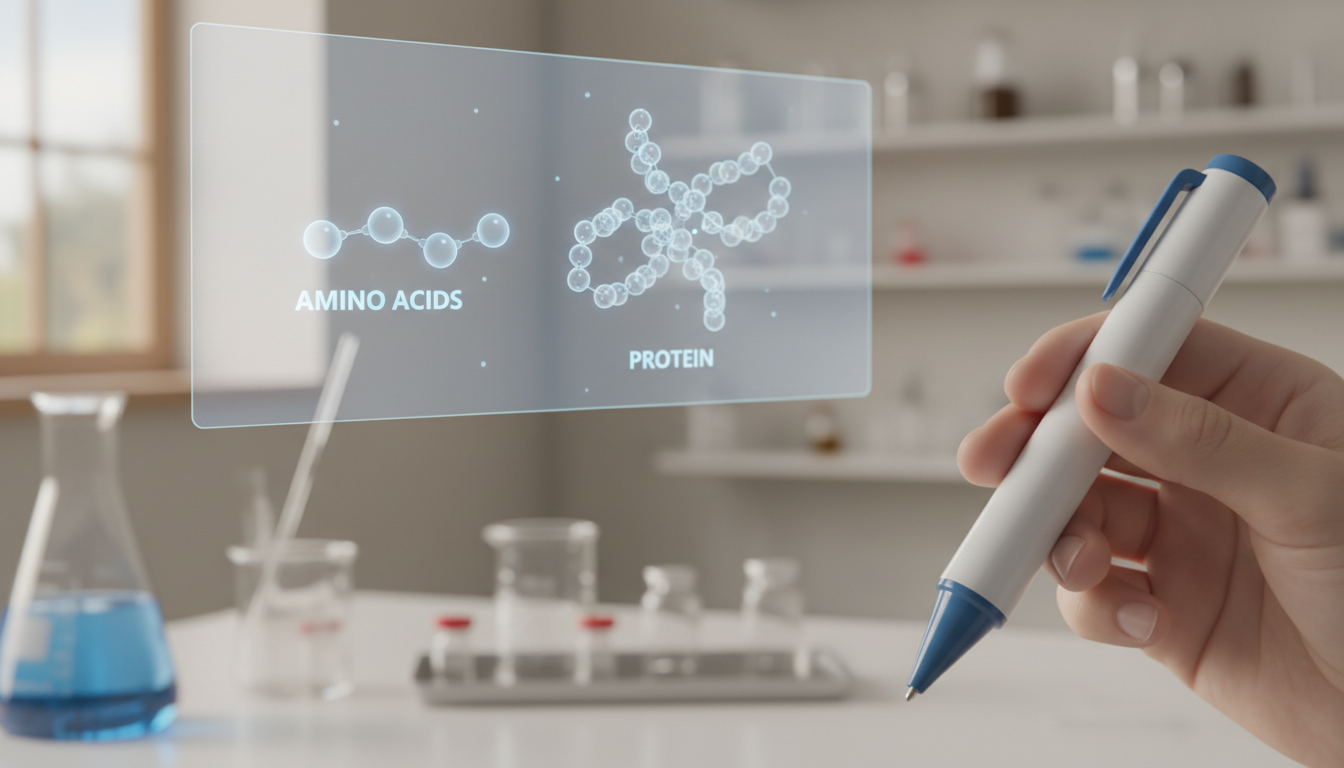
Before we go further, let's clarify what a peptide is. Think of peptides as small proteins. Both are made from chains of amino acids, the building blocks of life. The main difference is size. Peptides are short chains, typically containing 50 or fewer amino acids, while proteins are much longer and more complex.
Your body naturally produces thousands of different peptides, each with a specific job.
- Insulin is a peptide hormone that regulates blood sugar.
- Collagen peptides are famous for their role in skin health.
- Ghrelin is a peptide that tells your brain when you're hungry.
These natural communicators are why scientists have been able to create synthetic peptides for therapeutic use. By designing specific amino acid sequences, researchers can create molecules that mimic or block certain bodily functions. This is the foundation of modern peptide therapy.
It is also important to remember that not all peptides are beneficial or for therapeutic use. For example, researchers study what is amyloid beta peptide, a naturally occurring peptide that can clump together in the brain and is associated with the development of Alzheimer's disease. This shows the vast and varied roles peptides play in our biology, from metabolic health to neurological conditions. Tirzepatide is a great example of a synthetic peptide designed for a positive therapeutic effect.
What Is a GLP-1 Receptor Agonist?
GLP-1 stands for "glucagon-like peptide-1." It is a natural hormone your gut releases after you eat. Its job is to help regulate your blood sugar and appetite in several ways:
- It tells your pancreas to release insulin, which helps your cells absorb glucose from your bloodstream.
- It slows down gastric emptying, which is how fast food leaves your stomach. This makes you feel full longer.
- It signals to your brain that you are full, reducing your desire to keep eating.
A GLP-1 receptor agonist is a drug that mimics the action of this natural hormone. By binding to and activating GLP-1 receptors in your body, these medications can significantly enhance these effects. This leads to better blood sugar control and substantial weight loss.
The most well-known GLP-1 receptor agonists are part of the "incretin mimetics" class of drugs. Semaglutide, the active ingredient in Ozempic and Wegovy, is a prime example. You can learn more about this class of drugs in our guide to GLP-1 medications explained. These medications have been highly effective, but the development of tirzepatide took this mechanism a step further.
Is Tirzepatide a Peptide or GLP-1? Understanding Its Dual-Action Mechanism
So, back to our main question: is tirzepatide a peptide or GLP-1? As we've established, it's a peptide that acts as a GLP-1 agonist. But the full story is that it’s a dual-agonist, which is what makes it so special. Tirzepatide activates both GLP-1 receptors and GIP receptors.
GIP, or glucose-dependent insulinotropic polypeptide, is another incretin hormone released by the gut after eating. Like GLP-1, it helps regulate blood sugar and energy balance. For a long time, scientists focused primarily on GLP-1. Tirzepatide was the first approved medication to successfully target both pathways at once.
Tirzepatide's Structure: A 39-Amino-Acid Peptide
Tirzepatide is a synthetic peptide made of a single chain of 39 amino acids (PeptideBond.com). Its structure was carefully engineered by scientists at Eli Lilly to bind to both GLP-1 and GIP receptors. It has a half-life of about five days, which is why it can be conveniently administered as a once-weekly injection, similar to other peptide injections.
The GLP-1 and GIP "One-Two Punch"
By acting on both receptors, tirzepatide creates a more powerful effect than a GLP-1 agonist alone. Think of it as a "one-two punch" for metabolic control.
- The GLP-1 action provides strong appetite suppression and slows digestion.
- The GIP action also contributes to insulin release and may enhance fat reduction and energy expenditure in ways that are still being explored.
This synergistic effect appears to be the reason for tirzepatide's superior results in clinical trials. It doesn't just do one job; it tackles metabolic dysfunction from two different angles.
Effectiveness Compared: Why Dual-Action Leads to Greater Weight Loss
The data from clinical trials is clear. The dual-agonist approach of tirzepatide leads to more significant weight loss than single-agonist GLP-1s.
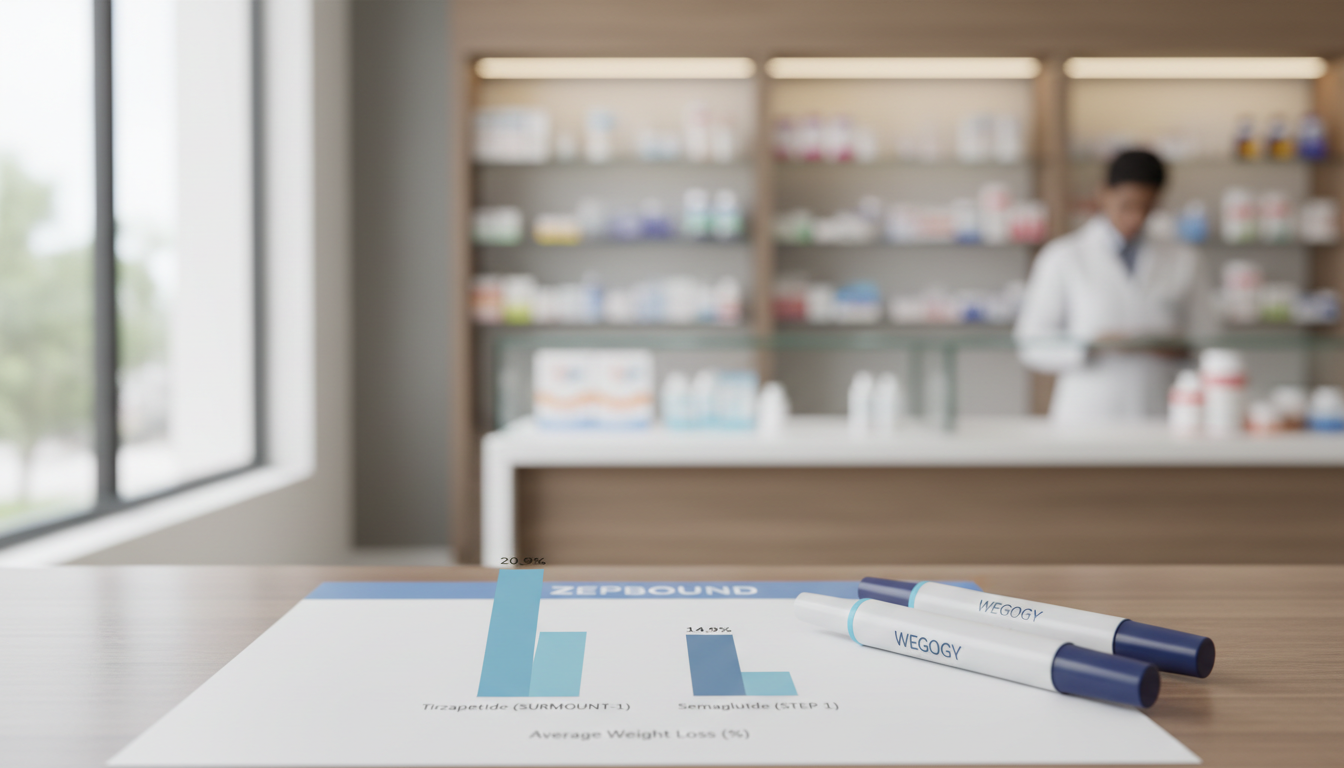
The landmark SURMOUNT-1 trial studied tirzepatide in individuals with obesity but without diabetes. The results were striking. At the highest dose (15 mg), participants achieved an average weight loss of 20.9% of their body weight over 72 weeks (Formblends). A follow-up analysis showed a mean weight loss of 22.5%, with nearly two-thirds of participants losing at least 20% of their body weight (PeptideBond.com).
To put that in perspective, trials for semaglutide (Wegovy) showed an average weight loss of around 15%. While 15% is still a fantastic result, the numbers for tirzepatide set a new benchmark.
The SURMOUNT program included several other key studies:
- SURMOUNT-2: Focused on people with both type 2 diabetes and obesity. They achieved an average weight loss of 14.7% at the 15mg dose (Peptidings). This is notable because weight loss is often harder for people with diabetes.
- SURMOUNT-3: Combined tirzepatide with an intensive lifestyle intervention, leading to a total average weight loss of 26.6% (Formblends).
- SURMOUNT-4: Demonstrated that stopping the medication led to an average weight regain of 14%, highlighting that these are long-term treatments for a chronic condition (Formblends).
This powerful efficacy is why tirzepatide gained so much attention and secured an FDA approval for chronic weight management in November 2023 under the brand name Zepbound. This was followed by another pioneering approval in December 2024 for treating moderate-to-severe obstructive sleep apnea in adults with obesity, making it the first drug approved for this specific obesity-related condition (PeptideBond.com). For a deeper dive into the two medications, our semaglutide vs. tirzepatide article offers a head-to-head breakdown.
Side Effects Compared: Tirzepatide vs. Pure GLP-1 Agonists
Because tirzepatide and pure GLP-1 agonists work on similar gut hormone pathways, their side effect profiles are very similar. The most common side effects are gastrointestinal in nature. They are typically mild to moderate and tend to be most pronounced when you first start the medication or increase your dose.
Here’s a comparison of common side effects reported in clinical trials for the highest doses of tirzepatide and semaglutide.
| Side Effect | Tirzepatide (Zepbound 15mg) | Semaglutide (Wegovy 2.4mg) |
|---|---|---|
| Nausea | ~29-33% | ~44% |
| Diarrhea | ~23-30% | ~30% |
| Vomiting | ~11-13% | ~24% |
| Constipation | ~9-11% | ~24% |
| Decreased Appetite | ~15-20% | ~6% |
| Indigestion | ~8-9% | ~10% |
Sources: Zepbound (Formblends) and Wegovy prescribing information.
As you can see, the types of side effects are nearly identical. Interestingly, some data suggests that rates of nausea and vomiting may be slightly lower with tirzepatide compared to high-dose semaglutide, though both can cause significant GI upset for some users.
Most people find that these side effects lessen or resolve after the first 8-12 weeks as their body adjusts (Formblends). Your provider will use a slow dose titration schedule, starting low and going up every four weeks, to help manage these effects. You can track your dosing schedule with our dose titration calculator.
Is Tirzepatide a Peptide or GLP-1? A Look at the Cost in 2026
When considering the question is tirzepatide a peptide or GLP-1, the difference in mechanism also leads to a difference in market positioning and cost. As of early 2026, the cost landscape for these medications continues to evolve.
The list price for Zepbound (tirzepatide) launched at approximately $1,060 per month, which was about 20% less than the list price of its main competitor, Wegovy (semaglutide), at the time (AJMC). The actual cost of tirzepatide for a patient can vary dramatically based on insurance coverage. Eli Lilly offers a savings card for commercially insured patients, which can bring the monthly cost down to as little as $25 (Telehealth Ally).
For those without insurance coverage, prices can be challenging. However, programs like LillyDirect offer a cash-pay path. Through LillyDirect, patients may be able to access Zepbound for a cash price of around $299 per month (Telehealth Ally). This has made it a more accessible option for some compared toother branded GLP-1s. You can explore a full breakdown of the monthly cost of tirzepatide here.
A new competitor entered the market in April 2026. The FDA approved Foundayo (orforglipron), an oral, once-daily GLP-1 agonist from Eli Lilly. Unlike tirzepatide and semaglutide, orforglipron is not a peptide; it's a "small molecule" that can be absorbed in pill form without food restrictions. Clinical trials showed it produced around 15% body weight loss, similar to semaglutide. Its major advantage is price and convenience, with a starting cash price of $149 per month (NPR & Houston Public Media).
This new oral option creates a three-tiered market:
- High Efficacy Injectable (Tirzepatide): Highest weight loss, higher price.
- Standard Efficacy Injectable (Semaglutide): Good weight loss, high price.
- Convenient Oral (Orforglipron): Good weight loss, much lower price, and no needles.
Who Should Choose Tirzepatide vs. a Pure GLP-1 Agonist?
Choosing the right medication is a decision you should make with your healthcare provider. However, here are some scenarios that might guide your conversation.
Consider Tirzepatide (Zepbound) if:
- Maximum weight loss is your top priority. With average weight loss exceeding 20% in trials, tirzepatide is currently the most effective approved medication for weight loss.
- You have both type 2 diabetes and obesity. Tirzepatide has shown excellent results in improving blood sugar (A1c) while also producing significant weight loss in this population.
- You have obesity-related obstructive sleep apnea. Zepbound is the first and only medication specifically approved for this condition as of 2026, making it a clear choice for those who fit this profile.
- You tried a pure GLP-1 agonist like semaglutide and didn't get the results you wanted. The dual-action mechanism may provide the extra push you need.
Consider a Pure GLP-1 Agonist (like Semaglutide or Orforglipron) if:
- Your insurance strongly prefers it. Sometimes, formulary coverage is the deciding factor.
- You are seeking an oral option. The new pill, Foundayo (orforglipron), offers the convenience of a once-daily tablet without injections and at a much lower cash price point. This could be a great starting point for many.
- You had intolerable side effects on tirzepatide. While the side effect profiles are similar, some individuals may tolerate one medication better than another.
- Cost is your primary barrier. The lower price of orforglipron ($149/month) makes it the most accessible option for those paying out-of-pocket.
Want to see which options fit your budget and personal health goals? The world of GLP-1s is complex, but help is available. Our free 3-minute quiz matches you with vetted providers who can create a plan for you.
Ready to Take the Next Step?
Understanding the nuances between these powerful medications is the first step toward making an informed decision about your health. Tirzepatide's dual-action peptide structure represents a significant advancement in metabolic medicine, offering new levels of efficacy for weight loss, diabetes, and related conditions.
If you're ready to explore your options with a medical professional, RxFox can connect you.
Take our free quiz to get matched with a licensed provider who can help.
FAQs
Is tirzepatide a peptide?
Yes, tirzepatide is a synthetic peptide. It is specifically a 39-amino-acid polypeptide designed to mimic the effects of two natural gut hormones, GLP-1 and GIP. This makes it a first-in-class dual-agonist peptide.
What is tirzepatide peptide used for?
Tirzepatide is FDA-approved for several conditions. It is used as Mounjaro to improve blood sugar control in adults with type 2 diabetes. It is used as Zepbound for chronic weight management in adults with obesity or who are overweight with a weight-related health issue. As of late 2024, Zepbound is also approved to treat moderate-to-severe obstructive sleep apnea in adults with obesity.
Is tirzepatide stronger than a normal GLP-1?
In terms of weight loss, clinical data shows tirzepatide is more effective than traditional single-agonist GLP-1 medications like semaglutide. The SURMOUNT-1 trial showed tirzepatide can lead to an average body weight loss of over 20%, compared to the roughly 15% seen in trials for semaglutide.
Can I get tirzepatide online?
Yes, you can get a prescription for tirzepatide (Zepbound or Mounjaro) through a licensed telehealth provider. Platforms like RxFox can connect you with online GLP-1 providers who will conduct a virtual consultation to see if you are a candidate, and if appropriate, send a prescription to your pharmacy or a compounding pharmacy.
Contributing to evidence-based peptide education and provider transparency.
Too many clinics, not enough clarity?
We don't sell peptides. Tell us your goals and we'll connect you with a vetted provider who can figure out what actually makes sense for you.
See what's right for youRelated articles
A Step-by-Step Gelatin Recipe for Weight Loss
Seen the viral "pink trick"? We break down the simple gelatin recipe for weight loss. Learn our step-by-step method to help manage hunger and feel full.
GLP-1 Weight LossOzempic Cost in 2026: What You'll Actually Pay
The 2026 Ozempic cost can be anywhere from $25 to over $1,400 a month. Discover why and learn how to find savings with or without insurance coverage.
GLP-1 Weight LossHow Zep Weight Loss Works and What to Expect
Thinking about zep weight loss? We cover how this drug works, what realistic results look like, common side effects, and how it compares to Ozempic.