How to Actually Rebalance Hormones for Weight Loss
Frustrated by a weight loss stall? It's likely not your fault. This guide shows you how to rebalance hormones for weight loss and finally get the scale moving.

This content is for informational purposes only and does not constitute medical advice.
You’ve been doing everything right. You’re eating cleaner, hitting the gym, and maybe even started on a GLP-1 medication. Yet, the scale refuses to budge, or at least not as much as you hoped. This frustrating plateau is a common experience, and often, the reason isn’t a lack of willpower. It’s a hidden saboteur: your hormones. The key to unlocking your best results may lie in a strategy to rebalance hormones for weight loss. This guide will explain why your hormones could be holding you back and how combining hormone optimization with modern weight loss therapies can create powerful, sustainable results in 2026.
The Unseen Barrier to Weight Loss: Your Hormones
For decades, we were told weight loss was a simple math problem: calories in versus calories out. If you're struggling, it's easy to feel like you're failing that equation. But the body is far more complex than a calculator. Hormones are the chemical messengers that run the entire show, dictating your metabolism, appetite, energy levels, and where your body stores fat. When they're out of sync, they can make weight loss feel like an uphill battle in a sandstorm.
According to insights from medical weight loss programs, even powerful medications like Semaglutide and Tirzepatide can be less effective if underlying hormonal issues are not addressed (Fond & Faye Medspa). Think of it like trying to drive a sports car with the wrong kind of fuel. The engine is powerful, but it can’t perform optimally.
Here are the key hormonal players that can disrupt your weight loss:
-
Insulin: Known as the fat-storage hormone, insulin’s job is to move glucose from your blood into your cells for energy. When you have insulin resistance, your cells don’t respond properly. Your pancreas pumps out even more insulin, and your body enters a state of constant fat storage, making it very difficult to burn fat.
-
Cortisol: Your "stress hormone." In short bursts, it’s helpful. But chronic stress from work, poor sleep, or life in general keeps cortisol levels high. This can increase appetite, trigger cravings for unhealthy food, and direct your body to store fat, particularly around your abdomen.
-
Thyroid Hormones (T3 and T4): Your thyroid is the master of your metabolism. If it's underactive (hypothyroidism), it slows down your metabolic rate. This means you burn fewer calories at rest, leading to fatigue, sluggishness, and stubborn weight gain that resists diet and exercise.
-
Estrogen and Progesterone: The balance of these female sex hormones is crucial. During perimenopause and menopause, dropping estrogen levels can cause the body to store more visceral fat around the organs, which is particularly risky for health. Learn more about your options with our guide to the best online HRT for menopause.
-
Testosterone: While often seen as a male hormone, testosterone is vital for women, too. Low testosterone in both men and women can lead to a loss of muscle mass. Since muscle is metabolically active and burns calories, losing it can slow your metabolism and make you more prone to gaining fat. If you notice symptoms, it's worth exploring the causes of decreased testosterone.
Feeling like one of these might be your issue? It can be confusing to figure out on your own. Take our free quiz to get matched with a provider who can help you understand your hormonal health.
The GLP-1 Revolution: A New Era for Weight Management
Over the last few years, a class of medications called GLP-1 receptor agonists has completely changed medical weight management. Originally developed for type 2 diabetes, drugs like semaglutide (Ozempic, Wegovy) and tirzepatide (Mounjaro, Zepbound) have proven incredibly effective for weight loss. They are a major advancement and offer a way to help rebalance hormones for weight loss by targeting key metabolic pathways.
GLP-1s work by mimicking a natural gut hormone that your body releases after you eat. This hormone does several things:
- Slows down how quickly your stomach empties, making you feel fuller for longer.
- Sends signals to your brain’s appetite center, reducing hunger and cravings.
- Helps your pancreas release the right amount of insulin when your blood sugar is high.
This has made them a go-to tool. But the landscape of GLP-1s is evolving rapidly. Here’s a look at the top options in 2026:
The Injectable Powerhouses:
- Zepbound (tirzepatide): Currently a market leader, Zepbound is a dual-agonist that targets both GLP-1 and GIP receptors. In trials, it showed an average weight loss of 34-48 pounds over 72 weeks (Found). A 2026 head-to-head trial also found Zepbound superior to a competitor, CagriSema, showing 25.3% weight loss compared to 22.2% (Telehealth Ally). It also had a better side effect profile.
- Wegovy (semaglutide): The first GLP-1 to gain major traction for weight loss, semaglutide is still a highly effective option. You can learn more about how it compares in our semaglutide vs. tirzepatide breakdown.
The Rise of GLP-1 Appetite Suppressant Pills:
- Foundayo (orforglipron): For those who prefer not to do injections, the options are growing. In 2026, Eli Lilly's Foundayo received FDA approval, becoming the second oral GLP-1 for weight loss. It can be taken anytime, with or without food, and trials showed an average weight loss of 12.4% body weight, or about 27 pounds, over 18 months (Conzit). This convenience makes it an attractive option.
On the Horizon:
- Retatrutide: This experimental drug is creating a lot of buzz. It’s a "triple-agonist" targeting GLP-1, GIP, and glucagon receptors. Phase 2 trials showed an incredible average weight loss of up to 24.2% of body weight, which could be more effective than Zepbound. However, its Phase 3 trials are just concluding in early 2026, so it is not yet FDA-approved or available (USA Today).
The availability of these medications is also expanding globally. While many of these drugs launch in the US first, those looking for GLP-1 drugs for weight loss in India, for example, can already access brands like Rybelsus (oral semaglutide) and Ozempic, with more expected to become available.
With so many choices, it's smart to check out detailed GLP-1 weight loss solution reviews and read guides like What's the Best GLP-1 for Weight Loss For You?.

The Supercharged Effect: How to Rebalance Hormones for Weight Loss Success
If GLP-1s are the powerful engine, hormone optimization is the high-octane fuel that makes it run its best. Using these therapies together isn't just about treating two separate issues. New evidence suggests they can work in synergy, creating results that are greater than the sum of their parts.
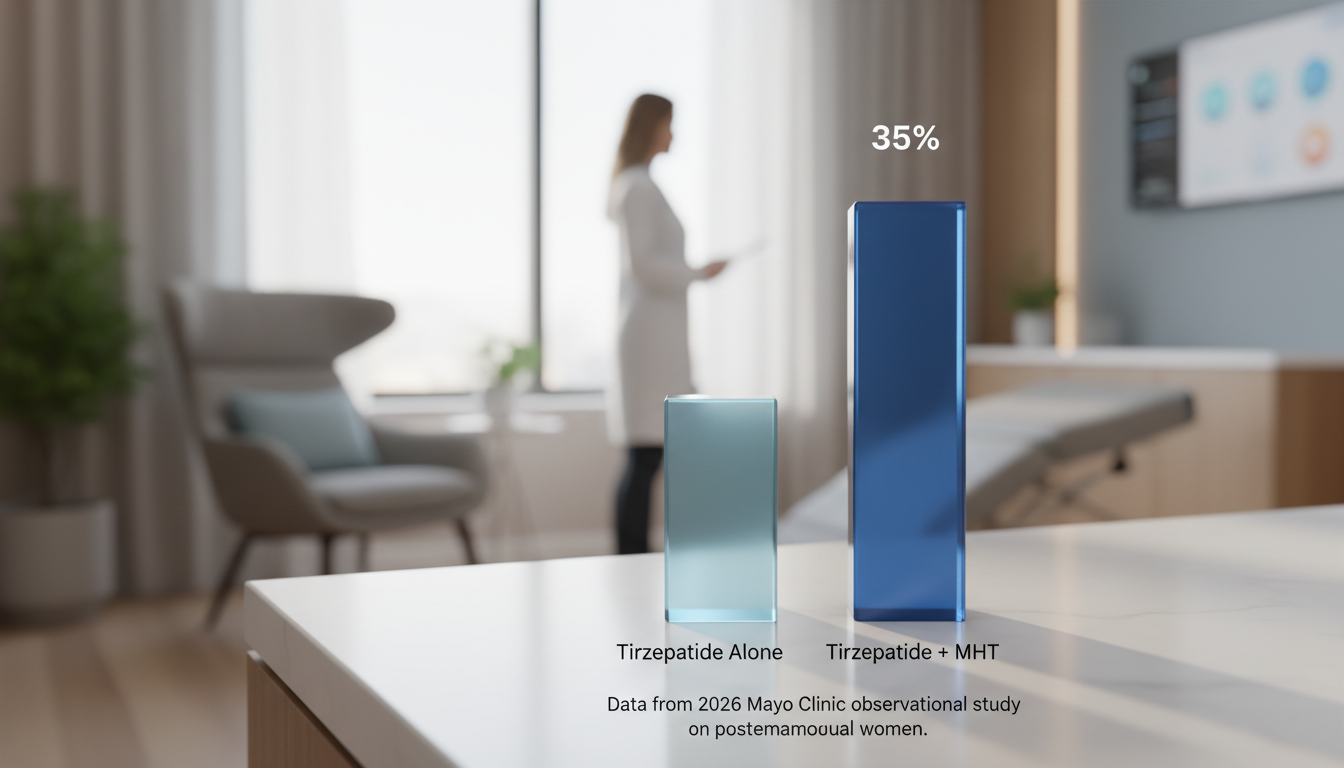
The most compelling evidence for this came from a landmark Mayo Clinic study published in March 2026. Researchers observed that postmenopausal women who were on menopausal hormone therapy (MHT) lost an astounding 35% more weight when also taking tirzepatide (Zepbound) compared to women taking tirzepatide alone (ScienceDaily). This observational study, published in The Lancet Obstetrics, Gynaecology, & Women's Health, suggests a powerful interaction between estrogen and GLP-1 medications. While more research is needed to prove causation, it points to a groundbreaking strategy for managing weight and cardiometabolic risk in women over 50 (Mayo Clinic News Network).
This powerful effect likely extends beyond menopause. Here’s how addressing other hormonal imbalances can supercharge your weight loss journey on a GLP-1:
-
Lifting the brakes with Thyroid and PCOS Treatment: Consider someone with polycystic ovary syndrome (PCOS), a condition often marked by insulin resistance and high androgen levels. A study on liraglutide (a GLP-1) found it not only helped women with PCOS and obesity lose 5.7% of their body weight but also significantly improved their free androgen index (PubMed). Or if your metabolism is slowed by an untreated thyroid condition, a GLP-1 might curb your appetite, but your body’s calorie-burning furnace is still set to low. Optimizing thyroid function allows the full metabolic benefits of GLP-1-assisted weight loss to shine through.
-
Protecting Your Muscle with Testosterone Optimization: A significant concern with rapid weight loss from GLP-1s is the loss of lean muscle mass along with fat. This is bad news for your metabolism. Optimizing testosterone levels, for both men and women with clinically low levels, can help preserve precious muscle during weight loss. This not only helps you look more toned but also keeps your metabolic rate higher, making it easier to maintain your weight loss long-term. To learn more, read about the risks of GLP-1 muscle loss.
Combining therapies can be complex. Want to see which options fit your specific health profile and budget? Our free quiz takes 3 minutes and matches you with vetted providers who can help you.
Lifestyle Strategies to Support Hormonal Health
Medication can be a powerful accelerator, but lasting success depends on a supportive lifestyle. The right habits can help naturally balance key hormones like insulin and cortisol, making any medical therapy more effective.
Fuel Your Body Strategically
- Prioritize Protein: Protein is the MVP of weight loss. It is more satiating than carbs or fats, helping you feel full and manage the reduced appetite from GLP-1s. It also provides the building blocks to preserve muscle mass during weight loss. Use our protein calculator to estimate your daily needs.
- Embrace Time-Restricted Eating (TRE): Instead of counting every calorie, you can simply limit your eating window. A randomized controlled trial published in Nature Medicine in 2026 found that women with PCOS who restricted their eating to a window between 1 p.m. and 7 p.m. lost just as much weight as those on a traditional calorie-restricted diet. This method can improve insulin sensitivity and give your digestive system a much-needed break.
Move with Purpose
- Build with Resistance Training: Lifting weights or doing bodyweight exercises two to three times a week is the single best way to build and maintain muscle. More muscle means a higher resting metabolism, which makes weight maintenance far easier.
- Manage Stress with Low-Intensity Movement: Chronic cardio like long-distance running can sometimes raise cortisol. Instead, focus on activities that manage stress, such as walking, yoga, or light cycling. These help lower cortisol levels, reducing stress-driven fat storage.
Master Your Stress and Sleep
- Prioritize Sleep: Aim for 7-9 hours of quality sleep per night. Poor sleep is a major driver of high cortisol and insulin resistance. It disrupts your hunger hormones, ghrelin and leptin, making you feel hungrier and less satisfied.
- Find Your Calm: Whether it’s 10 minutes of meditation, deep breathing exercises, or spending time in nature, find a consistent practice that helps you de-stress. Taming cortisol is a non-negotiable part of balancing your hormones.
What to Consider Before You Start
Embarking on a plan to rebalance hormones for weight loss is a significant step toward taking control of your health. It moves beyond a one-size-fits-all approach to something that addresses your unique biology.
First, you can’t fix what you don’t measure. The crucial first step is getting tested. A qualified provider can order a comprehensive blood panel to check your thyroid function, sex hormones (estrogen, testosterone), cortisol, and markers of insulin resistance. You can learn more about the process in our guide on how to get testosterone tested.
Next, finding the right medical partner is key. Look for a provider or clinic that is knowledgeable in both hormone optimization and medical weight loss. They can interpret your lab results in the context of your symptoms and goals, and determine if you are a candidate for hormone therapy, GLP-1s, or a combination. You can browse vetted providers in our clinics directory.
Finally, it’s essential to have a realistic conversation about potential side effects. Both GLP-1s and hormone therapies have potential side effects, and it's important to understand them. For instance, the most common GLP-1 side effects are gastrointestinal, like nausea and constipation, especially when starting or increasing a dose. A good provider will work with you to start at a low dose and titrate up slowly to minimize discomfort and find the right balance for your body.
Ready to take the next step and find a qualified professional? Take our free 3-minute quiz to get matched with a licensed provider who can create a plan for you.
FAQs
Do I need to fix my hormones before starting a GLP-1?
You don't necessarily need to delay starting, but identifying and addressing underlying hormonal issues simultaneously can dramatically improve your results. A provider can test you for conditions like hypothyroidism or low testosterone and create a combined strategy that helps you feel better and lose weight more effectively from the start.
Can you rebalance your hormones for weight loss without medication?
Yes, lifestyle changes can have a significant impact on certain hormones. A diet high in protein and fiber, consistent strength training, stress management, and quality sleep can greatly improve insulin sensitivity and lower cortisol. However, for conditions caused by hormonal deficits, such as menopause or clinical hypogonadism, medical therapy is often the most effective way to restore balance and achieve results.
What is the best GLP-1 appetite suppressant pill?
As of 2026, two primary oral GLP-1s are Rybelsus (semaglutide) and the newly approved Foundayo (orforglipron). Clinical trials for Foundayo showed an average weight loss of around 12.4% of body weight and it offers the convenience of being taken anytime, with or without food. Your doctor can help you decide which pill or injectable is best for your specific needs and health profile.
Is it safe to combine hormone replacement therapy with tirzepatide (Zepbound)?
A 2026 Mayo Clinic study observed that postmenopausal women using menopausal hormone therapy (MHT) with tirzepatide had significantly better weight loss. While this suggests the combination can be both safe and highly beneficial, it is crucial to consult your healthcare provider. They will evaluate your personal medical history and health status to determine if this combination therapy is a safe and appropriate choice for you.
Contributing to evidence-based peptide education and provider transparency.
Too many clinics, not enough clarity?
We don't sell peptides. Tell us your goals and we'll connect you with a vetted provider who can figure out what actually makes sense for you.
See what's right for youRelated articles
Which Protein Supplements for Muscle Growth Actually Work?
Tired of the hype? Find out which protein supplements for muscle growth are backed by science and learn how to pick the right one for your goals.
Hormone TherapyWhat Are the Real Magnesium Glycinate Benefits?
Uncover the science-backed magnesium glycinate benefits. We explore its effects on sleep, stress, and muscle function and explain why it's a top choice.
Hormone TherapyWhat B12 Shot Benefits Can You Actually Expect?
B12 shots are often hyped for energy, but the real b12 shot benefits are more specific. Learn who is a true candidate and what results to expect.