Decreased Testosterone Symptoms Guys Often Miss
Feeling tired, unmotivated, or gaining weight? Don't just blame aging. Learn the subtle and classic decreased testosterone symptoms many men ignore.

This content is for informational purposes only and does not constitute medical advice. Always consult a qualified healthcare provider for any health concerns or before starting a new treatment.
Fatigue that coffee can't fix. A lack of motivation at work and in the gym. Unwanted weight gain around your middle. Many men write these issues off as just a normal part of getting older. But as a March 2026 report highlights, these are often classic decreased testosterone symptoms that most men ignore. If you feel like a less energetic, less driven version of yourself, it might not just be age. Your hormones could be the cause.
The issue is more widespread than you might think. A 2025 study in the International Journal of Impotence Research found a significant drop in testosterone levels even among younger men aged 20 to 44. This isn’t just a problem for men over 50 anymore. Despite a rise in diagnoses for hypogonadism (the medical term for low testosterone), treatment rates have actually fallen, suggesting a gap between knowing there's a problem and getting help. This guide will walk you through the symptoms, the science behind testosterone, and the rapidly changing treatment landscape in 2026, so you can make an informed decision.
What Are Decreased Testosterone Symptoms and What Do They Mean?
Decreased testosterone symptoms are the physical, mental, and sexual changes that occur when your body doesn't produce enough testosterone. This is often called hypogonadism or Low T. Common signs include persistent fatigue, low sex drive, loss of muscle, increased body fat, and mood swings.
Testosterone is the primary male sex hormone, but it's much more than that. Think of it as a key that unlocks functions all over your body. It regulates everything from your sex drive and muscle mass to your bone density and even your mood. The "testosterone meaning" for your health is profound. When your levels are low, many of these systems can start to run poorly.
According to 2026 data, low testosterone affects roughly 25% of men over 30. Other research suggests that number could be as high as 39% for men over 45. The most common signs include:
- Low Sex Drive: A noticeable drop in your interest in sex.
- Erectile Dysfunction: Difficulty achieving or maintaining an erection.
- Constant Fatigue: Feeling tired all the time, no matter how much you sleep.
- Loss of Muscle Mass: Finding it harder to build or maintain muscle, even with regular workouts.
- Increased Body Fat: Especially stubborn fat around your abdomen.
- Moodiness and Irritability: Experiencing mood swings or feeling down more often.
- Brain Fog: Difficulty concentrating or feeling less mentally sharp.
For a clinical diagnosis, most providers look for these symptoms combined with two separate morning blood tests showing total testosterone levels under 300 ng/dL. You can learn more about at home testosterone testing kits, but a formal diagnosis requires a lab draw. Interestingly, many men report experiencing decreased testosterone symptoms even when their levels are in the "low-normal" range, somewhere between 300 and 400 ng/dL. This is why it's so important to discuss your symptoms with a doctor, not just look at a number on a lab report.
How Does Testosterone Work in the Body?
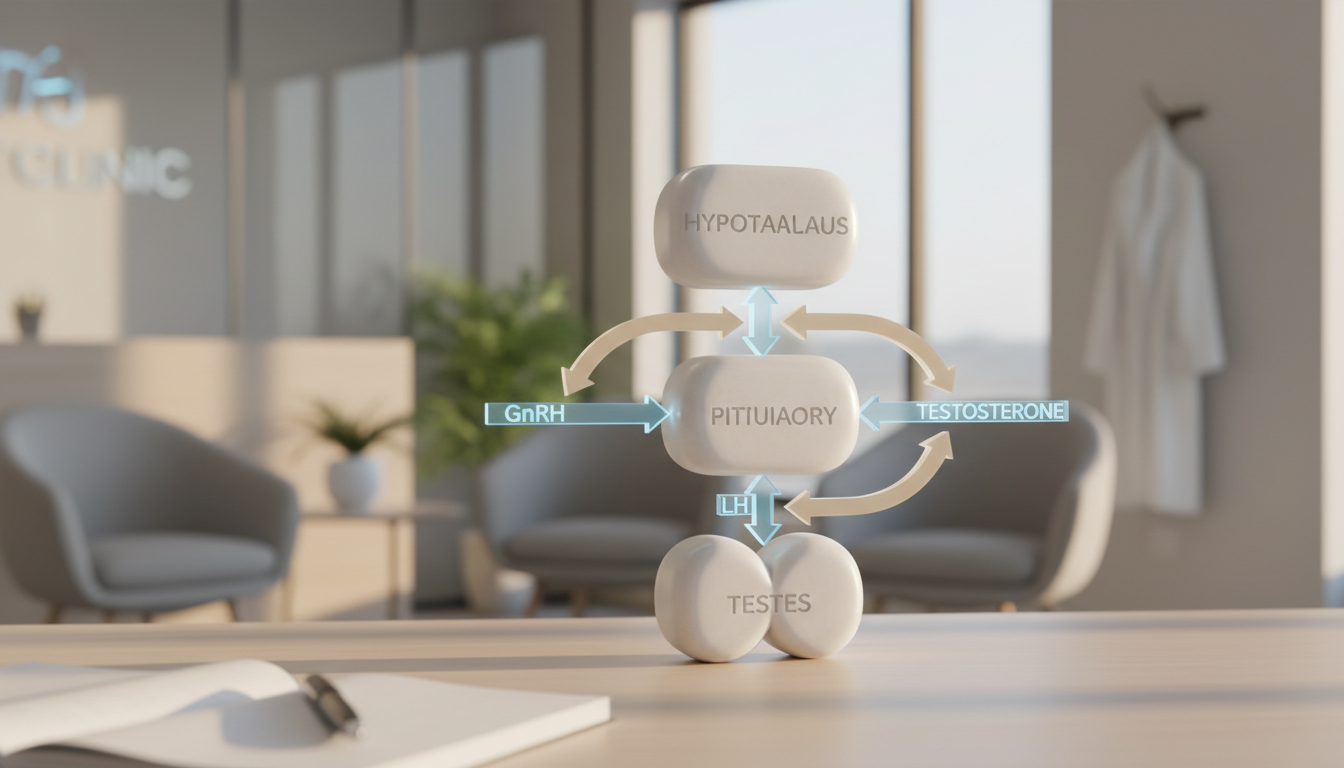
Testosterone production is managed by a sophisticated communication system called the Hypothalamic-Pituitary-Gonadal (HPG) axis. It works like this:
- Your brain's hypothalamus sends out a signal (GnRH).
- This tells your pituitary gland to release two other hormones, Luteinizing Hormone (LH) and Follicle-Stimulating Hormone (FSH).
- LH travels to your testes and signals them to produce testosterone.
Your body uses a negative feedback loop to keep levels in check. When testosterone levels are high enough, it sends a message back to the brain to slow down production. This is a delicate balance.
Once produced, testosterone travels through your bloodstream. Most of it is bound to proteins, primarily Sex Hormone-Binding Globulin (SHBG). A small portion, known as "free testosterone," is unbound and biologically active. This is the testosterone that can enter your cells and do its job by binding to androgen receptors in your muscles, bones, brain, and fat tissue.
This is also why managing free testosterone levels in women is important for their health. While women produce much less testosterone, it's still vital for their energy, libido, bone health, and overall well-being. A deficiency can cause similar symptoms, which you can read about in our guide to females testosterone.
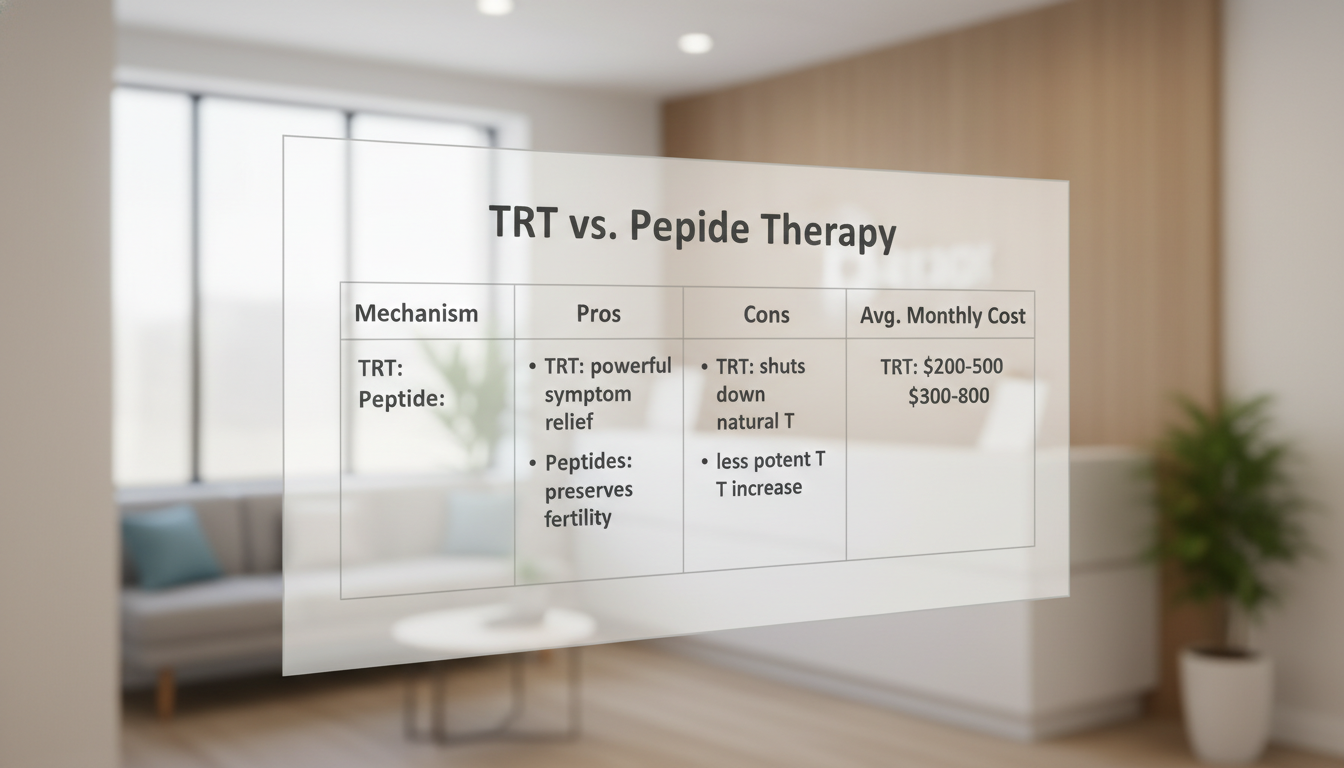
Testosterone Replacement Therapy (TRT) works by adding external testosterone to your system, raising your blood levels to a healthy range. This bypasses the HPG axis. Because your brain senses high levels of testosterone, it stops sending the signals to produce your own, which is why TRT can shut down natural production. In contrast, other treatments like peptide therapy with agents such as Sermorelin or Ipamorelin can stimulate your pituitary gland to produce more of its own hormones, supporting the HPG axis instead of replacing its output.
Feeling overwhelmed by the science? See if you're a candidate for treatment. Our free quiz can match you with a provider who can explain your options.
The Evidence-Based Benefits of Optimizing Testosterone
Correcting a true testosterone deficiency isn't about chasing a magic number. It's about relieving debilitating symptoms and improving your overall health. When prescribed and monitored correctly, testosterone therapy offers significant, evidence-based benefits. You can explore our deep dives on TRT benefits and side effects and the positive side effects of TRT for more details.
H3: Improved Body Composition (Less Fat, More Muscle)
Testosterone plays a central role in your metabolism. It promotes muscle protein synthesis, which is the process of building new muscle, and helps regulate how your body stores fat. A 2013 review in the Journal of Urology confirmed that low testosterone is associated with sarcopenia (age-related muscle loss) and visceral obesity, the dangerous fat that accumulates around your organs. Men on TRT often report that it's easier to build and maintain muscle, lose stubborn body fat, and see better results from their diet and exercise efforts.
H3: Enhanced Sexual Function and Libido
For many men, a declining sex life is the most frustrating symptom of Low T. It's also one of the first things to improve with treatment. Restoring testosterone levels to a healthy range is directly linked to an improved libido, better erectile quality, and greater overall sexual satisfaction. The 2013 review also identified sexual dysfunction as a key reason to screen for and treat testosterone deficiency. Feeling more like yourself again in the bedroom is a huge part of what it means to be a high testosterone male.
H3: Increased Energy, Mood, and Cognitive Function
The persistent fatigue, brain fog, and low motivation that plague men with low testosterone can be crushing. These aren't just feelings; they have a biological basis. Testosterone interacts with neurotransmitter systems in the brain that influence energy, focus, and mood. By correcting the deficiency, many men report a significant return of their mental and physical energy. They feel more focused, more confident, and more driven, both personally and professionally.
H3: Better Bone Density and Cardiovascular Health
Historically, the cardiovascular effects of TRT were a major concern. However, that view is now outdated. In February 2025, the FDA officially removed its "black box warning" about increased heart attack and stroke risk from all testosterone products. This decision was based on the large-scale TRAVERSE trial, which involved over 5,200 men and found that TRT did not increase the risk of major adverse cardiovascular events (medicalfoundationofnc.org). In fact, untreated low testosterone itself is associated with an increased risk of fatal cardiovascular events, according to a foundational review published on PubMed. Testosterone is also essential for maintaining bone mineral density, and treating low levels can help protect against osteoporosis.
Risks, Side Effects, and Managing Decreased Testosterone Symptoms with TRT
While the benefits are clear, no medical treatment is without potential risks. When managed by a qualified provider who monitors your health with regular blood work, testosterone therapy is very safe. However, it's important to be aware of the possible side effects. If you're considering treatment, understanding the downsides of TRT is a crucial step.
Here are the most common side effects to discuss with your doctor:
- Erythrocytosis: TRT can stimulate your bone marrow to produce more red blood cells. If your count gets too high, it can make your blood thicker, increasing the risk for blood clots. This is a primary risk that an FDA panel noted requires monitoring (
trtnyc.com) and is managed with regular blood tests and sometimes blood donations. - Infertility: This is a major consideration, especially for younger men. Because TRT provides testosterone from an outside source, your brain stops signaling the testes to produce their own. This shuts down both testosterone and sperm production, leading to infertility that can be permanent (
trtnyc.com). Men who wish to preserve fertility may consider alternative treatments like HCG injections or peptide therapy alongside or instead of TRT. - Skin Issues: Some men experience acne or oilier skin, similar to puberty. This happens because some testosterone converts to another hormone called dihydrotestosterone (DHT).
- Gynecomastia: If too much testosterone converts into estrogen, you can develop male breast tissue. This is often managed by adjusting your dose or with medications called aromatase inhibitors.
A common question is about "trt steroids." While testosterone is technically an anabolic steroid, TRT is a medical therapy. It uses a physiological dose prescribed by a doctor to restore your levels to a normal, healthy range. This is completely different from the supraphysiological (abusive) doses of illegal steroids used for bodybuilding, which carry far greater health risks. You can learn more about the distinction in our article, "Is Testosterone a Steroid?".
Navigating the risks and benefits can be tricky. A qualified provider can create a plan that works for you. Find a vetted TRT specialist with our free 3-minute quiz.
How to Get Started with Treatment
If you're dealing with decreased testosterone symptoms, getting help is more straightforward than ever. Here’s a simple path to follow:
- Check Your Symptoms: The first step is self-assessment. Are you experiencing three or more of the common symptoms of Low T? If so, it's worth investigating further. Our Hormone Symptom Checker can help you organize your thoughts before talking to a doctor.
- Consult a Provider: The next step is to speak with a doctor, preferably one who specializes in hormone optimization. With the rise of telehealth, you can now connect with online doctors that prescribe testosterone in the US, making access to expert care more convenient. You can also search for providers in your area through our clinics directory.
- Get Tested: A proper diagnosis requires bloodwork. As recommended by clinical guidelines, this involves two separate blood draws, taken in the morning when testosterone levels are highest (
formblends.com). This confirms that your levels are consistently low. - Discuss Your Options: If you are diagnosed with hypogonadism, your provider will discuss treatment options. These may include:
- TRT: This is the gold standard. It comes in several forms, including injections, gels, and creams. Injections are often the most cost-effective and reliable method, achieving stable therapeutic levels within 6-8 weeks for most patients. See our guide on the best testosterone injection for muscle gain to learn more.
- Peptide Therapy: For men concerned about fertility or who prefer to stimulate their body's own production, peptide therapies like Sermorelin or Ipamorelin are an excellent alternative. They can increase natural testosterone by 40-60% from baseline (
formblends.com). Explore how TRT and peptides can sometimes be used together.
Treatment costs vary, but it's more accessible than many think. TRT typically costs between $80 and $300 per month, while peptide therapy ranges from $150 to $250 per month. Our guide on how much is TRT per month breaks down the costs further.
The 2026 Legal Landscape: FDA Changes and How They Affect the Low Testosterone Guy
If you’ve looked into TRT in the past, you might have encountered conflicting information about its safety and legality. The good news is that in 2026, the regulatory landscape has shifted dramatically, making it easier for the average "low testosterone guy" to get clear answers and effective care.
Here are the key changes from the past year that signal a new era for hormone optimization:
- February 2025: Black Box Warning Removed. The FDA officially removed the stringent "black box warning" regarding cardiovascular risks from all testosterone products (
medicalfoundationofnc.org). This was a direct result of the TRAVERSE trial, which provided strong evidence that TRT is safe for the heart when prescribed appropriately. - December 2025: Expert Panel Recommends Expanded Access. An FDA advisory panel of 13 medical experts voted to recommend expanding the approved indications for testosterone therapy. They suggested it should be available for age-related deficiency and that the old contraindication for men with a history of prostate cancer should be removed (
medicalfoundationofnc.org). - December 2025: Push to Reclassify Testosterone. The same panel also recommended that testosterone be removed from its Schedule 3 controlled substance classification (
trtnyc.com). If adopted, this would dramatically reduce the administrative burden on doctors and make prescriptions easier to obtain.
For men suffering from decreased testosterone symptoms, these developments are significant. They mean that TRT is moving out of a legal gray area and into the mainstream of men's health. The FDA is actively reexamining access to these therapies, acknowledging that testosterone levels are declining and that treatment can be both safe and effective (okawashashin.com). This reduces ambiguity for telehealth platforms and makes it more important than ever for patients to choose a high-quality provider that prioritizes proper testing and ongoing monitoring.
Ready to stop guessing and get answers? Your path to feeling better starts with understanding your levels. Take our free quiz to connect with a qualified hormone specialist today.
FAQs about Decreased Testosterone Symptoms
What are the first signs of low testosterone?
The first signs are often subtle and easy to dismiss. Many men first notice persistent fatigue that isn't relieved by rest, a lower sex drive, and subtle mood changes, like increased irritability or a lack of motivation.
At what age does testosterone start to decrease?
Testosterone levels naturally begin to decline by about 1-2% per year after age 30. However, a 2025 study showed this decline is now happening even in men aged 20-44. Data also shows that the highest number of new hypogonadism diagnoses occurs in men aged 35-44.
What is considered a low testosterone level?
A clinical diagnosis of hypogonadism typically requires total testosterone levels under 300 ng/dL on two separate morning blood tests, accompanied by symptoms. However, many men experience symptoms of low T when their levels are in the low-normal range, between 300 and 400 ng/dL.
Can I increase my testosterone naturally?
Yes. Lifestyle interventions can have a meaningful impact. Resistance training, losing excess body fat, ensuring you get 7-9 hours of quality sleep, managing stress, and eating a balanced diet are all proven ways to support healthy testosterone production. These methods can often boost levels by 20-30%. Learn more in our guide on how to increase testosterone.
Is TRT a lifelong commitment?
In most cases, yes. Testosterone replacement therapy supplements your body's natural production, which causes your own system to shut down. If you stop TRT, your levels will return to their previous low, and your symptoms will likely return. It's a significant decision that should be discussed thoroughly with your provider.
What's the difference between TRT and taking illegal steroids?
The difference is dosage and medical supervision. TRT involves a doctor prescribing a physiological dose to restore your testosterone to a normal, healthy range to treat a medical condition. Illegal anabolic steroid use involves self-administering unmonitored, supraphysiological doses that are far higher than your body needs, which carries severe health risks.
Contributing to evidence-based peptide education and provider transparency.
Too many clinics, not enough clarity?
We don't sell peptides. Tell us your goals and we'll connect you with a vetted provider who can figure out what actually makes sense for you.
See what's right for youRelated articles
Which Protein Supplements for Muscle Growth Actually Work?
Tired of the hype? Find out which protein supplements for muscle growth are backed by science and learn how to pick the right one for your goals.
Hormone TherapyWhat Are the Real Magnesium Glycinate Benefits?
Uncover the science-backed magnesium glycinate benefits. We explore its effects on sleep, stress, and muscle function and explain why it's a top choice.
Hormone TherapyWhat B12 Shot Benefits Can You Actually Expect?
B12 shots are often hyped for energy, but the real b12 shot benefits are more specific. Learn who is a true candidate and what results to expect.