What's the 2026 Retatrutide vs Tirzepatide Cost?
Wondering about the retatrutide vs tirzepatide cost? We analyze 2026 pricing, insurance hurdles, and potential savings for both powerful weight loss drugs.
This content is for informational purposes only and does not constitute medical advice. Always consult with a qualified healthcare provider before starting any new treatment.
The world of weight management medication is moving fast, with two major players from Eli Lilly capturing everyone's attention: tirzepatide and the investigational drug retatrutide. While both show incredible promise, they are at very different stages of availability and present a complex choice for patients. A key deciding factor for many is the retatrutide vs tirzepatide cost, availability, and proven effectiveness. This guide breaks down everything you need to know in 2026 to understand these two powerful options.
Retatrutide vs. Tirzepatide: A Quick Comparison
For those who want the key facts right away, this table summarizes the main differences between the available tirzepatide (Zepbound) and the investigational retatrutide.
| Feature | Retatrutide (Investigational) | Tirzepatide (Zepbound) |
|---|---|---|
| FDA Approval Status | Not Approved (in Phase 3 trials) | Approved for weight management |
| Mechanism of Action | Triple-Agonist (GLP-1, GIP, Glucagon) | Dual-Agonist (GLP-1, GIP) |
| Average Weight Loss | 24.2% to 28.7% (in Phase 3 trials) | 20.9% (in clinical trials) |
| Availability in 2026 | Clinical trials, research, compounding | Widely available via prescription |
| Brand Name Monthly Cost | $1,000 - $1,500 (Projected post-approval) | ~$1,060 list price |
| Affordable Self-Pay Path | $200 - $650 (Compounded, not FDA-approved) | $299 - $449 (LillyDirect program) |
| Key Side Effects | Nausea, diarrhea, vomiting, dysesthesia | Nausea, diarrhea, vomiting, constipation |
Seeing the data side-by-side can make the choice clearer, but the details matter. Not sure which treatment path aligns with your health goals and budget? Take our free quiz to get matched with a provider who can guide you through your options.
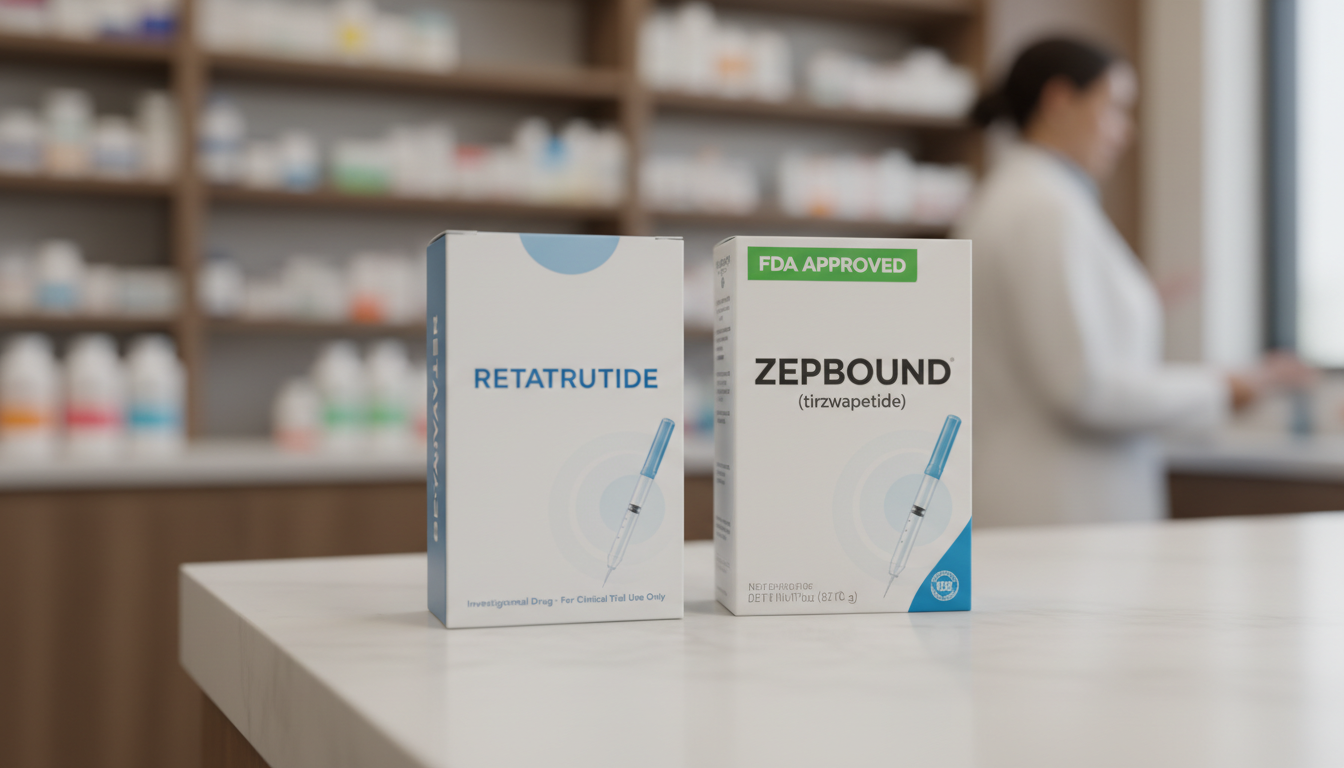
What is Retatrutide? The Investigational Triple-Agonist
Retatrutide is a medication currently in development by Eli Lilly that has generated significant excitement for its remarkable weight loss results in clinical trials. As of April 2026, it is still an investigational drug, meaning it has not been approved by the FDA and is not commercially available.
Its power lies in its unique mechanism. Retatrutide is a triple-hormone receptor agonist, targeting three different receptors in the body involved in appetite, metabolism, and energy expenditure:
- GLP-1 (Glucagon-like peptide-1): Slows digestion, reduces appetite, and helps control blood sugar. This is the same receptor targeted by drugs like semaglutide.
- GIP (Glucose-dependent insulinotropic polypeptide): Works with GLP-1 to enhance its effects on blood sugar and appetite suppression.
- Glucagon: This is the key differentiator. Activating the glucagon receptor is thought to increase energy expenditure, essentially helping the body burn more calories.
This "triple-action" approach has led to the highest weight loss percentages ever seen in a Phase 3 obesity trial. The TRIUMPH-4 study, with results released in late 2025, showed an average weight loss of 28.7% at 68 weeks (retaweightloss.com). Another Phase 3 trial, TRIUMPH-3, demonstrated 24.2% average weight loss over 72 weeks (glp1clinics.org).
While these results are incredible, retatrutide is not expected to receive FDA approval until mid-2027 at the earliest, with a commercial launch potentially in early 2028. For now, access is limited to a few specific paths, which we'll explore below.
What is Tirzepatide? The FDA-Approved Dual-Agonist
Tirzepatide is another blockbuster medication from Eli Lilly, but unlike retatrutide, it is fully FDA-approved and widely available in 2026. It is sold under two brand names:
- Mounjaro: Approved for managing type 2 diabetes.
- Zepbound: Approved on November 8, 2023, specifically for chronic weight management in adults with obesity or those who are overweight with a related health condition (Pharmacy Times).
You can read more about it on our tirzepatide peptide profile page.
Tirzepatide is a dual-agonist, targeting both the GLP-1 and GIP receptors. This combination was a major step up from previous single-agonist GLP-1 drugs like semaglutide (Ozempic/Wegovy). The synergy between GLP-1 and GIP provides powerful appetite suppression and blood sugar control, leading to substantial weight loss.
Clinical trials for Zepbound showed impressive results. The SURMOUNT-1 study found that participants on the highest dose lost an average of 20.9% of their body weight over 72 weeks (fda.gov). This made tirzepatide the most effective weight loss medication on the market upon its release. It is administered as a once-weekly injection, with the dosage gradually increased from a starting dose of 2.5 mg to a maximum of 15 mg to manage side effects.
Because it is FDA-approved, Zepbound can be prescribed by doctors and filled at pharmacies across the country, making it a practical and accessible choice for many people right now.
Key Differences: Mechanism, Efficacy, and Availability
While both are injectable medications from the same company, their core differences in science, results, and accessibility are vast.
Mechanism: Dual vs. Triple Agonist
The most fundamental difference is how they work. Tirzepatide is a dual-agonist, activating GLP-1 and GIP receptors. This combination effectively reduces hunger signals and improves how the body handles sugar. Think of it as a two-pronged attack on the biological drivers of weight gain.
Retatrutide is a triple-agonist, activating GLP-1, GIP, and glucagon receptors. The addition of the glucagon receptor is what sets it apart. Glucagon plays a role in liver glucose production, but in this context, its activation is believed to boost the body's overall energy expenditure. It adds a "calorie-burning" component to the appetite suppression of GLP-1 and GIP. This triple-action mechanism is the scientific reason behind its superior weight loss results in trials.
Efficacy for Weight Loss
The numbers speak for themselves. While tirzepatide set a high bar, retatrutide has surpassed it in clinical trials.
- Tirzepatide (Zepbound): Achieved up to 20.9% average body weight reduction in the 72-week SURMOUNT-1 trial (fda.gov). For a 250-pound person, this translates to about 52 pounds of weight loss.
- Retatrutide: Has shown 24.2% average weight loss in the TRIUMPH-3 trial and an unprecedented 28.7% in the TRIUMPH-4 trial (retaweightloss.com). For the same 250-pound person, a 28.7% loss would mean shedding over 71 pounds.
This nearly 8 percentage point difference in top-end results makes retatrutide a subject of intense interest. The TRIUMPH-4 trial also highlighted other benefits, such as a 75.8% improvement in knee pain for participants with osteoarthritis, showing its potential impact extends beyond just weight (glpsources.com).
Approval and Availability
This is the most critical difference for anyone making a decision in 2026.
Tirzepatide is available now. It's FDA-approved, has an established safety profile from years of use, and can be prescribed by a healthcare provider today. Patients can start their treatment immediately.
Retatrutide is not available as a commercial, FDA-approved drug. It is still in Phase 3 trials. While multiple trials are expected to release data throughout 2026, an actual FDA submission isn't planned until late in the year, with approval not anticipated until mid-to-late 2027 or even early 2028 (retaweightloss.com). This means for most people, retatrutide is something to watch for the future, not a solution for today. The only ways to access it currently are through participation in a clinical trial or via non-FDA regulated sources like research chemical suppliers or compounding pharmacies, which come with their own set of risks and considerations.
Comparing Side Effects: What to Expect from Each
Both medications work on the gastrointestinal system, so it's no surprise that their side effect profiles are similar. However, there are some key distinctions to be aware of.
| Side Effect | Retatrutide (at 12mg dose) | Tirzepatide (at 15mg dose) |
|---|---|---|
| Nausea | ~45% | ~28% |
| Diarrhea | ~25% | ~23% |
| Vomiting | ~18% | ~13% |
| Constipation | Not prominently reported | ~17% |
| Dysesthesia (Abnormal Skin Sensation) | ~20.9% | Not reported |
| Increased Heart Rate | Average of 4.3 bpm | Minimal change noted |
Sources: glp1clinics.org, glpsources.com, Zepbound Prescribing Information
Both drugs commonly cause gastrointestinal issues like nausea, diarrhea, and vomiting, especially when starting the medication or increasing the dose. These side effects are generally mild to moderate and tend to decrease over time. The higher rates seen in retatrutide trials may be related to its more potent triple-agonist mechanism. You can find more details on what to expect in our articles about tirzepatide side effects and Ozempic constipation, a common issue with GLP-1s.
The most notable difference is the novel side effect associated with retatrutide: dysesthesia. This is described as an abnormal sensation on the skin, like tingling, burning, or pins and needles. In trials, this was reported by up to 20.9% of participants on the highest dose (pharmexec.com). While most cases were mild and did not cause people to stop the drug, it is a unique adverse event not seen with tirzepatide.
Additionally, retatrutide was noted to cause a small increase in resting heart rate, which will be further evaluated in ongoing cardiovascular outcome trials (glp1clinics.org). Tirzepatide, like other GLP-1s, also carries a boxed warning about a potential risk of thyroid C-cell tumors based on studies in rats, a standard warning for this class of drugs.
Discussing these potential side effects with your provider is essential to making an informed choice.
The 2026 Retatrutide vs Tirzepatide Cost Breakdown
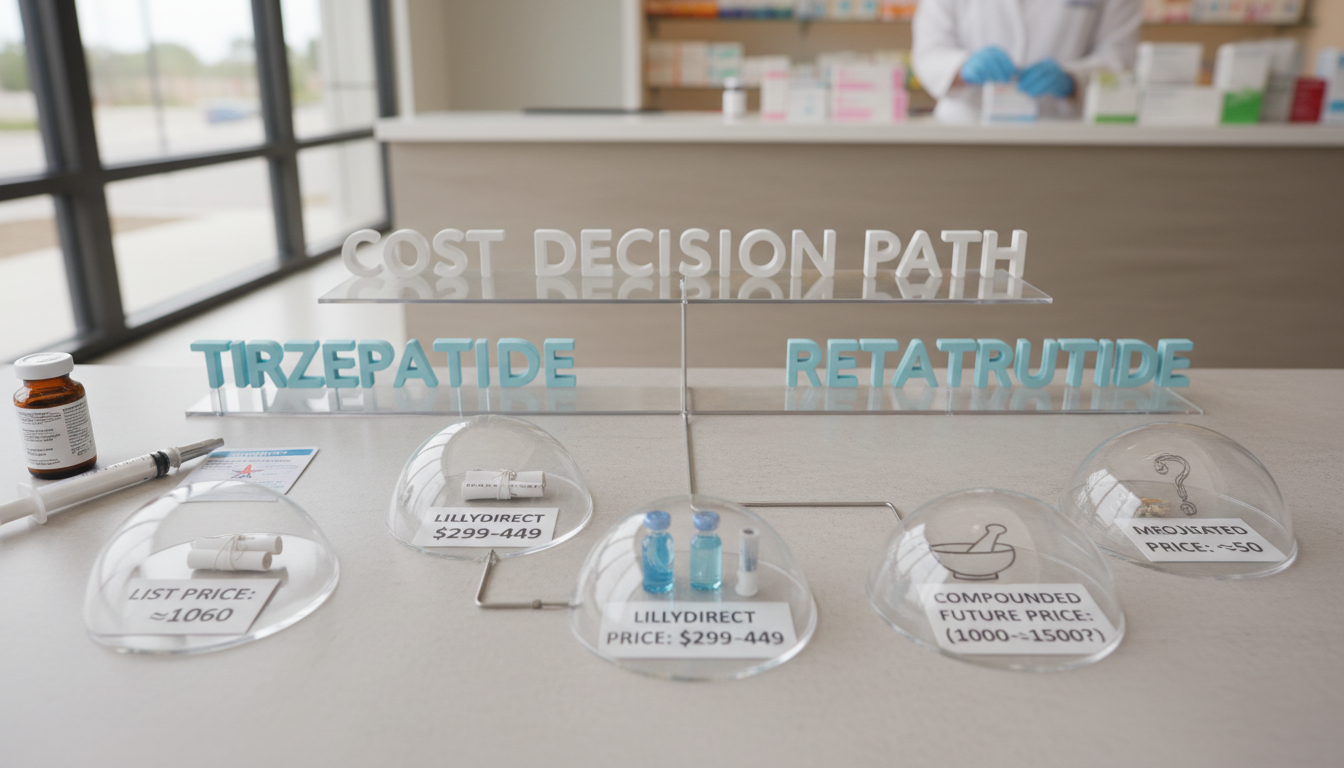
For most people, the decision between these two medications comes down to practical factors like price and access. Here, the difference is stark. Analyzing the retatrutide vs tirzepatide cost reveals a choice between a known, affordable path and a more uncertain, variable one.
Tirzepatide (Zepbound) Cost in 2026
The cost of tirzepatide has become much clearer and more accessible.
- List Price: The official list price for Zepbound is approximately $1,059 per month (AJMC). Without insurance coverage, this is the starting point at a typical pharmacy.
- LillyDirect Program: This has been the biggest development in affordability. Eli Lilly's direct-to-consumer platform, LillyDirect, offers a "Self Pay Journey Program." Through this program, eligible patients without insurance coverage can get Zepbound for a much lower price. As of a December 2025 announcement, monthly prices are:
- $299 for the 2.5 mg starting dose.
- $399 for the 5 mg dose.
- $449 for the 7.5 mg, 10 mg, 12.5 mg, and 15 mg maintenance doses.
- Medicare Bridge Program: Launching in July 2026, this federal program is expected to cover GLP-1s like Zepbound and Wegovy for obesity. For eligible Medicare beneficiaries, this could cap the monthly copay at just $50 (Telehealth Ally). You can learn more in our guide to tirzepatide cost with Medicare.
- Insurance Coverage: Commercial insurance coverage for Zepbound for weight loss is improving, but still varies widely by plan. If you have coverage, your copay could be much lower.
The LillyDirect program makes brand-name, FDA-approved tirzepatide accessible for under $500 a month, a clear and reliable price point.
Retatrutide Cost in 2026
Comparing the retatrutide vs tirzepatide cost is tricky because retatrutide isn't a commercial product. Its price depends entirely on the source.
- Projected Commercial Price: Once retatrutide is FDA-approved (estimated 2027-2028), experts project its list price will be in the $1,000 to $1,500 per month range, benchmarked against Zepbound and Wegovy (GLP3 Planner). Lilly will likely offer a savings program similar to Zepbound's, but the exact price is unknown.
- Current Compounded/Research Cost: As of 2026, the only way to access retatrutide is through non-commercial channels.
- Compounding Pharmacies: Some pharmacies create their own versions of retatrutide. The cost for these compounded versions typically ranges from $200 to $650 per month (Glunova Biotech). It's crucial to work with reputable clinics and pharmacies if considering this route, as quality and purity are not overseen by the FDA.
- Research Peptides: Sold for "research purposes only," retatrutide peptides can be purchased online for $150 to $500 per month (GLP3 Planner). This is the riskiest path, as these products are not intended for human consumption and lack any quality control.
In summary, the choice in 2026 is between a regulated, approved product (tirzepatide) with a clear cash price of $299-$449/month, or an unregulated, unapproved product (retatrutide) with a variable cost of $200-$650/month that carries additional risks.
Figuring out which options fit your budget and health profile can be confusing. Our free 3-minute quiz matches you with vetted providers who can help you understand the costs and benefits of different treatments.
Who Should Choose Which? Navigating the Retatrutide vs Tirzepatide Cost and Availability
Given the significant differences, the choice between retatrutide and tirzepatide in 2026 comes down to a few key scenarios.
You should choose Tirzepatide (Zepbound) if:
- You want to start treatment now with an FDA-approved medication.
- Safety and a well-documented clinical history are your top priorities.
- You want a predictable, affordable self-pay option via the LillyDirect program ($299-$449/month).
- You are eligible for the Medicare Bridge Program starting in July 2026, which would make your cost extremely low.
- You are looking for a highly effective medication that has already helped millions of people, with an average weight loss of around 21%.
For the vast majority of people seeking treatment in 2026, tirzepatide is the more practical, safer, and immediately accessible choice (Telehealth Ally). It offers incredible results that are available today.
You might consider Retatrutide if:
- You have not achieved your desired results with other GLP-1 medications like semaglutide or tirzepatide.
- You are willing to wait until at least mid-2027 or 2028 for an FDA-approved version, hoping for its superior weight loss results.
- You are comfortable working with a provider who sources from a trusted compounding pharmacy and understand the associated risks of using a non-FDA-approved product. The lower monthly cost of a compounded version is a primary motivator here, but must be balanced against the lack of regulatory oversight.
- You are eligible for and interested in participating in a clinical trial for retatrutide.
The decision is a classic case of "a bird in the hand is worth two in the bush." Tirzepatide is the proven, available "bird in the hand." Retatrutide is the "two in the bush" – potentially more powerful, but still out of reach for most people through conventional means. Before making any decisions, it is vital to discuss your health history and goals with a qualified medical professional.
Ready to explore your options with a professional? Take our free 3-minute quiz to get matched with a licensed provider who can help you determine the best path forward.
Frequently Asked Questions
Is retatrutide better than tirzepatide for weight loss?
Based on clinical trial data, retatrutide has shown a higher average weight loss (up to 28.7%) compared to tirzepatide (up to 20.9%). However, "better" is subjective. Tirzepatide is FDA-approved, widely available, and has a more established safety profile. Retatrutide is still investigational and not available as a commercial drug in 2026.
How much will retatrutide cost when it comes out?
While there is no official price, industry analysts project the list price for brand-name retatrutide will be between $1,000 and $1,500 per month upon its potential approval in 2027 or 2028. It is likely Eli Lilly will offer a savings program similar to Zepbound's, but the final self-pay price is unknown (Telehealth Ally).
Can I get retatrutide now in 2026?
You cannot get a commercially produced, FDA-approved version of retatrutide in 2026. The only ways to access it are by enrolling in a clinical trial or by obtaining it from sources like compounding pharmacies or research suppliers. These options are not regulated by the FDA and carry different risks than using an approved medication.
What is the biggest difference between retatrutide and tirzepatide?
The biggest practical difference is availability and approval status. Tirzepatide (Zepbound) is FDA-approved and available now by prescription. Retatrutide is an investigational drug still in clinical trials. The biggest scientific difference is their mechanism. Tirzepatide is a dual-agonist (GLP-1/GIP), while retatrutide is a triple-agonist (GLP-1/GIP/Glucagon), which accounts for its higher efficacy in trials.
Contributing to evidence-based peptide education and provider transparency.
Too many clinics, not enough clarity?
We don't sell peptides. Tell us your goals and we'll connect you with a vetted provider who can figure out what actually makes sense for you.
See what's right for youRelated articles
A Step-by-Step Gelatin Recipe for Weight Loss
Seen the viral "pink trick"? We break down the simple gelatin recipe for weight loss. Learn our step-by-step method to help manage hunger and feel full.
GLP-1 Weight LossOzempic Cost in 2026: What You'll Actually Pay
The 2026 Ozempic cost can be anywhere from $25 to over $1,400 a month. Discover why and learn how to find savings with or without insurance coverage.
GLP-1 Weight LossHow Zep Weight Loss Works and What to Expect
Thinking about zep weight loss? We cover how this drug works, what realistic results look like, common side effects, and how it compares to Ozempic.