Are TRT Bodybuilding Side Effects Worth It?
Beyond the gym rumors. Get a medically-informed look at the actual trt bodybuilding side effects so you can weigh the risks against the physique goals.

This content is for informational purposes only and does not constitute medical advice. Always consult with a qualified healthcare provider before starting or changing any medical treatment.
Using testosterone for bodybuilding is a common topic, but separating fact from fiction about the risks is critical. You want to understand the real TRT bodybuilding side effects, not just the gym-floor rumors. While testosterone can be a powerful tool, using it, especially for performance enhancement, comes with significant health considerations. This guide breaks down the evidence-based side effects, what the latest research from 2026 says, and how these risks can be managed under proper medical supervision.
It is essential to distinguish between medically supervised Testosterone Replacement Therapy (TRT) for diagnosed hypogonadism and using testosterone at higher, supraphysiologic doses for bodybuilding. The FDA only approves testosterone for men with low levels due to specific medical conditions (Scientific American). Using it for other reasons, like bodybuilding, involves different risk profiles that you must discuss with a provider. If you're new to this topic, our guide on what TRT is and who it's for provides a foundational overview.
Common TRT Side Effects and Their Frequency
When you start testosterone therapy, your body undergoes significant hormonal changes that can lead to a range of side effects. While many are manageable, it's important to know what to expect. The frequency and severity often depend on the dose, the delivery method, and your individual physiology. Below is a table summarizing the most common side effects observed in clinical settings, followed by a deeper explanation of each.
| Side Effect | Estimated Frequency | Key Management Strategy |
|---|---|---|
| Erythrocytosis (High Red Blood Cells) | 5% - 25% | Dose adjustment, therapeutic phlebotomy |
| Gynecomastia (Breast Tissue Growth) | 10% - 25% | Dose adjustment, very rarely aromatase inhibitors |
| Testicular Atrophy & Infertility | Nearly Universal | HCG co-administration, sperm banking prior to TRT |
| Acne and Oily Skin | Common, not consistently tracked | Skincare, dose adjustment |
| Fluid Retention | Common, variable frequency | Sodium reduction, blood pressure monitoring, dose adjustment |
Erythrocytosis (Elevated Hematocrit)
Erythrocytosis, a high red blood cell count, is widely considered the most clinically significant side effect to monitor on TRT (PeakedLabs). Testosterone stimulates the bone marrow to produce more red blood cells, which increases the oxygen-carrying capacity of your blood. However, too many red blood cells thicken the blood, raising a measure called hematocrit. If hematocrit gets too high, typically above 54%, it increases the risk of blood clots, which can lead to deep vein thrombosis (DVT) or a pulmonary embolism (PE) (Telehealth Ally). This side effect affects between 5% and 25% of men on TRT, with the risk varying based on the type of testosterone used.
Gynecomastia (Elevated Estradiol)
Many men worry about developing gynecomastia, or male breast tissue. This happens when some of the testosterone you administer converts into estradiol, a form of estrogen, through a process called aromatization. In 10-25% of men, this can lead to tender, swollen, or lumpy tissue behind the nipple (PeakedLabs). This side effect is often dose-dependent. Higher doses of testosterone can lead to more conversion to estradiol, increasing the risk.
Testicular Atrophy and Fertility Suppression
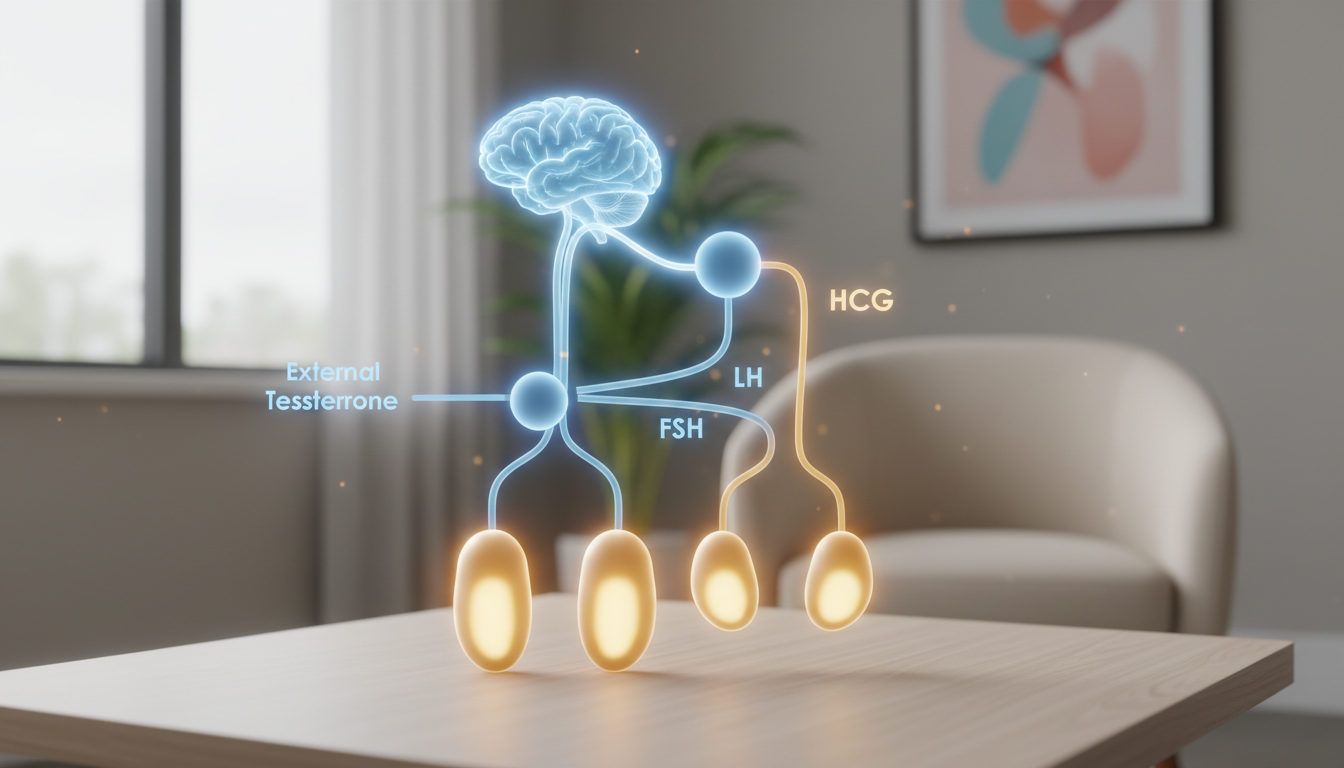
When you introduce external testosterone into your body, your brain’s hormonal signaling system (the HPG axis) slows down or stops telling your testes to produce their own testosterone. This shutdown leads to two near-universal side effects: testicular atrophy (shrinkage) and suppression of sperm production, causing infertility (ShotFreeTRT). For most men, this is a predictable outcome. While testicular size and function may return after stopping TRT, recovery is not guaranteed and can be prolonged.
Acne and Fluid Retention
Other common side effects include acne and fluid retention. Testosterone can increase sebum production in your skin, leading to oily skin and breakouts similar to what you may have experienced during puberty. Fluid retention, which can cause puffiness and a slight increase in blood pressure, is also common, especially when starting therapy.
Not sure if the benefits outweigh these potential side effects? The best way to understand your personal risk profile is to speak with a specialist.
Take our free 3-minute quiz to get matched with a licensed provider who can help you weigh the pros and cons.

Serious TRT Bodybuilding Side Effects to Watch For
While common side effects are often manageable, there are more serious risks to consider, particularly concerning cardiovascular health. For years, there was conflicting information about TRT and heart risks, with some early warnings from the FDA. However, the landscape of knowledge has changed dramatically thanks to a landmark study.
The Testosterone Replacement therapy for Assessment of long-term Vascular Events and efficacy ResponSE in hypogonadal men (TRAVERSE) trial, published in 2023, was a massive, FDA-mandated study designed to clarify these risks once and for all. It followed over 5,200 men for nearly three years (New England Journal of Medicine).
Here’s what the TRAVERSE trial found:
- No Increased Risk of Major Heart Events: The study showed that TRT did not increase the risk of major adverse cardiovascular events (MACE), which includes heart attack, stroke, or death from cardiovascular causes, compared to a placebo (The TRT and ED Clinics).
- Increased Risk of Blood Clots and AFib: While MACE risk wasn't higher, the trial did find a statistically significant increase in the incidence of atrial fibrillation (a type of irregular heartbeat), pulmonary embolism (a blood clot in the lungs), and deep vein thrombosis (a clot in the leg) (ShotFreeTRT). The risk for venous thromboembolic events (clots) was 46% higher in the testosterone group (The TRT and ED Clinics).
- Increased Blood Pressure: Separate mandatory studies confirmed that testosterone products as a class can cause small but consistent increases in blood pressure (Pharmacy Times).
Following these findings, the FDA took two major actions in February 2025. They removed the old boxed warning language about a possible increased risk of heart attacks and strokes. At the same time, they added new warnings to all testosterone product labels about the risk of increased blood pressure (The BH).
The key takeaway is that the most serious TRT bodybuilding side effects are often linked to unmanaged erythrocytosis. The thickened blood from a high red blood cell count is a primary driver of the clotting risks identified in the TRAVERSE trial. This underscores why consistent bloodwork and monitoring are non-negotiable when using testosterone. A deeper dive into the downsides of TRT can provide more context on these risks.
Who Should Not Take TRT?
Testosterone therapy is not safe or appropriate for everyone. Certain pre-existing medical conditions can be worsened by TRT, making the risks far outweigh any potential benefits. You should not take TRT if you have any of the following conditions, and it's crucial to disclose your full medical history to your provider.
- Prostate or Breast Cancer: Testosterone can stimulate the growth of hormone-sensitive cancers. Men with a history of or active prostate or breast cancer are generally not candidates for TRT.
- Untreated Severe Obstructive Sleep Apnea: TRT can worsen sleep apnea, a condition where breathing repeatedly stops and starts during sleep. If you have severe sleep apnea that is not being effectively treated, starting testosterone could be dangerous.
- Untreated Severe Heart Failure: Men with uncontrolled or severe congestive heart failure should not use TRT, as it can cause fluid retention that puts additional strain on the heart (Cleveland Clinic).
- Elevated Hematocrit or PSA: If your baseline blood tests show a very high red blood cell count (erythrocytosis) or a significantly elevated Prostate-Specific Antigen (PSA) level that has not been evaluated by a urologist, you should not start TRT until these issues are addressed.
- Trying to Conceive: As mentioned, TRT consistently suppresses sperm production. If you and your partner are actively trying to conceive a child, TRT is not a suitable option without concurrent fertility-preserving treatments.
The FDA has been clear that TRT is only approved for men with hypogonadism caused by an underlying medical condition, not for those with age-related declines in testosterone or for non-medical purposes like bodybuilding (FDA). Using testosterone without a confirmed medical need introduces health risks without a proven benefit.
Drug Interactions with Testosterone
When considering TRT, you must inform your doctor about all other medications, supplements, and substances you are taking. Testosterone can interact with several types of drugs, potentially altering their effectiveness or increasing the risk of side effects.
Key potential interactions include:
- Anticoagulants (Blood Thinners): Testosterone can enhance the effect of blood thinners like warfarin. This can increase your risk of bleeding. If you are on these medications, your doctor will need to monitor your clotting time (INR/PT) very closely and may need to adjust your dose.
- Insulin and Diabetes Medications: Testosterone can affect blood sugar levels, sometimes improving insulin sensitivity. For men with diabetes, this could mean your dose of insulin or other diabetes drugs may need to be lowered to prevent hypoglycemia (low blood sugar). Close monitoring of your blood glucose is essential.
- Corticosteroids: Using testosterone with corticosteroids like prednisone can increase the risk of fluid retention and edema (swelling), especially in individuals with existing heart or kidney disease.
- Blood Pressure Medications: Because testosterone can raise blood pressure, it may counteract the effects of your blood pressure medication. Your doctor may need to adjust your regimen to keep your blood pressure in a healthy range.
This is not a complete list of all possible interactions. To ensure your safety, it's vital to have a comprehensive discussion with your healthcare provider. You can also use online resources to check for potential issues.
To help you get started, RxFox provides a free Drug Interaction Checker tool that can help you screen for potential conflicts to discuss with your doctor.
How to Manage TRT Bodybuilding Side Effects
The good news is that most TRT bodybuilding side effects are manageable with proactive monitoring and a collaborative relationship with your doctor. The goal of a proper protocol is not just to raise your testosterone levels but to do so while keeping all your health markers in a safe and optimal range.
Here are practical strategies for managing the most common side effects:
Managing High Hematocrit (Erythrocytosis)
This is the most important side effect to manage due to its link to clotting risk. Management usually involves:
- Dose Reduction: Often, simply lowering the testosterone dose is enough to bring your hematocrit back into the safe range.
- Therapeutic Phlebotomy: This is a simple procedure identical to donating blood. If your hematocrit exceeds the safe threshold (often >54%), your doctor will order a phlebotomy to remove a unit of blood, which effectively thins your blood and reduces your risk (Telehealth Ally). Bodybuilders on higher doses may need to do this more frequently.
- Hydration: Staying well-hydrated can also help keep your blood from becoming too viscous.
Managing High Estradiol (Gynecomastia)
The primary strategy for managing high estradiol and preventing gynecomastia is to adjust the testosterone dose. According to PeakedLabs, starting an aromatase inhibitor (AI) like anastrozole should not be the first step. Lowering the testosterone dose or splitting the dose into more frequent injections can often control estradiol without the need for another medication. Over-suppressing estradiol with AIs can lead to its own set of negative side effects, like joint pain and low libido.
Managing Infertility and Testicular Atrophy
For men concerned about maintaining fertility or testicular size, the most common approach is co-administration of Human Chorionic Gonadotropin (HCG). HCG mimics a hormone that directly stimulates the testes to continue producing their own testosterone and sperm, even while on TRT. For men who plan to have children in the future, banking sperm before starting TRT is the most reliable way to preserve fertility (ShotFreeTRT).
Feeling overwhelmed by all the factors to consider? A qualified provider can create a plan that fits your specific health profile and goals.
Our free quiz can match you with vetted TRT clinics and providers in minutes.
When to See a Doctor
While on TRT, you should be having regular follow-up appointments and blood tests to monitor your health. However, certain symptoms warrant immediate medical attention. Contact your doctor or seek emergency care if you experience any of the following:
- Signs of a Blood Clot: Sudden swelling, pain, warmth, or redness in a leg (possible DVT).
- Signs of a Pulmonary Embolism: Sudden shortness of breath, sharp chest pain (especially when breathing deeply), or coughing up blood.
- Signs of a Heart Attack or Stroke: Chest pain or pressure, pain radiating to your arm or jaw, shortness of breath, sudden numbness or weakness on one side of the body, slurred speech, or sudden confusion.
- Mood Changes: Severe depression, anxiety, or aggression that feels out of character.
- Prostate Symptoms: Difficulty urinating, a weak stream, or needing to urinate frequently, especially at night.
These symptoms could indicate a serious or life-threatening complication. Do not wait for your next scheduled appointment to address them.
FAQs
Does TRT for bodybuilding always cause infertility?
Yes, TRT consistently suppresses natural sperm production, which leads to infertility for the duration of use. While fertility may return after stopping, this is not guaranteed. Men who want to preserve their ability to have children should consider sperm banking before starting or discuss using HCG with their doctor.
Is TRT safe for your heart if you're a bodybuilder?
The 2023 TRAVERSE trial showed that medical TRT for hypogonadal men did not increase the risk of heart attack or stroke. However, it did show an increased risk of blood clots and atrial fibrillation. For bodybuilders using higher doses, this risk, particularly the one from clot formation due to high hematocrit, is likely amplified. Safe use requires strict medical supervision and regular bloodwork.
How is TRT for bodybuilding different from medical TRT?
Medical TRT aims to restore testosterone levels to a normal physiologic range (e.g., 400-800 ng/dL) to treat symptoms of diagnosed hypogonadism. TRT for bodybuilding often involves using supraphysiologic doses to push levels far above the normal range (e.g., 1,000-2,000+ ng/dL) to maximize muscle growth. This higher dosing significantly increases the risk and severity of side effects.
Can you reverse side effects like gynecomastia from TRT?
If caught early, gynecomastia can often be reversed by adjusting the protocol, usually by lowering the testosterone dose to reduce estrogen conversion. However, if the glandular tissue becomes well-established, it may become permanent and require surgery for removal. This is why it's vital to report any nipple sensitivity or lumps to your doctor immediately.
Contributing to evidence-based peptide education and provider transparency.
Too many clinics, not enough clarity?
We don't sell peptides. Tell us your goals and we'll connect you with a vetted provider who can figure out what actually makes sense for you.
See what's right for youRelated articles
Which Protein Supplements for Muscle Growth Actually Work?
Tired of the hype? Find out which protein supplements for muscle growth are backed by science and learn how to pick the right one for your goals.
Hormone TherapyWhat Are the Real Magnesium Glycinate Benefits?
Uncover the science-backed magnesium glycinate benefits. We explore its effects on sleep, stress, and muscle function and explain why it's a top choice.
Hormone TherapyWhat B12 Shot Benefits Can You Actually Expect?
B12 shots are often hyped for energy, but the real b12 shot benefits are more specific. Learn who is a true candidate and what results to expect.