Peptide Injections Pros and Cons: Are They Worth It?
Curious about peptide therapy? We break down the real peptide injections pros and cons, comparing FDA-approved drugs to compounded wellness peptides.
This content is for informational purposes only and does not constitute medical advice. Please consult with a qualified healthcare professional before starting any new treatment.
Peptide injections are gaining significant attention for everything from weight loss to anti-aging. But not all peptides are created equal. Understanding the peptide injections pros and cons is crucial, as the market is split between rigorously tested, FDA-approved drugs and compounded peptides popular in wellness circles. This guide will break down the critical differences in safety, cost, and effectiveness to help you understand which path might be right for you after a discussion with your doctor.
Quick Comparison: FDA-Approved vs. Unapproved Peptides
Before we dive deep, here’s a high-level look at the differences between the two main categories of peptide injections you'll encounter.
| Feature | FDA-Approved Peptide Drugs | Compounded & Unapproved Peptides |
|---|---|---|
| Regulatory Status | Approved by the FDA for specific medical conditions after extensive clinical trials. | Not FDA-approved for safety or efficacy. Often sold as "research chemicals" or prepared by compounding pharmacies under specific, and often changing, rules. |
| Evidence Level | High-quality human clinical trial data (Phase I-III) proves safety and effectiveness for a specific use. | Evidence is mostly from animal studies or anecdotal reports. Robust human clinical data is often lacking. |
| Common Examples | Insulin (diabetes), Semaglutide (Wegovy/Ozempic for weight loss/diabetes), Tirzepatide (Zepbound/Mounjaro for weight loss/diabetes). | BPC-157 (injury repair), GHK-Cu (skin/hair), CJC-1295/Ipamorelin (growth hormone), TB-500 (healing). |
| Quality & Purity | Manufactured under strict guidelines ensuring dose accuracy, purity, and sterility. | Varies significantly. Potential risks of contamination, incorrect peptide sequence, or unknown purity from unregulated sources. |
| Sourcing | Prescribed by a licensed doctor and dispensed by a licensed pharmacy. | Available through some wellness clinics, compounding pharmacies, or sold online (often illegally for human use). |
| Cost | High without insurance ($1,000+ per month), but can be affordable with good coverage. | Generally lower than brand-name drugs ($150 - $2,000+ monthly), but almost never covered by insurance. |
| Safety Profile | Known side effects and long-term safety data are well-documented. | Long-term side effects in humans are largely unknown. Risk of unexpected immune reactions or other health issues. |
Deciding between different peptide options can be confusing. To find a qualified provider who can guide you through the peptide injections pros and cons, take our free 3-minute quiz to get matched with a specialist.
What Are FDA-Approved Peptide Drugs?
An FDA-approved peptide is a medication that has successfully completed the U.S. Food and Drug Administration's rigorous drug approval process. This is the gold standard for any medical treatment. To gain approval, a peptide drug must undergo years of testing, including multiple phases of human clinical trials, to prove it is both safe and effective for treating a specific medical condition.
The process ensures several things for patients:
- Proven Efficacy: The drug has been shown to work for its intended purpose in large-scale studies.
- Established Safety: The short-term and long-term side effects are well-documented, allowing doctors to weigh the benefits against the risks.
- Guaranteed Quality: Manufacturing facilities are held to high standards, ensuring every dose has the correct ingredients, purity, and strength.
As of early 2026, there are 49 FDA-approved peptide active ingredients on the market (Pure Peptide Clinic). The most famous examples are insulin for diabetes and the new class of GLP-1 medications explained like semaglutide and tirzepatide. Peptides like semaglutide (brand names Ozempic and Wegovy) and tirzepatide (brand names Mounjaro and Zepbound) have become household names due to their proven effectiveness for weight management and blood sugar control. When you get one of these from a standard pharmacy with a doctor's prescription, you are getting an FDA-approved peptide drug.
What Are Compounded & Unapproved Peptides?
This category includes peptides that have not gone through the FDA approval process for use as a drug. They exist in a complex regulatory space and are often promoted for benefits like injury recovery, anti-aging, and cognitive enhancement.
Common examples you might see at wellness clinics or online include BPC-157 for healing, GHK-Cu for skin rejuvenation, and stacks like CJC-1295/Ipamorelin to stimulate growth hormone release.
These peptides are often sourced in two ways:
- "Research Use Only" Channels: Many are sold online as chemicals strictly for laboratory research, not for human consumption. Using these products poses significant safety risks because there is no oversight on their purity, accuracy, or sterility (HealthCentral).
- Compounding Pharmacies: These specialized pharmacies can sometimes prepare individual drug formulations for specific patients. However, the rules are complicated. The FDA has a list of substances that should not be compounded due to safety concerns, and many popular peptides have been on it (AP News).
A major development occurred on February 27, 2026, when HHS Secretary Robert F. Kennedy Jr. directed that 14 peptides be moved to "Category 1." This move signals an intent to allow compounding pharmacies to legally prepare and market them. Peptides like BPC-157, GHK-Cu, and the popular CJC-1295/Ipamorelin stack are included in this list (IMLWP). While this may improve access through more legitimate channels, it's critical to remember that this regulatory shift does not replace the need for large-scale human trials to prove safety and effectiveness.

Key Differences: FDA-Approved vs. Unapproved Peptide Injections Pros and Cons
When you weigh the peptide injections pros and cons, the differences in evidence, mechanism, and regulation are the most important factors to consider.
Mechanism & Target
FDA-approved peptides have a well-understood and highly specific biological mechanism. For instance, the semaglutide mechanism of action involves mimicking a natural hormone called GLP-1. This targeted action helps regulate appetite and blood sugar in a predictable way. Doctors know exactly what the drug is designed to do and which bodily systems it will affect.
In contrast, the mechanisms of many unapproved peptides are based primarily on preclinical or animal studies (The Whole Human Health and Wellbeing). For example, a significant amount of BPC-157 research suggests it may promote the growth of new blood vessels to speed up healing in rats. While promising, it's not guaranteed that it works the same way or is safe in humans. This lack of precise human data means the effects can be less predictable and may carry unknown risks.
Evidence & Effectiveness
The single biggest difference is the level of evidence. An FDA-approved drug is backed by years of expensive, double-blind, placebo-controlled human clinical trials. This is the highest standard of scientific proof. The results are published in peer-reviewed journals, and the data confirms the peptide works for a specific condition.
Unapproved peptides simply do not have this level of evidence. As Martin Conda Sheridan, Ph.D., a medicinal chemistry expert, notes, FDA approval validates that a peptide works and is safe for a particular use (HealthCentral). Most peptides popular in wellness clinics lack strong human trial results. Their benefits are often supported by personal testimonials or small, uncontrolled studies, which are not reliable enough to establish widespread safety or effectiveness.
Regulation & Quality Control
With an FDA-approved drug, you know exactly what you're getting. They are produced in tightly controlled environments that ensure every vial is sterile, contains the correct peptide sequence, and is dosed accurately.
The unapproved market is a different story. Quality is a major concern. If you buy a product online labeled "for research use only," you have no guarantee of its purity, content, or sterility (AP News). Injecting a contaminated or incorrect substance can lead to infection, immune reactions, or other serious health problems. Sourcing from a reputable compounding pharmacy under the guidance of a knowledgeable doctor can reduce some of this risk, but it does not eliminate it. Finding a trustworthy source is paramount, which is why working with peptide doctors you can trust is so important.
Feeling overwhelmed by the options? It's a complex topic. You can get personalized guidance by using our free tool. Take our 3-minute quiz to get matched with a vetted provider who can discuss the best options for your specific goals.
Side Effects Compared: Analyzing the Risks of Peptide Injections
When evaluating the risks of peptide injections, it's helpful to separate them by category. All injections can cause localized reactions like redness, swelling, itching, or pain at the injection site. These are typically mild and often decrease with time and proper injection technique (Peptide Revealed).
The more significant differences in side effects arise from the peptides themselves.
| Side Effect Category | FDA-Approved Peptides (Examples) | Compounded & Unapproved Peptides (Examples & Risks) |
|---|---|---|
| Common & Mild Effects | Well-documented and predictable. For GLP-1s like semaglutide, this includes nausea, diarrhea, and constipation. For growth hormone peptides, it can be water retention or joint stiffness. | Can include headaches, dizziness, nausea, and flushing. Effects are often dose-dependent but less predictable due to a lack of large-scale human data. |
| Serious Adverse Events | Rare but known risks are listed on the drug label. For example, some GLP-1s carry a black box warning for a specific type of thyroid tumor seen in rodent studies. | Unknown. The lack of long-term human studies means the potential for serious adverse events over time is a major question mark. |
| Contamination Risks | Extremely low due to sterile manufacturing standards. | Significant risk, especially when sourced from unregulated online vendors. Can lead to bacterial infections or reactions to unknown impurities. |
| Immune Reactions | Possible but rare. The peptide sequence is known and pure, minimizing the risk of the body reacting to an incorrect molecule. | Higher risk. An incorrect peptide sequence or contaminants can trigger an unpredictable immune response. Dr. Eric Topol warns against combining multiple unapproved peptides due to these unknown interactive risks (AP News). |
For FDA-approved drugs, the side effect profile is thoroughly understood. If you are prescribed Wegovy and experience nausea, your doctor can advise you on how to manage it because it's a known side effect seen in clinical trials. For more on this, see our guides on semaglutide side effects and Ozempic face.
For unapproved peptides, the picture is much murkier. While many users report only mild side effects, the lack of long-term safety data is a significant "con" that anyone considering these treatments must accept (Health.com).
Cost Comparison for Peptide Injections
Cost is one of the most practical considerations when weighing peptide injections pros and cons. Prices can vary dramatically, and insurance plays a huge role.
Cost of FDA-Approved Peptides
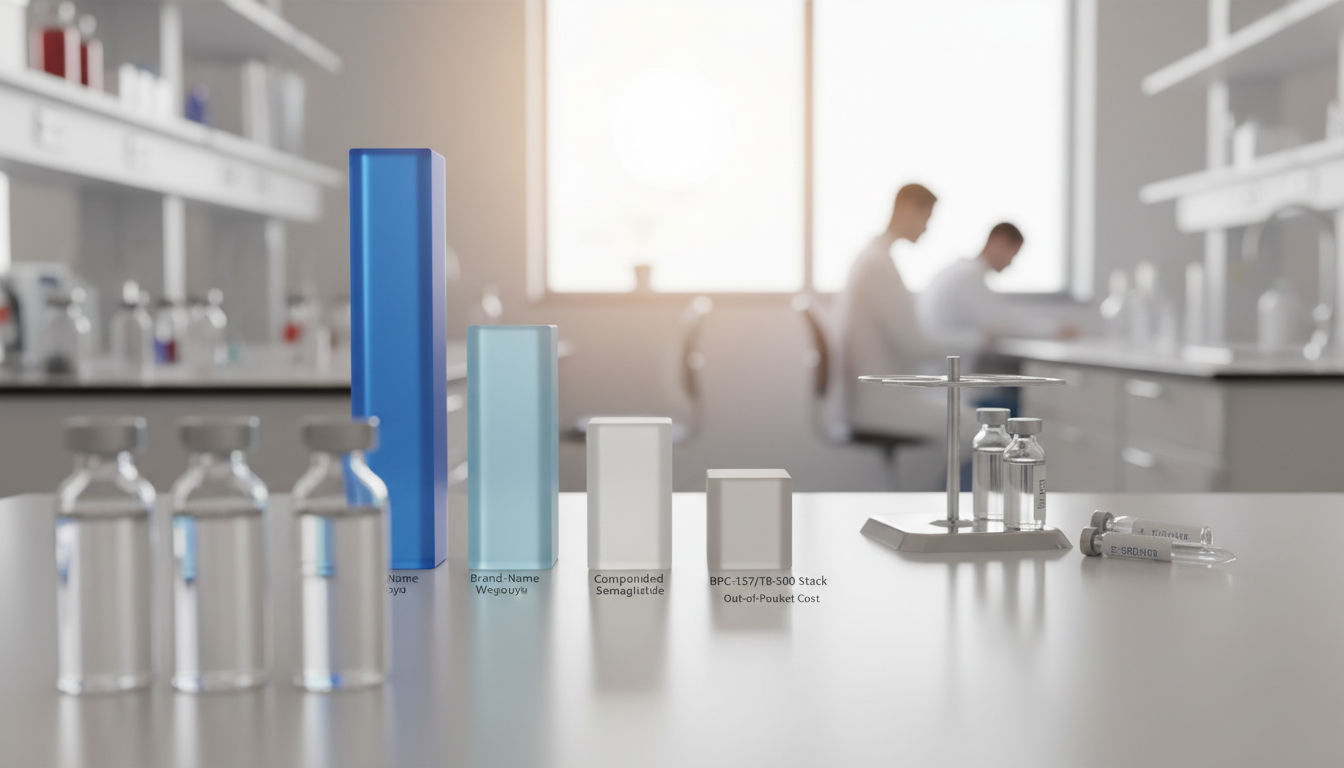
Brand-name, FDA-approved peptides are expensive. Without insurance, the price can be prohibitive for most people.
- Semaglutide (Wegovy/Ozempic): The cost for semaglutide can exceed $1,300 per month.
- Tirzepatide (Zepbound/Mounjaro): The monthly cost of tirzepatide often falls between $1,100 and $1,400.
However, with good insurance coverage for GLP-1s, the out-of-pocket cost can drop to a manageable co-pay. Insurance companies typically require a formal diagnosis, such as type 2 diabetes or a body mass index (BMI) over a certain threshold, to provide coverage.
Cost of Compounded & Unapproved Peptides
Compounded peptides are generally cheaper than brand-name drugs, which is a major reason for their popularity. However, they are almost never covered by insurance, so you will be paying fully out-of-pocket.
- Overall Range: A monthly regimen can cost anywhere from $150 to $2,000, depending on the peptide, dose, and clinic (Pure Peptide Clinic).
- Compounded GLP-1s: Compounded semaglutide costs often range from $250 to $500 per month.
- Wellness Peptides: Vials of peptides like BPC-157 or GHK-Cu can cost $300-$600 online, and comprehensive treatment plans through a clinic can run into thousands (AP News).
While the lower upfront price is appealing, it's important to factor in the lack of insurance support and the quality considerations discussed earlier. Our guide on what makes peptides cost so much provides a deeper breakdown.
Making a Choice: The Pros and Cons of Different Peptide Injections
So, who should choose which type of peptide injection? The decision should always be made with a qualified healthcare provider, but here are some general scenarios.
Scenario 1: You Have a Diagnosed Medical Condition
If you have a diagnosed condition for which an FDA-approved peptide exists—like type 2 diabetes, clinical obesity, or a specific hormone deficiency—the choice is clear. An FDA-approved drug is the recommended path.
- Pros: Proven safety and effectiveness, predictable results, quality assurance, and the possibility of insurance coverage.
- Cons: High cost without insurance and may require meeting specific diagnostic criteria.
Scenario 2: You Are Pursuing General Wellness, Anti-Aging, or Performance goals
This is where unapproved, compounded peptides are most often marketed. Individuals looking to recover from a nagging injury, improve skin quality, or boost energy might explore peptides like BPC-157, TB-500, or GHK-Cu.
- Pros: Lower out-of-pocket cost than brand-name drugs and may offer benefits not addressed by conventional medicine. Anecdotal evidence can be very compelling.
- Cons: Significant risks including unknown long-term safety, lack of strong human evidence, and potential for low-quality or contaminated products. No insurance coverage.
If you choose to explore this route, it is vital to proceed with extreme caution. This means finding a legitimate peptide clinic with an experienced provider who sources from reputable, vetted compounding pharmacies. The 2026 HHS directive may make it easier to find such providers, but it doesn't change the fundamental evidence gap for these substances.
Ready to take the next step and speak with a professional? Take our free 3-minute quiz to get matched with a licensed provider in your area who can help you explore your options safely.
FAQs
Are peptide injections safe?
Safety depends heavily on the type of peptide. FDA-approved peptide injections prescribed by a doctor for a specific condition have a well-studied safety profile from large clinical trials. Compounded or unapproved peptides carry higher risks due to a lack of long-term human safety data, potential impurities, and no regulatory oversight on quality.
Do peptide injections actually work?
Again, it depends. FDA-approved peptides like tirzepatide for weight loss are proven to be highly effective for their intended use. The effectiveness of many wellness peptides, such as BPC-157 for injury repair, is primarily supported by animal studies and anecdotal reports, with strong human clinical evidence being very limited (The Whole Human Health and Wellbeing).
How much do peptide injections cost a month?
The cost varies widely. FDA-approved brand-name drugs like Wegovy or Zepbound can cost over $1,300 a month without insurance. The total cost of peptide therapy using compounded peptides typically ranges from $150 to over $2,000 monthly, depending on the specific peptides and dosages, and is not covered by insurance (Pure Peptide Clinic).
Is BPC-157 legal to buy in 2026?
The legal status of BPC-157 is currently changing. A directive from the HHS Secretary in February 2026 moved to allow compounding pharmacies to legally prepare it, which may increase access through medical providers. However, a formal reclassification from the FDA is still pending. Selling it online labeled "for research use only" for human self-injection remains a regulatory gray area with significant risks. You should only use BPC-157 under the guidance of a qualified doctor from a reputable peptide clinic near you.
Contributing to evidence-based peptide education and provider transparency.
Too many clinics, not enough clarity?
We don't sell peptides. Tell us your goals and we'll connect you with a vetted provider who can figure out what actually makes sense for you.
See what's right for youRelated articles
How Protein and Muscle Growth Actually Work
It's not just about eating more. Understand the real science of protein and muscle growth to learn how much you need and the best timing to see results.
Peptide ScienceWhat are the best peptides for muscle growth and fat loss?
Exploring peptides for muscle growth and fat loss? Discover the most effective options for body recomposition, how they actually work, and what to expect.
Peptide ScienceThe Key L-Lysine Benefits for Skin, Immunity & Stress
Discover the science-backed l-lysine benefits. Our guide covers how this essential amino acid may boost collagen, fight viruses, and aid calcium absorption.