What's the BPC 157 Cost Per Month in 2026?
Trying to budget the true bpc 157 cost per month? We explain the 2026 price differences between research sites, clinics, and why one is so much cheaper.
This content is for informational purposes only and does not constitute medical advice. Consult with a qualified healthcare professional before starting any new treatment.
BPC-157 has generated significant interest for its potential role in healing and recovery. If you're exploring this peptide, one of your first questions is likely about the bpc 157 cost per month. The answer is complicated. In 2026, prices can range from as low as $40 for a single vial from a research site to over $900 for a comprehensive, medically supervised program. This vast difference comes down to the source, quality, and level of professional oversight you choose.
After a period of regulatory uncertainty, a February 2026 FDA reclassification has made BPC-157 available again through licensed compounding pharmacies with a prescription (PeakedLabs, 2026). However, it remains an unapproved medication, which heavily influences its cost and accessibility. This guide breaks down the real numbers so you can understand what to expect.
Quick BPC-157 Price Summary: What to Expect in 2026
The price you pay for BPC-157 depends entirely on the path you take. You can source it yourself from unregulated vendors or work with a medical clinic for a prescription and guidance. The table below outlines the most common scenarios and their associated costs.
| Source / Option | Estimated Monthly Cost (2026) | What's Typically Included |
|---|---|---|
| Research Vendor (Self-Sourced) | $40 - $150 | The peptide vial only (e.g., 5mg or 10mg). No medical advice, supplies, or quality guarantee. |
| Online Clinic (Oral Capsules) | $100 - $250 | A 30-day supply of compounded oral capsules and basic medical support. |
| Online Clinic (Injectable Course) | $200 - $500 | A 30-day supply of injectable BPC-157, administration supplies, and ongoing medical support. |
| Full Telehealth Program (First Month) | $350 - $900 | Initial doctor consultation, baseline lab work, a 30-day supply of medication, and all necessary supplies. |
| In-Person Regenerative Clinic | $500 - $2,000+ | All of the above plus in-person consultations, more extensive lab panels, and potentially other combined therapies. |
Disclaimer: These are estimated prices based on market analysis in 2026. Actual costs may vary by provider and location.
Will Insurance Cover the BPC-157 Cost Per Month?
In almost all cases, the answer is no. Health insurance will not cover the bpc 157 cost per month. This is the single biggest factor making it a direct-to-consumer, out-of-pocket expense.
The primary reason is that BPC-157 is not an FDA-approved drug for any medical condition. Insurers build their formularies, the list of covered drugs, almost exclusively around FDA-approved medications. Even though regulatory changes in February 2026 restored its status to Category 1, allowing licensed pharmacies to compound it, this action is not the same as FDA approval (PeakedLabs, 2026). Compounded medications exist in a different category and are rarely covered by insurance plans.
Whether you have an HMO, PPO, or another plan type, the policy's stance on unapproved and investigational therapies will almost certainly exclude BPC-157. These treatments are considered experimental, and insurers will not pay for them outside of a formal, sanctioned clinical trial.
What about Health Savings Accounts (HSAs) or Flexible Spending Accounts (FSAs)? Using these funds for BPC-157 is also very unlikely to be approved. For a medical expense to be eligible, it generally must be for the diagnosis, cure, mitigation, treatment, or prevention of a disease. Since BPC-157 lacks FDA approval for any specific disease, an attempt to use HSA/FSA funds could be denied or challenged during an audit. According to at least one analysis, its research status makes it ineligible for HSA/FSA use (PeptideClinicLocator.com, 2026).
The only potential avenue for accessing BPC-157 at no cost is by enrolling in a clinical trial. These research studies provide the medication and associated medical care for free, but spots are extremely limited and have strict eligibility criteria.
BPC-157 Cost Per Month Without Insurance (Cash Pay)
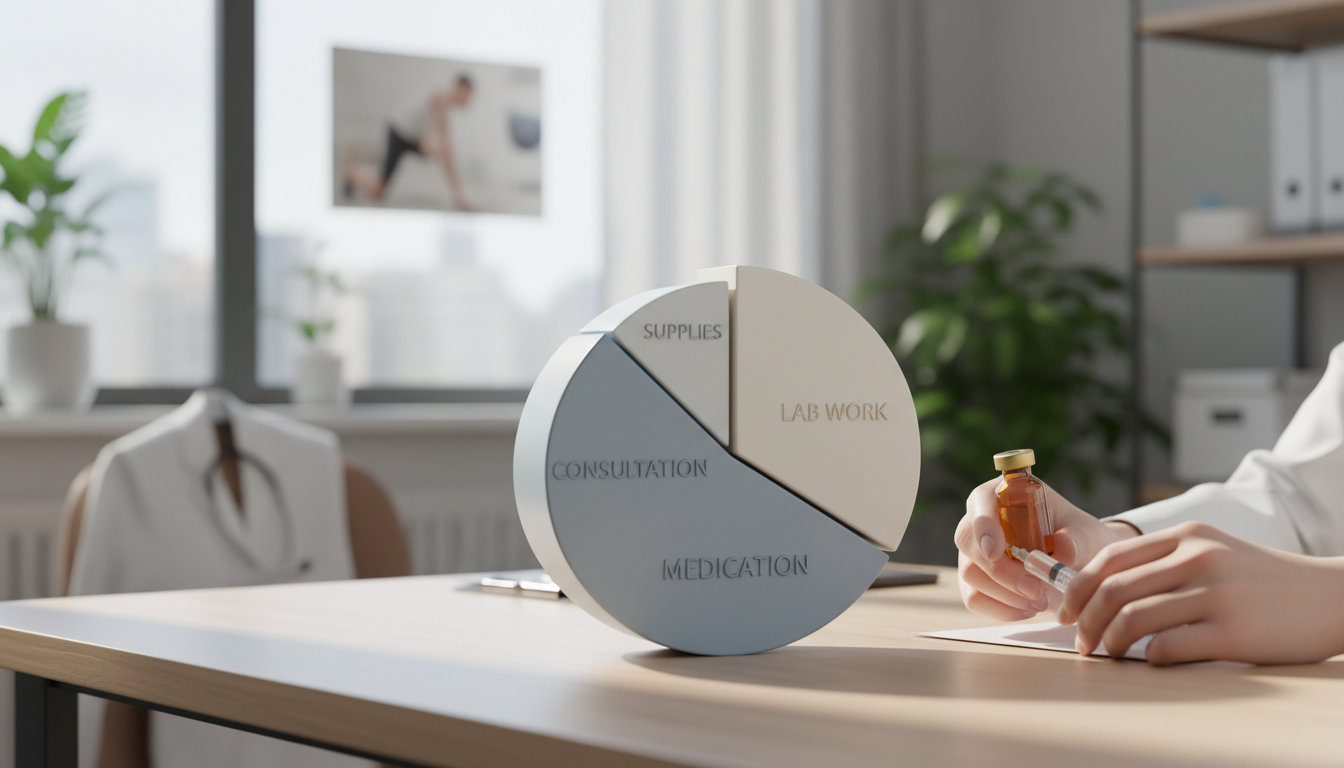
Since insurance is not an option, nearly everyone pays for BPC-157 with cash. The total cash-pay price is not just the cost of the peptide itself. A safe and effective protocol involves several components, each with its own price tag.
1. The Peptide Itself: This is where the price varies the most.
- Research-Grade Vials: Sourcing BPC-157 from online "research chemical" vendors is the cheapest option, running from $35 to $65 for a 5mg vial (Formblends, 2026). A higher concentration, like a 10mg vial, might cost $55 to $100 (Peptide Publicus, 2026). At a typical
dosage of bpc 157 peptide(250-500 mcg/day), a 5mg vial only lasts 10 to 20 days, putting the monthly medication cost between $60 and $195. This path carries significant risks regarding purity and safety, as it lacks medical oversight. - Prescription-Grade Compounded Peptide: When you go through a medical clinic, you get pharmaceutical-grade BPC-157 from a licensed compounding pharmacy. The cost for the medication alone is higher, typically $100 to $250 per month (Treatment Comparison, 2026). This premium pays for sterility testing, verified purity, and legal prescription fulfillment. You can read more about the differences in our guide on BPC-157 capsules vs. injections.
2. Consultation Fees: Medical supervision is a critical part of the cost.
- Initial Consultation: A first-time appointment with a provider to discuss your goals and determine if you are a candidate can cost $150 to $400 (PeakedLabs, 2026).
- Follow-Up Visits: Subsequent check-ins may cost $75 to $200, though many clinics bundle these into their monthly program fee.
3. Lab Work: A responsible clinic will require baseline blood tests before prescribing therapy. These labs can add $100 to $350 to your initial startup cost (PeakedLabs, 2026). This step is essential for safety and is completely skipped in the research vendor model.
4. Supplies: If you choose the injectable form, you will need supplies. This includes bacteriostatic water for reconstitution, alcohol swabs, and insulin syringes. Expect to pay an additional $10 to $20 per month for these items (Formblends, 2026).
When you add it all up, a complete first-month course from a reputable clinic can cost $350 to $900. After the initial consult and labs, ongoing months typically drop to $200 to $500.
Feeling overwhelmed by the options? Our quick quiz can help you find a vetted provider and see personalized cost estimates.
Comparing Online Clinic Prices for BPC-157
Telehealth has made peptide therapy more accessible. Online clinics offer a convenient way to get a legal prescription and medical guidance without leaving home. While prices vary, they follow a similar structure. Here’s a comparison of what you might expect from popular online providers in 2026.
| Clinic / Provider Type | Initial Consultation | Est. Monthly BPC-157 Cost (Medication) | Notes |
|---|---|---|---|
| AgelessRx | Often included in program | $200 - $400 | Typically offers bundled programs that include medical support and medication. |
| Defy Medical | ~$295 | $150 - $350 | A-la-carte pricing structure; consultation, labs, and medication are often billed separately. |
| Viking Alternative Medicine | ~$199 - $299 | $200 - $400 | Offers comprehensive programs that may include follow-ups in the package price. |
| General Telehealth Platforms | $75 - $150 | $125 - $300 | Lower upfront consultation fees but may have less specialized support. |
Note: These are estimates for illustrative purposes. Please contact the clinics directly for current pricing. Providers like these offer a much safer alternative to unregulated sites and can be a good starting point for your search. You can browse more options on our clinics directory.
The biggest variable between clinics is their pricing model. Some use an a-la-carte approach, where you pay for the consultation, labs, and medication separately. Others offer an all-inclusive monthly or quarterly subscription that bundles everything together. This can sometimes be more expensive upfront but often provides better value and more predictable costs over time. The overall edge peptide therapy cost at these clinics reflects the inclusion of medical oversight, which is crucial for safety.
How to Save Money on Your BPC-157 Treatment
While BPC-157 is an out-of-pocket expense, there are several ways to manage the cost and find more affordable options without compromising on safety.
- Choose Telehealth Over In-Person Clinics. Online providers have lower overhead costs than brick-and-mortar clinics. As a result, their programs can be 25% to 40% cheaper for the same quality of care and medication (PeptideClinicLocator.com, 2026).
- Ask About Multi-Month Packages. Many clinics offer a discount if you commit to a longer treatment course, such as a 3-month or 6-month supply. This can often reduce the per-month cost by 10% to 20%.
- Consider Oral Capsules for Gut Health. If your primary goal is gut repair, oral BPC-157 might be a viable and cheaper option. Monthly costs for capsules range from $45 to $120, whereas injectables run $80 to $200 for just the medication (Peptide Publicus, 2026). Discuss which form is right for you with your doctor.
- Inquire About Different Compounding Pharmacies. If your provider is open to it, they may be able to send your prescription to a different licensed 503A or 503B compounding pharmacy. Prices for the same compound can vary between pharmacies.
- Use Our Free Tools. Before you commit, use a tool like our peptide comparison page to see how BPC-157 stacks up against other options. Understanding the full landscape can prevent you from spending money on a treatment that isn't the best fit for your goals.
One final option people consider is buying from unregulated research chemical websites. While this is undeniably the cheapest way to acquire the peptide, we strongly advise against it. These products come with no guarantee of purity, sterility, or even identity. You could be injecting a contaminated substance or the wrong compound entirely, which can lead to serious health issues. You can learn more about potential dangers in our article on BPC-157 side effects. The higher cost of a clinical program pays for safety and peace of mind.
Want to see which cost-saving options might work for you? Our free quiz takes 3 minutes and matches you with vetted providers who can discuss pricing and protocols.
Is the BPC-157 Cost Per Month Worth It?
Whether the bpc 157 cost per month is a worthwhile investment depends entirely on your personal situation, goals, and budget. For someone dealing with a nagging injury that hinders daily life or athletic performance, a monthly cost of $300 to $500 might be a small price to pay for accelerated recovery and a return to normal function.
The value proposition is rooted in its potential benefits, which, while primarily shown in preclinical studies, are compelling. Research suggests BPC-157 may accelerate the healing of muscle, tendon, and ligament injuries and exhibit protective effects on the gut (PeptideVerdict, 2026). The potential bpc 157 10mg benefits for serious injuries are what drive most people to consider the therapy.
When you compare its cost to alternatives, the picture becomes clearer. A single course of physical therapy can easily exceed $1,000. More advanced treatments, like certain types of cost of hgh peptide therapy, can run into thousands of dollars per month. In that context, BPC-157 can be a more accessible option for regenerative medicine. For more context on other therapies, you can read our pillar post on NAD injections benefits.
Ultimately, the value is subjective. The cost of a medically supervised program ($350-$900 for the first month) buys you a high-purity product, professional guidance, and a protocol designed for your specific needs. The cost of a research vial ($40-$150) only buys the substance itself, leaving you to manage the significant risks on your own. For most people, the assurance of safety and professional oversight makes the clinical route the only one worth considering.
Frequently Asked Questions
What is a typical dosage of BPC-157 peptide?
A common dosage for BPC-157 is between 250 and 500 micrograms (mcg) per day, administered via subcutaneous injection near the site of injury. The optimal bpc 157 dosage for women is generally the same as for men, though it is often calculated based on body weight. Always follow the specific protocol provided by your doctor. You can see more examples in our BPC-157 dosing chart.
Are BPC-157 capsules as effective as injections?
It depends on the therapeutic goal. For systemic or localized issues like tendon and muscle repair, injections provide superior bioavailability. For gastrointestinal issues, oral capsules are specifically designed to survive the stomach acid and act directly on the gut lining, making them the preferred choice for that purpose. For a deeper dive, check bpc 157 peptide capsules vs injections in our comparison guide.
What are the main side effects of BPC-157 tablets or injections?
Based on animal studies and anecdotal reports from users, BPC-157 is generally well-tolerated. The most commonly reported side effects are minor and temporary, such as redness or irritation at the injection site. Some users report dizziness, nausea, or changes in blood pressure. The greatest risk of adverse effects comes from using impure or contaminated products from unregulated sources.
How do I inject BPC-157 peptide?
If prescribed injectable BPC-157, your clinic will provide detailed instructions. Generally, the process involves reconstituting the lyophilized (freeze-dried) peptide powder with bacteriostatic water. You then draw the prescribed dose into an insulin syringe and inject it subcutaneously (into the fatty tissue) of the abdomen or near an injury site. Never attempt to self-inject without guidance from a medical professional.
Ready to find a qualified provider and get a personalized cost estimate? Take our free 3-minute quiz to get matched with a licensed clinic specializing in peptide therapy.
Contributing to evidence-based peptide education and provider transparency.
Too many clinics, not enough clarity?
We don't sell peptides. Tell us your goals and we'll connect you with a vetted provider who can figure out what actually makes sense for you.
See what's right for youRelated articles
What Are the GHK-Cu Peptide Benefits and Side Effects?
Everyone is talking about GHK-Cu. This safety guide offers a balanced look at the ghk cu peptide benefits and side effects, cutting through the hype.
Tissue RepairThe Truth About Oral BPC 157 Side Effects
Considering oral BPC-157? We break down the potential oral BPC 157 side effects, looking at what animal studies and real user anecdotes actually report.
Tissue RepairWhen Is BPC-157 Effective Orally & When It's Not
Wondering is BPC-157 effective orally? While it's uniquely stable in stomach acid, its effect depends on your issue. Learn when oral BPC works and when another form might be better.