Semaglutide Dosing Chart: Titration Schedule, Doses, and What Your Provider Should Tell You
A clear semaglutide dosing chart covering Wegovy and Ozempic titration schedules, oral semaglutide dosing, what happens if you miss a dose, and common mistakes to avoid.
Why Dosing Matters More Than You'd Think
Semaglutide doesn't start at its full dose. Not because the manufacturer wants to drag things out, but because jumping straight to a therapeutic dose will almost certainly make you sick. The gradual ramp-up — called titration — is how your GI system adjusts to a drug that fundamentally changes how fast your stomach empties and how your brain processes hunger signals.
Skip a step, rush the schedule, or go in without understanding how the doses map out, and you'll end up dealing with avoidable side effects. A good provider walks you through this before you ever take your first injection. Here's what that conversation should cover.
Wegovy Injection Titration Schedule (Standard: Up to 2.4 mg)
Wegovy is semaglutide approved specifically for chronic weight management. The titration follows a set escalation pattern, with each dose held for four weeks before moving up.
| Phase | Weekly Dose | Duration | Purpose |
|---|---|---|---|
| Month 1 | 0.25 mg | 4 weeks | Introduction — minimal therapeutic effect, body begins adjusting |
| Month 2 | 0.5 mg | 4 weeks | First meaningful dose — appetite suppression starts |
| Month 3 | 1 mg | 4 weeks | Therapeutic range — noticeable hunger reduction |
| Month 4 | 1.7 mg | 4 weeks | Approaching maintenance — GI adaptation continues |
| Month 5+ | 2.4 mg | Ongoing | Full maintenance dose — target for most patients |
The total escalation period is 16 weeks (four months) before you reach the standard maintenance dose of 2.4 mg weekly. Some providers extend the time at each step — holding at a given dose for six or eight weeks instead of four — if a patient is experiencing significant nausea or other GI symptoms. That's not falling behind. That's good medicine.
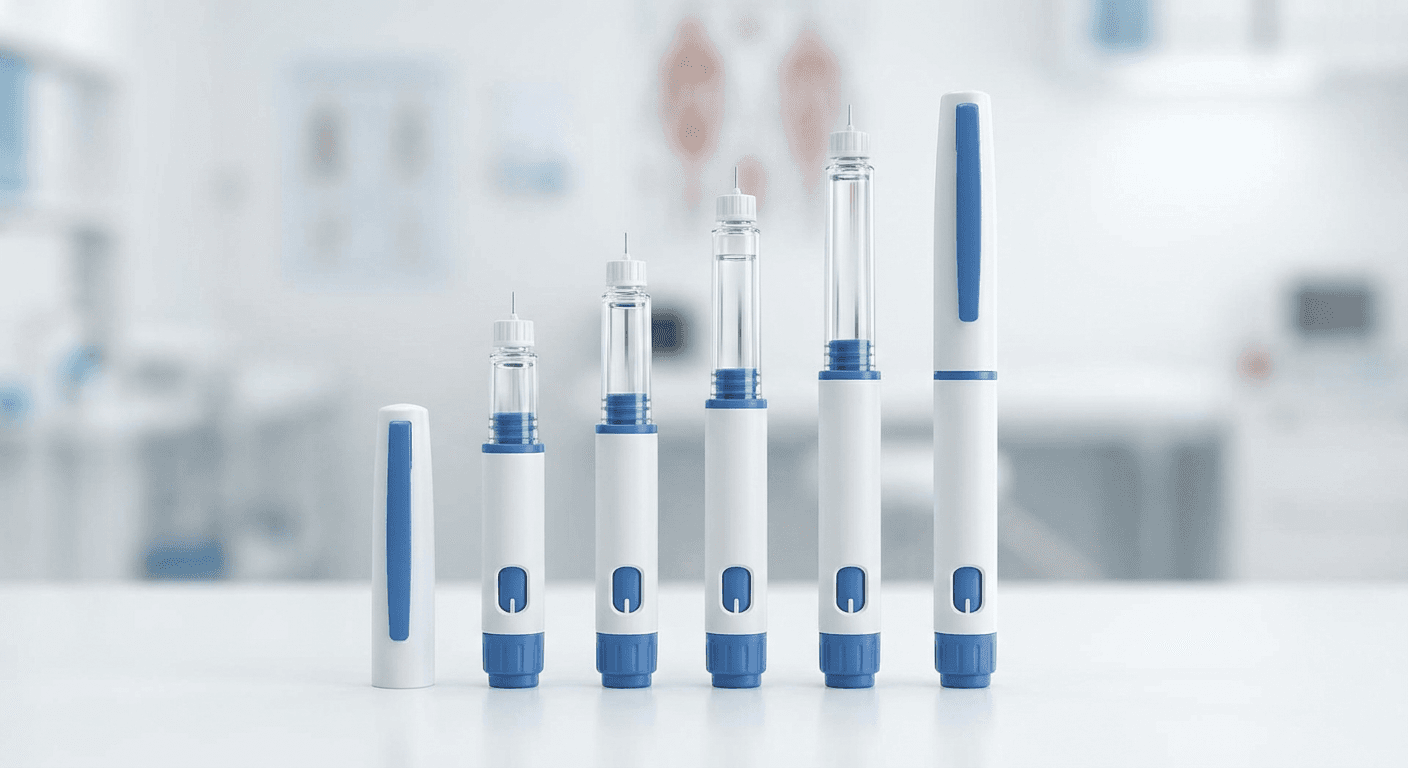
Each Wegovy dose comes in a separate, color-coded pen. You don't adjust the dose on a single pen — each escalation step uses a new pen strength. Your provider (or pharmacy) will prescribe the appropriate pen for each phase.
Wegovy HD: The New 7.2 mg Option
In March 2026, the FDA approved Wegovy HD (semaglutide 7.2 mg) for patients who have already tolerated 2.4 mg for at least four weeks and need additional weight reduction. The STEP UP trial showed 20.7% mean body weight loss at this dose, with nearly a third of participants losing 25% or more.
| Phase | Weekly Dose | Duration | Notes |
|---|---|---|---|
| Standard titration | 0.25 mg → 2.4 mg | 16 weeks | Same schedule as above |
| HD transition | 3.6 mg | 4 weeks | Intermediate step to HD dose |
| HD maintenance | 7.2 mg | Ongoing | Highest approved semaglutide dose |
Wegovy HD is not for everyone. The higher dose came with more frequent GI side effects (70.8% vs. 61.2% at 2.4 mg) and a notable rate of dysesthesia — altered skin sensation — at about 23%. These symptoms generally resolved over time. Your provider will evaluate whether the additional weight loss potential justifies the added side effect burden for your situation. Novo Nordisk plans to launch the Wegovy HD pen in April 2026.
For a personalized view of your titration timeline, including dose dates and what to expect at each stage, try the dose titration calculator.
Ozempic Dosing Schedule (Diabetes Indication)
Ozempic is the same molecule as Wegovy but is prescribed for type 2 diabetes at different doses. The FDA approved a higher 2 mg dose for Ozempic in 2024 for patients who need tighter blood sugar control.
| Phase | Weekly Dose | Duration | Purpose |
|---|---|---|---|
| Weeks 1-4 | 0.25 mg | 4 weeks | Starter dose |
| Weeks 5-8 | 0.5 mg | 4+ weeks | First therapeutic dose for blood sugar |
| Optional increase | 1 mg | Ongoing | Standard maintenance for most patients |
| Optional increase | 2 mg | Ongoing | Maximum dose for additional glycemic control |
The key difference from Wegovy: Ozempic's top approved dose for diabetes is 2 mg, while Wegovy goes to 2.4 mg (or now 7.2 mg) for weight management. Some providers prescribe Ozempic off-label for weight loss, but the dosing isn't identical to Wegovy's approved protocol. If weight loss is your primary goal, Wegovy or the new oral formulation is the intended path.
Oral Semaglutide Dosing
There are now two oral semaglutide products, and they dose very differently from the injections.
Oral Wegovy (Weight Management)
Approved in December 2025, this is the first oral GLP-1 medication for chronic weight management. It uses the same active ingredient but at much higher milligram amounts because oral bioavailability is lower than injectable.
| Phase | Daily Dose | Duration |
|---|---|---|
| Titration start | 3 mg | 4 weeks |
| Step 2 | 7 mg | 4 weeks |
| Step 3 | 14 mg | 4 weeks |
| Step 4 | 25 mg | 4 weeks |
| Maintenance | 50 mg | Ongoing |
The OASIS 4 trial demonstrated 16.6% mean weight loss at 64 weeks with the 25 mg dose. Novo Nordisk launched oral Wegovy in January 2026 at approximately $149/month for the starting dose.
Critical dosing rule: Oral semaglutide must be taken first thing in the morning on an empty stomach with no more than 4 ounces of plain water. Then wait at least 30 minutes before eating, drinking anything else, or taking other medications. This isn't optional advice — the drug's absorption depends on it. Food, coffee, or other pills in your stomach will dramatically reduce how much semaglutide actually makes it into your system.
Rybelsus (Diabetes)
Rybelsus is the older oral semaglutide formulation for type 2 diabetes. Available in 3 mg, 7 mg, and 14 mg tablets. The 14 mg maximum is well below the oral Wegovy doses, which is why Rybelsus produces roughly 5% weight loss compared to oral Wegovy's 16.6%. Same fasting requirement applies.
What Happens If You Miss a Dose
This depends on how late you are.
For injectable semaglutide (Ozempic/Wegovy): If you remember within five days of your scheduled injection day, take it as soon as you can and then resume your regular weekly schedule. If more than five days have passed, skip that dose entirely and take your next one on your regular day. Never double up — two doses within 48 hours significantly increases the risk of severe nausea and vomiting.
For oral semaglutide: If you miss a day, just skip it. Take your normal dose the next morning. Don't take two pills to catch up.
After missing two or more weekly injections in a row: Your body may have partially readjusted, and resuming at your previous dose could trigger stronger side effects. Some providers suggest stepping back one dose level and re-titrating. This is a good reason to contact your provider rather than just picking up where you left off.
Missing an occasional dose won't undo your progress. Semaglutide has a half-life of about a week, so one missed injection doesn't mean the drug disappears from your system overnight. But consistency matters for sustained results.
Why Titration Matters — the Mechanism
The dose escalation isn't arbitrary. When you first start a GLP-1 medication, your GLP-1 receptors in the gut, brain, and pancreas aren't accustomed to sustained activation at pharmacological levels. Jumping to a full dose overwhelms the system.
The slow ramp gives your gut time to adapt to slower gastric emptying. It gives the nausea pathways in your brainstem time to desensitize. And it gives your provider data points at each level to see how you're responding — both in terms of side effects and early weight or blood sugar changes.
Patients who rush titration (or providers who skip dose steps) consistently report worse GI symptoms, higher dropout rates, and more emergency room visits for dehydration from uncontrolled vomiting. The four-week-per-step protocol exists because the clinical trials tested it that way and found it produced the best balance of efficacy and tolerability.
Common Dosing Mistakes
Skipping the low doses because they "don't do anything." The 0.25 mg dose isn't meant to produce weight loss. It's meant to prepare your body for the doses that do. Skipping it is the single most common cause of preventable severe nausea.
Titrating up on a fixed calendar regardless of symptoms. If you're still having significant nausea at 1 mg after four weeks, moving to 1.7 mg on schedule will probably make things worse. A good provider adjusts the pace based on how you're tolerating each level. There's no prize for reaching 2.4 mg as fast as possible.
Injecting at inconsistent times or days. Semaglutide works best with steady-state blood levels. Injecting on Monday one week and Friday the next creates peaks and valleys that can worsen side effects. Pick a day, pick a rough time, and stick with it.
Not adjusting the dosing window for oral semaglutide. The 30-minute fasting rule before and after oral semaglutide exists for absorption, not safety. If you eat within that window, the drug won't hurt you. It just won't work properly. Some patients accidentally sabotage their results by not taking the fasting requirement seriously.
Splitting or altering pen doses. Wegovy pens are single-dose and pre-set. You can't dial a half-dose or use half a pen this week and half next week. Each pen delivers one fixed dose. Using them any other way risks getting an inaccurate amount.
Semaglutide Dosing Compared to Tirzepatide
If you're weighing semaglutide against tirzepatide (Mounjaro/Zepbound), the dosing schedules are similar in structure but differ in the numbers.
| Semaglutide (Wegovy) | Tirzepatide (Zepbound) | |
|---|---|---|
| Starting dose | 0.25 mg weekly | 2.5 mg weekly |
| Dose steps | 0.25 → 0.5 → 1 → 1.7 → 2.4 mg | 2.5 → 5 → 7.5 → 10 → 12.5 → 15 mg |
| Time to maintenance | ~16 weeks | ~20 weeks |
| Maximum dose | 7.2 mg (Wegovy HD) | 15 mg |
| Oral option | Yes (oral Wegovy, Rybelsus) | No |
| Injection frequency | Once weekly | Once weekly |
Both use four-week intervals between dose increases. Tirzepatide has one more titration step, adding about a month to reach maximum dose. For a full side-by-side comparison including efficacy and cost, see the semaglutide vs. tirzepatide guide.
Working With Your Provider on Dose Adjustments
Titration isn't purely mechanical. The best outcomes happen when patients and providers communicate about what's working and what isn't at each dose level.
Things worth telling your provider at each check-in: how severe your nausea is on a scale of 1 to 10, whether GI symptoms are improving or plateauing, whether you're noticing appetite changes, any new symptoms that appeared after the last dose increase, and whether you're struggling with the injection itself.
Providers can adjust the schedule in several ways. They can extend the time at any dose step. They can hold at a lower maintenance dose (1.7 mg instead of 2.4 mg) if the side effects at the higher dose outweigh the marginal benefit. They can also prescribe short-term antiemetics during particularly rough transitions.
If you don't have a provider yet, the provider matching quiz connects you with licensed clinics that specialize in GLP-1 prescribing and take the time to manage titration properly. You can also filter for providers offering the oral Wegovy pill if you'd rather avoid injections entirely.
For a broader look at what treatment costs across different providers and formulations, the cost guide covers pricing in detail. And if you want to find a legitimate clinic, that guide walks through the red flags to watch for.
Semaglutide Dosing Chart FAQ
What is the Wegovy titration schedule?
Wegovy starts at 0.25 mg weekly for four weeks, then increases every four weeks through 0.5 mg, 1 mg, and 1.7 mg before reaching the 2.4 mg maintenance dose at week 17. The full escalation takes about four months. Patients on the new Wegovy HD can continue to 3.6 mg and then 7.2 mg weekly if their provider determines additional weight loss is needed and the 2.4 mg dose was well-tolerated. Each dose level uses a separate pre-filled pen.
What is the maximum dose of semaglutide for weight loss?
As of March 2026, the maximum FDA-approved dose of semaglutide for weight loss is 7.2 mg weekly (Wegovy HD). This is for patients who have completed the standard titration to 2.4 mg, tolerated that dose for at least four weeks, and could benefit from additional weight reduction. For diabetes (Ozempic), the maximum is 2 mg weekly. The oral Wegovy pill tops out at 50 mg daily.
Can I start semaglutide at a higher dose to lose weight faster?
No. Starting at a higher dose skips the adaptation period your body needs and will very likely cause severe nausea, vomiting, and diarrhea. The titration schedule exists because the clinical trials proved it produces the best balance of weight loss and tolerability. Providers who skip dose steps are not doing you a favor. If your current provider suggests starting above 0.25 mg without a specific medical reason, that's a red flag.
What if I can't tolerate the 2.4 mg dose?
You don't have to reach 2.4 mg. Some patients maintain at 1.7 mg or even 1 mg and still achieve meaningful weight loss, just somewhat less than what the highest dose produces. Your provider can hold you at whatever dose gives the best balance of results and tolerability for your body. The dose titration calculator can help you and your provider plan an adjusted schedule.
How is oral semaglutide dosing different from the injection?
Oral semaglutide uses much higher milligram amounts because only a fraction of the drug is absorbed through the stomach lining. The oral Wegovy pill titrates from 3 mg to 50 mg daily over about 16 weeks. It must be taken on an empty stomach with a small sip of water, then you wait 30 minutes before eating or drinking. Injectable semaglutide is a once-weekly shot with no food timing requirements. Both deliver the same active molecule — the dosing difference is purely about absorption.
How do Ozempic and Wegovy doses compare?
Both contain semaglutide. Ozempic is approved for type 2 diabetes and tops out at 2 mg weekly. Wegovy is approved for weight management and goes up to 2.4 mg (or 7.2 mg with Wegovy HD). The starting dose is the same for both: 0.25 mg weekly. The titration steps diverge after 0.5 mg, with Ozempic moving to 1 mg or 2 mg, and Wegovy continuing through 1 mg, 1.7 mg, and 2.4 mg. If weight loss is your goal, Wegovy's dosing protocol is designed for that purpose. Your provider can explain which is appropriate for your situation.
Contributing to evidence-based peptide education and provider transparency.
Too many clinics, not enough clarity?
We don't sell peptides. Tell us your goals and we'll connect you with a vetted provider who can figure out what actually makes sense for you.
See what's right for youRelated articles
A Step-by-Step Gelatin Recipe for Weight Loss
Seen the viral "pink trick"? We break down the simple gelatin recipe for weight loss. Learn our step-by-step method to help manage hunger and feel full.
GLP-1 Weight LossOzempic Cost in 2026: What You'll Actually Pay
The 2026 Ozempic cost can be anywhere from $25 to over $1,400 a month. Discover why and learn how to find savings with or without insurance coverage.
GLP-1 Weight LossHow Zep Weight Loss Works and What to Expect
Thinking about zep weight loss? We cover how this drug works, what realistic results look like, common side effects, and how it compares to Ozempic.