Are Melanotan II Peptide Benefits Worth the Risks?
Curious about melanotan ii peptide benefits? We break down its popular uses for tanning and libido, plus the significant risks you need to consider.

This content is for informational purposes only and does not constitute medical advice.
Melanotan II, often called MT-2 or the "Barbie drug," is one of the most well-known yet controversial compounds in the world of peptide research. Originally developed for sunless tanning, the list of potential melanotan ii peptide benefits has grown to include effects on sexual arousal and appetite. But unlike many other popular peptides, MT-2 carries a unique history and a significant list of warnings from regulatory bodies.
This guide provides a balanced, evidence-based look at Melanotan II in 2026. We will explore its documented effects, its complex safety profile, and its complicated status as an unapproved research chemical. By understanding both the potential upsides and the considerable risks, you can have a more informed discussion with your healthcare provider. For a broader understanding of what peptides are, you can read our complete guide on peptides.
Overview: What Is Melanotan II and Why Is It So Controversial?
Melanotan II is a synthetic peptide, a lab-created version of a natural hormone called alpha-melanocyte-stimulating hormone (α-MSH). Researchers at the University of Arizona developed it in the 1980s with a specific goal, to find a way to induce a protective tan without needing harmful UV sun exposure. The idea was that stimulating the body's own tanning mechanism could lower skin cancer rates.
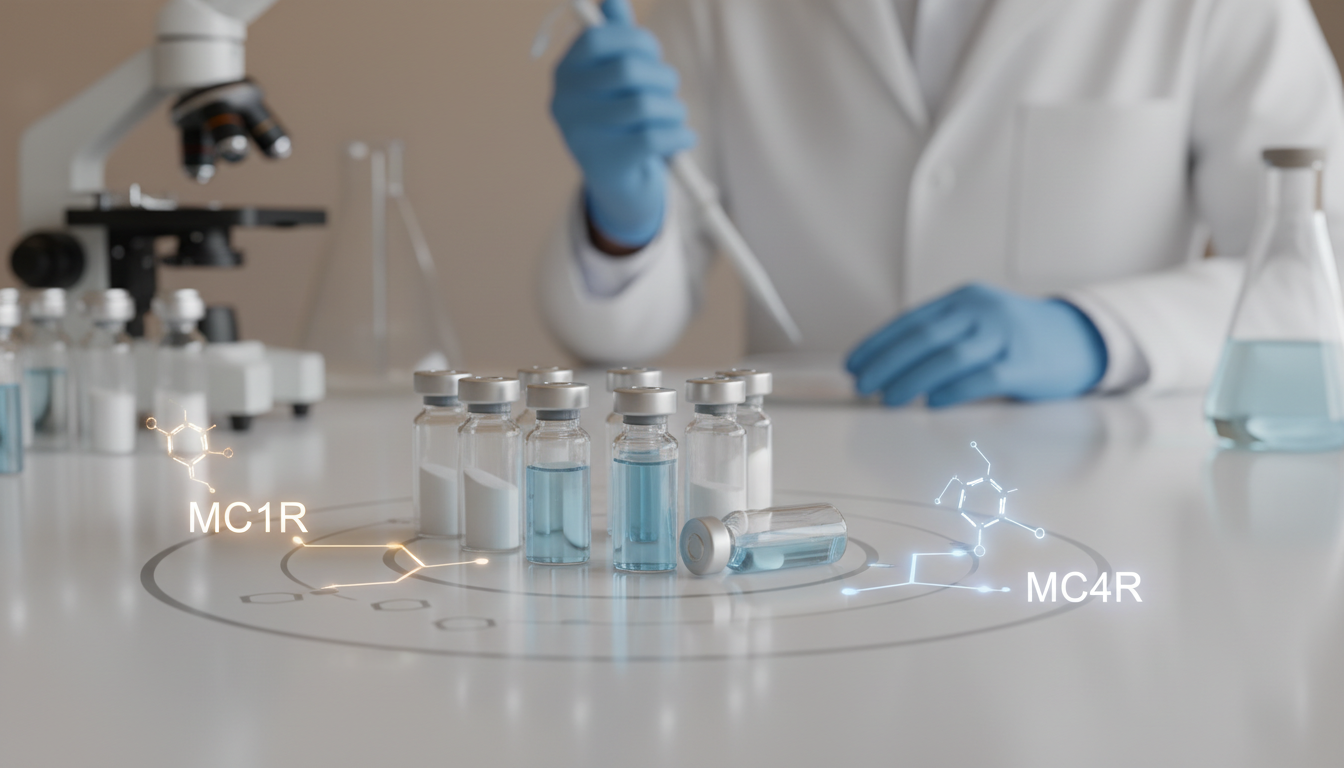
The peptide works by binding to and activating a group of receptors in the body known as melanocortin receptors. This is where its power, and its problems, begin. MT-2 is non-selective, meaning it doesn’t just activate one receptor, it activates several at once (PeptideInsight).
- MC1R (Melanocortin 1 Receptor): Activation of this receptor is responsible for increasing the production of melanin, the pigment that darkens skin, hair, and eyes. This is the mechanism behind MT-2's tanning effect.
- MC4R (Melanocortin 4 Receptor): Activation of this receptor is linked to sexual arousal, appetite, and metabolism. This leads to MT-2's other well-known effects.
While early clinical trials in the 1990s confirmed MT-2 could produce a tan and had surprising effects on sexual function, its development was officially stopped around 2003. The reason was its non-selective nature and the resulting side effects, including nausea, blood pressure changes, and concerns about its long-term impact on skin moles (PeptideInsight).
Despite never receiving FDA or EMA approval for any medical use, MT-2 became widely available through online "research chemical" vendors. This creates a high-risk situation where consumers self-administer an unapproved substance from sources with no quality control, which is why regulatory agencies have issued multiple warnings against its use (Peptide Breakdown).
The Primary Draw: Analyzing Melanotan II Peptide Benefits for Skin Tanning
The most sought-after of all melanotan ii peptide benefits is its ability to induce a deep, natural-looking tan. For individuals with fair skin who burn easily, the concept of achieving a tan that might offer some photoprotection is highly appealing. The science behind this effect is well-documented in early human trials.
Research has shown that MT-2 effectively stimulates melanin production by activating the MC1R. In one Phase I trial, participants showed measurable changes in skin pigmentation after just five low-dose subcutaneous injections, all without significant UV exposure (The Peptide Catalog). This ability to tan without the sun is the peptide's main claim to fame.
However, the results are not uniform and depend heavily on your natural skin tone, often categorized by the Fitzpatrick scale.
- Fitzpatrick Skin Types III-IV: Individuals who tan relatively easily may see visible skin darkening within 5 to 10 days of starting a loading protocol.
- Fitzpatrick Skin Types I-II: Those with very fair skin who typically burn may need 3 to 4 weeks to notice subtle changes. For this group, results are often slower and less dramatic.
You can find a more detailed breakdown in our guide to MT-2 peptide results. It's also worth noting that one of the first visible signs of the peptide working is a darkening of existing freckles and moles. This is a direct indicator that melanocytes, the body's pigment-producing cells, are being activated.
Although MT-2 can work without sun, its effects are significantly accelerated by small amounts of UV exposure. Users often report that just 15-20 minutes of sun exposure a few times a week can dramatically deepen the tan. The theory is that the peptide primes the melanocytes, and the UV light then triggers a much stronger melanin release than would normally occur.
The Unexpected Effect: Unpacking Melanotan II Peptide Benefits for Sexual Health
While tanning was the intended goal, one of the most powerful melanotan ii peptide benefits was discovered by accident. During early clinical trials for tanning, male participants began reporting an unusual side effect: spontaneous and unsolicited erections. This led researchers to investigate MT-2’s potential as a treatment for sexual dysfunction.
This effect is caused by MT-2's activation of the MC4R in the brain, which is known to play a key role in sexual arousal pathways. Unlike drugs like Viagra that work by increasing blood flow to the genitals, MT-2 appears to work on a central, neurological level to directly increase libido and sexual response.
The clinical evidence for this is surprisingly strong.
- A 1998 study on men with psychogenic erectile dysfunction (ED) found that 8 out of 10 participants experienced "clinically apparent erections" after a dose of MT-2. The erections lasted for a mean of 38 minutes, compared to just 3 minutes with a placebo (PeptideInsight).
- Another clinical trial reported a positive erectile response in 17 out of 20 men with psychogenic ED at a dose of 0.025 mg/kg (PeakedLabs).
This effect isn't limited to men. Studies and anecdotal reports suggest women may experience heightened sexual desire and arousal as well. The rapid onset of this effect is notable, with some users reporting increased libido within hours of an injection, unlike the tanning effect which takes days or weeks to build.
The discovery of MT-2's pro-sexual properties was so significant that it led to the development of a new, targeted drug. Researchers created PT-141 (bremelanotide), a peptide derived from MT-2 that selectively targets the MC4R receptor for sexual arousal without causing the same level of skin pigmentation. In 2019, Bremelanotide (sold under the brand name Vyleesi) received FDA approval for treating hypoactive sexual desire disorder (HSDD) in premenopausal women (PeakedLabs).
This makes the sexual benefit of MT-2 a unique case. While the peptide itself remains unapproved, its underlying mechanism has been validated and refined into an FDA-approved therapy.
Navigating the world of peptides can be complex. If you're looking for guidance on vetted, high-quality options from licensed providers, our free quiz can match you with a qualified professional who specializes in peptide therapy.
Appetite, Body Composition, and Other Potential Effects
Beyond tanning and sexual health, MT-2's activation of the MC4R has also been linked to appetite suppression. Many users anecdotally report a significant decrease in hunger, which has led to interest in the peptide for weight management.
Animal studies support this, with some research showing that MT-2 could reduce food intake by up to 30% in rodents (The Peptide Catalog). The mechanism is thought to be related to the same central nervous system pathways that influence satiety and metabolism. However, the evidence in humans is not as consistent or well-studied as the tanning and sexual effects. While some users do experience appetite suppression, it can be accompanied by an initial feeling of nausea, which may contribute to the reduced desire to eat.
When compared to modern weight loss medications, the appetite-suppressing effect of MT-2 is far less predictable and comes with more side effects. For instance, GLP-1 medications like Semaglutide and Tirzepatide work through a more targeted and understood mechanism for appetite control and have undergone extensive clinical trials for safety and efficacy.
Some research also hints at potential benefits for body composition and even neuroprotection, but these claims are largely based on preclinical animal models. There is currently not enough robust data from human trials to consider these as established benefits of Melanotan II. They remain areas of academic interest rather than practical applications.

What to Consider: The Risks, Side Effects, and Unapproved Status of MT-2
No discussion of Melanotan II is complete without a serious look at its risks. The peptide’s development was halted for good reason, and its unapproved status means anyone using it is stepping into unknown territory. Before considering this compound, you must understand the following points.
First and foremost, MT-2 is not approved by the FDA or any other major regulatory body for human use. This is a critical distinction from other compounds that may be used off-label but have at least been approved for something. The lack of approval means there is no standardized manufacturing, purity, or dosing protocol. Anyone sourcing MT-2 is buying an unregulated chemical, often from online vendors with zero oversight, which presents a significant risk to safety. An established peptide clinic can offer guidance on approved and well-vetted therapies.
Common, short-term side effects are widely reported and include:
- Nausea: Perhaps the most common side effect, often occurring shortly after injection.
- Facial Flushing: A feeling of warmth and redness in the face.
- Blood Pressure Changes: Both increases and decreases in blood pressure have been noted.
- Yawning and Stretching: An odd but frequently reported side effect.
According to user reports, many of these initial side effects, like nausea and flushing, tend to peak within the first few days and often subside or become more manageable with continued use (The Peptide Catalog).
The more serious concerns are long-term. Because MT-2 stimulates melanocytes, it causes existing moles and freckles to darken and can lead to the formation of new ones (melanocytic nevi). The critical, unanswered question is whether this chronic stimulation could increase the risk of developing melanoma, the most dangerous form of skin cancer. As of 2026, the long-term cancer risk from MT-2 use remains completely uncharacterized (Peptide Breakdown). This lack of safety data is a major reason why medical professionals advise against its use. If you're weighing the pros and cons of peptide injections, this risk is a significant con for MT-2.
Finally, individuals who purchase MT-2 should be aware of the cost. While not exorbitant, the price can add up during loading phases. Current 2026 prices from research vendors are typically in the range of $3.50 to $5.00 per milligram, meaning a single 10mg vial can cost between $35 and $50. You can learn more about general peptide pricing here.
Ready to explore peptide therapy with a professional? Take our free 3-minute quiz to get matched with a licensed provider who can create a plan for your specific goals.
FAQs
What is the main benefit of Melanotan II?
The primary and most well-documented benefit of Melanotan II is its ability to induce skin tanning by stimulating melanin production. This can occur even with minimal to no UV exposure, though sunlight accelerates the process.
How long does it take for Melanotan II to work?
The timeline varies by skin type. Individuals with Fitzpatrick skin types III-IV may see results in 5-10 days, while those with very fair skin (types I-II) may need 3-4 weeks for noticeable changes. Effects on sexual arousal can be much faster, sometimes within hours of a dose.
Is Melanotan II safe?
No, Melanotan II is not considered safe for human use. It is not approved by the FDA or any other regulatory agency. Its long-term safety is unknown, and there are significant concerns about its potential to increase the risk of skin cancer due to chronic melanocyte stimulation.
What are the common side effects of MT-2?
Common side effects include nausea, facial flushing, decreased appetite, yawning, and spontaneous erections. A more concerning side effect is the darkening of existing moles and the formation of new ones.
Is there an FDA-approved alternative to Melanotan II?
For sexual dysfunction, yes. The peptide PT-141 (bremelanotide) was developed from MT-2 research and is FDA-approved to treat hypoactive sexual desire disorder (HSDD) in women. For tanning, there are no approved peptide alternatives.
Contributing to evidence-based peptide education and provider transparency.
Too many clinics, not enough clarity?
We don't sell peptides. Tell us your goals and we'll connect you with a vetted provider who can figure out what actually makes sense for you.
See what's right for youRelated articles
How Protein and Muscle Growth Actually Work
It's not just about eating more. Understand the real science of protein and muscle growth to learn how much you need and the best timing to see results.
Peptide ScienceWhat are the best peptides for muscle growth and fat loss?
Exploring peptides for muscle growth and fat loss? Discover the most effective options for body recomposition, how they actually work, and what to expect.
Peptide ScienceThe Key L-Lysine Benefits for Skin, Immunity & Stress
Discover the science-backed l-lysine benefits. Our guide covers how this essential amino acid may boost collagen, fight viruses, and aid calcium absorption.