The Oral Wegovy Pill: How It Works, Cost, and Who It's For
Everything you need to know about the new Wegovy pill — how it compares to the injection, what it costs, how to take it correctly, and whether it works as well.
A Pill That Does What the Injection Does
The FDA approved oral Wegovy (semaglutide 25 mg tablets) on December 22, 2025. Novo Nordisk launched it in US pharmacies in January 2026. It's the first and only oral GLP-1 medication approved specifically for chronic weight management.
This is a bigger deal than it might seem. Semaglutide has been available as an injection since 2021 (Ozempic for diabetes, Wegovy for weight loss). And an older oral version, Rybelsus, has been around since 2019 for diabetes. But Rybelsus tops out at 14 mg, which isn't enough to produce the weight loss results people associate with Wegovy. The new pill goes to 25 mg — nearly double the dose — and it works.
For the millions of people who've been interested in semaglutide but unwilling to inject themselves weekly, there's now a real alternative.
How Is It Different From Rybelsus?
Same molecule, very different product. Here's the breakdown:
- Rybelsus is oral semaglutide approved for type 2 diabetes. Maximum dose is 14 mg. It was never approved or studied at doses high enough for meaningful weight loss.
- Oral Wegovy is oral semaglutide approved for weight management. Maximum dose is 25 mg. It was studied in the OASIS clinical trial program specifically for weight loss.
- Injectable Wegovy is subcutaneous semaglutide 2.4 mg given once weekly.
The oral and injectable forms of Wegovy contain the same active ingredient and hit the same receptors. The difference is delivery method, dosing, and how the drug gets into your bloodstream.
How Well Does It Work?
The OASIS 4 trial — the pivotal study behind the FDA approval — randomized 307 adults with obesity or overweight (plus at least one weight-related health condition) to oral semaglutide 25 mg or placebo for 64 weeks.
Results in fully adherent participants:
- Oral semaglutide: 16.6% average weight loss
- Placebo: 2.7% average weight loss
- 20%+ weight loss: Achieved by 34.4% of oral semaglutide patients vs. 2.9% on placebo
That 16.6% figure is comparable to what injectable Wegovy produced in the STEP trials (15–17% weight loss). An indirect treatment comparison presented at ObesityWeek 2025 confirmed that the two formulations "offer comparable efficacy for weight management" with only "small and not clinically meaningful" numerical differences.
The pill works about as well as the shot. That's the headline.
How to Take It Correctly (This Part Matters)
Oral semaglutide is finicky about how you take it. The absorption technology requires specific conditions, and cutting corners reduces how much drug actually gets into your system.
The rules:
- Take it first thing in the morning on an empty stomach.
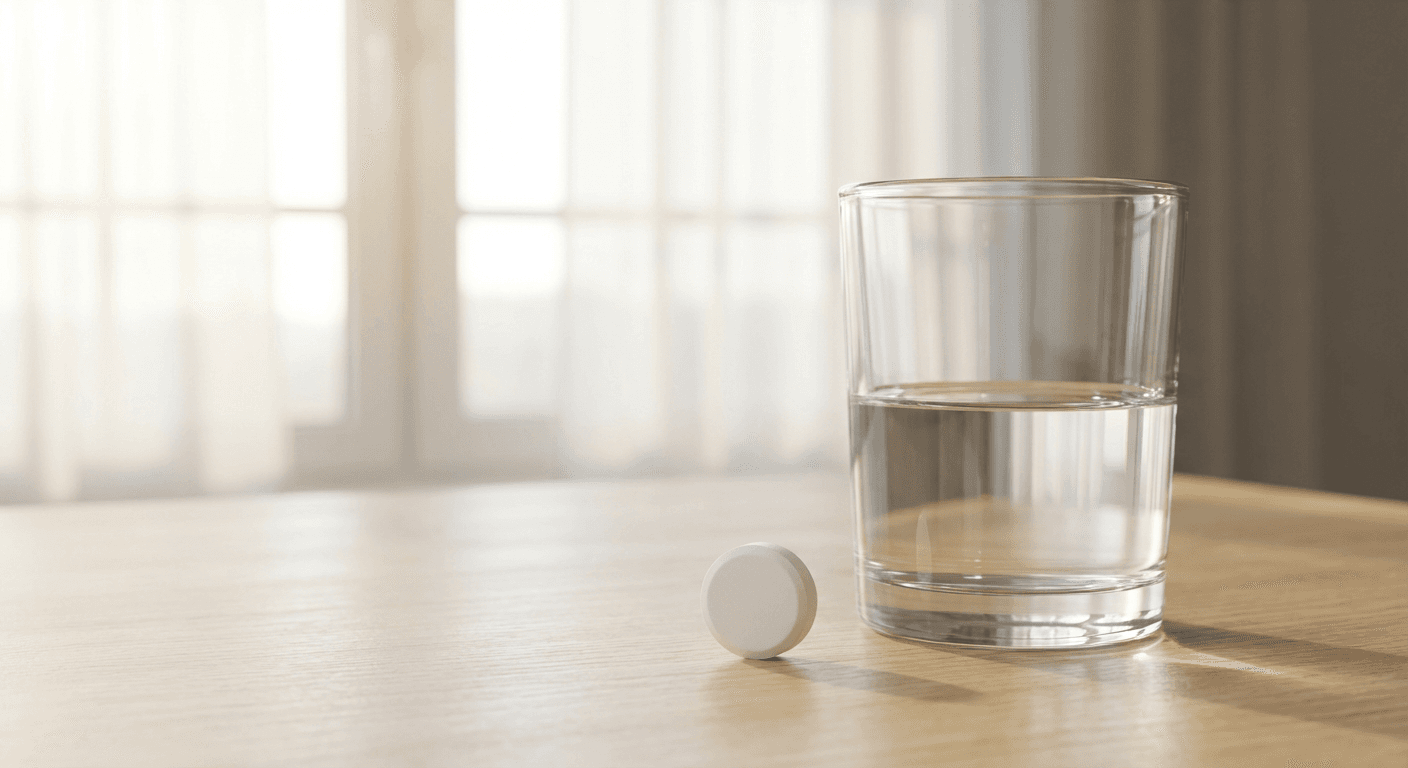
- Swallow the tablet whole with up to 4 ounces (half a glass) of plain water. Not coffee. Not juice. Water.
- Wait at least 30 minutes before eating, drinking anything else, or taking other oral medications.
- Don't crush, chew, or split the tablet.
If you miss a dose, skip it and take the next one the following morning. Don't double up.
These aren't arbitrary rules. They're driven by the SNAC absorption technology built into the tablet.
Why the Strict Dosing Instructions?
Semaglutide is a peptide — a small protein. Normally, proteins get destroyed in your stomach by acid and digestive enzymes before they can be absorbed. That's why most peptide drugs are injected.
Each Wegovy pill contains SNAC (sodium salcaprozate), a compound that creates a temporary protective environment around the semaglutide in your stomach. SNAC raises the local pH, shields the drug from pepsin breakdown, and helps it cross the stomach lining into your bloodstream through a process called transcellular absorption.
This only works properly on an empty stomach with minimal liquid. Food in the stomach dilutes the SNAC concentration, changes the pH, and physically interferes with the tablet's contact with the stomach wall. Even a glass of water that's too large can reduce absorption.
The bioavailability of oral semaglutide is about 0.8% — meaning less than 1% of the drug in the pill actually reaches your bloodstream. That sounds terrible, but it's by design. The 25 mg dose accounts for this. Once the drug is absorbed, it behaves identically to the injected form. The pharmacokinetic profile is the same.
In the clinical trials, patients who didn't follow the strict empty-stomach protocol lost less weight. The instructions aren't suggestions.
The Dosing Schedule
Like injectable Wegovy, the pill uses a gradual titration schedule to minimize GI side effects. Your provider will start you low and increase the dose monthly:
- Month 1: 1.5 mg once daily
- Month 2: 4 mg once daily
- Month 3: 9 mg once daily
- Month 4 and beyond: 25 mg once daily (maintenance dose)
The full titration takes about three months. Most patients start seeing meaningful weight loss effects once they reach the 9 mg or 25 mg dose. The early weeks are about letting your body adjust to the medication, not about maximum efficacy.
What Does It Cost?
This is where oral Wegovy gets interesting. Novo Nordisk priced it more aggressively than the injection.
Without Insurance (Self-Pay)
- Starter doses (1.5 mg, 4 mg) through NovoCare: $149/month
- Maintenance doses (9 mg, 25 mg) through NovoCare: $299/month
- Injectable Wegovy through NovoCare: $199–$349/month
The pill is roughly $50/month less than the injection at maintenance, and significantly cheaper at starting doses. For someone just beginning treatment, $149/month is the lowest entry point for brand-name semaglutide.
With Insurance
Both oral and injectable Wegovy carry the same list price of approximately $1,350/month. If your insurance covers Wegovy, the co-pay is typically the same regardless of formulation. Novo Nordisk's savings program brings the co-pay to $0–$25/month for most commercially insured patients.
Medicare
Medicare coverage for obesity medications is expected to begin mid-2026, with estimated co-pays around $50/month. This would cover both oral and injectable forms.
For a full breakdown of pricing across GLP-1 medications, see our cost guide.
Who Is It Best For?
The oral Wegovy pill isn't better than the injection for everyone. It's a different option that suits specific situations.
Strong candidates for the pill:
- People who dislike or fear needles. This is the obvious one. Needle aversion is a real barrier to treatment, and it's kept a meaningful number of patients from trying semaglutide.
- People who travel frequently. No injection supplies, no cold chain storage concerns, no TSA questions about syringes.
- Patients who prefer daily habits over weekly ones. Some people find it easier to remember a daily morning pill than a weekly injection. Others are the opposite. Know yourself.
- Cost-conscious cash-pay patients. At $149/month for starting doses, the pill is the cheapest branded semaglutide option available.
The injection might be better if:
- You can't follow the strict morning routine. If your mornings are chaotic, or you need coffee and medication first thing, the 30-minute fasting window will be a problem. The injection has no such restriction.
- You have GI absorption concerns. Conditions that affect stomach acid or gastric motility (like gastroparesis or bariatric surgery history) may reduce how well the pill is absorbed.
- You prefer less frequent dosing. One injection per week vs. a pill every single morning. For some, weekly is simpler.
- You're already stable on the injection. If you're doing well on injectable Wegovy, switching to the pill introduces a new variable without clear benefit.
Side Effects: How Does the Pill Compare?
The side effect profile is similar to injectable Wegovy, with one notable difference: nausea and vomiting rates are higher with the oral form.
From the OASIS 4 trial:
- Nausea: 46.6% (oral) vs. roughly 44% (injectable, from STEP trials)
- Vomiting: 30.9% (oral) vs. roughly 24% (injectable)
- Diarrhea and constipation: Comparable across both forms
The higher nausea rates likely relate to taking the drug on an empty stomach. Most patients report that GI side effects are worst during the titration phase and improve substantially after reaching the maintenance dose. The same pattern holds for the injection.
Serious side effects — pancreatitis risk, gallbladder events, thyroid C-cell tumor warning — are identical between formulations because they're related to the semaglutide molecule itself, not the delivery method. Make sure your provider screens for contraindications before prescribing either form. You can also use our drug interaction checker to review your current medications.
Can You Switch Between the Pill and the Injection?
Yes, though your provider should manage the transition. The two formulations aren't directly dose-equivalent (25 mg oral does not equal 2.4 mg injectable in a milligram-to-milligram sense). The matching is based on clinical outcomes — both produce similar weight loss at their respective therapeutic doses.
If you're switching from injectable to oral, most providers will start you at the 9 mg oral dose (skipping the lower titration steps) if you were already at the full 2.4 mg injection dose. Going the other direction usually involves starting at 1.0 mg or 1.7 mg injectable. Your provider will tailor this based on how you've been responding.
How It Fits Among Other GLP-1 Options
The oral Wegovy pill competes primarily on convenience and access. It doesn't change the fundamental calculus of GLP-1 weight loss medications — it just removes one of the biggest barriers (needles) and lowers the entry-level cost.
For patients weighing their options between semaglutide and tirzepatide, the oral format doesn't change the efficacy comparison. Tirzepatide still produces slightly more weight loss and may preserve more lean mass. But tirzepatide is only available as an injection (an oral version is in development but not yet approved).
If you're deciding between weight loss medications and want to talk through which one fits your situation, take the provider-matching quiz. It connects you with licensed clinicians who prescribe these medications and can help you weigh the pros and cons of each option.
For a more data-driven starting point, the weight loss projection calculator can give you a sense of what to expect on semaglutide based on your starting weight and goals.
Frequently Asked Questions About the Oral Wegovy Pill
Is the Wegovy pill as effective as the injection?
In clinical trials, oral semaglutide 25 mg produced 16.6% average weight loss at 64 weeks, compared to 15–17% for injectable Wegovy 2.4 mg in the STEP trials. An indirect comparison presented at ObesityWeek 2025 confirmed comparable efficacy between the two. The pill works about as well as the shot for most patients, assuming you follow the dosing instructions carefully — particularly the empty stomach and 30-minute fasting window.
How much does oral Wegovy cost without insurance?
Through Novo Nordisk's NovoCare program, the starting doses (1.5 mg and 4 mg) cost $149/month. Maintenance doses (9 mg and 25 mg) cost $299/month. These are cash-pay prices, no insurance required. That makes the pill the most affordable branded semaglutide option currently available. For comparison, injectable Wegovy runs $199–$349/month through the same program.
Can I drink coffee before taking the Wegovy pill?
No. The pill must be taken on a completely empty stomach with only a small amount of plain water (up to 4 ounces). Coffee, tea, juice, or any other beverage before taking the tablet will interfere with absorption. After swallowing the pill, you need to wait at least 30 minutes before consuming anything else. If your morning coffee routine is non-negotiable, you'll need to wake up 30 minutes earlier or consider the injectable form instead.
What's the difference between oral Wegovy and Rybelsus?
Both contain oral semaglutide and use the same SNAC absorption technology. The key difference is dose and indication. Rybelsus maxes out at 14 mg and is approved only for type 2 diabetes. Oral Wegovy goes up to 25 mg and is approved for chronic weight management. The higher dose produces significantly more weight loss. If you're taking Rybelsus for diabetes and want weight loss benefits, talk to your provider about whether switching to oral Wegovy makes sense — they may need to adjust your diabetes treatment plan.
How long before oral Wegovy starts working for weight loss?
The titration schedule takes about three months to reach the full 25 mg dose. Most patients notice reduced appetite within the first few weeks (even at lower doses), but significant weight loss typically begins after reaching 9 mg or 25 mg. In the OASIS 4 trial, weight loss was measured at 64 weeks. Expect a gradual process — the first month or two is mainly about adjusting to the medication, with the most noticeable results coming in months three through six.
Will my insurance cover the Wegovy pill?
If your insurance already covers injectable Wegovy, it will likely cover the oral form since it carries the same FDA approval for weight management. Coverage varies by plan, and prior authorization may be required. Novo Nordisk offers a savings card that reduces co-pays to $0–$25/month for most commercially insured patients. If you're on Medicare, coverage for obesity medications is expected to begin mid-2026. Check with your insurance provider or ask a licensed clinic to verify your coverage before starting.
Contributing to evidence-based peptide education and provider transparency.
Too many clinics, not enough clarity?
We don't sell peptides. Tell us your goals and we'll connect you with a vetted provider who can figure out what actually makes sense for you.
See what's right for youRelated articles
A Step-by-Step Gelatin Recipe for Weight Loss
Seen the viral "pink trick"? We break down the simple gelatin recipe for weight loss. Learn our step-by-step method to help manage hunger and feel full.
GLP-1 Weight LossOzempic Cost in 2026: What You'll Actually Pay
The 2026 Ozempic cost can be anywhere from $25 to over $1,400 a month. Discover why and learn how to find savings with or without insurance coverage.
GLP-1 Weight LossHow Zep Weight Loss Works and What to Expect
Thinking about zep weight loss? We cover how this drug works, what realistic results look like, common side effects, and how it compares to Ozempic.