Ozempic Face: What It Is, Why It Happens, and What to Do About It
Ozempic face — the gaunt, aged look some people get from rapid weight loss on GLP-1 medications. What causes it, who's most at risk, and what actually works to prevent or treat it.
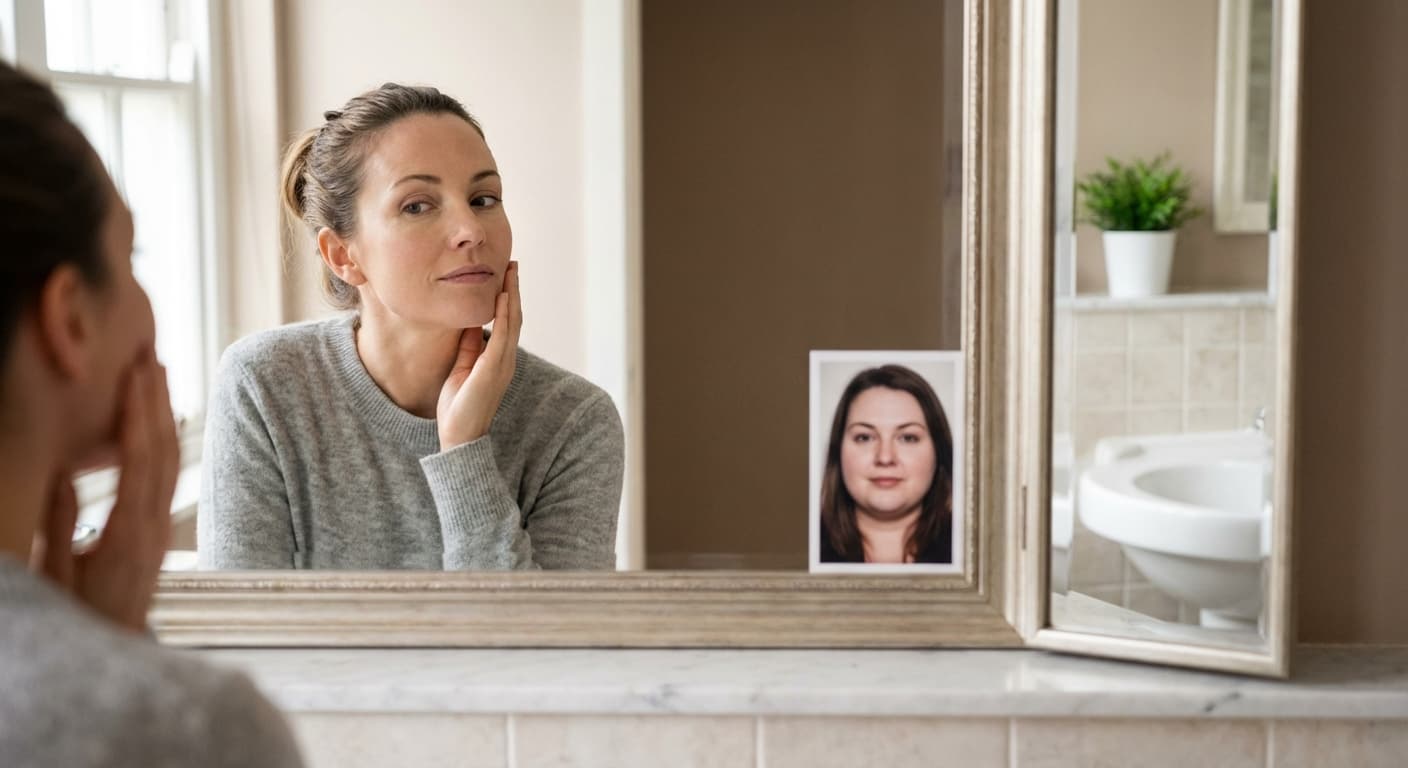
What Is Ozempic Face?
"Ozempic face" isn't a medical term. It's a nickname — coined somewhere between TikTok and tabloid headlines — for the gaunt, hollowed-out look that some people develop after losing weight on GLP-1 medications like semaglutide or tirzepatide. Sunken cheeks, visible nasolabial folds, sagging skin around the jaw, and temples that look scooped out.
It's not unique to Ozempic or even to GLP-1 drugs. Any significant, rapid weight loss can cause it. Bariatric surgery patients have dealt with this for decades. But the explosion of GLP-1 prescriptions since 2023 put the phenomenon in front of millions of people who'd never thought about what losing 50+ pounds would do to their face.
Why Your Face Changes When You Lose Weight
Your face has fat pads — distinct pockets of fat in the cheeks, temples, around the eyes, and along the jawline. These fat pads aren't just excess weight. They provide structural volume that keeps skin looking smooth and full. Think of them as scaffolding.
When you lose a significant amount of body fat, you don't get to choose where it comes from. Fat disappears from your belly, your arms, and your face. The fat pads shrink. Without that underlying volume, skin that was once draped over a fuller surface now has less to cling to. It sags. Wrinkles deepen. The cheeks hollow.
Two things make GLP-1 weight loss particularly noticeable in the face. First, the speed. Semaglutide produces average weight losses of 15-17% of body weight over 68 weeks, and many people lose even more. That pace doesn't give skin time to gradually tighten and adapt. Second, the lean mass issue. Research presented at ENDO 2025 showed that approximately 39-40% of weight lost on semaglutide comes from lean mass, not just fat. When you lose muscle and connective tissue alongside fat, the structural support beneath your skin diminishes even further.
Who's Most at Risk
Not everyone who takes Ozempic ends up with a gaunt face. Several factors determine how pronounced the effect is.
Age. This is the biggest predictor. After 40, collagen production has already slowed significantly. Skin loses elasticity. When facial fat disappears at that age, the skin can't bounce back the way it would in a 25-year-old. People in their 50s and 60s on GLP-1 medications tend to see the most dramatic facial changes.
Amount of weight lost. The more weight you lose, the more facial volume you lose. Someone who drops 15 pounds will likely notice very little change. Someone who loses 80 pounds may look dramatically different in the face — even if they're thrilled with the rest of their body.
Speed of weight loss. Losing weight slowly gives skin and soft tissue more time to adjust. Rapid loss — especially the aggressive titration schedules some providers use — increases the likelihood of loose skin everywhere, including the face.
Starting facial structure. People who naturally carry more volume in their face (fuller cheeks, rounder features) may actually benefit from some facial slimming. Those who start with angular, thinner features are more likely to tip into looking gaunt.
Genetics and skin quality. Sun damage history, smoking, genetics, and baseline skin elasticity all play a role. Two people the same age who lose the same amount of weight can end up looking very different.
How Fast Does It Happen?
Most people start noticing facial changes somewhere between the 3-month and 6-month mark, once they've lost enough weight for the volume difference to become visible. It's rarely the first thing people notice — abdominal fat loss and looser clothing come first. The face tends to catch up later, and sometimes the change feels sudden even though it's been gradual.
Family members and friends may notice it before you do. The face is what people look at in conversation, and changes there register differently than a smaller waistline.
Is Ozempic Face Permanent?
That depends on what you do about it — and what caused it.
The fat loss itself is permanent as long as you maintain your weight loss. Your body won't selectively re-deposit fat in your face if you stay at your new weight. The loose skin can improve somewhat over time as your body remodels collagen, but this process is slow (months to years) and limited by age.
If you regain weight, some facial volume will return, but the skin may not snap back to its pre-weight-loss tightness, especially if it was stretched for a long time. Yo-yo weight changes can make skin laxity worse over time.
The good news: there are real interventions that help, ranging from prevention strategies to cosmetic treatments.
Prevention: What You Can Do While Losing Weight
The most effective approach is prevention during the weight loss process itself. Once the volume is gone, you're in treatment territory rather than prevention.
Lose weight at a moderate pace. Providers who titrate GLP-1 doses gradually — going slow on the upward escalation — tend to see fewer dramatic facial changes in their patients. A target of one to two pounds per week gives skin more time to adapt. If you're losing weight very quickly, it's worth discussing dose adjustment with your provider.
Prioritize protein. This is critical and often overlooked. Research from ENDO 2025 showed that patients consuming at least 1.6 grams of protein per kilogram of body weight daily lost only 22% of their weight as lean mass, compared to 39% lean mass loss in those eating under 1.0 g/kg. Lean mass includes the structural tissue that supports your face. Aim for at least 1.2-1.6 g/kg daily — higher if you're strength training. Our foods to eat on semaglutide guide covers this in detail.
Strength training. Patients who combined semaglutide with structured resistance training preserved 30% more lean mass than those on the medication alone. Resistance training also increases dermal thickness and improves skin elasticity by reducing inflammation and stimulating collagen production in the skin. You don't need to become a bodybuilder. Two to three sessions per week targeting major muscle groups makes a real difference.
Sun protection. UV damage accelerates collagen breakdown. If you're losing weight on a GLP-1 and want to preserve skin quality, daily sunscreen on your face isn't vanity — it's strategy.
Hydration. Semaglutide can contribute to dehydration, especially through GI side effects. Well-hydrated skin looks and functions better than dehydrated skin. It won't prevent structural volume loss, but it keeps skin looking its best during the process.
Treatment Options if It's Already Happened
If you're already seeing the gaunt look and want to address it, there are several approaches — ranging from relatively simple to surgical.
Dermal fillers (hyaluronic acid). This is the most common first-line treatment. Fillers like Juvederm Voluma or Restylane Lyft can be injected into the cheeks, temples, and under-eye area to restore lost volume. Results are immediate, last 12-18 months, and can be dissolved if you don't like the outcome. The downside: cost ($600-$1,200 per syringe, and most people need 2-4 syringes) and the need for repeat treatments.
Biostimulatory fillers. Products like Sculptra (poly-L-lactic acid) and Radiesse work differently. Instead of adding volume directly, they stimulate your body's own collagen production over time. Results are more gradual (noticeable over 2-4 months) but tend to look more natural and last 2+ years. They require multiple treatment sessions and aren't reversible like hyaluronic acid fillers.
Topical retinoids. Tretinoin (0.025% to 0.05%) can be started before or during GLP-1 treatment to stimulate collagen production in the skin. It won't restore lost fat pad volume, but it improves skin texture, thickness, and elasticity. This is a long-game approach — visible results take 3-6 months.
Collagen supplementation. Some evidence supports hydrolyzed collagen peptides (10-15 grams daily) for improving skin elasticity and hydration. The research isn't as strong as for topical retinoids, but it's low-risk and inexpensive. Think of it as a supporting player, not the main treatment.
Fat transfer. For more significant volume loss, a plastic surgeon can harvest fat from another part of your body and inject it into your face. Unlike fillers, this uses your own tissue, and the results can be permanent (once the transferred fat establishes blood supply, it behaves like normal facial fat). The procedure is more involved and expensive than fillers but avoids the need for repeat treatments.
Skin tightening procedures. Radiofrequency microneedling, ultrasound-based treatments (like Ultherapy), and laser resurfacing can tighten loose skin and stimulate collagen remodeling. These work best for mild to moderate skin laxity and are often combined with fillers for a more complete result.
The Provider Perspective
A good prescribing provider will talk about facial changes proactively, not just react when you come in upset about how you look. If your provider hasn't mentioned this possibility and you're concerned, bring it up.
Some providers adjust their approach specifically to minimize facial impact — using slower dose titration, emphasizing protein targets, and referring patients to dermatologists or aesthetic providers early if they're in a high-risk category. This kind of coordinated care makes a difference.
If you're comparing semaglutide vs. tirzepatide, it's worth noting that both medications can cause facial volume loss. The effect is driven by the weight loss itself, not the specific medication. Tirzepatide tends to produce slightly greater weight loss on average, which could theoretically mean more facial impact, but individual variation matters more than the drug choice.
Not sure where to start? Take our provider-matching quiz to find a provider who takes a measured, patient-centered approach to GLP-1 therapy — including managing side effects like this one.
Ozempic Face FAQs
What exactly causes Ozempic face?
Rapid loss of facial fat pads — the pockets of fat in your cheeks, temples, and around your eyes that provide structural volume. When these shrink significantly, skin sags and wrinkles deepen. GLP-1 medications don't target facial fat specifically; any major weight loss can cause it. The speed of weight loss on drugs like semaglutide and the associated lean mass loss make it more pronounced than it might be with slower, diet-based weight loss.
At what age does Ozempic face become a concern?
It can happen at any age, but it's most noticeable in people over 40. Collagen production declines with age, and skin elasticity decreases. A 30-year-old who loses 40 pounds may see minimal facial change because their skin can still adapt. A 55-year-old losing the same amount is much more likely to develop visible hollowing and sagging.
Can you prevent Ozempic face while still losing weight?
Yes, to a degree. Slower weight loss (1-2 pounds per week), high protein intake (at least 1.2-1.6 g/kg body weight daily), regular strength training, sun protection, and good hydration all help minimize facial volume loss and support skin quality. None of these guarantee you'll avoid it entirely — especially with large amounts of weight loss — but they meaningfully reduce the severity.
How much do fillers for Ozempic face cost?
Hyaluronic acid fillers typically run $600-$1,200 per syringe, and most people need 2-4 syringes for meaningful facial volume restoration. That puts a single treatment session at roughly $1,200-$4,800. Biostimulatory options like Sculptra cost $700-$1,000 per vial and require multiple sessions but last longer. Costs vary widely by location and provider. Check our cost guide for more context on the total expense of GLP-1 therapy.
Does Ozempic face go away if you stop the medication?
If you regain weight after stopping, some facial volume will return as fat is redeposited. However, skin that has been stretched and lost elasticity may not fully bounce back — you could end up with some restored volume but persistent looseness. If you maintain your weight loss, the facial changes are essentially permanent without cosmetic intervention.
Is Ozempic face worse with semaglutide or tirzepatide?
The facial volume loss is driven by the weight loss itself, not the specific drug. Since tirzepatide tends to produce slightly greater average weight loss than semaglutide (roughly 20-25% vs. 15-17% of body weight in trials), it may theoretically cause more facial change. But individual factors — age, genetics, speed of loss, protein intake, exercise — matter more than which medication you're on.
Contributing to evidence-based peptide education and provider transparency.
Too many clinics, not enough clarity?
We don't sell peptides. Tell us your goals and we'll connect you with a vetted provider who can figure out what actually makes sense for you.
See what's right for youRelated articles
A Step-by-Step Gelatin Recipe for Weight Loss
Seen the viral "pink trick"? We break down the simple gelatin recipe for weight loss. Learn our step-by-step method to help manage hunger and feel full.
GLP-1 Weight LossOzempic Cost in 2026: What You'll Actually Pay
The 2026 Ozempic cost can be anywhere from $25 to over $1,400 a month. Discover why and learn how to find savings with or without insurance coverage.
GLP-1 Weight LossHow Zep Weight Loss Works and What to Expect
Thinking about zep weight loss? We cover how this drug works, what realistic results look like, common side effects, and how it compares to Ozempic.