The Real Link Between Testosterone and Cholesterol
The link between testosterone and cholesterol is full of outdated myths. Learn how testosterone actually impacts your lipid panels and what it means for your heart.

This content is for informational purposes only and does not constitute medical advice. Consult with a qualified healthcare provider for any health concerns or before making any decisions related to your health or treatment.
The connection between testosterone and cholesterol is one of the most talked-about topics in men's health, filled with outdated beliefs and new, exciting science. For years, men have worried that starting testosterone replacement therapy (TRT) could harm their heart health. But recent landmark studies are changing the conversation. We now understand this relationship is far more complex than a simple cause-and-effect. Low testosterone is often linked to poor metabolic health, including unhealthy cholesterol levels. This guide will break down the latest 2026 research to give you a clear, evidence-based understanding of the testosterone cholesterol connection.
What is the Link Between Testosterone and Cholesterol?
The relationship between testosterone and cholesterol is bidirectional. Cholesterol is the essential building block your body uses to produce all steroid hormones, including testosterone. However, recent studies show that unhealthy cholesterol levels, particularly a type called remnant cholesterol, are strongly associated with having low testosterone.
Your body's hormone production starts with cholesterol. A series of enzymatic reactions in the testes and adrenal glands convert cholesterol into testosterone. Because of this, many people assume that eating more cholesterol will increase testosterone levels. However, research shows that dietary cholesterol intake is not associated with total testosterone levels in men (DrOracle.ai). Your body manufactures most of the cholesterol it needs, so the link is more about your internal metabolic environment than the food you eat.
More importantly, a growing body of evidence suggests the association often works in the other direction. Low testosterone levels are frequently a sign of underlying metabolic dysfunction, which includes poor cholesterol profiles. A major 2026 cross-sectional study found that elevated remnant cholesterol (RC) was a powerful predictor of testosterone deficiency in men aged 50-75. In fact, RC was better at identifying men with low T than any traditional lipid marker like LDL or HDL (Frontiers in Endocrinology, 2026). This suggests that looking at specific cholesterol particles, not just the basics, gives a clearer picture of your hormonal health.
How Does the Testosterone Cholesterol Connection Work?
The interplay between testosterone and cholesterol involves hormones, inflammation, and metabolic signaling. Low testosterone does not directly cause high cholesterol, nor does TRT automatically fix it. The connection is a complex web where low T is often a symptom of a larger metabolic issue, and therapeutically raising testosterone can, in turn, influence that system for the better.
The Role of Inflammation and Lipids
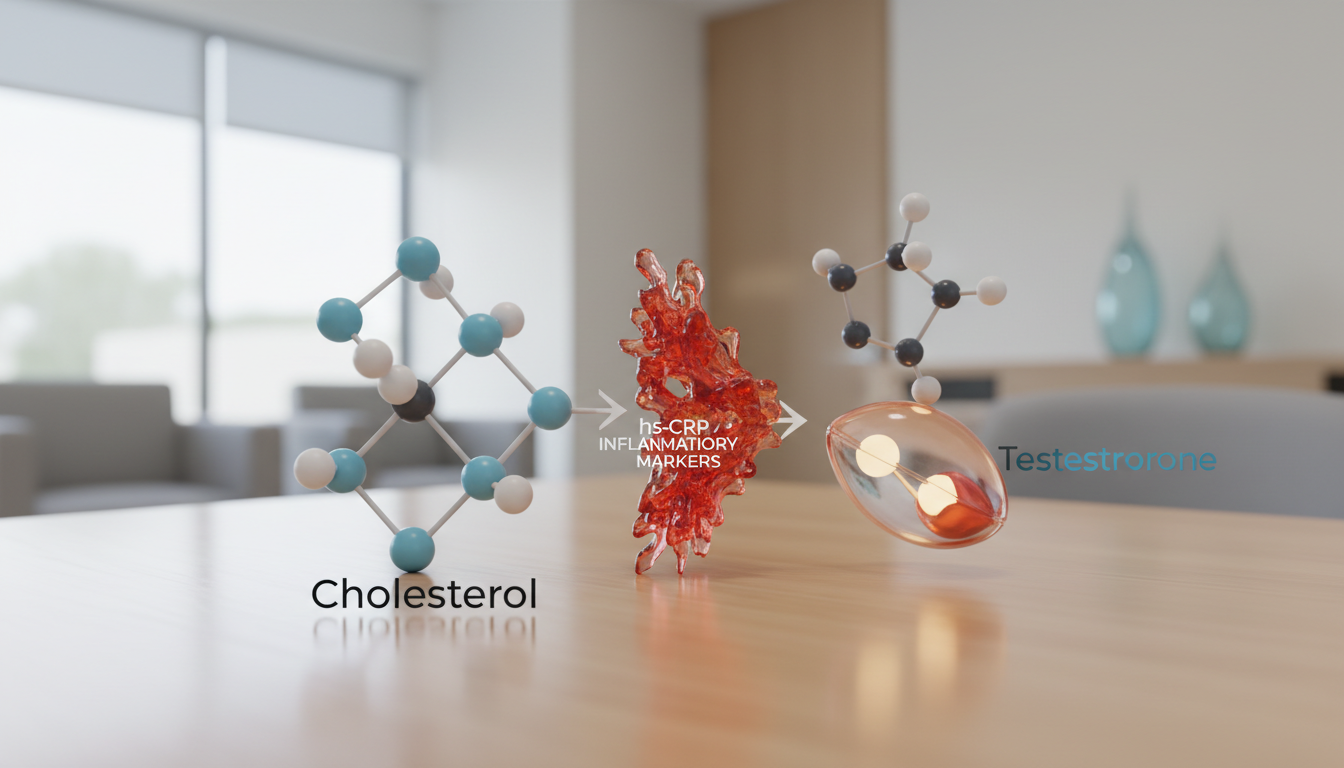
The latest research points to a three-way link between inflammation, lipids (fats like cholesterol), and testosterone. A 2026 study discovered that the association between high remnant cholesterol and low testosterone was partially driven by inflammatory markers like hs-CRP and IL-6 (Frontiers in Endocrinology, 2026). This means chronic, low-grade inflammation may be a key factor that disrupts both your lipid balance and your body's ability to produce adequate testosterone.
Another study from 2025 supported this, finding that men with both high residual cholesterol risk (unhealthy lipid levels) and high residual inflammation risk (elevated hs-CRP) had significantly lower total and free testosterone (Frontiers in Endocrinology, 2025). This paints a clear picture: a metabolically unhealthy state, characterized by inflammation and poor lipid management, creates an environment where testosterone production suffers.
The TRAVERSE Trial and an Updated View on Heart Health
For a long time, testosterone products carried a stark warning from the FDA about a potential increased risk of cardiovascular events. This created significant fear and uncertainty for men considering TRT. The TRAVERSE clinical trial, whose results were published in 2023, was designed to answer this question definitively.
The TRAVERSE trial was the largest study of its kind, involving over 5,200 men with diagnosed hypogonadism (low T). It found no significant increase in major adverse cardiovascular events (like heart attacks or strokes) in men receiving testosterone compared to those on placebo (trted.org). This landmark finding prompted the FDA in 2025 to remove the boxed cardiovascular warning from testosterone labels.
However, the story does not end there. While the risk of major events did not increase, the trial did note a few other changes. The FDA added a new warning about a potential for increased blood pressure (Pharmacy Times, 2025). The trial also observed a higher incidence of non-fatal arrhythmias (5.2% vs. 3.3%), venous thromboembolic events or blood clots (1.7% vs. 1.2%), and acute kidney injury (2.3% vs. 1.5%) in the testosterone group (trted.org). This highlights that while TRT is safer than once feared for the heart, it's not without risks and requires careful medical supervision.
Understanding this complex web of factors is overwhelming. Are your symptoms from low T or something else? Is TRT safe for you? Trying to figure this out alone is tough. Take our free 3-minute quiz to get matched with a licensed provider who can review your health history and guide you toward the right solution.
Benefits of Optimizing the Testosterone-Cholesterol Relationship
For men with clinically diagnosed hypogonadism, restoring testosterone to a healthy physiological range can offer significant metabolic benefits that go far beyond addressing symptoms like fatigue and low libido. These improvements are a direct result of correcting the hormonal imbalance and its effect on the body's systems.
H3: Improved Lipid Profiles
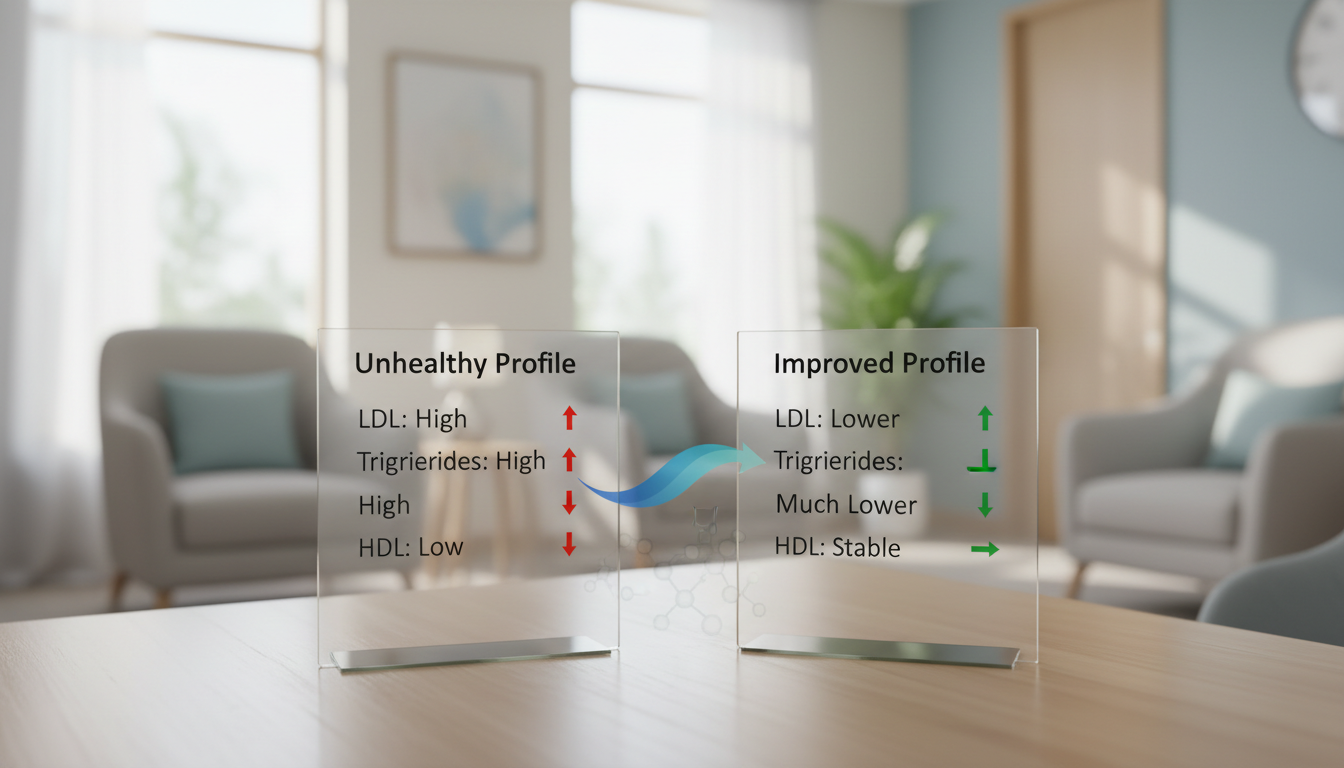
While supraphysiologic (abnormally high) doses of testosterone can harm cholesterol levels, therapeutic TRT often has a neutral or even positive effect. A large retrospective study of over 4,300 men on TRT found significant improvements in key lipid markers over 12 months. The study observed a 20% reduction in triglycerides and a staggering 79% improvement in the triglyceride:HDL ratio for men who started with poor numbers (PubMed). These changes indicate a powerful improvement in metabolic health. It is worth noting, however, that the same study saw a minor decrease in HDL ("good") cholesterol, reinforcing the need for regular monitoring.
H3: Reduced Inflammation
As we've seen, chronic inflammation is a key troublemaker linking poor metabolic health to low testosterone. By addressing the root hormonal deficiency with TRT, you can help dial down this inflammatory state. Studies have repeatedly shown that markers like hs-CRP are negatively associated with testosterone levels. A 2025 study using NHANES data found that ratios of immune cells to HDL cholesterol, which serve as biomarkers for inflammation, were excellent predictors of testosterone deficiency (BMC Endocrine Disorders, 2025). Improving your testosterone levels is one part of a larger strategy to cool down systemic inflammation, which benefits your entire body, including your cardiovascular system.
H3: Better Blood Sugar Control
One of the most impressive benefits seen in men undergoing TRT is an improvement in glycemic control. The same large retrospective study that showed better lipid profiles also documented a significant 4.46% reduction in HbA1c (PubMed). HbA1c is a key marker for long-term blood sugar control. An improvement like this is clinically meaningful and suggests that optimizing testosterone can be a valuable tool for managing prediabetes or improving metabolic health in men with type 2 diabetes. This effect is likely tied to testosterone's role in building muscle and reducing fat, which improves insulin sensitivity.
H3: Increased Lean Muscle and Decreased Fat Mass
A primary and well-documented benefit of TRT is the change in body composition. Testosterone is an anabolic hormone, meaning it promotes tissue growth, particularly muscle. Men on TRT typically experience an increase in lean muscle mass and a corresponding decrease in body fat, especially visceral fat (the dangerous fat around your organs). This shift not only improves strength and physical function but also has profound metabolic benefits. More muscle and less fat leads to better insulin sensitivity, a higher resting metabolic rate, and a healthier overall metabolic profile, further improving the way your body handles both sugar and cholesterol. For more details on what to expect, check out our guide on TRT before and after results.
Risks and Side Effects of TRT on Cholesterol and Cardiovascular Health
While the TRAVERSE trial provided significant reassurance about the cardiovascular safety of TRT for men with hypogonadism, the therapy is not without risks. Understanding these potential side effects is critical for making an informed decision with your healthcare provider. The key is to maintain testosterone levels within a healthy, physiological range, not to push them to supraphysiologic levels seen in steroid abuse.
One of the most significant findings from recent research is the effect on blood pressure. Following the TRAVERSE trial, the FDA added a new warning to all testosterone products regarding the potential for increased blood pressure (Pharmacy Times, 2025). This is a critical factor to monitor, as chronically elevated blood pressure is a major risk factor for heart disease and stroke. A 2026 Mendelian randomization study suggested that men who are genetically disposed to having higher lifelong testosterone may have a 17% increased risk of coronary artery disease, which is believed to be driven by this effect on blood pressure (Interactive Wellness, 2026).
The TRAVERSE trial also identified a few other non-fatal but serious risks. Participants in the testosterone group had a 46% increased risk of venous thromboembolic events (blood clots in the veins) and a higher incidence of non-fatal arrhythmias like atrial fibrillation (trted.org). These risks underscore why TRT should only be considered for men with a confirmed medical need and not for casual "anti-aging" purposes without a diagnosis.
Furthermore, using testosterone at doses higher than what is medically prescribed can have a negative impact on your lipids. Supraphysiologic doses can significantly lower HDL ("good") cholesterol while increasing total cholesterol, undoing any potential benefits and actively harming your cardiovascular health (DrOracle.ai). This is a primary reason why distinguishing between medically supervised TRT and illicit steroid use is so important. For more on this, see our article, Is TRT steroids?.
Navigating the benefits and risks requires expert guidance. You shouldn't have to guess about your health. Want to see which FDA-approved options fit your budget and goals? Our free quiz takes 3 minutes and matches you with vetted providers who can help.
How to Get Started with Testosterone Therapy Safely
Starting TRT is a medical process that should always be guided by a qualified healthcare provider. The goal is to confirm a deficiency, prescribe the appropriate treatment, and monitor your progress to ensure safety and effectiveness.
Step 1: Get Tested
The first and most important step is to confirm you have clinically low testosterone, also known as hypogonadism. This requires a blood test. Most guidelines, including those used in major clinical trials, define testosterone deficiency as a total testosterone level under 300 ng/dL accompanied by symptoms (Frontiers in Endocrinology, 2026). Symptoms can include fatigue, low libido, brain fog, depression, and loss of muscle mass. Your provider will likely order a comprehensive panel that checks not only total and free testosterone but also other hormones like estradiol and key health markers like your lipid panel and complete blood count (CBC). To learn more about your options for testing, you can read about at-home testosterone testing kits.
Step 2: Consult a Provider
Once you have your lab results, you must consult with a provider. This can be a urologist, an endocrinologist, or a provider at a specialized hormone clinic, many of which now operate online. A qualified doctor will review your labs, discuss your symptoms, and take a full medical history to determine if TRT is appropriate for you. They will also discuss the different forms of treatment, such as injections, gels, or creams.
Step 3: Administration and Dosing
Testosterone injections are the most common and often most effective method of administration. Testosterone cypionate is a frequent choice, typically injected once or twice a week. One common question is about testosterone cypionate color; it should be a clear, colorless to pale yellow oil. If it appears cloudy, has crystals, or is a different color, it should not be used. Your provider will teach you how to self-administer the injections safely, usually into the muscle of the thigh or glute. You can find detailed instructions on where to inject testosterone.
Step 4: Consistent Monitoring
TRT is not a "set it and forget it" treatment. Ongoing monitoring is essential to ensure your hormone levels are in the optimal range and to watch for potential side effects. You will need follow-up blood work every 3 to 6 months to check your testosterone, estradiol, hematocrit (red blood cell concentration), and lipid levels. This allows your provider to make dose adjustments as needed and manage any emerging issues, such as elevated blood pressure or changes in your cholesterol, before they become serious.
Legal Status and Sourcing Testosterone Online
Testosterone is a controlled substance in the United States, which means its sale and use are regulated by law to ensure patient safety. Understanding the legal framework is crucial before seeking treatment, especially through an online clinic.
Testosterone is FDA-approved for the treatment of medical conditions that cause hypogonadism, such as issues with the pituitary gland or testicles. The FDA has included "Limitation of Use" language on product labels, clarifying that it is not approved for treating low testosterone due to normal aging alone (Pharmacy Times, 2025). This means a proper diagnosis from a licensed provider is legally required to get a prescription.
Because it is a Schedule III controlled substance, you cannot buy testosterone over the counter. A valid prescription from a provider with a DEA license is necessary. This is where legitimate online TRT clinics come in. These telehealth platforms connect you with licensed doctors who can conduct a consultation, order blood work, and, if appropriate, write a prescription that is sent to a licensed pharmacy.
When searching for care, many people look for the cheapest online testosterone therapy. While cost is a valid concern, safety and legitimacy should be the top priorities. Reputable clinics will always require comprehensive lab work and a video consultation. Be wary of any website that offers to sell testosterone without a prescription, as these are illegal operations selling unregulated and potentially dangerous products. The cheapest testosterone cypionate is often sourced through compounding pharmacies that work with these online clinics, which can provide a more affordable option than brand-name drugs from a local pharmacy. Some providers also help patients navigate insurance, though finding online testosterone therapy covered by insurance can be challenging depending on your specific plan and diagnosis. Our guide to the best testosterone therapy online can help you compare reputable options.
The most important step is finding a provider you can trust. Ready to explore your options? Take our free 3-minute quiz to get matched with a licensed provider in your state who can help you get started safely.
FAQs
Will taking testosterone fix my high cholesterol?
Not directly, but it can help. In men with diagnosed testosterone deficiency, TRT has been shown to significantly improve triglyceride levels and the triglyceride-to-HDL ratio. However, it may also slightly lower HDL ("good") cholesterol. It should be seen as one part of a comprehensive plan that also includes diet, exercise, and possibly other medications to manage your overall cholesterol profile.
Does high cholesterol cause low testosterone?
The relationship is more of an association than direct causation. New research from 2026 suggests that a specific type of cholesterol, called remnant cholesterol, along with chronic inflammation, is strongly linked to a higher risk of testosterone deficiency. This implies that a poor metabolic state contributes to low testosterone, rather than high cholesterol itself being the direct cause.
What color is testosterone cypionate supposed to be?
Testosterone cypionate solution for injection should be a clear, viscous oil that is colorless or has a slight pale yellow tint. You should not use the medication if it is cloudy, contains particles or crystals, or has changed color, as this could indicate it is expired or contaminated.
Can women use online testosterone therapy?
Yes, some telehealth providers offer online testosterone therapy for women. This treatment involves much lower doses of testosterone than are used for men and is typically prescribed off-label to address symptoms like persistent fatigue, low libido, and mood changes, especially during perimenopause and menopause. It is crucial for women to work with a provider experienced in female hormone optimization. You can learn more in our guide to low testosterone in females.
Is online testosterone therapy covered by insurance?
It can be, but coverage varies widely. For insurance to cover TRT, you typically need a confirmed diagnosis of hypogonadism from a medical standpoint, not just age-related decline. Many online TRT clinics operate on a direct-to-consumer, cash-pay basis for simplicity. However, some may provide you with the necessary paperwork (a superbill) to submit a claim to your insurance company for potential reimbursement.
What is the safest way to get testosterone?
The safest and only legal way to get testosterone is through a prescription from a licensed medical provider after undergoing comprehensive blood testing to confirm a diagnosis of hypogonadism. Avoid any online source that offers to sell testosterone without a prescription, as these products are unregulated, illegal, and potentially harmful.
Contributing to evidence-based peptide education and provider transparency.
Too many clinics, not enough clarity?
We don't sell peptides. Tell us your goals and we'll connect you with a vetted provider who can figure out what actually makes sense for you.
See what's right for youRelated articles
Which Protein Supplements for Muscle Growth Actually Work?
Tired of the hype? Find out which protein supplements for muscle growth are backed by science and learn how to pick the right one for your goals.
Hormone TherapyWhat Are the Real Magnesium Glycinate Benefits?
Uncover the science-backed magnesium glycinate benefits. We explore its effects on sleep, stress, and muscle function and explain why it's a top choice.
Hormone TherapyWhat B12 Shot Benefits Can You Actually Expect?
B12 shots are often hyped for energy, but the real b12 shot benefits are more specific. Learn who is a true candidate and what results to expect.