Testosterone Enanthate vs Cypionate: The Real Difference
Everyone says they're the same, but are they? We compare testosterone enanthate vs cypionate on half-life, injection pain, and what really matters.
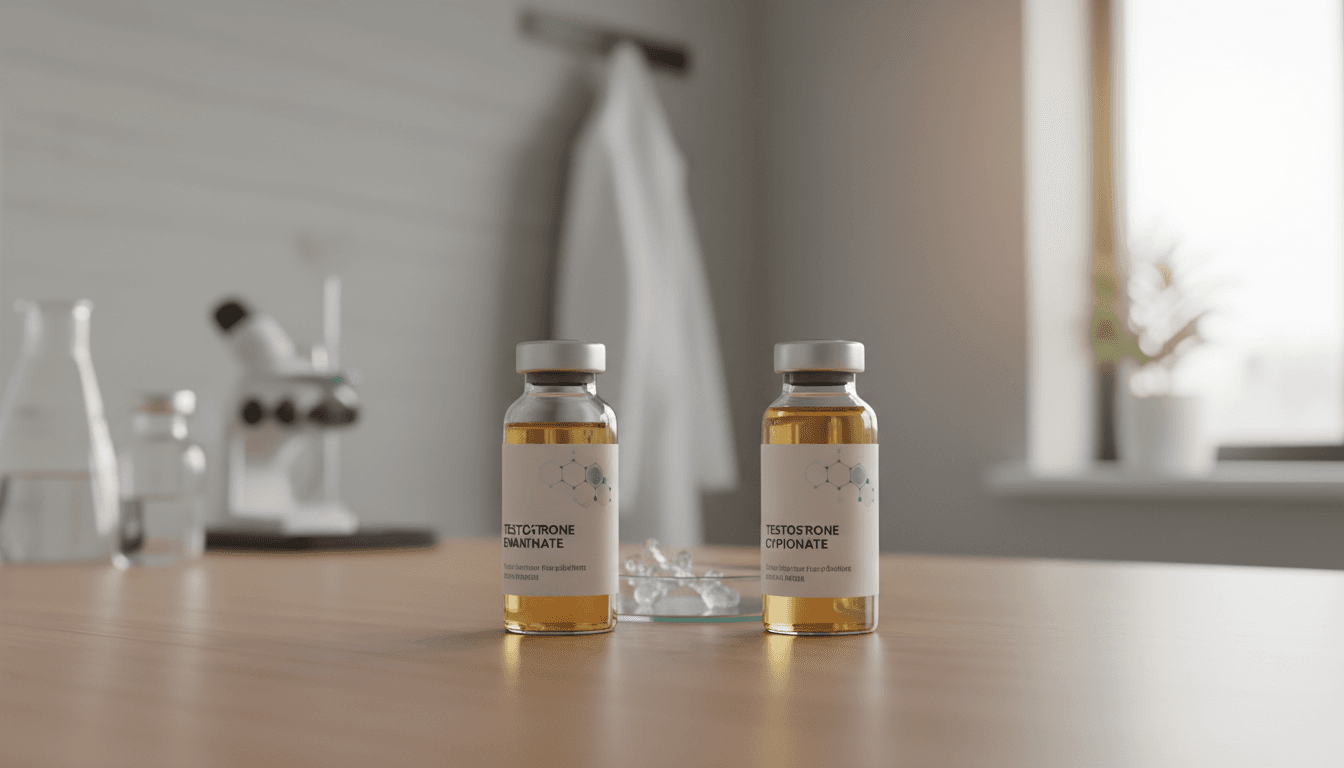
This content is for informational purposes only and does not constitute medical advice. Consult with a qualified healthcare professional before making any decisions about your health or treatment.
When you start exploring testosterone replacement therapy (TRT), you quickly run into a common question: what's the real story with testosterone enanthate vs cypionate? For decades, these two injectable forms of testosterone have been the workhorses of hormone optimization. While you might hear strong opinions in online forums, the clinical reality is that they are remarkably similar. The choice between them often boils down to practical factors like cost, availability in 2026, and minor differences in their chemical makeup.
Many men start their TRT research looking for natural ways to feel better, exploring everything from diet changes to the legendary link between oysters and testosterone. When lifestyle adjustments aren't enough, understanding medical options like TRT is the next step. This guide will break down everything you need to know to have an informed conversation with your provider.
Quick Comparison: Testosterone Enanthate vs Cypionate
For those looking for a quick answer, here’s a side-by-side look at the key attributes of these two popular testosterone esters.
| Feature | Testosterone Enanthate | Testosterone Cypionate |
|---|---|---|
| Half-Life | ~5–7 days | ~8 days |
| Typical Carrier Oil | Sesame Oil | Cottonseed Oil |
| Common Dosing | Weekly | Weekly or every 2 weeks |
| 2026 Availability (US) | Generally good | Intermittent shortages reported |
| Average Cost (Generic) | $40–$120 (Compounded) | $30–$80 (Commercial Generic) |
| FDA-Approved Uses | Hypogonadism, delayed puberty, metastatic breast cancer | Hypogonadism |
| Common Brand Names | Xyosted, Delatestryl | Depo-Testosterone |
Seeing the similarities and small differences can be confusing. If you're not sure which path is right for your goals and body, expert guidance is key. Take our free 3-minute quiz to get matched with a licensed provider who can help you understand your options.
What is Testosterone Enanthate?
Testosterone enanthate is an injectable form of bioidentical testosterone. The hormone itself is just testosterone, the primary male sex hormone responsible for everything from muscle mass and bone density to libido and mood. The "enanthate" part is an ester, which is a chemical tail attached to the testosterone molecule. This ester slows down the release of the hormone into your bloodstream after it's injected.
Without an ester, your body would metabolize the testosterone too quickly, requiring very frequent injections. The enanthate ester gives the medication a half-life of around 5 to 7 days, according to a 2026 report from PeakedLabs. This means that after about a week, half of the active dose has been processed by your body. Because of this, providers typically prescribe testosterone enanthate injections every 7 to 10 days to maintain stable hormone levels (Oreate AI Blog).
Traditionally, testosterone enanthate is suspended in sesame oil (Verywell Health). It has been a mainstay in medicine for decades and is approved by the FDA for treating hypogonadism (low testosterone), delayed puberty in boys, and even certain types of breast cancer in women.
In 2018, a modern version called XYOSTED was approved, which is a pre-filled auto-injector for subcutaneous (under the skin) use (TheraRadar). Studies show this auto-injector is very effective, with one cohort analysis finding it raised average testosterone levels from 246.6 ng/dL to a healthy 538.4 ng/dL in just six weeks (International Journal of Impotence Research). Research has also shown that testosterone enanthate therapy can significantly improve body composition in men, helping to reduce fat mass and increase lean muscle (Testosterone.me).
What is Testosterone Cypionate?
Testosterone cypionate is the other major injectable used in TRT, and it's structurally very similar to enanthate. Like enanthate, it is a bioidentical testosterone molecule attached to an ester. The "cypionate" ester is slightly longer and more complex than the enanthate ester, which gives it a marginally longer half-life.
Most sources, including Pfizer, the manufacturer of the brand-name version Depo-Testosterone, state its half-life is approximately eight days (Pfizer Medical - US). Because of this slightly longer duration, traditional dosing schedules were sometimes stretched to every two to four weeks. However, modern what is TRT protocols now favor more frequent injections, usually weekly, to avoid the hormonal roller coaster of high peaks and low troughs.
Testosterone cypionate is most often suspended in cottonseed oil (PeakedLabs). In the United States, it has long been the most commonly prescribed form of testosterone, though that has created some supply chain issues. As of early 2026, intermittent shortages of generic testosterone cypionate have been reported, making enanthate a more readily available choice for many patients (PeakedLabs). If you're starting your research, our guide on what to know before starting testosterone cypionate offers a deeper look into this specific medication.
Introduced way back in 1951, it's a well-established and effective treatment for hypogonadism in both cisgender and transgender men (Wikipedia).

Key Differences in Testosterone Enanthate vs Cypionate
While clinically interchangeable, a few key distinctions separate these two esters. For most people on TRT, these differences are minor, but they can be important in specific situations.
Half-Life and Dosing Frequency
The most talked-about difference is the half-life. Testosterone cypionate has a half-life of about 8 days, while enanthate's is slightly shorter, around 5-7 days. In theory, this means cypionate stays in your system a little longer.
However, in modern clinical practice, this difference is almost meaningless. Research has shown that both formulations are clinically equivalent and produce identical testosterone levels when dosed appropriately (DrOracle.ai). Most TRT providers now recommend weekly or even twice-weekly injections for both cypionate and enanthate. This more frequent schedule provides much more stable blood levels, which helps you feel better consistently and can reduce side effects associated with hormonal spikes. A weekly dose of 50-100 mg is often preferred over a larger 200 mg dose every two weeks for this reason (Oreate AI Blog).
Carrier Oil and Injection Experience
A more practical difference is the carrier oil used.
- Testosterone Enanthate typically uses sesame oil.
- Testosterone Cypionate typically uses cottonseed oil.
These oils have different viscosities, or thicknesses. Some people find one oil feels "smoother" to inject than the other. More importantly, a small number of individuals may have a sensitivity or mild allergic reaction to one oil but not the other. If you experience unusual post-injection pain, redness, or swelling, it might be due to the carrier oil, not the testosterone itself. In these cases, switching from cypionate to enanthate (or vice versa) can solve the problem.
Availability and Prescribing Habits
For years, testosterone cypionate has dominated the U.S. market, while enanthate has been more popular in Europe and other parts of the world. This has led many U.S. doctors to default to prescribing cypionate simply out of habit.
However, this dynamic is changing. As of March 2026, PeakedLabs reports that cypionate is experiencing intermittent shortages across the United States. This has made testosterone enanthate a practical and necessary alternative for many clinics and patients. The choice between them is often driven by what the pharmacy has in stock or what an insurance plan prefers, not by an inherent clinical advantage of one over the other (DrOracle.ai).
The choice often comes down to small factors and what a provider recommends based on availability and your profile. To explore these options with a professional, take our free quiz and get matched with a licensed TRT provider.
FDA-Approved Indications
While both are used primarily for treating low testosterone, they have slightly different official FDA-approved indications. Testosterone enanthate holds a wider range of approvals, including for delayed puberty and certain breast cancers (Verywell Health). This is largely a historical and regulatory distinction that has little impact on its use for standard male TRT. The active ingredient, after all, is just testosterone. Understanding that testosterone is a steroid hormone, essential for development and health, is key to seeing why it has multiple medical uses.
Testosterone Enanthate vs Cypionate: Side Effects Compared
Because both drugs deliver the same bioidentical hormone, their side effect profiles are virtually identical. The ester (cypionate or enanthate) is just a delivery mechanism that gets cleaved off in the body, leaving pure testosterone to do its work. Therefore, any side effect possible with one is possible with the other.
The likelihood and severity of side effects are determined by dosage, injection frequency, and individual genetics, not by the type of ester used.
| Potential Side Effect | Commentary |
|---|---|
| Aromatization (Estrogen) | Both can convert to estradiol. High levels can cause water retention, moodiness, and gynecomastia. This is managed through proper dosing and, if needed, an aromatase inhibitor. |
| Erythrocytosis (High RBC) | Both can increase red blood cell count (hematocrit). One study noted a risk of 43.8% with intramuscular use (DrOracle.ai). This requires regular blood monitoring. |
| Injection Site Reactions | Pain, redness, or swelling at the injection site can occur with either. This is often related to the carrier oil (sesame vs. cottonseed) or injection technique. |
| Androgenic Side Effects | Acne, oily skin, and potential acceleration of male pattern baldness can occur in those genetically predisposed. These effects are dose-dependent. |
| Cardiovascular & Prostate | Long-term use requires monitoring of cholesterol, blood pressure, and prostate markers (PSA) with a qualified provider. |
One interesting point from recent findings is that the injection method may influence side effects. Some evidence suggests that subcutaneous (SubQ) injections may lead to less aromatization (conversion to estrogen) compared to deeper intramuscular (IM) injections (Verywell Health). This technique, which involves injecting into the fat layer under the skin, can be done with either ester and is a strategy to discuss with your provider if you are sensitive to estrogen-related side effects.

Cost Comparison: Testosterone Enanthate vs Cypionate in 2026
When deciding between testosterone injections vs pills or gels, cost is a major factor. Injections are almost always the most affordable option, and the costs for cypionate and enanthate are very competitive. Here’s a breakdown of what you can expect to pay in 2026.
Generic Vials
This is the most common and cost-effective way to buy testosterone. A standard vial is 10ml and contains 200 mg/ml testosterone, which is a total of 2000mg.
- Testosterone Cypionate Cost: Without insurance, a generic 10ml vial of testosterone cypionate 200mg/10ml typically costs $30 to $80 (PeakedLabs). One vial can last 2-3 months depending on your weekly dose, making the monthly cost very low.
- Testosterone Enanthate Cost: Generic enanthate is not as widely available in commercial pharmacies in the US but can be sourced from compounding pharmacies.
Compounded Formulations
Many patients get their testosterone from a compounding pharmacy, which makes medications specific to a prescription. This is a common source for both esters.
- Cost: Compounded testosterone cypionate or enanthate typically costs $40 to $120 for a 10ml vial (PeakedLabs). While slightly more expensive than a commercial generic, it guarantees access, especially during shortages.
Branded Auto-Injectors
For those who prioritize convenience, branded auto-injectors are an option.
- XYOSTED (Testosterone Enanthate): This is a premium product. The cost of testosterone injections without insurance for XYOSTED is significant, running $400 to $600 per month (PeakedLabs).
Insurance Coverage
The testosterone replacement therapy cost with insurance can vary dramatically.
- Most insurance plans will cover generic testosterone cypionate vials with a small copay, as it's the cheapest option.
- Coverage for XYOSTED or brand-name gels is much harder to get and often requires "step therapy," where you must first try and fail with the cheaper generic injections.
- The testosterone gel cost with insurance can still be high, with copays often exceeding the full cash price of a vial of injectable testosterone.
For context, the cost of testosterone cream for women is a separate consideration, usually sourced from compounding pharmacies and costing around $40-$100 per month.
Who Should Choose Which? Specific Scenarios
So, how do you decide in the testosterone enanthate vs cypionate debate? The answer is almost always "in consultation with your doctor." However, here are some common scenarios to help guide that conversation.
-
If You Prioritize the Lowest Cost: Your best bet is a generic vial of testosterone cypionate 200 mg/ml oil. It is widely available at most pharmacies and is typically the cheapest cash-price option. However, given the 2026 shortages, if it’s out of stock, compounded enanthate is an equally effective and still affordable alternative.
-
If You're Worried About Injection Pain or Allergies: This is where the carrier oil matters. If you find injections with cypionate (cottonseed oil) to be painful or cause irritation, ask your provider about switching to enanthate (sesame oil). The opposite is also true. This is one of the few situations where there is a clear reason to prefer one over the other.
-
If You Want Maximum Convenience: For those who despise needles and want a quick, simple, and nearly painless process, the XYOSTED (testosterone enanthate) auto-injector is the clear winner. You must be prepared for the significantly higher cost, as insurance is unlikely to cover it without a fight.
-
If You're Prone to Estrogen Side Effects: The choice of ester is less important than the injection method. Talk to your provider about doing subcutaneous (SubQ) injections. This method, which involves smaller, more frequent injections into belly fat, can lead to more stable hormone levels and potentially less conversion to estrogen (Verywell Health). It can be done with either cypionate or enanthate.
Ready to start your TRT plan? Finding the right provider is the most important step. Take our free 3-minute quiz to get matched with a licensed provider who can help create a plan for you.
FAQs
Can you switch between testosterone enanthate and cypionate?
Yes, you can. They are considered clinically interchangeable. Because their half-lives and dosing are so similar, most providers will switch you at a 1:1 dose. You should always discuss any medication change with your doctor first.
Which is better in the testosterone enanthate vs cypionate debate for muscle gain?
Neither is inherently better. The active hormone that builds muscle is testosterone, which is identical in both. Your results will depend on your dosage, consistency, diet, and training program, not the ester attached to the hormone. If muscle gain is a primary goal, our guide on the best testosterone injection for muscle gain can provide more context.
Is one injection more painful than the other?
Pain is subjective. Some people report a difference in post-injection soreness, which is likely due to the different carrier oils (sesame vs. cottonseed) and their viscosity. However, proper injection technique, needle gauge, and injection site rotation are far more important for minimizing pain.
What does a concentration like 200 mg/ml testosterone mean?
This refers to the concentration of the medication, not the dose you inject. A vial labeled "200 mg/ml" contains 200 milligrams of testosterone in every 1 milliliter of oil. A typical weekly TRT dose might be 100 mg, which would mean you would inject 0.5 ml from that vial.
Why are testosterone injections preferred over pills?
When considering testosterone injections vs pills, safety and effectiveness are key. Oral testosterone pills must pass through the liver before entering the bloodstream, a process that can cause significant liver strain and damage. Injections (both enanthate and cypionate) bypass this "first-pass metabolism," delivering the hormone directly into circulation, which is safer and allows for more stable and predictable dosing.
Contributing to evidence-based peptide education and provider transparency.
Too many clinics, not enough clarity?
We don't sell peptides. Tell us your goals and we'll connect you with a vetted provider who can figure out what actually makes sense for you.
See what's right for youRelated articles
Which Protein Supplements for Muscle Growth Actually Work?
Tired of the hype? Find out which protein supplements for muscle growth are backed by science and learn how to pick the right one for your goals.
Hormone TherapyWhat Are the Real Magnesium Glycinate Benefits?
Uncover the science-backed magnesium glycinate benefits. We explore its effects on sleep, stress, and muscle function and explain why it's a top choice.
Hormone TherapyWhat B12 Shot Benefits Can You Actually Expect?
B12 shots are often hyped for energy, but the real b12 shot benefits are more specific. Learn who is a true candidate and what results to expect.