Is Testosterone a Steroid? Yes, but It's Complicated
So, is testosterone a steroid? The short answer is yes. Learn the crucial difference between the body's natural hormone and synthetic anabolic steroids.

This content is for informational purposes only and does not constitute medical advice. Always consult with a qualified healthcare provider for any health concerns or before making any decisions related to your health or treatment.
It’s one of the most common questions in men's health, surrounded by confusion and decades of misinformation from bodybuilding magazines and gym locker rooms. So, is testosterone a steroid? The short answer is yes. Testosterone is, by its chemical definition, a steroid hormone that your body produces naturally. However, this is not the whole story.
The term "steroid" often brings to mind images of illegal performance-enhancing drugs. This guide is here to clear the air. We'll break down the science, explain the difference between your body's own hormones and synthetic drugs, and look at the latest 2026 safety data on testosterone replacement therapy (TRT).
General Questions About Testosterone
This section answers the fundamental questions about testosterone's classification and what it means.
So, is testosterone a steroid?
Yes, testosterone is a steroid. Specifically, it is a steroid hormone that belongs to the androgen class (The TRT Catalog, 2026). Its chemical structure is based on a distinctive four-ring carbon skeleton, which is the defining feature of all steroids. Your body synthesizes it from cholesterol. This classification is not just a technicality; it's fundamental to how testosterone functions in your body. The confusion usually comes from lumping this essential natural hormone in with synthetic anabolic steroids used illegally for performance enhancement.
What is the chemical definition of a steroid?
Chemically, a steroid is an organic compound with a specific structure of four fused rings of carbon atoms. This core structure is called the steroid backbone. According to The TRT Catalog, testosterone’s molecular formula is C19H28O2, and it is derived from cholesterol, another well-known steroid. This structure allows it to be a precursor for other important hormones, including dihydrotestosterone (DHT) and estradiol. Its identity as a steroid is based entirely on this molecular arrangement, not on whether it is used for medical or non-medical purposes.
What does "anabolic-androgenic steroid" mean?
This term breaks down into two parts. "Anabolic" refers to metabolic processes that build up molecules, like building muscle mass. "Androgenic" refers to the development and maintenance of masculine characteristics, such as a deep voice, facial hair, and sex drive (Cleveland Clinic, 2026). Natural testosterone is an anabolic-androgenic steroid because it performs both of these functions in the body. Synthetic versions, which are also anabolic-androgenic steroids, are used medically but are sometimes misused by athletes to amplify these effects, which can carry significant health risks.
Is my body's natural testosterone a steroid?
Absolutely. The testosterone your body produces is a natural steroid hormone. It plays a crucial role in puberty, fertility, bone density, red blood cell production, and mood regulation for both men and women, though men have much higher levels. Thinking of it as a "steroid" can be confusing, but it's simply a scientific classification. Just as insulin is a peptide hormone, testosterone is a steroid hormone. It is a vital component of your endocrine system, not an artificial substance, unless it is administered from an external source.
How is prescribed testosterone different from illegal steroids?
The difference comes down to three things: purpose, dose, and supervision. Prescribed testosterone, or TRT, is used to treat a diagnosed medical condition called hypogonadism, where the body doesn't produce enough testosterone on its own. The goal is to restore levels to a normal, healthy range under a doctor's care. In contrast, illegal steroid use involves taking synthetic testosterone variants, often at extremely high doses, to force muscle growth beyond natural limits without medical oversight (DEA, 2026). This significant difference in dosage and intent is what separates therapy from abuse.
Not sure if your symptoms point to low testosterone? Our symptom checker can provide some initial insights to discuss with a provider.
Take our quick quiz to find a provider who can help diagnose and treat low T.
Why does testosterone have a bad reputation?
Testosterone's reputation has been unfairly tarnished by its association with illegal anabolic steroid abuse. When people use synthetic testosterone or similar drugs at "supraphysiological" doses (many times higher than what the body produces or what a doctor would prescribe), they risk serious side effects. These include heart problems, liver damage, and mood swings. The media often focuses on these risks, blurring the line between dangerous abuse and legitimate, medically supervised testosterone replacement therapy for men with clinical deficiencies.
What are some examples of anabolic steroids?
The U.S. Drug Enforcement Administration (DEA) classifies anabolic steroids as synthetic versions of testosterone. While testosterone itself is on the list, other common examples include substances developed specifically for performance enhancement. These include trenbolone, oxandrolone (often sold as Anavar), stanozolol (Winstrol), and nandrolone (Deca-Durabolin). These substances are all designed to mimic or amplify the anabolic effects of testosterone and are considered controlled substances in the United States (DEA, 2026).
Is it legal to use testosterone?
Using testosterone is legal only when prescribed by a licensed medical provider to treat a diagnosed medical condition. In the U.S., testosterone is a Schedule III controlled substance, meaning it has an accepted medical use but also a potential for abuse. Buying it without a prescription or from an unlicensed source is illegal. If you believe you have symptoms of low testosterone, the correct and legal path is to consult a doctor, who can run tests and, if necessary, provide a prescription. You can even find online doctors that prescribe testosterone in the US.

Safety & Side Effects: Is Testosterone a Dangerous Steroid?
The conversation around safety is nuanced. Medically supervised TRT is very different from illegal steroid abuse. Here’s what the latest 2026 research says about the risks.
Is testosterone therapy (TRT) safe in 2026?
The safety profile of TRT has become clearer in recent years. In 2025, the FDA removed its strongest boxed warning about cardiovascular risk from testosterone product labels. This decision was largely based on the results of the major TRAVERSE trial, which found that TRT did not increase the rate of major adverse cardiac events in men with hypogonadism (Interactive Wellness, 2026). However, the FDA did add a new warning about a potential increase in blood pressure. So, while some major fears have been eased, TRT requires careful monitoring by a healthcare professional.
Does testosterone cause heart attacks?
Based on the largest and most definitive study to date, the TRAVERSE trial, testosterone replacement therapy did not increase the incidence of heart attack or stroke compared to a placebo in middle-aged and older men with low T and high cardiovascular risk (NEJM, 2023). However, the same study did find a higher incidence of other issues like atrial fibrillation and pulmonary embolism in the testosterone group. It's also worth noting a 2026 study found that men with genetically higher lifelong testosterone had a slightly increased risk of coronary artery disease, highlighting the complex role testosterone plays in cardiovascular health (Interactive Wellness, 2026).
Why did the FDA add a blood pressure warning to testosterone?
In 2025, the FDA mandated a new warning about increased blood pressure for all testosterone products. This decision was based on postmarket studies that consistently showed small but measurable increases in blood pressure with testosterone use (FDA, 2025). For example, a phase III trial for the oral testosterone product KYZATREX found an average increase of 1.7 mmHg in systolic blood pressure, with about 3% of participants needing to start anti-hypertensive medication during the study (PMC, 2026). This risk is manageable but underscores the need for regular monitoring during treatment.
What are the other potential side effects of TRT?
Besides blood pressure changes, TRT can have other side effects. The TRAVERSE trial noted a higher rate of atrial fibrillation, acute kidney injury, and pulmonary embolism in the testosterone group compared to the placebo group (NEJM, 2023). Other common but less severe side effects can include acne, oily skin, potential hair thinning, and fluid retention. In women, side effects can include hair growth and voice deepening, as seen in a recent study on testosterone for IVF patients (Nature Communications, 2026). Discussing these potential risks with your provider is a key part of the decision-making process. Explore the pros and cons of TRT here.
Is testosterone therapy for women safe?
Testosterone is not FDA-approved for women, but it is sometimes prescribed "off-label" for issues like low libido or as an adjunct hormonal therapy. Its safety in women is less studied than in men. A 2026 clinical trial (T-TRANSPORT) looking at testosterone use for women with diminished ovarian reserve undergoing IVF was actually stopped early because it showed no benefit and caused side effects like increased hair growth (Nature Communications, 2026). Any use of testosterone in women requires very careful consideration of the potential risks and benefits with an experienced clinician. For more a more common therapy, learn about hormone replacement therapy for perimenopause.
Regulation & Medical Use: Answering 'Is Testosterone a Steroid' from a Clinical View
Federal agencies and medical societies are constantly reviewing testosterone. This section covers how it's regulated and used in a clinical setting.
Why is the FDA re-evaluating testosterone therapy in 2026?
The FDA is in a continuous process of evaluating TRT to ensure its policies reflect the latest science. In December 2025, the agency issued a formal Request for Information (docket FDA-2025-N-6743) to gather opinions from experts and the public on TRT for men (Federal Register, 2025). This initiative received thousands of comments and involves a reassessment of safety warnings, diagnostic criteria, and approved uses. Groups like the Testosteronology Society have submitted detailed responses to help shape future guidelines (PRWeb, 2026). This is a sign of responsible oversight, not a signal of new, undisclosed dangers.
Who is approved to take testosterone?
According to the FDA, testosterone therapy is approved only for men diagnosed with a medical condition that causes low testosterone, such as primary or secondary hypogonadism. It is not officially approved to treat age-related declines in testosterone levels, sometimes called "andropause," in the absence of a specific underlying condition (FDA, 2025). A diagnosis requires both clinical symptoms (like fatigue, low libido, or muscle loss) and blood tests confirming low levels. You can learn more about how to test your testosterone levels here.
Want to see which treatment options might fit your specific situation and budget? Our comprehensive quiz takes just a few minutes and connects you with vetted providers in your area.
Find your personalized provider match now.
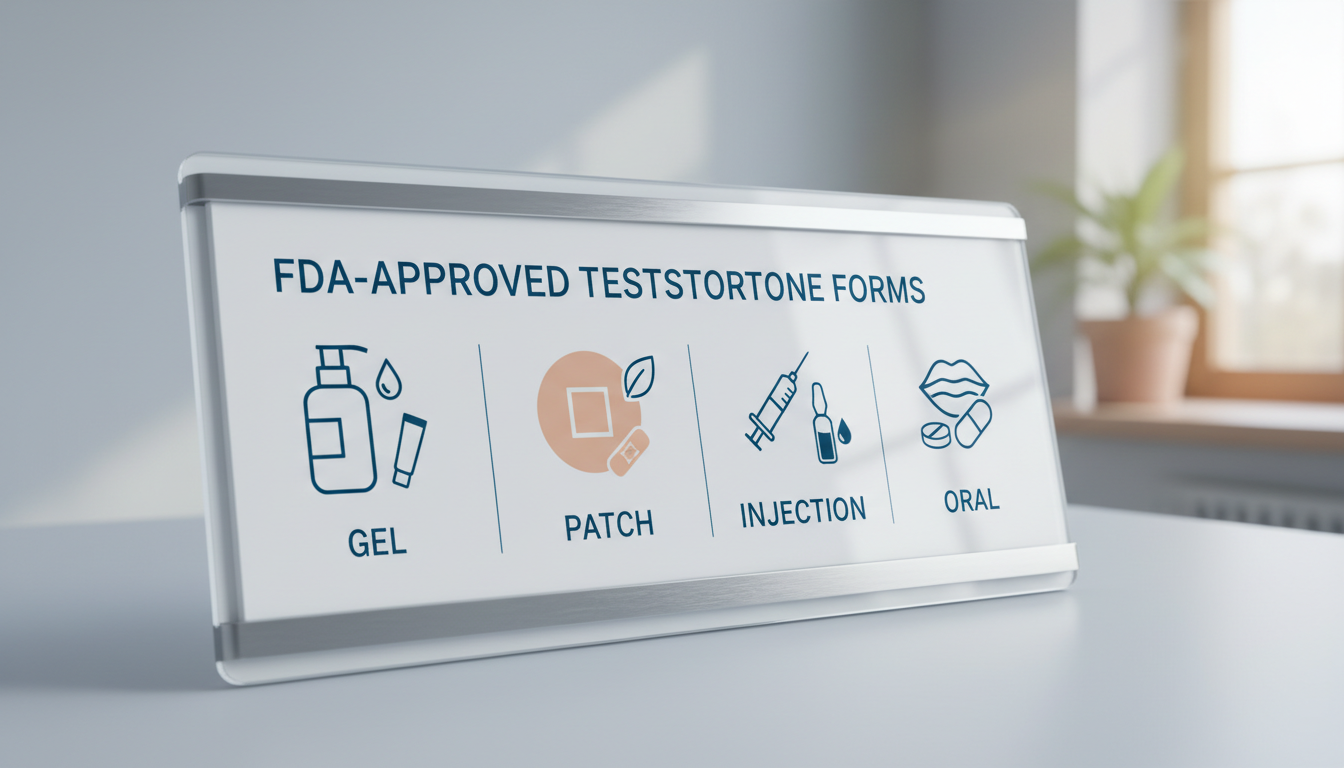
What forms of testosterone are FDA-approved?
Several FDA-approved methods for testosterone administration are available in 2026. These are designed to provide stable hormone levels and offer different lifestyle conveniences. Options include:
- Injections: Such as Testosterone Cypionate, typically administered every 1-2 weeks.
- Topical Gels: Applied daily to the skin, like the options discussed in our testosterone gel guide.
- Transdermal Patches: Worn on the skin and changed daily.
- Oral Capsules: A newer option like KYZATREX (testosterone undecanoate).
- Buccal Systems: A tablet that sticks to your gum.
Each method has its own pros and cons, which you should discuss with your doctor (FDA, 2025).
What is a normal testosterone level for men?
What's considered "normal" can vary slightly between labs, but a general range is typically between 300 and 1,000 nanograms per deciliter (ng/dL). For clinical trial purposes, a recent study on an oral testosterone product defined the target eugonadal (normal) range as 222–800 ng/dL (PMC, 2026). A doctor will interpret your levels in the context of your age, the time of day the blood was drawn (levels are highest in the morning), and your symptoms. A single low reading isn't always enough for a diagnosis; tests are often repeated for confirmation.
Can you naturally increase your testosterone?
Yes, lifestyle changes can support healthy testosterone production, though they may not be enough to resolve clinical hypogonadism. Regular exercise (especially strength training), getting enough sleep, managing stress, and maintaining a healthy body weight are all proven to help. Diet also plays a role; ensuring adequate intake of zinc, vitamin D, and healthy fats is important. Some people even wonder if certain foods, like oysters, can boost T-levels, which we explore in our guide on the oysters and testosterone connection. These methods are a great first step and complement medical therapy. Learn more about how to increase testosterone naturally.
Ready to Find a Provider?
Understanding the science behind testosterone is the first step. The next is talking to a professional who can provide guidance based on your personal health profile. If you're ready to explore whether hormone optimization is right for you, help is available.
FAQs
Is testosterone considered a performance-enhancing drug (PED)?
Yes, when used by an individual with normal testosterone levels for the sole purpose of gaining a physical advantage, it is considered a performance-enhancing drug. The World Anti-Doping Agency (WADA) and most major sports leagues ban its use without a therapeutic use exemption (TUE).
Does taking testosterone make you angry ("roid rage")?
"Roid rage" is a term linked to the abuse of anabolic steroids at very high doses, which can cause irritability and aggression. This is not a typical side effect of medically supervised TRT, which aims to bring testosterone levels into a normal physiological range, not push them to extreme highs. Most patients on TRT report improved mood and well-being, not anger.
Is testosterone a controlled substance?
Yes. In the United States, testosterone and all other anabolic steroids are classified as Schedule III controlled substances by the DEA. This means it has a valid medical use but also a potential for dependence and abuse. A prescription from a licensed healthcare provider is required to obtain it legally.
Can I buy testosterone online?
You can legally obtain a prescription for testosterone through a consultation with a licensed telehealth provider or an online clinic, but you cannot buy it directly like a supplement. These services require a legitimate medical consultation, bloodwork, and a diagnosis. Purchasing testosterone from websites that don't require a prescription is illegal and dangerous, as the products may be counterfeit, contaminated, or improperly dosed.
Contributing to evidence-based peptide education and provider transparency.
Too many clinics, not enough clarity?
We don't sell peptides. Tell us your goals and we'll connect you with a vetted provider who can figure out what actually makes sense for you.
See what's right for youRelated articles
Which Protein Supplements for Muscle Growth Actually Work?
Tired of the hype? Find out which protein supplements for muscle growth are backed by science and learn how to pick the right one for your goals.
Hormone TherapyWhat Are the Real Magnesium Glycinate Benefits?
Uncover the science-backed magnesium glycinate benefits. We explore its effects on sleep, stress, and muscle function and explain why it's a top choice.
Hormone TherapyWhat B12 Shot Benefits Can You Actually Expect?
B12 shots are often hyped for energy, but the real b12 shot benefits are more specific. Learn who is a true candidate and what results to expect.