What to Expect with Testosterone Treatment in Males
Considering testosterone treatment in males? We break down the latest options, what results to expect, and how to talk to your doctor about getting started.

This content is for informational purposes only and does not constitute medical advice. Always consult with a qualified healthcare provider before making any decisions about your health or treatment.
The landscape of testosterone treatment in males has changed more in the last two years than in the previous decade. If you've been feeling off, struggling with low energy, brain fog, or a lack of drive, you're not alone. Many men experience the effects of declining testosterone levels. The good news is that understanding and accessing effective treatment is becoming clearer and safer. Groundbreaking regulatory updates in 2025 have reshaped the conversation around safety, and new treatment methods arriving this year, 2026, are providing more options than ever before. This guide will walk you through everything you need to know today.
A New Era for Testosterone Treatment in Males
For years, a cloud of uncertainty hung over testosterone replacement therapy (TRT), primarily due to a stark "black box warning" from the FDA regarding potential cardiovascular risks. This warning, based on older and often debated studies, made many men and their doctors hesitant. That all changed in February 2025.
Following the results of the large-scale TRAVERSE clinical trial, the FDA officially removed this cardiovascular risk warning from all testosterone products (MedicalFoundationofNC). The trial, which involved over 5,200 men with pre-existing or high risk of heart disease, found that testosterone therapy was not associated with a higher rate of major adverse cardiac events compared to a placebo. Specifically, 7.0% of men in the testosterone group experienced an event, versus 7.3% in the placebo group (Urology Times).
This was a landmark decision. It was followed by a December 2025 FDA expert panel recommendation to expand the approved uses for TRT, potentially even removing its classification as a Schedule III controlled substance to improve access (TRTNYC). While the FDA did add a new warning about potential increases in blood pressure, the overall shift signals a new chapter of confidence in testosterone treatment in males when properly managed. This change acknowledges that for men with clinically low testosterone, the benefits can significantly outweigh the documented risks. If you're wondering if TRT is worth exploring, there's never been a better time to get clear, science-backed answers.
Understanding Your Treatment Options in 2026
Once you and your provider decide that treatment is the right path, you'll find a variety of methods available. Each has its own benefits, administration schedule, and cost. Choosing the right one depends on your lifestyle, goals, and your doctor's recommendation.
Testosterone Injections
Injectable testosterone, typically cypionate or enanthate, remains the most common and often most affordable form of TRT. These are administered into the muscle (intramuscular) or the fat layer under the skin (subcutaneous).
- How it works: You or your provider inject a measured dose of testosterone, usually once or twice a week. Some modern protocols use smaller, more frequent "microdoses" to maintain stable hormone levels and minimize side effects.
- Effectiveness: Injections are highly effective. Clinical studies show TRT, including injections, normalizes testosterone levels in 89% of hypogonadal men within 12 weeks (FormBlends).
- Cost: Injections are typically the most budget-friendly option. A 2026 review found injectable therapy can start around $80 per month (FormBlends). For example, telehealth provider Male Excel offers testosterone cypionate injections starting at $120 per month, plus a required medical membership (Newswire).
For more on dosing, you can explore common questions like if 0.5 mL of testosterone a week is enough.
Topical Gels and Creams
Topical options like gels and creams provide a non-invasive way to administer testosterone daily.
- How it works: You apply a prescribed amount of gel or cream to your shoulders, upper arms, or abdomen each day. The hormone is absorbed through the skin into the bloodstream.
- Effectiveness: Gels can be effective, but absorption rates can vary between individuals. The expected testosterone gel gains in terms of symptom relief are similar to other methods if levels are properly managed. One key consideration is the risk of transference. The testosterone gel effects on women or children who come into contact with the application site can be serious, so strict precautions are necessary.
- Cost: Gels are generally more expensive than injections. Male Excel's Lipoderm cream starts at $132 per month on top of their membership fee (Newswire).

Oral Testosterone (KYZATREX®)
A major development for 2026 is the expanded availability of an FDA-approved oral testosterone medication, KYZATREX®. Previously, oral options were limited due to concerns about liver toxicity.
- How it works: This is a twice-daily pill taken with food. It uses a different formulation (testosterone undecanoate) that bypasses the liver, mitigating previous safety concerns.
- Effectiveness: Clinical data is very promising. Studies show it restores testosterone levels in up to 96% of men and, on average, doubles free testosterone (Hims & Hers News).
- Side Effects: While it avoids the old liver issues, it does carry the class-wide risk of increasing blood pressure. A phase III study found a mean systolic blood pressure increase of 1.7 mmHg, with hypertension being the most common adverse reaction (PMC).
The arrival of a safe, effective oral pill provides a convenient option for men who are uncomfortable with needles or worry about topical transference.
Not sure which of these treatment options might be the best fit for your body and your life? You're not alone. Take our free 3-minute quiz to get matched with a provider who can review your symptoms and help you understand your choices.
The Cost and Accessibility of Testosterone Treatment in Males
Understanding the financial commitment is a critical step. The cost of testosterone therapy for men can vary widely based on the type of treatment, your dosage, and whether you use a local clinic or a telehealth service.
In 2026, the general monthly cost for a complete TRT program ranges from about $80 to $300 (FormBlends). This typically includes the medication, supplies, and clinical oversight.
Here’s a breakdown of typical costs:
- Injectable Testosterone: Most affordable, often in the $80-$150 per month range.
- Topical Gels/Creams: Mid-range, usually costing $120-$250 per month.
- Oral Testosterone (KYZATREX®): As a newer, branded medication, it may be on the higher end of the spectrum.
- Peptide Therapies: Costs for adjuncts like sermorelin can add $150-$250 to your monthly total.
- Combined Therapies: The hgh and testosterone therapy cost can be significantly higher, often running several hundred dollars per month, as HGH is a more expensive and regulated medication.
Telehealth platforms have made accessing treatment much easier. Companies like Hims and Male Excel offer comprehensive programs that include at-home testing and medication shipped to your door. For example, Male Excel's program requires a $99/month medical membership fee on top of the medication cost, which covers ongoing consultations and lab work monitoring (Newswire). It's important to check if these programs use FDA-approved drugs or compounded medications, which are not individually approved by the FDA.
When researching, you might see terms like "testosterone therapy singapore cost" or "testosterone gel nhs." It's crucial to understand that costs, regulations, and approved treatment protocols can be very different outside the United States. This guide focuses on the US market; always check with local health authorities for information specific to your country.
The first step in any program is getting your levels checked. You can learn more about this process and even find options for an at-home testosterone testing kit.
Alternatives and Adjuncts to Traditional TRT
TRT isn't the only way to address low testosterone. For some men, especially those concerned about fertility, alternative or combination therapies may be a better fit. This is particularly relevant for testosterone therapy in young men.
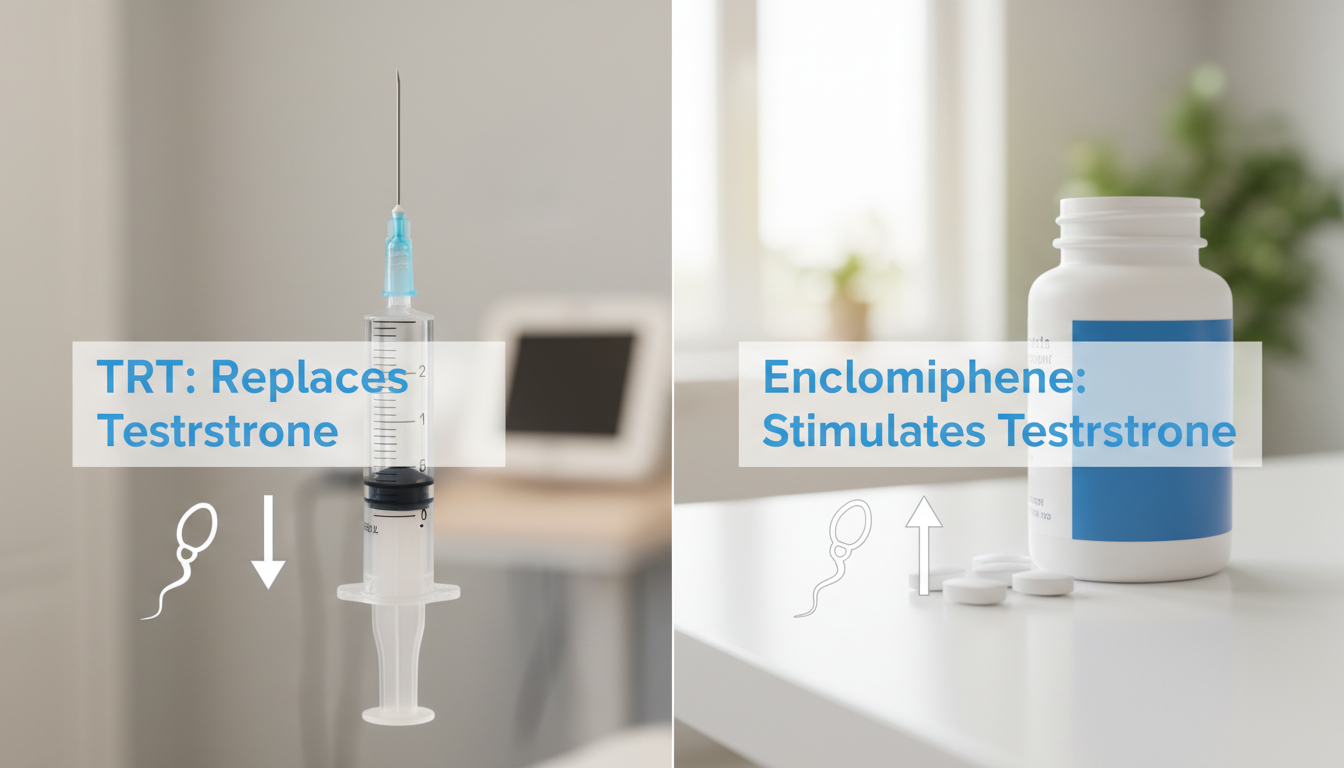
A common question is, "will testosterone injections increase sperm count?" The answer is a clear no. Standard TRT introduces external testosterone, which signals the body to shut down its own production, including the processes that support sperm maturation. This often leads to reduced sperm count and infertility.
For men who want to raise their testosterone while preserving fertility, options include:
- Enclomiphene: This is a selective estrogen receptor modulator (SERM) that blocks estrogen feedback at the pituitary gland. This "tricks" the body into producing more of its own natural testosterone and follicle-stimulating hormone (FSH), which supports sperm production. Telehealth providers like Hims are now offering compounded enclomiphene, which has been shown to potentially double testosterone levels without harming fertility (Hims & Hers News).
- Peptide Therapies: Peptides like Sermorelin and Ipamorelin are growth hormone secretagogues. They stimulate the pituitary gland to produce more growth hormone, which can indirectly support testosterone production. Some studies show these peptides can increase natural T levels by 40-60% from baseline and are sometimes used alongside low-dose TRT to support the body's own hormonal axis (FormBlends). You can find more information in our CJC-1295 + Ipamorelin guide.
These alternatives offer a different approach, working with your body's systems rather than replacing their function. They can be used alone or as part of a more complex protocol designed by a specialist.
Want to see which options fit your specific symptoms, budget, and goals? Our free quiz takes just 3 minutes and matches you with vetted providers who specialize in hormone optimization.
What to Consider Before Starting Treatment
Before jumping into treatment, it's essential to take a measured approach. Proper diagnosis and ongoing monitoring are the keys to a safe and effective outcome.
The first step is diagnosis. A diagnosis of clinical hypogonadism typically requires two separate morning blood tests showing total testosterone levels under 300 ng/dL, along with corresponding symptoms like fatigue, low libido, or depression (FormBlends). Simply having a number on the low end of the "normal" range isn't enough; clinical symptoms must be present. You can learn more about how to get testosterone tested and understand your testosterone serum levels.
Next, have an open conversation with your provider about the potential risks and side effects. While the major cardiovascular warning is gone, the TRAVERSE trial did note higher rates of atrial fibrillation and pulmonary embolism in the testosterone group (Urology Times). Furthermore, the FDA has mandated a new warning about increased blood pressure for all testosterone products based on postmarket studies (govdelivery.com). This is a manageable side effect but one that requires monitoring.
Finally, commit to the process. TRT is not a quick fix; it's a long-term medical therapy that requires regular follow-ups and blood work to ensure your levels are in a healthy range and to monitor for side effects like changes in red blood cell count (hematocrit) or PSA levels. Finding a qualified provider you trust is the most important decision you'll make. You can search for clinics that specialize in hormone therapy to find an expert near you.
Ready to explore your options with a professional? Take our free 3-minute quiz to get matched with a licensed provider who can create a plan for your specific needs.
FAQs
What is the best form of testosterone treatment for males?
There is no single "best" form of testosterone treatment; the right choice depends on your lifestyle, budget, comfort with needles, and your doctor's assessment. Injections are often the most affordable, while gels and the new oral pill KYZATREX® offer needle-free convenience.
Will testosterone injections increase sperm count?
No. In fact, testosterone injections almost always decrease sperm count and can lead to infertility. They signal your body to stop its own testosterone and sperm production. Men concerned with fertility should discuss alternatives like enclomiphene with their provider.
How much does testosterone therapy cost in 2026?
The cost of testosterone therapy for men in 2026 typically ranges from $80 to $300 per month. This cost varies depending on the treatment type (injections, gels, pills), dosage, and the clinic or telehealth platform you use.
Is testosterone therapy safe now after the FDA changes?
Testosterone therapy is considered much safer following the FDA's removal of the black box warning for cardiovascular risk in 2025. However, it is not without risks. It can increase blood pressure and has other potential side effects that must be monitored by a healthcare provider.
Contributing to evidence-based peptide education and provider transparency.
Too many clinics, not enough clarity?
We don't sell peptides. Tell us your goals and we'll connect you with a vetted provider who can figure out what actually makes sense for you.
See what's right for youRelated articles
Which Protein Supplements for Muscle Growth Actually Work?
Tired of the hype? Find out which protein supplements for muscle growth are backed by science and learn how to pick the right one for your goals.
Hormone TherapyWhat Are the Real Magnesium Glycinate Benefits?
Uncover the science-backed magnesium glycinate benefits. We explore its effects on sleep, stress, and muscle function and explain why it's a top choice.
Hormone TherapyWhat B12 Shot Benefits Can You Actually Expect?
B12 shots are often hyped for energy, but the real b12 shot benefits are more specific. Learn who is a true candidate and what results to expect.