Where to Get Testosterone & How to Start TRT Safely
Wondering where to get testosterone? We break down how to get tested, find a reputable doctor, and compare the pros and cons of online vs. in-person TRT.

This content is for informational purposes only and does not constitute medical advice. Always consult with a qualified healthcare provider before making any decisions about your health or treatment.
Decoding Testosterone: An Introduction to Hormone Health
If you're asking "where to get testosterone," you're likely dealing with symptoms that are impacting your quality of life. Fatigue, low motivation, brain fog, and a decreased sense of well-being can all point toward hormonal imbalances, and it's natural to seek solutions. Understanding your options for Testosterone Replacement Therapy (TRT) is the first step toward having an informed conversation with a healthcare provider. This guide will walk you through the entire process for 2026, from finding a provider to understanding the costs and procedures involved.
First, let's cover the basics. So, where is testosterone produced in males? Primarily in the testicles (the Leydig cells, specifically), with a small amount made by the adrenal glands. This hormone is crucial for maintaining muscle mass, bone density, red blood cell production, and sex drive. When your body doesn't produce enough, leading to a condition called hypogonadism, a doctor may prescribe TRT. It's important to remember that testosterone is a Schedule III controlled substance in the U.S. (according to Drugs.com), meaning you can only obtain it legally with a valid prescription from a licensed medical professional. This guide will show you exactly how to do that safely and effectively.
The Two Main Paths: Where to Get Testosterone Online vs. In-Person
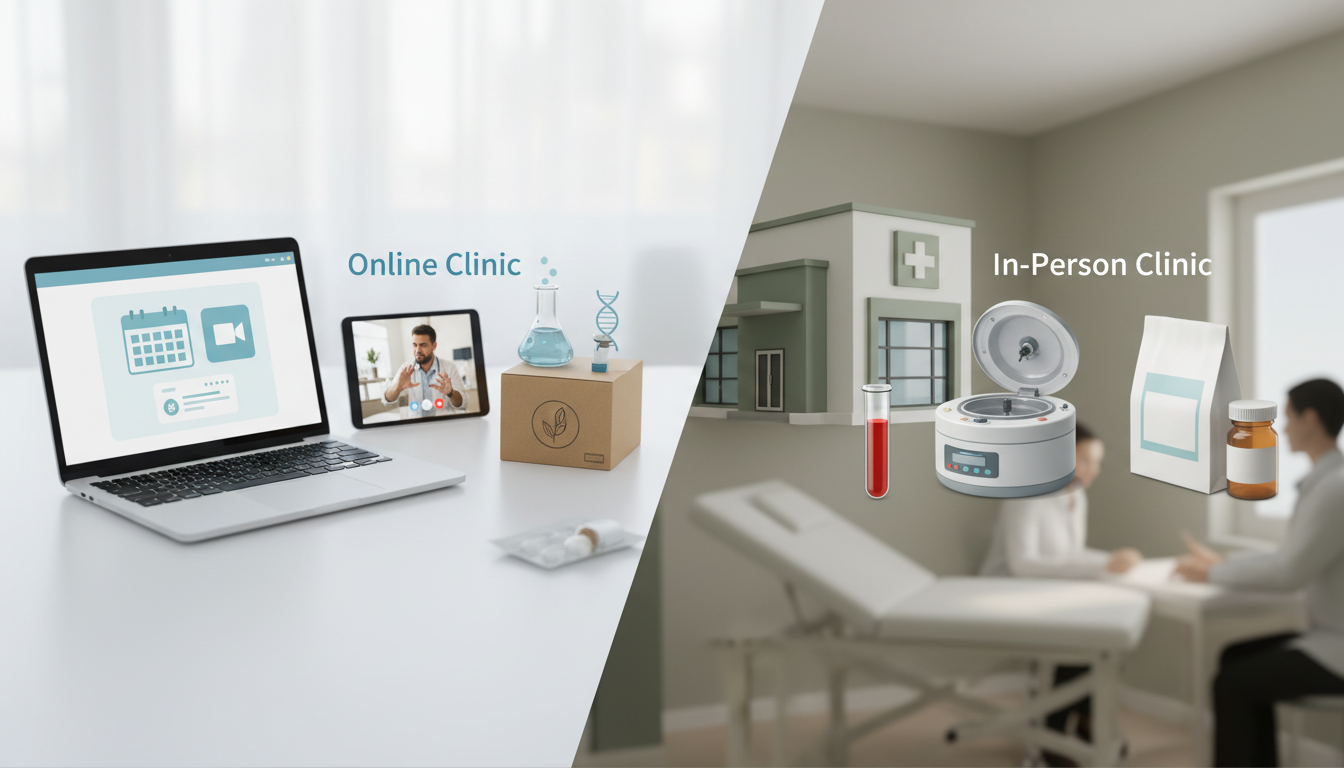
When you decide to explore TRT, you have two primary avenues: a modern telehealth platform or a traditional in-person clinic. Both have the same goal of getting you properly diagnosed and treated, but the process, cost, and convenience can differ significantly.
Online TRT Clinics
The rise of telehealth has made hormone optimization more accessible than ever. As of March 2026, obtaining TRT online is legal and a common practice across the United States, provided it’s managed by a licensed prescriber (Telehealth Ally).
The typical online process is straightforward:
- Online Intake: You start by filling out a detailed health history and symptom questionnaire on the clinic's website.
- Lab Work: The clinic sends you a requisition form for blood work at a local lab partner like Quest or Labcorp. Some companies even offer at-home testosterone testing kits.
- Telehealth Consultation: You have a video call with a licensed doctor or nurse practitioner to review your lab results, discuss your symptoms, and determine if you are a candidate for TRT.
- Medication Delivery: If a prescription is appropriate, it’s sent from a partner pharmacy directly to your door, usually within one to two weeks.
Online platforms often bundle services into a monthly subscription. For example, some providers like Fountain TRT offer an all-inclusive model for around $199 per month which covers medication, follow-up labs, and ongoing consultations, though it requires an initial diagnostic lab test for a small fee ($35) and is only available in certain states. This bundled approach simplifies budgeting and can be more affordable than traditional routes.
Pros of Online Clinics:
- Convenience: The entire process can be managed from home.
- Accessibility: You can access specialists who may not be in your local area.
- Transparent Pricing: Many clinics offer flat monthly fees, so you know exactly what you'll pay.
Cons of Online Clinics:
- Limited Physical Exam: The consultation is virtual, lacking a hands-on physical exam.
- State Restrictions: Some telehealth providers do not operate in every state.
If this modern approach sounds appealing, you can check out reviews of the best online testosterone therapy providers.
Traditional In-Person Clinics
The traditional route involves visiting a local doctor, such as a urologist, endocrinologist, or a specialized men's health clinic. The process starts with an in-office appointment, a physical exam, and a referral for lab work. You'll then return for a follow-up appointment to discuss results and treatment options.
While some patients prefer the established relationship of an in-person doctor, this path can have drawbacks. Costs are often fragmented. You’ll pay for the office visit, a separate fee to the lab, and another payment to the pharmacy. This can make the total monthly cost less predictable and often higher than online alternatives (ShotFreeTRT).
Pros of In-Person Clinics:
- Established Relationship: You can build a long-term, in-person relationship with your provider.
- Physical Exams: Allows for a hands-on physical assessment.
- Insurance Potential: Some parts of the treatment might be covered by insurance, though this varies widely. You can learn more about if TRT is covered by insurance.
Cons of In-Person Clinics:
- Higher Cost: Out-of-pocket costs are generally higher.
- Less Convenient: Requires multiple trips to the doctor's office and lab.
- Fragmented Billing: Costs are separated, making it harder to budget.
Feeling unsure which path is right for you? Our free quiz can help you understand your options and connect you with a vetted provider who fits your needs and preferences. Take the 3-minute quiz to get started.
Navigating the Costs: A 2026 Breakdown of TRT Prices
One of the biggest questions men have is about the cost. In 2026, the price for TRT without insurance can range anywhere from $100 to over $500 per month, depending on the provider, delivery method, and whether services are bundled (ShotFreeTRT).
Cost by Provider Type and Delivery Method
Online clinics are typically the more affordable option, offering all-in packages that include medication, consultations, and sometimes even follow-up lab work. A typical monthly cost for an online TRT subscription ranges from $99 to $300 (Telehealth Ally).
Here’s a breakdown of estimated monthly costs by the type of testosterone used:
- Testosterone Injections (Cypionate or Enanthate): This is the most common and cost-effective method. Online clinics usually bundle injectable TRT for $100–$250 per month (ShotFreeTRT). Sourcing the medication alone from a compounding pharmacy can be as low as $40–$100 per month, but this doesn't include provider oversight or lab fees (Telehealth Ally). Learn more about testosterone cypionate here.
- Testosterone Gels and Creams: Transdermal options are convenient but tend to be more expensive. Compounded creams and gels typically cost $150–$300 per month through online clinics (ShotFreeTRT). The brand-name versions can be significantly more.
- Testosterone Pellets: These are inserted under the skin and release testosterone over several months. While convenient, they are a higher-cost option, with each insertion procedure costing
$400to$2,000. This averages out to about $125–$400 per month (Cost Digest). - Oral Testosterone Capsules: Branded oral forms like KYZATREX are the most expensive, often running $400–$700 per month without insurance. However, compounded oral testosterone is a more accessible option at $100–$250 per month (ShotFreeTRT).
The "Hidden" Cost: Bloodwork
Blood testing is a non-negotiable part of safe and effective TRT, but it can be a significant and sometimes surprising expense. If not included in a subscription, follow-up lab work can add $300–$800 annually to your total cost (ShotFreeTRT). A single comprehensive hormone panel drawn every 3-6 months can cost $100 to $250 out-of-pocket (ShotFreeTRT).
Furthermore, a 2025 study published in the International Journal of Impotence Research revealed a major lack of price transparency for testosterone testing in U.S. hospitals. The study found that nearly half of hospitals (48.3%) failed to report their prices. For those that did, the median price for a total testosterone test was $84.90 and $92.27 for a free testosterone test, but prices varied dramatically. This makes it difficult for patients to shop around and highlights the value of online clinics that bundle lab costs into a predictable monthly fee.
Want to see which TRT options fit your budget and goals? Our free quiz takes 3 minutes and matches you with vetted providers who offer transparent pricing.
The Step-by-Step Process for Getting a Testosterone Prescription
Now that you know the 'where' and 'how much,' let's walk through the 'how.' Obtaining a legal testosterone prescription follows a clear medical protocol to ensure it's both safe and appropriate for you.
Step 1: Initial Consultation and Symptom Screening The process begins with a consultation where you discuss your symptoms with a provider. Be prepared to talk openly about issues like fatigue, low libido, mood changes, or difficulty concentrating. Many men find it helpful to first use a hormone symptom checker to organize their thoughts.
Step 2: Diagnostic Blood Testing If your symptoms suggest low testosterone, the next step is comprehensive lab work. To receive a clinical diagnosis of hypogonadism, guidelines require at least two separate morning testosterone blood draws showing low levels (Telehealth Ally). This is because testosterone levels fluctuate throughout the day and are naturally highest in the morning. Your provider will order a panel that typically includes:
- Total Testosterone
- Free Testosterone
- Estradiol (E2)
- Prostate-Specific Antigen (PSA)
- Complete Blood Count (CBC) to check hematocrit
This is the most critical step for a diagnosis. You can learn more about the process of getting your testosterone tested here.
Step 3: Physician Review and Diagnosis A licensed physician will carefully review your lab results in the context of your reported symptoms and health history. A diagnosis is not based on a number alone. A provider will consider your overall clinical picture before recommending treatment.
Step 4: Prescription and Treatment Plan If you are diagnosed with hypogonadism, the provider will create a treatment plan. This is where the concept of low dose testosterone for males is important. The goal of TRT is not to achieve superhuman levels but to restore your testosterone to an optimal range for your age and health, relieving your symptoms. Your provider will start you on a dose, often a conservative one, and titrate it based on how you feel and your follow-up lab results. They will also discuss the pros and cons of different delivery methods, like injections, gels, or creams.
Step 5: Medication Delivery and Ongoing Monitoring With an online clinic, your prescribed medication will be shipped from a licensed U.S. pharmacy directly to your home, typically within one to two weeks (Telehealth Ally). TRT is not a "one and done" treatment. Your provider will require follow-up blood work every 3 to 6 months to monitor your hormone levels, check for side effects, and make any necessary dose adjustments. This ongoing oversight is crucial for safe and effective long-term therapy.

What to Consider and Important Safety Information
Before starting therapy, it’s vital to understand that TRT is a medical treatment with specific indications and potential risks.
TRT is for Medical Need, Not Performance Enhancement
Testosterone should only be used to treat diagnosed medical conditions like hypogonadism. It is not intended for enhancing athletic performance or as an anti-aging cure-all for men with normal testosterone levels. The Drug Enforcement Administration (DEA) classifies testosterone as a Schedule III controlled substance due to its potential for misuse. Abusing testosterone carries serious risks, including heart problems, liver damage, infertility, and psychological effects (Drugs.com). Understanding that testosterone is a steroid in a medical context is key to using it responsibly.
Research and Patient Populations
The safety and efficacy of TRT are well-established for adult males with hypogonadism. For instance, the FDA-approved oral capsule KYZATREX had its prescribing label updated in July 2025, showing continued refinement of its safety profile for this group. However, its safety and effectiveness have not been established for males under 18 years old.
Medical research continues to explore new applications and formulations. For example, a clinical trial at UCSF (which began in 2025) is currently studying the injectable XYOSTED for testosterone replacement in adolescent boys aged 12-17 with diagnosed hypogonadism. This research helps expand our understanding but also underscores that TRT should only be used in specific populations under strict medical supervision.
Choosing a Reputable Provider
With the growth of online health, it's crucial to choose a legitimate provider. Look for platforms that openly state they work with licensed U.S. physicians and pharmacies. A major red flag is any service that offers to sell you testosterone without requiring a consultation and comprehensive bloodwork. This is illegal and dangerous. For guidance, read our post on how to find a legitimate peptide clinic, as many of the same principles apply to hormone providers.
What Are My Next Steps?
You've learned about the different places to get testosterone, the costs involved, and the process to expect. Here’s a simple checklist to guide you forward:
- Assess Your Symptoms: Take an honest look at how you feel. Are you struggling with fatigue, brain fog, or low motivation? Use our Hormone Symptom Checker to see if your symptoms align with low T.
- Commit to a Professional Consultation: Self-diagnosing is not an option. The only way to know for sure is to speak with a qualified medical provider who can properly evaluate you.
- Prepare for Lab Testing: Understand that blood work is a mandatory step for a legal and safe prescription. Be prepared to get two morning blood draws.
- Explore Your Provider Options: Use the information in this guide to compare online clinics with local doctors. Consider cost, convenience, and your personal preferences.
Ready to take the first step? Don't let symptoms of low testosterone hold you back from living your life to the fullest. Take our free 3-minute quiz to get matched with a licensed provider who can guide you through this process.
FAQs About Where to Get Testosterone
Is it legal to get testosterone online in 2026? Yes, it is legal to get testosterone online as long as it is prescribed by a licensed medical provider after a formal diagnosis based on symptoms and required lab work. Testosterone is a controlled substance, so a valid prescription is mandatory.
How much does a testosterone test cost?
The cost varies significantly. A 2025 study found the median price was around $85 for a total testosterone test and $92 for free testosterone, but many hospitals don't publish their prices. Online TRT clinics often bundle the initial and follow-up lab work into their monthly subscription fee, making the cost more predictable.
Can I get testosterone without seeing a doctor? No, you cannot legally or safely get testosterone without a prescription from a licensed medical professional. Testosterone is a Schedule III controlled substance, and a doctor must conduct a proper medical evaluation, including blood tests, to diagnose hypogonadism before prescribing it.
What is the cheapest way to get testosterone?
Injectable testosterone, such as testosterone cypionate, is generally the most affordable option. Sourcing it through an online clinic that uses a compounding pharmacy typically offers the lowest all-in cost, with monthly plans often starting around $100 to $150, which includes the medication, supplies, and medical oversight.
Do I need TRT if my testosterone is just a little low? This is a decision to make in partnership with your doctor. A slightly low number on a lab report doesn't automatically mean you need TRT. Your provider will consider your symptoms, overall health, and the full lab panel. Sometimes, a provider may prescribe low dose testosterone for males to gently bring levels into an optimal range and see if symptoms improve, rather than aiming for the high end of normal right away.
Contributing to evidence-based peptide education and provider transparency.
Too many clinics, not enough clarity?
We don't sell peptides. Tell us your goals and we'll connect you with a vetted provider who can figure out what actually makes sense for you.
See what's right for youRelated articles
Which Protein Supplements for Muscle Growth Actually Work?
Tired of the hype? Find out which protein supplements for muscle growth are backed by science and learn how to pick the right one for your goals.
Hormone TherapyWhat Are the Real Magnesium Glycinate Benefits?
Uncover the science-backed magnesium glycinate benefits. We explore its effects on sleep, stress, and muscle function and explain why it's a top choice.
Hormone TherapyWhat B12 Shot Benefits Can You Actually Expect?
B12 shots are often hyped for energy, but the real b12 shot benefits are more specific. Learn who is a true candidate and what results to expect.