Is TRT Covered by Insurance? Your 2026 Cost Breakdown
Wondering is TRT covered by insurance? We break down the requirements your insurer wants to see, typical out-of-pocket costs, and how to appeal a denial.

This content is for informational purposes only and does not constitute medical advice. Consult with a qualified healthcare provider before making any decisions about your health or treatment.
You’re feeling the symptoms. The fatigue, the low motivation, the dip in drive. You've done your research, and Testosterone Replacement Therapy (TRT) seems like a possible solution. But one huge question hangs in the air: can you actually afford it? You've probably searched "is TRT covered by insurance" and found a lot of vague answers.
Let's clear that up.
The short answer is yes, in 2026, most major insurance plans are expected to cover TRT, but only when it is deemed medically necessary. This guide will give you the real numbers and a complete breakdown of what "medically necessary" means, what you can expect to pay with and without insurance, and how online clinics are changing the game. We'll show you exactly how insurance approval works and what your total out-of-pocket costs will likely be this year.
TRT Cost: Quick Price Summary (2026)
Before we dive into the details, here is a quick overview of what you can expect to pay for TRT annually, depending on your situation. As you can see, the path you choose has a significant impact on your yearly costs.
| Coverage Type | Typical Annual Cost Range (2026) | What It Usually Includes |
|---|---|---|
| Good Insurance Coverage | $160 – $420 | Doctor visits (copay), generic testosterone cypionate (copay), and required lab work. |
| High-Deductible Insurance Plan | $1,000 – $2,500+ | You pay 100% of costs (visits, labs, medication) until your high deductible is met. |
| Medicare (Part B + D) | $500 – $2,000+ | Varies. Depends on deductibles, 20% coinsurance, and plan formulary. Part D has a $2,000 max out-of-pocket. |
| Cash-Pay (Local Doctor) | $1,500 – $3,600+ | Initial consult, medication, follow-up visits, and basic labs. Ancillaries are extra. |
| Cash-Pay (Online Clinic) | $950 – $2,820 | All-inclusive plans often bundle medication, all lab work, virtual consultations, and provider support. |
Sources: The TRT Catalog, Highland Longevity, Medicare.org
Is TRT Covered by Insurance? The Full Cost Breakdown
Getting your TRT covered by insurance can feel like navigating a maze, but it is possible. In fact, industry data for 2026 suggests that an estimated 83% of patients who follow the correct protocol get approved (Source: FormBlends). The key is understanding and meeting the strict criteria for "medical necessity."
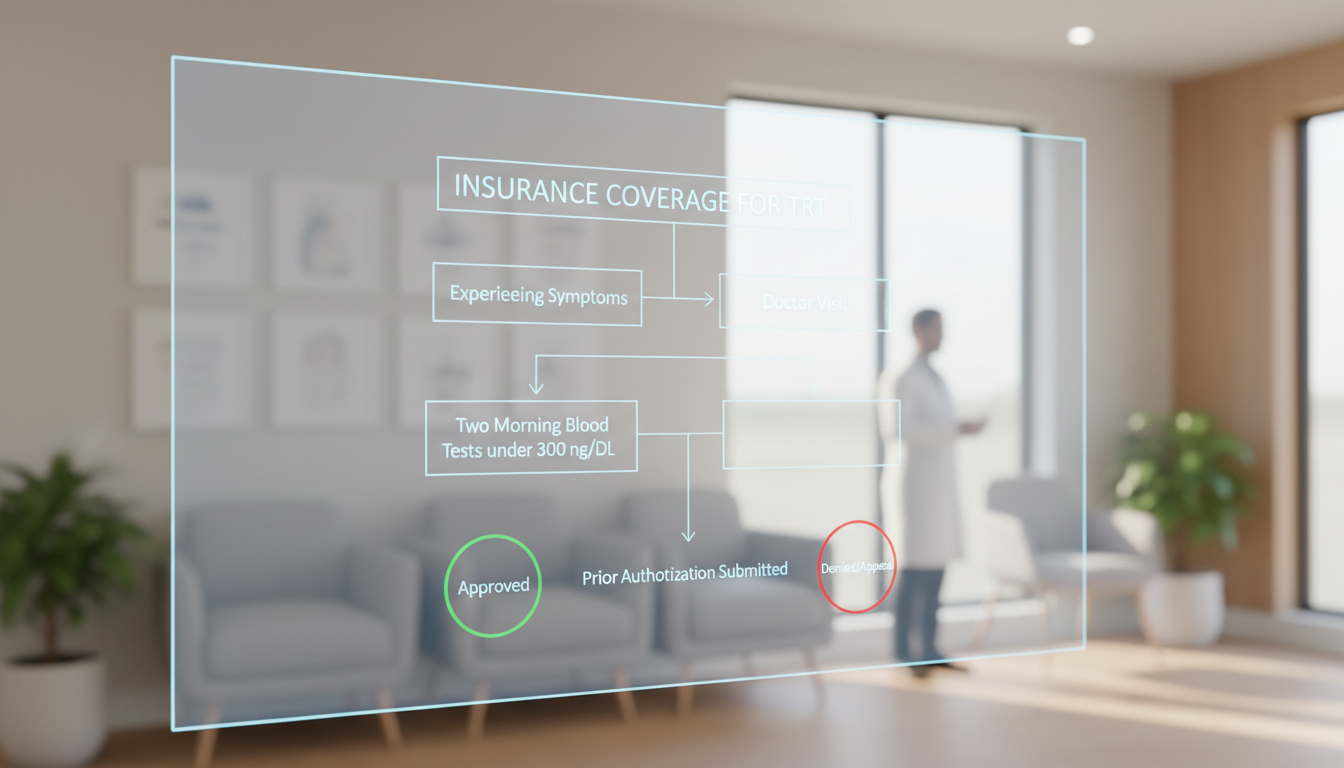
So, what does that mean? For most insurance companies, including major providers like Aetna, Blue Cross Blue Shield, and UnitedHealthcare, you must prove you have clinical hypogonadism. This typically requires:
- Two Morning Blood Tests: You'll need at least two separate blood tests, taken in the morning when testosterone levels are highest, showing total testosterone levels under 300 ng/dL. To understand what your numbers mean, you can read more about testosterone serum levels.
- Documented Symptoms: Your doctor must document your symptoms of decreased testosterone, such as fatigue, low libido, erectile dysfunction, or loss of muscle mass.
- A Formal Diagnosis: The provider will submit a prior authorization request using the specific diagnosis code for hypogonadism (ICD-10 code E29.1).
The approval process usually takes between two to four weeks. If your claim is denied, don't lose hope. Well-documented appeals have a success rate of about 65% in 2026 (Source: FormBlends).
Once you're approved, what do you actually pay? This depends heavily on your plan's structure:
- With a Good PPO/HMO Plan: After you've met your annual deductible, your costs will be relatively low. You can expect monthly out-of-pocket expenses to range from $25 to $150. This covers your copays for doctor visits and your share of the medication cost. Annually, this could be as low as $160 to $420 if your deductible is already met for the year (Sources: FormBlends, The TRT Catalog).
- With a High-Deductible Health Plan (HDHP): Your initial costs will be much higher. You will pay 100% of the price for doctor visits, lab tests, and medication until your deductible (which can be several thousand dollars) is met. This can result in an annual cost of $1,000 to $2,720, sometimes making cash-pay options more predictable and affordable (Source: The TRT Catalog).
- With Medicare: Medicare coverage for TRT is specific. It covers TRT for symptomatic hypogonadism but not for low testosterone related to normal aging (Source: Medicare.org).
- Medicare Part B covers treatments administered by a professional in a clinical setting. You first pay your Part B deductible, then you are responsible for 20% of the Medicare-approved cost.
- Medicare Part D covers self-administered medications like injections or gels you use at home. Your cost depends on your plan's formulary. A significant update that carries into 2026 is the $2,000 out-of-pocket cap on Part D prescription drugs, which can provide a safety net for ongoing treatment costs (Source: Medicare.org).
It's also crucial to know what insurance usually won't cover. Most plans favor generic injectable testosterone cypionate and are less likely to cover more expensive gels, patches, or pellets. Furthermore, ancillary medications like HCG, which some doctors prescribe to maintain fertility and testicular size on TRT, are almost never covered for this use (Source: Highland Longevity).
TRT Cost Without Insurance (Cash Pay)
If dealing with insurance seems too complicated, or if you don't meet their strict criteria, paying with cash is a straightforward alternative. While the sticker price is higher, it offers predictability and control over your treatment.
The monthly cost for cash-pay TRT typically ranges from $100 to $300, which adds up to an annual cost of $1,200 to $3,600 (Source: Highland Longevity).
So, what does that price get you? It depends on where you go.
- At a Local Doctor or Endocrinologist: You will pay for each service separately. An initial consultation might be $250-$500, follow-up visits $100-$250, and lab work can be another $200-$600, depending on the panel. The medication cost is on top of that. A 10 mL vial of testosterone cypionate might cost $40-$100 and last for several months.
- At a Dedicated Men's Health or TRT Clinic: These clinics often operate on a cash-pay basis and provide bundled pricing. This is the model that online clinics have perfected, offering a more inclusive and often more affordable package.
The primary benefit of cash pay is avoiding the gatekeeping of insurance. Many men choose this route for several reasons:
- No Prior Authorization: You can start treatment quickly without waiting weeks for an insurance decision.
- No Arbitrary Cutoffs: Insurance requires your T levels to be under 300 ng/dL. Many men feel symptomatic at levels of 350 or 400 ng/dL but cannot get insurance coverage. Cash-pay clinics focus on symptoms and optimization, not just a number on a lab report.
- Access to Better Protocols: Insurance often restricts treatment to what's cheapest, not what's best. Cash-pay clinics frequently include beneficial ancillary medications like HCG or anastrozole and allow for more frequent lab monitoring to fine-tune your protocol, which insurance would deny (Source: The TRT Catalog).
The cost of the testosterone itself also varies by type if you're paying out of pocket (Source: Hims):
- Injections: Most affordable at $10-$100 per month.
- Gels or Patches: Significantly more expensive at $200-$500 per month.
- Pellets: The most expensive option, often costing over $1,000 per insertion procedure, which is typically done 2-4 times per year.
Comparing cash-pay options can be confusing. Are you getting a good deal, and which provider is right for you? Take our free quiz to get matched with vetted providers who fit your needs and budget. Find your provider now.
Is Online TRT Covered By Insurance? Comparing Clinic Prices
The rise of telehealth has brought a new wave of online testosterone therapy clinics. These platforms offer convenience, specialized care, and transparent pricing. The big question many ask is, is online TRT covered by insurance?
For the most part, the answer is no. The vast majority of online TRT clinics operate on a direct-to-patient, cash-pay model. They don't deal directly with insurance companies. This allows them to streamline their services, reduce administrative overhead, and offer more comprehensive care without being constrained by insurance company rules.
However, some clinics may provide you with a "superbill" upon request. This is a detailed invoice of the services you've received that you can submit to your insurance company for potential out-of-network reimbursement. Success with this varies wildly depending on your insurance plan's out-of-network benefits.
The primary appeal of these clinics is their all-inclusive subscription pricing. Annual plans generally run from $948 to $2,820 (Source: The TRT Catalog). This predictability is a huge draw for men who want to avoid the surprise bills that can come with using insurance.
Let's compare some of the popular online options available in 2026.
| Online Clinic | Starting Monthly Cost | What's Included | Insurance Accepted? |
|---|---|---|---|
| TRT Nation | $99/month | Testosterone, supplies, consultations. Lab work is separate. | No |
| Peter MD | $79/month | Testosterone, supplies, consultations. Lab work is separate. | No |
| FountainTRT | $199/month | All-inclusive: medication, all labs, consultations, and provider access. | No |
| Hone Health | $30/month (Membership) | Membership fee for provider access. Medication and labs are extra. | No, but uses insurance for labs. |
Disclaimer: Prices are based on 2026 research from sources like The TRT Catalog and are subject to change. This is not an exhaustive list.
As you can see, the models differ. Some, like TRT Nation and Peter MD, offer a low monthly entry point, but you'll need to pay for your initial and follow-up lab work separately, which can add hundreds of dollars per year. Others, like FountainTRT, have a higher monthly fee but are truly all-inclusive, bundling the cost of all medications, lab tests, and consultations into one transparent price.
This cash-pay model allows online clinics to offer what many consider a higher standard of care. They focus on optimizing your hormones for how you feel, not just getting you above an arbitrary 300 ng/dL threshold. They are also more likely to prescribe and manage ancillary medications to ensure you feel your best throughout your treatment. If you're looking for the best online testosterone therapy, it's important to compare what's included in the total price.
How to Save Money on TRT
Whether you use insurance or pay cash, the costs of long-term therapy can add up. Here are over five effective strategies to make TRT more affordable in 2026.
- Use Your Insurance (If You Qualify): If your testosterone is clinically low, going through your insurance is often the cheapest path. Be diligent about the process. Get both morning labs done. Make sure your doctor documents your symptoms thoroughly. If you are denied, remember that appeals are successful about 65% of the time with proper documentation (Source: FormBlends).
- Choose Generic Injectable Testosterone: Across all payment methods, generic testosterone cypionate or enanthate injections are the most cost-effective form of TRT. Gels, patches, brand-name drugs, and pellets are significantly more expensive and less likely to be covered by insurance.
- Use Prescription Discount Cards: If you are a cash-pay patient (or even if you have a high-deductible plan), services like GoodRx can dramatically lower the cost of your medication. A 10mL vial of testosterone cypionate that might be $120 retail could be as low as $35 with a coupon.
- Perform Your Own Injections: If you are on Medicare Part B and having a nurse administer your shot, you are paying 20% coinsurance for each visit. Learning to inject testosterone at home can save you thousands per year in administration fees and copays. Most providers are happy to teach you how.
- Ask for a 90-Day Supply: Many pharmacies and insurance plans offer a discount for filling a 3-month supply of medication at once versus a 1-month supply. This reduces your number of copays and trips to the pharmacy.
- Compare Lab Costs: Lab work can be a major hidden expense. Ask your clinic if you can use your insurance for labs even if you pay cash for the consultations and medication. Alternatively, you can use direct-to-consumer lab services to purchase your own panels, which can sometimes be cheaper than going through a clinic or hospital system. Researching how to get testosterone tested can reveal several cost-saving options.
By combining these strategies, you can take control of your healthcare costs and make TRT a sustainable part of your budget.

Is TRT Worth the Cost?
After breaking down all the numbers, from $25 a month with great insurance to over $300 a month for an all-inclusive online plan, you might be asking: is it even worth it?
This is a deeply personal question, but for many men, the answer is a resounding yes. The cost of TRT should be weighed against the cost of inaction. Living with the symptoms of low testosterone has its own price. It can affect your career, your relationships, your physical health, and your overall quality of life.
Properly managed TRT can lead to significant improvements:
- Increased energy and reduced fatigue
- Improved mood and cognitive function
- Restored libido and sexual function
- Increased muscle mass and decreased body fat
- Better bone density
You can read more about what to expect from testosterone treatment in males and see before and after results.
Of course, TRT is a medical treatment, not a magic bullet. It requires a lifelong commitment and has potential downsides and side effects that must be managed by a qualified provider. The cost is not just for the medication itself, but for the expert medical guidance needed to do it safely and effectively.
Ultimately, you are not just paying for a vial of testosterone. You are investing in feeling like yourself again. When you consider the potential return on that investment in terms of vitality, productivity, and happiness, many find the monthly cost to be a small price to pay.
Ready to explore if TRT is the right investment for your health? The first step is talking to a professional. Take our free 3-minute quiz to get matched with a licensed provider who can assess your symptoms and guide you through your options.
FAQs
How low does my testosterone need to be for insurance to cover TRT?
Most insurance plans in 2026 require two separate morning blood tests showing total testosterone levels under 300 ng/dL, along with documented symptoms of hypogonadism.
Does Medicare cover TRT in 2026?
Yes, Medicare covers TRT when it is medically necessary for a diagnosed condition like symptomatic hypogonadism. It does not cover TRT for low testosterone caused by normal aging. Part B covers in-office treatments, and Part D covers self-administered drugs, with an out-of-pocket maximum of $2,000 for 2026.
Are online TRT clinics covered by insurance?
Generally, no. The majority of online TRT clinics are cash-pay and do not accept insurance directly. They offer bundled subscription plans for convenience and transparent pricing. Some may provide paperwork for you to seek out-of-network reimbursement on your own.
How much does TRT cost a month with insurance?
Once your annual deductible is met, your monthly out-of-pocket cost for TRT with good insurance coverage is typically between $25 and $150. This includes copays for medication and potentially doctor visits.
Is HCG usually covered by insurance for TRT?
No, insurance plans almost never cover HCG when prescribed as an ancillary medication alongside TRT to maintain testicular function or fertility. This is considered an off-label use and is typically an out-of-pocket expense.
Contributing to evidence-based peptide education and provider transparency.
Too many clinics, not enough clarity?
We don't sell peptides. Tell us your goals and we'll connect you with a vetted provider who can figure out what actually makes sense for you.
See what's right for youRelated articles
Which Protein Supplements for Muscle Growth Actually Work?
Tired of the hype? Find out which protein supplements for muscle growth are backed by science and learn how to pick the right one for your goals.
Hormone TherapyWhat Are the Real Magnesium Glycinate Benefits?
Uncover the science-backed magnesium glycinate benefits. We explore its effects on sleep, stress, and muscle function and explain why it's a top choice.
Hormone TherapyWhat B12 Shot Benefits Can You Actually Expect?
B12 shots are often hyped for energy, but the real b12 shot benefits are more specific. Learn who is a true candidate and what results to expect.