What Are the Real GHK-Cu Copper Peptide Benefits?
Discover the science-backed ghk-cu copper peptide benefits. We explain how this compound works for skin rejuvenation, hair growth, and wound healing.
This content is for informational purposes only and does not constitute medical advice. Always consult with a qualified healthcare provider before starting any new treatment.
The search for effective anti-aging solutions often leads to complex ingredients with big promises. But what if one of the most promising compounds was already inside your body, just in diminishing supply? This is the story of GHK-Cu. In this guide, we'll explore the science behind the ghk-cu copper peptide benefits, looking at what the research actually shows for skin, hair, and overall tissue repair in 2026. This isn't just about another cosmetic cream, it's about a peptide that can influence thousands of your genes.
What is GHK-Cu?
GHK-Cu, short for Glycyl-L-Histidyl-L-Lysine-Copper, is a naturally occurring peptide-copper complex found in human blood plasma, saliva, and urine. It's a small protein fragment, a tripeptide, bound to a copper ion. Think of it as a biological delivery driver, carrying essential copper to cells and signaling them to initiate repair and regeneration processes throughout the body.
This peptide was first identified in the 1970s, but its significance has grown as we learn more about its role in health. The most critical finding is how its concentration changes with age. According to BioStrata Research, plasma levels of GHK-Cu drop dramatically as we get older, falling from around 200 nanograms per milliliter at age 20 to just 80 ng/mL by age 60.
This decline is important because GHK-Cu acts as a master regulator for tissue remodeling. As its levels fall, the body's ability to heal wounds, produce collagen, and control inflammation may slow down. This connection between declining GHK-Cu and the signs of aging has made it a major focus in anti-aging and regenerative medicine. By reintroducing this peptide, either topically or systemically, the goal is to restore some of the body's natural repair functions. You can learn more about how peptides work in our guide to peptide therapy.
How Does GHK-Cu Work?
The mechanism behind GHK-Cu is fascinating and goes far beyond simple skincare. It works on a fundamental, genetic level. Research from multiple sources, including Tetrapod and a 2026 Springer Nature review, confirms that GHK-Cu modulates the expression of over 4,000 human genes. That's roughly 31-32% of the genes involved in tissue remodeling, essentially helping to "reset" cellular activity to a healthier, more youthful state.
Here’s a breakdown of its key actions:
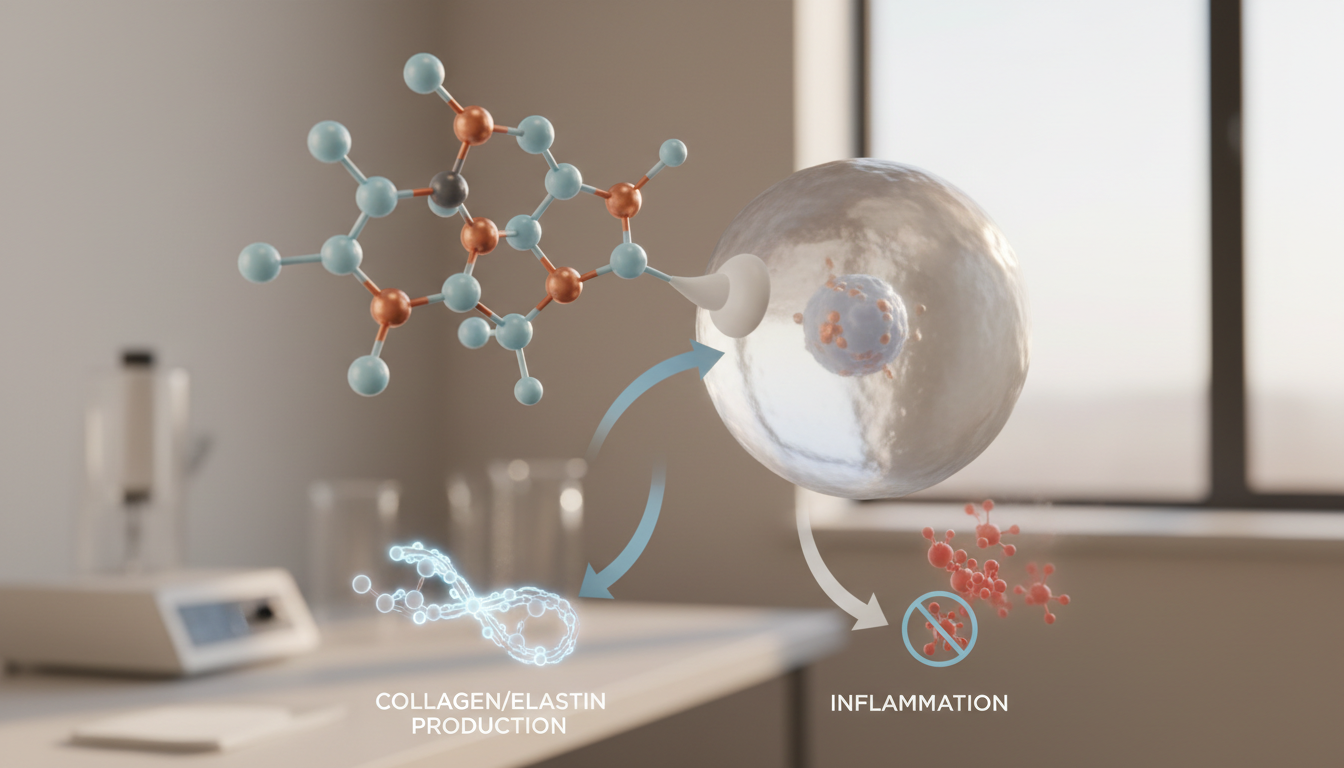
- Gene Modulation: GHK-Cu signals cells to turn "on" beneficial genes and turn "off" harmful ones. It upregulates genes responsible for producing collagen and elastin, the proteins that give skin its structure and firmness. At the same time, it downregulates genes that promote inflammation (like IL-6) and scar formation (like TGF-β1).
- Stimulating Collagen Production: Lab studies cited by PepCodex show that GHK-Cu can stimulate fibroblasts, the skin's "factory" cells, to produce up to 70% more collagen. This directly counteracts the age-related decline in collagen that leads to wrinkles and sagging skin.
- Antioxidant and Anti-inflammatory Effects: The copper component of GHK-Cu is crucial for the function of the antioxidant enzyme superoxide dismutase (SOD). Studies show GHK-Cu can reduce damaging reactive oxygen species (ROS) by 50% in skin cells exposed to UV radiation. Its ability to lower inflammatory markers helps calm irritated skin and create a better environment for healing.
- Promoting Blood Vessel Growth: GHK-Cu supports angiogenesis, the formation of new blood vessels. This improves circulation to damaged tissues, delivering more oxygen and nutrients needed for repair, which is particularly beneficial for wound healing and hair follicle health.
Intrigued by how GHK-Cu could benefit you? Take our free 3-minute quiz to get matched with a provider who can discuss your specific goals and health profile.
The Science-Backed GHK-Cu Copper Peptide Benefits
While the mechanisms are impressive, the real question is whether they translate to measurable results. The ghk-cu copper peptide benefits are best documented in a few key areas, primarily backed by clinical trials on topical applications. Let's look at the evidence.
Rejuvenates Skin and Reduces Wrinkles
This is the most well-studied benefit and the reason GHK-Cu is a star in the cosmetic world. The evidence for its effects on skin is strong. For anyone interested in the ghk-cu peptide benefits for skin, the data is compelling.
- Wrinkle Reduction: A review from Nationwide Peptides highlighted a trial where a 0.5% GHK-Cu cream reduced wrinkles by 31.6%. Another study from BioStrata Research noted consistent 25-35% improvements in wrinkle depth.
- Improved Firmness and Elasticity: Peptide Garden cited a 12-week clinical trial where users saw a 22% increase in skin firmness and a 16% reduction in fine lines. PhoenixMeds Inc. also notes that pilot studies show elasticity improvements of up to 30%.
- Increased Collagen: The core of skin rejuvenation is collagen. One study showed an 8-week application of a 1% GHK-Cu serum increased skin collagen content by 70%. These results are why it's a key ingredient in some of the best injectable peptides for skin tightening.
Most studies show visible improvements, such as better skin laxity and clarity, within 4 to 12 weeks of consistent topical use.
Accelerates Wound Healing and Reduces Scarring
GHK-Cu’s ability to remodel tissue makes it a powerful agent for healing. It doesn't just patch up a wound, it helps organize the new tissue in a healthier, less scarred way. This is where you might see dramatic ghk-cu peptide before and after results in men and women.
- Scar Reduction: A study referenced by Tetrapod and Nationwide Peptides found that a 0.5% GHK-Cu gel applied to post-surgical wounds reduced scar volume by an impressive 35% over three months when compared to standard silicone gel.
- Chronic Wound Healing: Its effects are particularly notable in difficult-to-heal wounds. In a clinical trial on diabetic foot ulcers, GHK-Cu achieved an 85% wound closure rate at 12 weeks, compared to just 55% in the control group.
This powerful healing response is why some practitioners explore it for managing everything from acne scars to recovery from cosmetic procedures. It shares some functional overlap with other healing peptides like BPC-157, though they work through different pathways.
Promotes Hair Growth and Thickness
The secondary keyword ghk cu peptide benefits for hair is a popular search query, and for good reason. While the scalp is skin, the benefits of GHK-Cu extend specifically to the hair follicle. The mechanism is threefold:
- Increased Blood Flow: By promoting the growth of new blood vessels around the follicle, it delivers more oxygen and nutrients.
- Reduced Inflammation: Scalp inflammation can choke off hair follicles. GHK-Cu's anti-inflammatory properties create a healthier environment for hair growth.
- Collagen Production: Collagen strengthens the hair follicle and the surrounding dermal papilla cells.
Because of these actions, GHK-Cu is a common ingredient in topical serums designed to combat hair thinning and promote thicker, healthier hair.
What About GHK-Cu Peptide Benefits Bodybuilding?
For bodybuilders, the interest in GHK-Cu isn't about direct muscle growth. It’s not an anabolic agent like growth hormone. Instead, the ghk-cu peptide benefits bodybuilding enthusiasts seek are centered on recovery and tissue health. Intense training causes micro-tears in muscles and strains connective tissues. GHK-Cu’s systemic anti-inflammatory and regenerative properties can potentially speed up the repair of joints, tendons, and muscle tissue, allowing for more consistent training. Its skin-tightening effects may also be beneficial for those undergoing significant body composition changes.
Risks, Side Effects, and Safety Considerations
No compound is without potential downsides. It's crucial to understand the safety profile of GHK-Cu, which differs significantly between topical and injectable forms.
Topical GHK-Cu: For cosmetic use, GHK-Cu is considered very safe with a long history of use. According to PepCodex, topical applications are associated with "minimal side effects." The most common issue is mild skin irritation, redness, or itching, which can sometimes occur with higher concentrations (over 1%) or on very sensitive skin. These effects usually resolve on their own.
Injectable GHK-Cu: This is a different story. The injectable form introduces GHK-Cu systemically, and the safety data is much more limited. Peptidings notes there is "zero published human data" from large-scale clinical trials on injectable GHK-Cu for anti-aging. Its use is considered investigational.
Reported side effects from practitioner-led evaluations include:
- Injection Site Reactions: Bruising (affecting up to 20% of users) and swelling (around 10%) are common, especially when injecting into the stomach area. These are typical for many subcutaneous injections.
- Copper Overload: This is a rare but serious risk. Nationwide Peptides warns of potential copper toxicity at very high doses, defined as over 50 mg per week. Symptoms can include nausea, dizziness, and headaches. This is why medically supervised dosing is critical.
- Limited Long-Term Data: Current safety data for injectable use is limited to studies lasting less than one year.
The bottom line is that while topical GHK-Cu is well-tolerated, injectable GHK-Cu carries more risks and should only be pursued under the guidance of a qualified healthcare provider. You can read more about the potential cons of GHK-Cu peptide in our detailed guide.
Weighing the potential benefits against the risks can be tricky. Take our free quiz to connect with a qualified provider who can help you make an informed decision based on your health profile and goals.
How to Get Started with GHK-Cu (Administration & Sourcing)
If you're interested in trying GHK-Cu, there are two primary ways to use it.
Topical Application: This is the most common and accessible method. GHK-Cu is an ingredient in many over-the-counter and medical-grade serums, creams, and gels.
- Concentration: Clinical studies often use concentrations between 0.5% and 1% for significant results. However, many commercial products contain lower amounts, typically 0.1% to 0.3%, which can still be effective for general skin maintenance.
- How to Use: Apply a thin layer to clean skin once or twice daily, followed by a moisturizer. It can be used alongside other ingredients like hyaluronic acid, but be cautious when combining it with strong acids or retinoids to avoid irritation.
Injectable Application: This method provides systemic benefits for whole-body repair and anti-aging.
- Administration: Injectable GHK-Cu is administered via subcutaneous injection, usually into the fatty tissue of the abdomen or thigh. This requires a prescription and proper instruction on sterile injection techniques.
- Sourcing: This is not something you should buy from an unregulated online source. Injectable peptides must be prescribed by a doctor and sourced from a reputable peptide compounding pharmacy. This ensures the product is pure, sterile, and correctly dosed. You can find a legitimate peptide clinic to explore this option safely.
Many of the impressive ghk-cu peptide injection before and after stomach photos online are anecdotal. Your results will depend on your health, dosage, and consistency, making professional guidance essential.
More Than Skin Deep: GHK-Cu Copper Peptide Benefits and Regulatory Status in 2026
One of the most important things to know is the legal and regulatory status of GHK-Cu, especially with recent changes in 2026. This directly affects its availability and how it can be used.
As of April 2026, GHK-Cu is not an FDA-approved drug for any medical indication. For years, its primary role has been as a cosmetic ingredient in topical products. However, a significant regulatory shift is changing the landscape for its use in peptide therapy.
According to reports from BioStrata Research and Peptide Garden, GHK-Cu was among a group of peptides slated for reclassification by the FDA in February 2026. It was expected to move from FDA Compounding Category 2 (peptides that cannot be compounded) back to Category 1 (peptides that can be compounded under specific conditions).
This change is critical. It restores the ability of compounding pharmacies to prepare GHK-Cu formulations, including injectables, when prescribed by a licensed physician for an individual patient. This does not mean injectable GHK-Cu is now FDA-approved. It simply reopens a pathway for physicians to use it off-label within their practice as part of a peptide therapy program. The lack of formal FDA approval means large-scale pharmaceutical trials are still needed to establish it as a mainstream medical treatment. For a broader look at this topic, see our article on whether peptide therapy is FDA approved.
Ready to see if GHK-Cu or other peptide therapies are a good fit for you? Take our free 3-minute quiz to get matched with a licensed provider in your area who can create a plan based on your unique health goals.
Frequently Asked Questions
How long does it take to see GHK-Cu benefits?
For topical use, you may notice improvements in skin hydration and clarity within a few weeks. More significant changes, like wrinkle reduction and improved firmness, typically take 4 to 12 weeks of consistent daily use as collagen remodeling is a slow biological process. For injectable use, results and timelines are highly individual and should be discussed with your provider.
Can GHK-Cu help with hair loss?
Yes, GHK-Cu can support hair health. By increasing blood flow to the scalp, reducing inflammation, and stimulating collagen production, it helps create a healthier environment for hair follicles. It is a popular ingredient in topical hair growth serums designed to combat thinning.
Is injectable GHK-Cu safe?
Injectable GHK-Cu is considered investigational, as it lacks large-scale human clinical trial data for safety and efficacy. Known risks include injection site reactions like bruising and swelling. At high doses, there is a rare risk of copper toxicity. Its use should always be under the strict supervision of a qualified medical provider.
What's the difference between GHK and GHK-Cu?
GHK is the tripeptide (glycyl-histidyl-lysine) on its own. GHK-Cu is that same peptide chemically bound to a copper ion. The GHK-Cu complex is considered the biologically active form responsible for most of the significant benefits, as GHK's primary role is to bind and transport copper to cells.
Does GHK-Cu really reverse aging?
GHK-Cu does not reverse chronological aging. However, it can significantly reduce visible signs of aging by resetting thousands of genes to a more youthful state of function. This leads to increased collagen, better skin repair, and reduced inflammation, resulting in a more youthful appearance and improved tissue health.
How much does GHK-Cu cost?
The cost varies widely. Topical cosmetic products containing GHK-Cu can range from $30 to over $150, depending on the brand and concentration. Injectable GHK-Cu protocols prescribed by a clinic are more expensive and can range from $200 to $500 or more per month. For a detailed breakdown, please see our guide on GHK-Cu peptide cost.
Contributing to evidence-based peptide education and provider transparency.
Too many clinics, not enough clarity?
We don't sell peptides. Tell us your goals and we'll connect you with a vetted provider who can figure out what actually makes sense for you.
See what's right for youRelated articles
What Does Sermorelin Before And After Face Look Like?
See a real sermorelin before and after face timeline. We break down the changes you can expect in skin quality, fine lines, and texture week by week.
Anti-AgingWhat Are the Science-Backed GHK-Cu Peptide Benefits?
Curious about GHK-Cu? We explore the science-backed ghk-cu peptide benefits for skin repair, hair growth, and anti-aging. Learn how it works & more.
Anti-AgingWhat GHK Cu Peptide Before and After Pictures Really Show
Don't just look at ghk cu peptide before and after pictures. Understand the realistic timeline for results on wrinkles, scars, and hair growth.