So, Is Mounjaro for Weight Loss or Something Else?
Asking "is Mounjaro for weight loss"? Find out how it's actually used, its official FDA approval status, and what to know before talking to a doctor.

This content is for informational purposes only and does not constitute medical advice. Consult with a qualified healthcare provider for any health concerns or before making any decisions related to your health or treatment.
The question of is Mounjaro for weight loss has become one of the most common topics in health and wellness this year. While you might see incredible before-and-after stories online, the reality is a bit more complex. Mounjaro is technically FDA-approved to manage type 2 diabetes. However, due to its powerful effects on appetite and metabolism, doctors widely prescribe it "off-label" for chronic weight management. This guide answers all the common questions about using Mounjaro for weight loss in 2026, giving you the clear, direct information you need.
For a deep dive into the active ingredient in Mounjaro, see our complete guide on what to expect when taking tirzepatide.
General Questions About Mounjaro for Weight Loss
What exactly is Mounjaro and how does it work?
Mounjaro is the brand name for the medication tirzepatide. It's a weekly injectable drug that works as a dual-agonist, targeting two different hormone receptors in your body, GIP and GLP-1. These hormones are involved in managing blood sugar and appetite. By activating these receptors, Mounjaro helps reduce your appetite, increase feelings of fullness, and slow down how quickly your stomach empties. This combination of effects makes it easier to eat less and leads to significant weight loss, as demonstrated in multiple clinical trials (ucl-cdn-prod.thirdparty.solvhealth.com).
Is Mounjaro officially FDA-approved for weight loss?
No, Mounjaro itself is not FDA-approved for the sole purpose of weight loss. Its official approval is for improving blood sugar control in adults with type 2 diabetes. However, the active ingredient, tirzepatide, is so effective for weight management that the FDA approved the exact same medication under a different brand name, Zepbound, specifically for chronic weight management. Because they are identical, many physicians feel confident prescribing Mounjaro "off-label" for weight loss, especially if Zepbound is not covered by a patient's insurance (blogs.oregonstate.edu).
How much weight can you actually lose with Mounjaro?
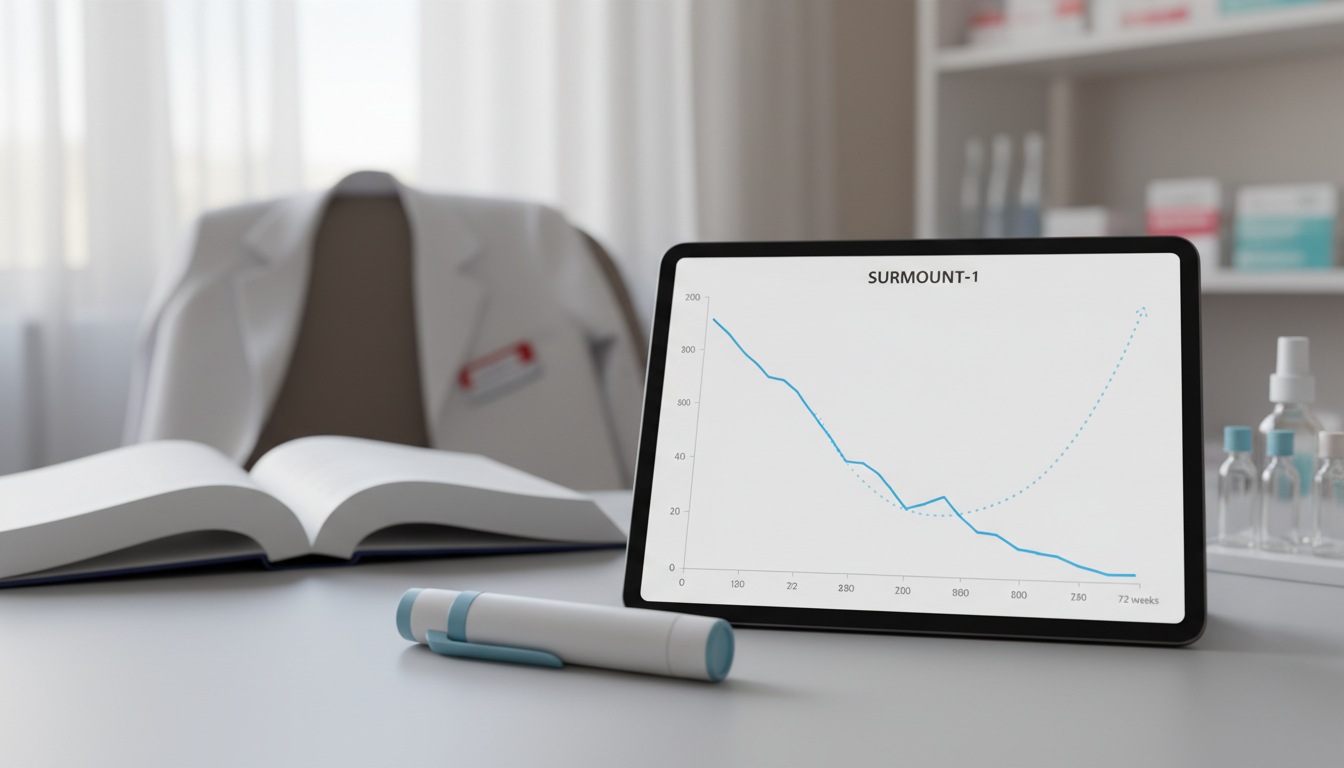
Clinical trial results for Mounjaro are impressive. In the SURMOUNT-1 trial, participants without diabetes saw significant reductions in body weight over 72 weeks. Those on the highest dose (15 mg) lost an average of 22.5% of their starting body weight, which was about 52 pounds for the average person in the study (glp1guided.com). The SURMOUNT-3 study showed that when combined with intensive lifestyle changes, patients could achieve a total mean weight loss of 26.6% over 84 weeks (campuspress.yale.edu). These results are some of the highest seen from any weight management medication.
How quickly does Mounjaro start working for weight loss?
While Mounjaro begins working on your blood sugar and appetite immediately after the first dose, noticeable weight loss takes time. Most people start on a low dose (2.5 mg) which is increased every four weeks to minimize side effects. You may notice small changes in your appetite and weight within the first few weeks, but significant weight loss typically becomes more apparent after you titrate up to higher, more therapeutic doses (usually 5 mg and above). The most dramatic results reported in clinical trials occurred over many months, not weeks.
What happens if I stop taking Mounjaro?
Mounjaro is designed for long-term, chronic management of either diabetes or weight. If you stop taking the medication, the effects that suppress appetite and regulate blood sugar will wear off. For this reason, many people regain a significant portion of the weight they lost. One study showed that weight regain is common if the medication is stopped without a solid, long-term plan for diet and exercise in place (ucl-cdn-prod.thirdparty.solvhealth.com). It's best to think of Mounjaro as a tool to support ongoing lifestyle changes, not a temporary fix.
What are the most common side effects?
The most frequently reported side effects of Mounjaro are gastrointestinal. These include nausea, diarrhea, vomiting, constipation, and stomach pain. For most users, these side effects are mildest when starting the medication or increasing the dose and tend to decrease over time as the body adjusts. Eating smaller meals and avoiding greasy or sugary foods can help manage these symptoms. You can learn more in our detailed post about common Mounjaro side effects.
Is Mounjaro safe to use for weight loss?
When prescribed by a doctor, Mounjaro is generally considered safe for its intended use and for off-label weight loss. However, it does carry a boxed warning, the FDA's most serious, for a potential risk of thyroid C-cell tumors. This risk was observed in animal studies, but it has not been confirmed in humans (glp1guided.com). Due to this potential risk, it should not be used by people with a personal or family history of medullary thyroid carcinoma or Multiple Endocrine Neoplasia syndrome type 2. For more details, read our guide, Is Mounjaro Safe for Weight Loss?.
What is the difference between Mounjaro and Zepbound?
Mounjaro and Zepbound are the exact same medication, tirzepatide, made by the same company, Eli Lilly. The only difference is their name and FDA-approved use. Mounjaro is approved for type 2 diabetes, while Zepbound is approved for chronic weight management in adults with obesity or who are overweight with a related health condition. This distinction is mostly for insurance and marketing purposes. Your doctor may prescribe either one depending on your health profile and insurance coverage.
Deciding between Mounjaro, Zepbound, or another medication can feel overwhelming. Not sure which treatment is right for you? Take our free quiz to get matched with a provider who can create a plan for your goals.
Cost and Insurance Questions: Is Mounjaro for Weight Loss Affordable?
How much does Mounjaro cost without insurance in 2026?
Without insurance coverage, the price of Mounjaro can be a major barrier for many people. As of 2026, the retail price for a one-month supply of Mounjaro typically ranges from $900 to $1,100 (glp1guided.com). This price can vary slightly depending on the pharmacy you use and any available discount programs. This high cost is a primary reason why patients look for insurance coverage or explore alternatives like compounded medications. For a complete cost breakdown, check out our guide on the Mounjaro price in the USA.
Will my insurance cover Mounjaro for weight loss?
Coverage depends entirely on your specific insurance plan. Since Mounjaro is only FDA-approved for type 2 diabetes, most insurance plans will not cover it if prescribed solely for weight loss. They see this as "off-label" use. However, if you have a diagnosis of type 2 diabetes, coverage is much more likely. Some plans may cover Zepbound for weight loss, as that is its on-label use. You should always check your plan's formulary or call your insurance provider directly to confirm coverage rules.
Is Mounjaro covered by Medicare for weight loss?
This is a tricky question. Currently, Medicare Part D plans are legally prohibited from covering medications when prescribed solely for weight management. Therefore, if you are wondering is Mounjaro covered by Medicare for weight loss, the answer is generally no. However, if your doctor prescribes Mounjaro to manage type 2 diabetes, your Part D plan may cover it. The rules are slowly changing, but as of 2026, direct coverage for weight loss medications under Medicare is still not standard practice.
What are the cheaper alternatives to brand-name Mounjaro?
If the cost of Mounjaro is too high, you have a few options to discuss with your provider. One is compounded tirzepatide, which is created by a specialized pharmacy and is often significantly less expensive. Another option is a different GLP-1 medication, like semaglutide. As of April 2026, Eli Lilly also launched a new, once-daily weight-loss pill called Foundayo (orforglipron). It is available through LillyDirect for a starting price of $149 per month, offering a more affordable oral alternative (pharma.economictimes.indiatimes.com).
Want to see which options fit your budget and goals? Our free quiz takes three minutes and matches you with vetted providers who can explore all available treatments with you.

Mounjaro vs. Other Weight Loss Medications
Is Mounjaro a better choice than Ozempic or Wegovy for weight loss?
Mounjaro often leads to greater weight loss than Ozempic or Wegovy. This is because Mounjaro is a dual-agonist, acting on both GIP and GLP-1 receptors, while Ozempic and Wegovy (semaglutide) only act on the GLP-1 receptor. Clinical data suggests this dual action gives tirzepatide an edge. On average, Mounjaro users lose about 5 to 6 percentage points more body weight compared to those on semaglutide-based medications (formblends.com). However, the "better" choice depends on individual factors like tolerance, cost, and your doctor's recommendation. Read our full semaglutide vs. tirzepatide comparison for more.
How does Mounjaro compare to metformin for weight loss?
Mounjaro and metformin are very different medications. Metformin is an oral drug that has been a first-line treatment for type 2 diabetes for decades. It can cause modest weight loss, often just a few pounds, by reducing the liver's sugar production and improving insulin sensitivity. In contrast, Mounjaro is a much newer, more powerful injectable that directly targets appetite hormones, leading to an average weight loss of over 20% in trials. While metformin is affordable and widely used, its weight loss effects are minimal compared to Mounjaro. Learn more about metformin weight loss here.
What is Foundayo and how does it compare to Mounjaro?_
Foundayo (orforglipron) is a new once-daily weight-loss pill from Eli Lilly approved by the FDA on April 2, 2026. Unlike the injectable Mounjaro, Foundayo is an oral GLP-1 medication that offers more convenience. Clinical trials showed it helped people lose about 12% to 15% of their body weight (pharma.economictimes.indiatimes.com). While its weight loss effect is less than Mounjaro's (up to 22.5%), its lower cost (starting at $149/month) and pill form make it an attractive new option. It also has no food or water restrictions, a key advantage over other oral options.
Is an injection or a pill better for weight loss?
The choice between an injection like Mounjaro and a pill like Foundayo depends on your preferences and lifestyle. Injections like Mounjaro and Zepbound are taken only once a week, which many find convenient. They also currently produce the highest levels of weight loss. Pills like Foundayo must be taken every day, but they eliminate the need for needles. Oral medications have historically produced slightly less weight loss than their injectable counterparts but offer greater ease of use and often a lower price point. Discuss the pros and cons of each with your healthcare provider.
Lifestyle and Long-Term Use Questions
Do I have to diet and exercise while on Mounjaro?
Yes, absolutely. Mounjaro is a powerful tool, but it works best as part of a comprehensive lifestyle change. Clinical trials that showed the best results combined the medication with diet and exercise (ucl-cdn-prod.thirdparty.solvhealth.com). For example, the SURMOUNT-3 study, which involved an intensive lifestyle program, resulted in a total mean weight loss of 26.6% (campuspress.yale.edu). The medication helps control your appetite and makes it easier to stick to a lower-calorie diet, but your food choices and activity level are still the foundations of sustainable weight management.
Can Mounjaro cause muscle loss with weight loss?
Any time you lose weight, especially rapidly, you are at risk of losing muscle mass along with fat. This is not unique to Mounjaro but is a concern with all effective weight loss methods, including bariatric surgery and very low-calorie diets. To help preserve muscle, it is crucial to engage in regular strength training and consume adequate protein while losing weight. A high-protein diet can help your body prioritize fat loss while protecting your lean muscle. Learn more about GLP-1s and muscle loss here.
Is Mounjaro intended to be a long-term medication?
For most people, yes. Both obesity and type 2 diabetes are considered chronic conditions. Medications like Mounjaro are designed to manage these conditions over the long term. As noted, stopping the medication often leads to weight regain because the biological effects on appetite and metabolism are no longer present. A healthcare provider will typically view Mounjaro as part of an ongoing treatment plan, similar to medications for high blood pressure or cholesterol, that you continue taking to maintain the health benefits.
Ready to see how medication could fit into your long-term health plan? Take our free 3-minute quiz to get matched with a licensed provider who can help you explore your options.
FAQs
Is Mounjaro a good option for weight loss?
Yes, for many people Mounjaro is an excellent option for weight loss due to its high effectiveness. Clinical trials show it can help people lose over 20% of their body weight. Though it is technically approved for type 2 diabetes, its active ingredient is approved for weight loss under the name Zepbound, and doctors frequently prescribe Mounjaro off-label for this purpose.
Can you get Mounjaro prescribed only for weight loss?
Yes, a doctor can prescribe Mounjaro "off-label" for weight loss even if you don't have type 2 diabetes. This is a common and legal practice where a doctor prescribes a drug for a condition other than its official FDA-approved use. However, your insurance may not cover the cost if it's prescribed off-label.
What is the biggest downside of using Mounjaro for weight loss?
The biggest downsides are cost and access. Without insurance, Mounjaro can cost over $1,000 per month. Because it's often prescribed off-label for weight loss, getting insurance to cover it is difficult. Another downside is the potential for weight regain after stopping the medication, meaning it's often a long-term commitment.
How do I get a prescription for Mounjaro for weight loss?
To get a prescription, you must consult with a licensed healthcare provider. You can visit a local weight loss clinic or use a telehealth platform to connect with a doctor online. The provider will evaluate your health history, BMI, and any weight-related health conditions to determine if you are a suitable candidate for Mounjaro or a similar medication like Zepbound.
Contributing to evidence-based peptide education and provider transparency.
Too many clinics, not enough clarity?
We don't sell peptides. Tell us your goals and we'll connect you with a vetted provider who can figure out what actually makes sense for you.
See what's right for youRelated articles
A Step-by-Step Gelatin Recipe for Weight Loss
Seen the viral "pink trick"? We break down the simple gelatin recipe for weight loss. Learn our step-by-step method to help manage hunger and feel full.
GLP-1 Weight LossOzempic Cost in 2026: What You'll Actually Pay
The 2026 Ozempic cost can be anywhere from $25 to over $1,400 a month. Discover why and learn how to find savings with or without insurance coverage.
GLP-1 Weight LossHow Zep Weight Loss Works and What to Expect
Thinking about zep weight loss? We cover how this drug works, what realistic results look like, common side effects, and how it compares to Ozempic.